
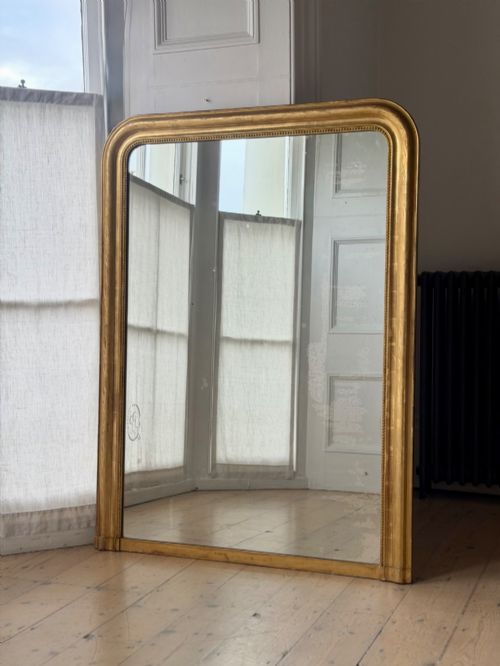



Decorative Round Mirror
A decorative round mirror brings focus and light to a room, offering circular frames in giltwood, brass, and ebonised wood from the nineteenth century onwards.
Decorative Round Mirror
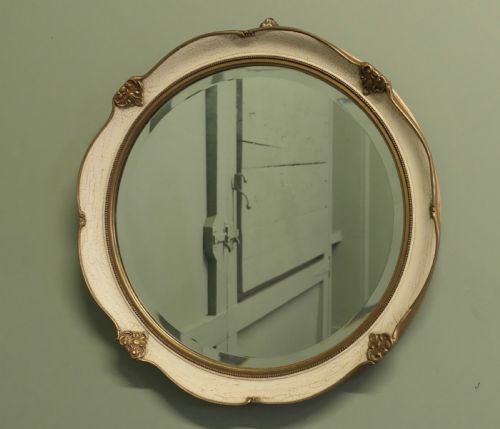
A decorative round mirror draws the eye through circular forms that contrast with standard rectangular wall hangings. These pieces span the nineteenth century, Edwardian era, and Art Deco periods, appearing in forms such as convex plates, porthole designs, and butler's mirrors.
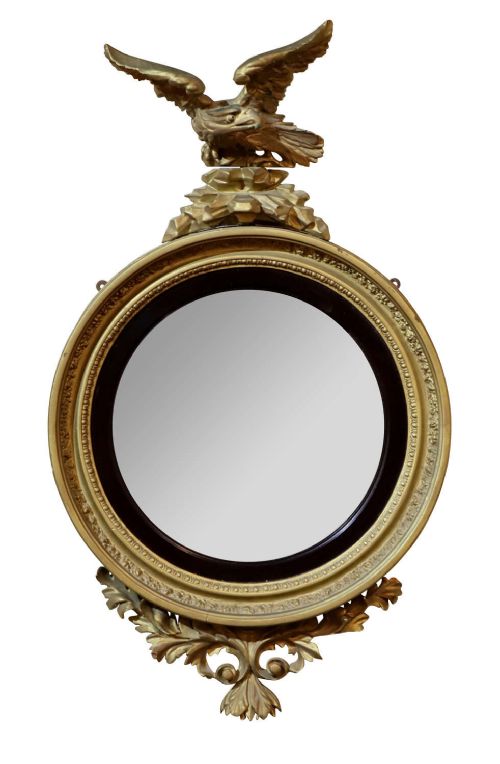
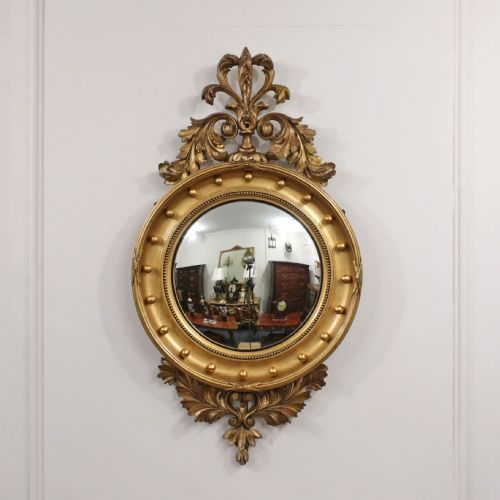
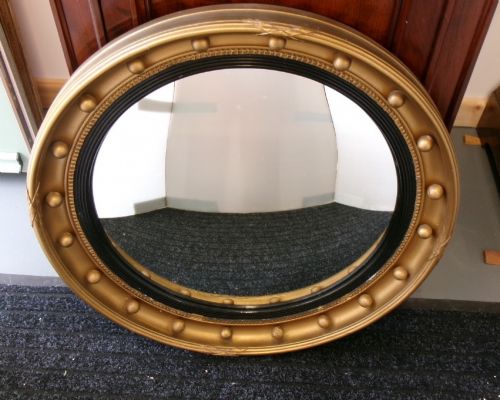
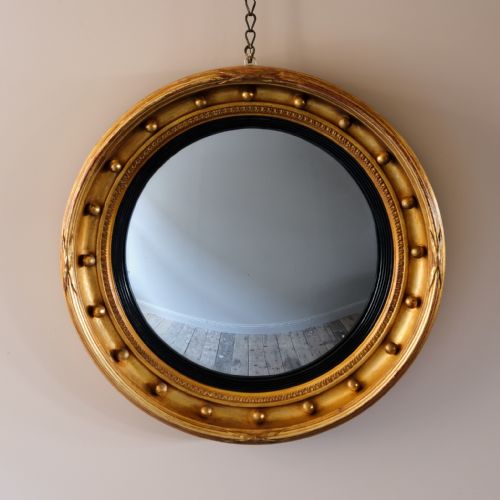
The selections available here are most commonly Regency and Victorian convex wall mirrors alongside French Art Deco examples. Frames utilise materials like giltwood, brass, oak, and gesso, often featuring eagle surmounts or ebonised slips.
Originating as practical objects for checking appearance or distributing light in darker spaces, these circular wall mirrors serve primarily as focal decorative elements. They anchor a mantelpiece or hallway wall with distinct historical presence.
How they were made
Frames are constructed from woods such as oak, pine, or turned wood, heavily built to support weighty glass plates. Giltwood and gesso finishes require skilled layering of plaster over wood before applying gold leaf or paint.
Convex mirror plates are blown or cast to create the characteristic curved surface that distorts and widens the reflected interior. Brass frames involve casting and polishing techniques, whilst etched Art Deco examples display surface work directly upon the glass.
Listings feature items from the Regency, Victorian, Edwardian, and Art Deco periods, utilising materials including giltwood, brass, alabaster, and oak.
What varies in quality
Quality rests upon the crispness of the frame carving and the depth of the gilding or surface finish. Early Regency giltwood and eagle-mounted pieces show meticulous hand-carving and substantial weight, whereas later revival items utilise simpler moulded compositions.
The condition and clarity of the mirror plate dictate the visual impact of the piece. Foxing or original distortion adds age character, but the integrity of the frame construction and the survival of original gesso ornamentation determine the overall standing of the mirror.
The Decorative Round Mirror Glossary
- Convex glass
- Curved glass that projects outward, creating a wide-angle reflection of the room. This form was historically favoured for butler's mirrors and Regency wall pieces.
- Giltwood
- Timber coated with a thin layer of gold leaf over a prepared base. This material defines many nineteenth-century frames.
- Gesso
- A plaster mixture applied to wood frames to create a smooth surface for gilding or painting. It allows for detailed moulded ornamentation.
- Ebonised slip
- A dark inner wooden moulding framing the mirror plate. This technique creates visual depth between the glass and the outer frame.
- Foxing
- Age-related spots and discoloration within the mirror plate. It develops as the silver backing degrades over decades.
Decorative Round Mirror: Frequently Asked Questions
Where should I hang a convex mirror?
Hang a convex round mirror at eye level in a hallway, above a fireplace, or opposite a window. Its curved surface gathers light from across the room and creates a miniature panoramic view of the interior space.
Because these pieces project outward and often carry substantial weight from giltwood or brass frames, ensure they are secured to wall studs using appropriate fixings rather than standard plaster plugs.
How do I date an antique round mirror?
Dating relies on examining the frame materials, construction techniques, and the characteristics of the glass plate. Regency examples often feature heavy giltwood with eagle crests and ebonised slips, whilst later Victorian and Edwardian pieces show different moulding styles and oak construction.
Inspect the backboards, fixings, and the composition of the gesso or paint layers. Original mirror plates frequently display natural foxing and minor imperfections consistent with nineteenth-century manufacturing methods.
What is a butler's mirror?
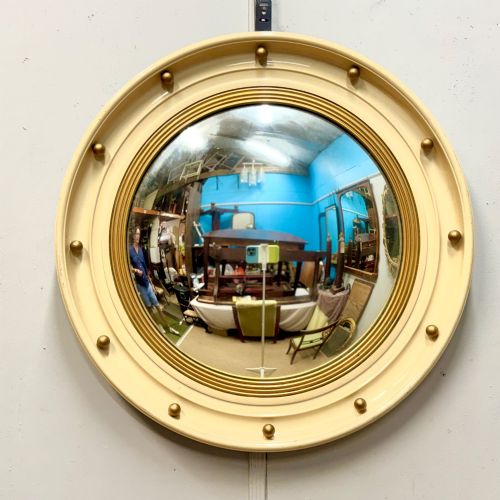
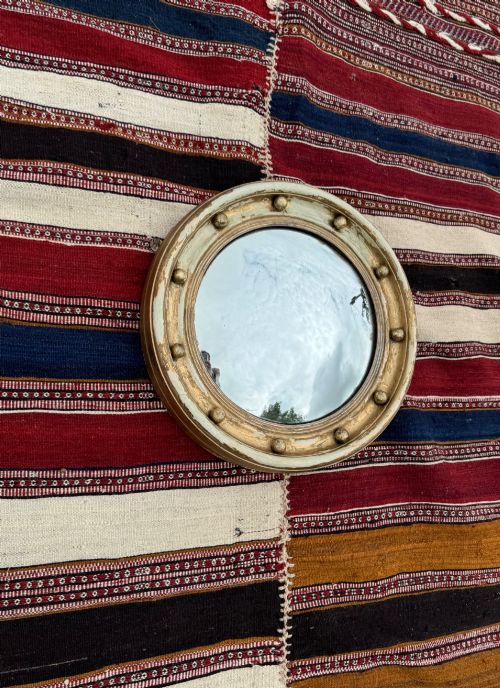
A butler's mirror is a circular convex wall mirror traditionally used by staff in large houses to monitor activity across a dining room or hall from a single vantage point. The curved glass provides a wide field of vision.
These pieces typically feature round frames with small decorative balls or reeded details around the perimeter, combining functional surveillance with striking decorative presence.
How do I clean an antique mirror plate?
Clean antique mirror plates gently using a soft, dry microfibre cloth to remove dust. Avoid spraying liquid cleaner directly onto the glass, as moisture can seep behind the frame and damage vulnerable old backing or foxed silvering.
If moisture is necessary, apply a small amount of mild cleaner to the cloth rather than the glass, and keep liquids away from vulnerable gesso, giltwood, or wooden frame joints.