



Decorative Privacy Divider
A decorative privacy divider shapes space and blocks sight lines, bringing layered folding panels into a room.
Decorative Privacy Divider
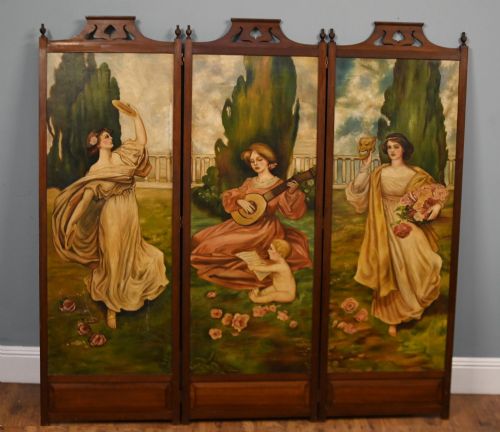
A decorative privacy divider takes the form of folding screens and room dividers that partition interiors while adding visual depth. These pieces span multiple periods, including the Victorian era, the eighteenth century, and the early twentieth century.
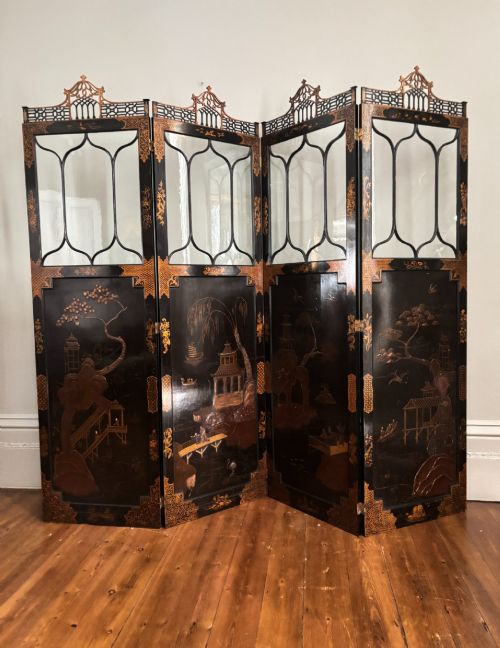
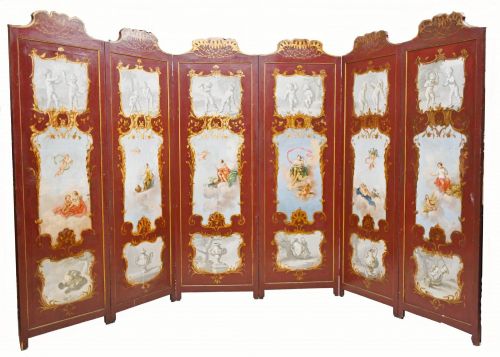
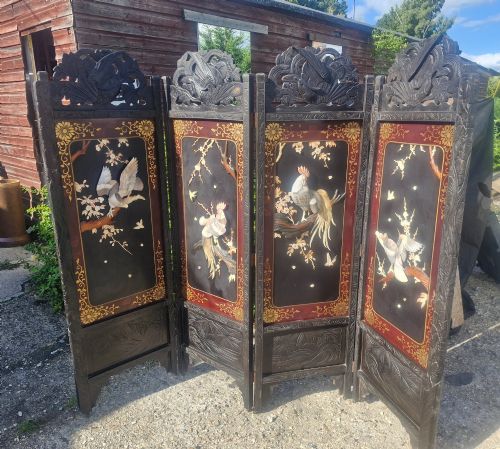
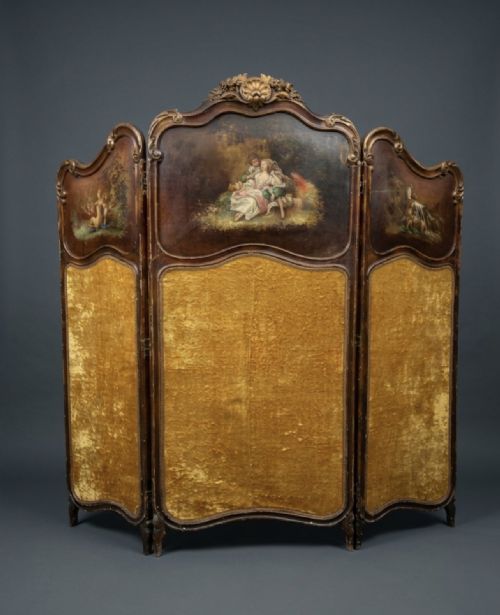
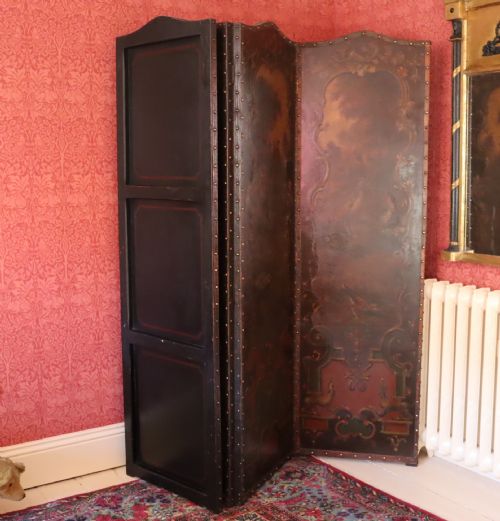
The versions met most often on this page include multi-fold panels constructed from wood, leather, canvas, and lacquer. They arrive from varied stylistic traditions such as French Rococo Revival, Chinoiserie, Arts and Crafts, and Japanese Meiji designs.
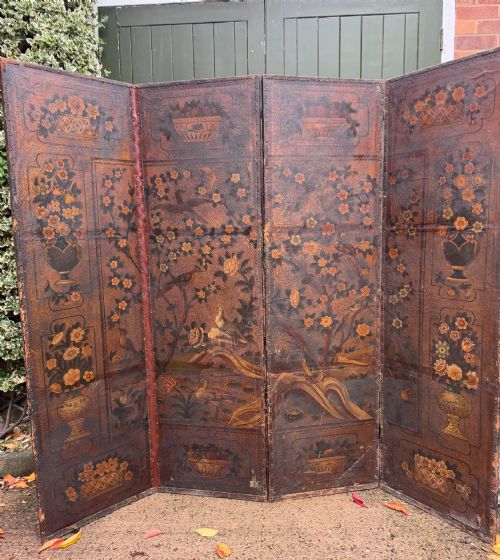
Makers and artisans employed diverse techniques across these panels, ranging from deep carved bone figures to hand painted leather and hardstone mounting. Each piece serves to divide a domestic space whilst functioning as a prominent decorative surface.
How they were made
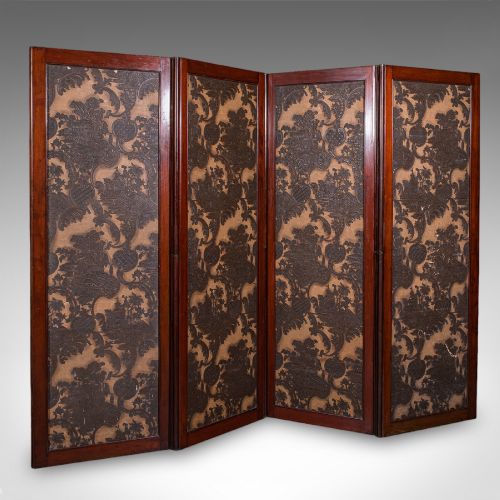
Construction relies on sturdy wooden frames of mahogany, walnut, or oak to support folding panels hinged together in sequences of three or four folds. These frameworks provide the structural backbone necessary for freestanding room division.
Surfaces are finished using oil paint, lacquer, or embossed leather, often enriched with gilt details, silk cotton, and velvet fabric. Artisans applied hand painted pastoral scenes, Chinoiserie motifs, and Pre-Raphaelite imagery directly onto the panels.
Specialised decorative elements include deep carved bone figures and hardstone mounts applied to black lacquer backgrounds. These tactile additions create relief and texture across the plane of the screen.
Decorative Privacy Divider Retail Price Guide 2026
Typical asking prices for decorative privacy divider among the pieces listed under this phrase on Sellingantiques today, from the lower quarter to the upper quarter. They describe what is for sale here now, not the wider market.
Styles span French Rococo Revival, Pre-Raphaelite, Japanese Meiji, Continental Baroque, Chinoiserie, and Arts and Crafts.
What varies in quality
Quality rests upon the execution of the surface artistry, whether through hand painted leather, delicate lacquer work, or intricate wood carving. Panels featuring detailed pictorial scenes or complex relief elements require a high degree of craftsmanship.
The integrity of the structural hinges and the selection of primary timbers, such as solid mahogany or walnut, determine the durability of the folding mechanism. Superior construction ensures the multi-fold frame stands stable and pivots smoothly over repeated use.
The Decorative Privacy Divider Glossary
- Folding screen
- A piece of furniture consisting of two or more panels that are hinged together, used to partition a room or provide privacy.
- Modesty screen
- A smaller type of screen historically utilised to shield individuals from drafts or unwanted gazes in domestic settings.
- Lacquer
- A durable resin finish applied in multiple layers to wood surfaces, often associated with Asian decorative arts and Chinoiserie styles.
- Cordoban leather
- Embossed and gilt-painted leather originating from Spain, prized for rich texture and durability on large panels.
- Hardstone-mounted
- The technique of embedding carved jade, soapstone, or other minerals directly into a lacquered or wooden background.
Decorative Privacy Divider: Frequently Asked Questions
How do I use a decorative privacy divider at home?
These screens divide large rooms into smaller zones, create dressing areas, or conceal utilitarian corners without permanent building work.
They stand against walls as large decorative art pieces when fully extended or fold compactly to alter the layout of a space.
What materials make up these screens?
Construction materials include hardwoods like walnut, mahogany, and oak for the structural frames that support the folding panels.
Surfaces incorporate oil paint, lacquer, embossed leather, velvet fabric, and silk cotton, frequently accented with carved bone or hardstone.
How do I distinguish eighteenth-century pieces from Victorian ones?
Eighteenth-century examples often feature elaborate gilt embossed leather or continental baroque motifs reflecting period workshops.
Victorian pieces frequently display Revival styles, painted canvas, or photographic prop elements characteristic of nineteenth-century production.
Are these room dividers freestanding?
Hinges connect multiple wooden panels together, allowing the screen to support its own weight in a zig-zag configuration.
This folding design means no permanent wall fixings or floor tracks are required for stability.