






Chinoiserie Lacquer Screen
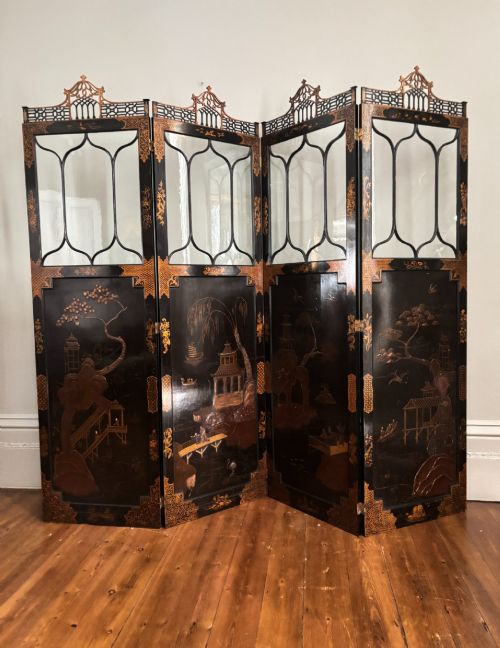
These chinoiserie lacquer screen examples bring hand-painted narrative scenes and deep black or coromandel surfaces into a room to divide space or frame a hearth.
Chinoiserie Lacquer Screen
A chinoiserie lacquer screen transforms an interior by introducing folding panels, painted room dividers, and smaller hearth or dressing protections decorated with East Asian motifs. Buyers searching for a chinoiserie lacquer screen encounter pieces originating from the eighteenth century through the early twentieth century, spanning Regency, Victorian, and Chinese Chippendale interpretations.
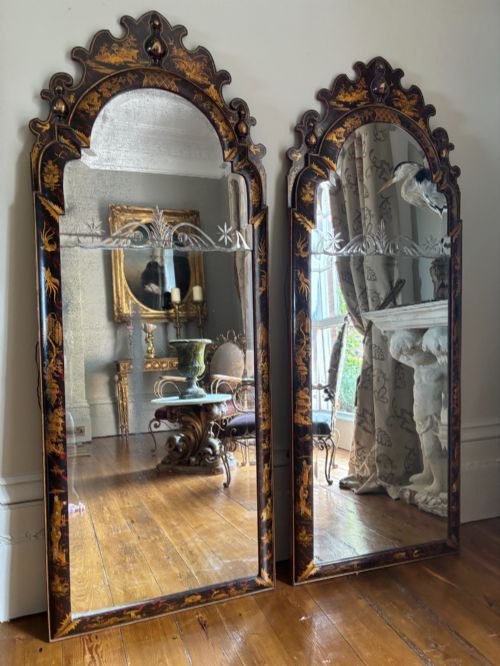
The selections on this page appear most frequently as large multi-fold folding screens, alongside smaller variants such as fire screens, pole screens, pier mirrors, and wall art panels. These objects function practically to partition a room or block heat while serving as prominent decorative focal points through their detailed pictorial surfaces.
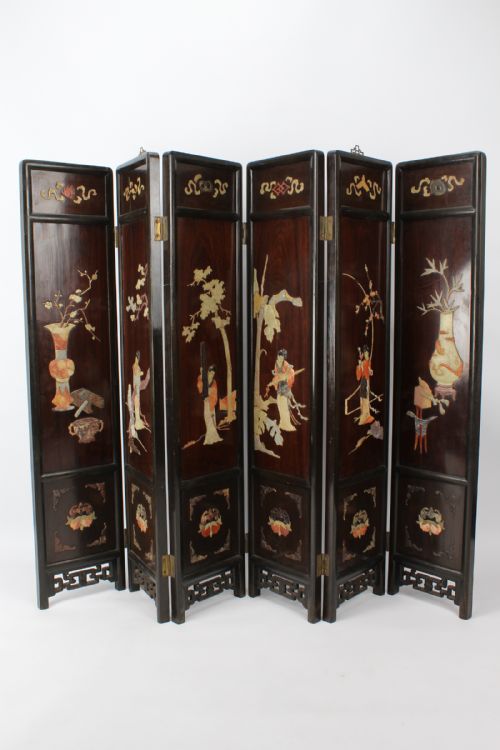
Origin and period markers vary widely among the items, moving from eighteenth-century coromandel eight-fold works to nineteenth-century black lacquer panels and nineteen-thirties hardstone-mounted examples. The physical formats range from compact four-panel dividers up to expansive six-panel and eight-panel structures.
Materials and Construction
The foundational structures rely on wood, lacquered wood, and papier mâché, built as multi-panel hinged frames or single standing panels. Artisans applied successive coats of lacquer to build deep, smooth surfaces capable of receiving intricate painted or incised decoration.
Chinoiserie Lacquer Screen Retail Price Guide 2026
Typical asking prices for chinoiserie lacquer screen among the pieces listed under this phrase on Sellingantiques today, from the lower quarter to the upper quarter. They describe what is for sale here now, not the wider market.
Materials documented across the inventory include lacquered wood, brass hinges, gold leaf, glass, and applied hardstone mounted on solid wood frames.
Evaluating the Workmanship
The distinction between ordinary and exceptional examples rests on the depth of the lacquer finish and the precision of the hand-painted or incised narrative details. Superior pieces display multi-layered grounds with crisp application of gold leaf and integrated hardstone elements that remain securely anchored to the wood.
Structural integrity across multiple folds indicates superior craftsmanship, particularly in the alignment of heavy panels and the durability of the hinges. The sophistication of the chinoiserie style interpretation, whether adhering to Chinese Chippendale proportions or Victorian black lacquer conventions, dictates the visual authority of the piece.
The Chinoiserie Lacquer Screen Glossary
- Coromandel
- A type of Chinese incised lacquer where designs are cut into a dark ground and filled with colours or gold leaf. This technique produces a rich, textured surface seen on multi-fold room dividers.
- Chinoiserie
- European artistic interpretation of Chinese and East Asian decorative styles, popular across various periods. It manifests through painted pavilions, exotic figures, and fantastical landscapes on furniture and screens.
- Pole screen
- A vertical decorative screen mounted on a tall wooden pole with a tripod base, designed to be adjusted vertically. It protected a seated person's face from the direct heat of an open fire.
- Hardstone
- Minerals such as jade, agate, or soapstone carved and applied in relief to a lacquered wooden background. This method adds tactile dimension and varied colour to pictorial scenes.
- Fire screen
- A freestanding barrier placed before a fireplace when not in use to conceal the hearth or block drafts. These items utilise painted wood, lacquer, or fabric panels within a rigid frame.
Chinoiserie Lacquer Screen: Frequently Asked Questions
How were folding screens used historically?
Historically, folding screens partitioned large rooms to create private areas, block drafts, and manage interior spaces. They also served as movable backdrops that added colour and narrative art to formal parlours and bedrooms.
In addition to room division, specific formats like fire screens stood before hearths during warmer months to hide unlit grates. Dressing screens provided visual privacy during toilette routines in private chambers.
What is the difference between coromandel and painted lacquer?
Coromandel lacquer involves cutting the design directly into the thick dark lacquer ground to create a recessed, carved effect that is subsequently filled with pigments or gold. This technique yields a distinct tactile depth and a dense composition across multiple panels.
Painted lacquer relies on applying pigments and gold leaf directly onto the smooth surface without carving into the layers. This method results in flat or slightly raised pictorial designs depicting figures, foliage, and architectural elements.
How do you distinguish 18th-century pieces from later revivals?
Eighteenth-century examples typically display specific handling of coromandel techniques and materials consistent with Qing Dynasty production or early European chinoiserie trade pieces. The patination of the wood and the specific formulation of the lacquer layers reveal the extended age of these early works.
Nineteenth and twentieth-century revivals, including Victorian and Chinese Chippendale style interpretations, often incorporate machine-cut elements or distinct hardware styles. The presence of nineteenth-century papier mâché or nineteen-thirties hardstone mounts clearly points to later manufacturing periods.
Where should a large screen be placed?
A large multi-fold screen works effectively when positioned against a plain wall to function as large-scale wall art or as a dramatic room divider. Placing it to catch natural light highlights the reflective qualities of the black lacquer and gold leaf.
Smaller variants such as fire screens sit comfortably directly in front of a decorative hearth or as accent pieces in corners. Dressing screens find a natural home in bedrooms or dressing areas where they echo their original functional context.