







Oriental Folding Room Screen
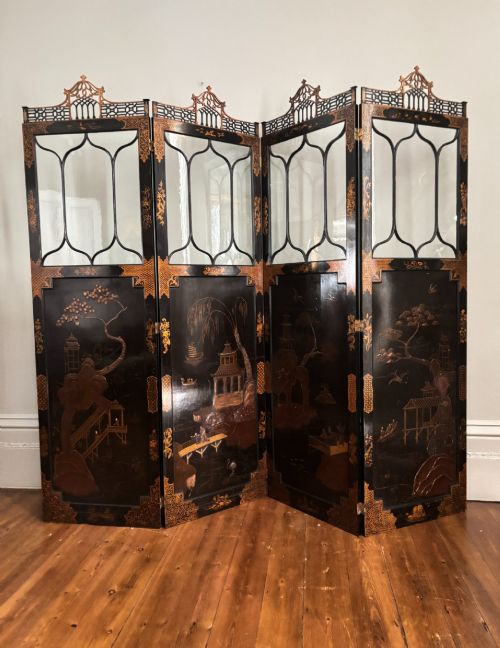
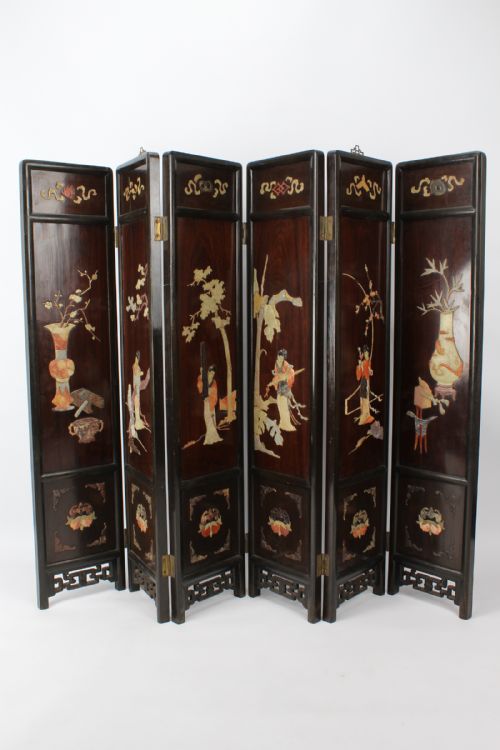
An oriental folding room screen divides a space with painted panels, lacquer, and carved detail.
Oriental Folding Room Screen
An oriental folding room screen divides space and creates privacy using multiple hinged panels. These pieces appear in forms ranging from tall multi-fold room dividers to dressing screens and low fire screens.
The pieces seen here span centuries from the eighteenth century through to the mid twentieth century, drawing on Chinese, Japanese, Burmese, and Indian traditions. Buyers most frequently meet large four-fold and eight-fold examples finished in lacquer or carved wood.
Styles range from traditional Chinese and Japanese Meiji work to Victorian Chinoiserie and Chinese Chippendale interpretations. Each screen functions simultaneously as architectural furniture and as a decorative painting surface.
How they were made
Wood and hardwood form the structural core of these screens, often finished with layers of dark or black lacquer. Artisans applied successive coats of lacquer to build a deep, durable surface that could be incised or polished.
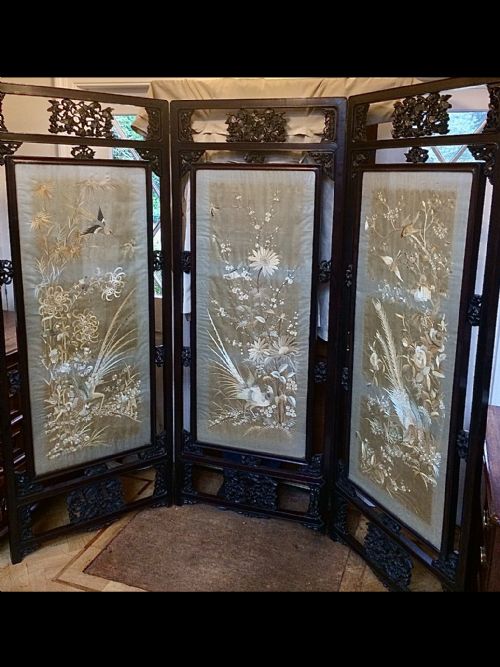
Decoration relied on applied materials including carved bone, hardstone, and painted silk. Fretwork panels, brass hinges, and glass elements also appear across the surviving pieces, combining carpentry with decorative arts.
Oriental Folding Room Screen Retail Price Guide 2026
Typical asking prices for oriental folding room screen among the pieces listed under this phrase on Sellingantiques today, from the lower quarter to the upper quarter. They describe what is for sale here now, not the wider market.
One past photographic prop screen doubled as a Victorian backdrop, proving that even folding dividers enjoy a successful second career in the studio.
What varies in quality
The depth and precision of the carving separate standard panels from exceptional examples. Deeply carved bone figures, meticulous incised lacquer work, and balanced proportions distinguish the finer screens.
The quality of the materials and the execution of the painting dictate visual weight. Well-preserved silk panels and rich, unblemished lacquer surfaces elevate a screen above purely utilitarian dividers.
The Oriental Folding Room Screen Glossary
- Coromandel
- A type of Chinese incised lacquer where the background is cut away and filled with pigments. It creates a rich, textured surface across multiple panels.
- Chinoiserie
- European decorative style inspired by Chinese and East Asian artistic traditions. It appears in British interpretations of Asian forms during the Victorian period and earlier.
- Meiji
- A period of Japanese history spanning from 1868 to 1912 noted for detailed craftsmanship in metal, wood, and lacquer. Pieces from this era often feature intricate inlaid bone or painted decoration.
- Fire screen
- A small decorative screen placed in front of an unused fireplace to block drafts or improve the room's appearance. These are typically lower than room dividers.
- Hardstone
- Dense minerals such as jade, agate, or soapstone carved and mounted onto wooden surfaces. It adds colour and tactile relief to lacquer screens.
Oriental Folding Room Screen: Frequently Asked Questions
How do I use a folding screen at home?
These screens partition large rooms, create private dressing areas, or stand against plain walls as decorative art. Their hinged panels adjust easily to fit different spatial layouts.
Position them away from direct heat sources and strong sunlight to protect the lacquer, silk, and wood construction over time.
How are different periods told apart?
Eighteenth and nineteenth-century examples often feature deep coromandel lacquer and traditional motifs. Pieces from the early twentieth century introduce diverse regional variations, including Burmese and Indian carved fretwork.
Stylistic cues such as Victorian Chinoiserie or Meiji decorative elements help align a screen with its probable era of production.
What materials make up these screens?
The primary structure relies on wood and hardwood, frequently coated in black or coloured lacquer. Decoration incorporates carved bone, hardstone, silk, glass, and brass.
Some examples also utilise papier mâché or delicate textile panels within their folding frames.
Are these screens heavy?
The weight varies depending on the wood used and the number of panels. Large eight-fold hardwood and lacquered screens are substantial pieces requiring two people to move safely.
Smaller dressing screens and fire screens are lighter and can be repositioned easily around a room.