






Carved Lacquer Screen
A carved lacquer screen brings depth and texture to a room, offering rich surfaces built up through layers of resin.
Carved Lacquer Screen
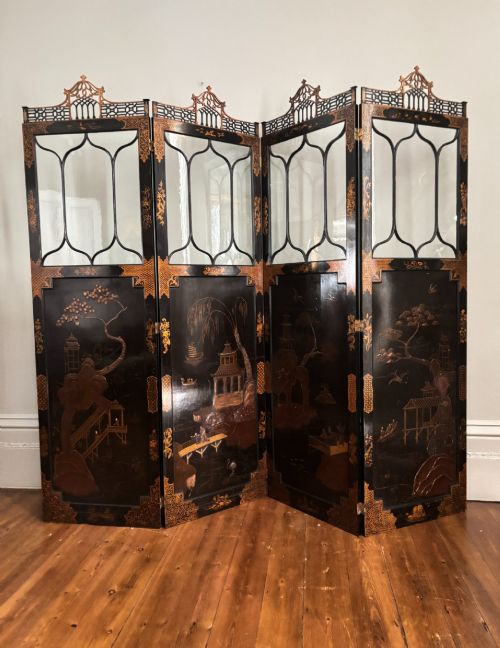
A carved lacquer screen functions as a folding room divider, a low table screen, a fire screen or a wall plaque, shaped by traditions spanning Chinese and Japanese workshops. Buyers seeking a carved lacquer screen will frequently encounter multi-fold folding screens from the nineteenth and early twentieth centuries alongside smaller tabletop versions.
The forms range from grand eight-fold panels down to intimate three-fold dressing screens and single decorative plaques. These pieces draw on aesthetic movements such as Chinoiserie, the Meiji period and the Qing dynasty, bringing distinct regional character into an interior.
Originating predominantly from China and Japan, with examples also appearing from Burma, these items serve to partition spaces or decorate walls. The variety includes coromandel work, bantam work and framed panel sets designed to catch the light.
How they were made
The construction relies on a core of wood or hardwood that receives numerous successive applications of lacquer. Artisans build up thick surfaces of sap-based resin before carving intricate designs directly into the hardened layers.
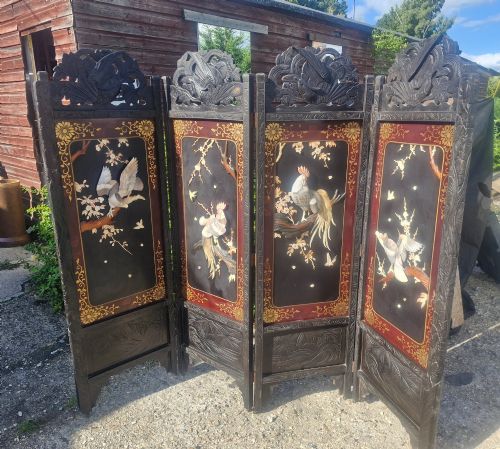
Many examples incorporate applied details such as carved bone, hardstone, mother-of-pearl, abalone and brass. These contrasting materials stand proud of the lacquer ground, depicting figures, birds in branches and foliage.
Carved Lacquer Screen Retail Price Guide 2026
Typical asking prices for carved lacquer screen among the pieces listed under this phrase on Sellingantiques today, from the lower quarter to the upper quarter. They describe what is for sale here now, not the wider market.
Intricate bone figures peer out from shadowy lacquer branches, frozen mid-song for over a century.
What varies in quality
The depth and precision of the carved lacquer determine the visual impact of the surface. Finer pieces show crisp edges and intricate detailing within the layers rather than shallow or flat incision.
The skill involved in setting inlay materials like bone, hardstone and mother-of-pearl marks the distinction between standard production and superior craftsmanship. The stability of the underlying wood and the preservation of the lacquer coating shape the enduring integrity of the piece.
The Carved Lacquer Screen Glossary
- Coromandel lacquer
- A Chinese incised lacquer technique where the design is carved into a built-up dark ground and filled with colours or left natural. It is often seen on large folding room dividers.
- Shibayama
- A Japanese decorative technique using inlaid elements such as shell, ivory, bone and coral to create raised pictorial motifs. This work appears on fine tabletop and folding screens.
- Table screen
- A smaller decorative screen mounted on a stand for display on a desk or piece of furniture. These items showcase detailed carving and inlay on a miniature scale.
- Bantam work
- An export style resembling coromandel work featuring low-relief coloured lacquer panels. It is associated with Chinese export pieces produced for Western markets.
- Chinoiserie
- A European artistic style reflecting Chinese motifs and decorative techniques. This aesthetic heavily influences many nineteenth-century folding screens.
Carved Lacquer Screen: Frequently Asked Questions
How do I use a folding screen at home?
A folding screen works effectively to divide a large open space, create a private dressing area or soften an empty corner. Position it against a plain wall as a backdrop or angle the panels to catch the light.
Ensure the panels are stable when standing and avoid placing them in direct sunlight to protect the lacquer finish.
What is the difference between coromandel and bantam work?
Coromandel lacquer involves deep incisions into thick layers of dark lacquer, revealing a lighter ground beneath which is then painted. Bantam work relates to a specific export style featuring shallower, colourful incised designs.
Both techniques create richly textured surfaces, though coromandel pieces tend to feature heavier wooden structures and more robust folding panels.
How do I care for an antique lacquer screen?
Dust the surface gently with a soft, dry cloth to prevent accumulation in the carved recesses. Keep the screen away from excessive heat sources and damp environments to prevent the wood from warping.
Avoid using modern chemical cleaners or polishes, as these can damage the delicate resin layers and inlay materials.
How can I tell the period of a screen?
Dating relies on examining the construction methods, the style of the hardware and the characteristics of the carving. Nineteenth-century examples often display heavier wooden frames and deep, organic pigment application.
Twentieth-century pieces frequently show different assembly techniques and stylistic influences reflecting the Qing dynasty or the Japanese Meiji period.