



Decorative Porcelain Tray
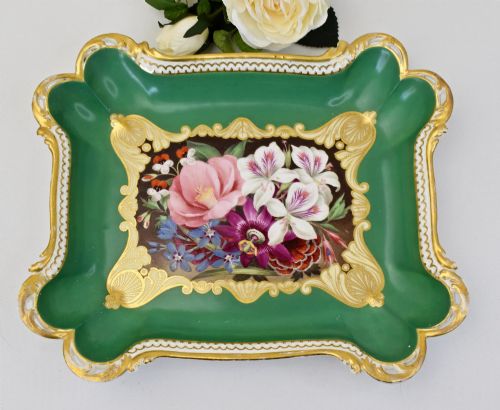
A decorative porcelain tray brings colour and painted detail to a table, combining ceramic bodies with gilt bronze mounts or intricate hand-painted subjects.
Decorative Porcelain Tray
When searching for a decorative porcelain tray, buyers encounter an array of serving dishes, cabinet pieces, and platters spanning the eighteenth century through to the Edwardian period. These objects encompass English factories like Royal Crown Derby and Worcester, alongside continental works from Sèvres, Meissen, and Vienna.
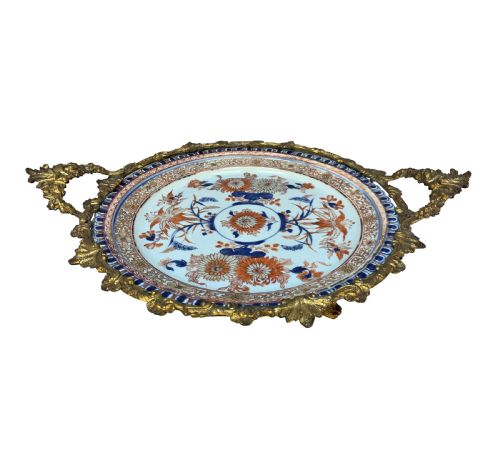
The forms vary widely from fan-shaped plates and twin-handled serving dishes to centrepieces mounted in ormolu or brass bases. Many pieces double as cabinet dishes or desk accessories, designed for display rather than heavy dining use.
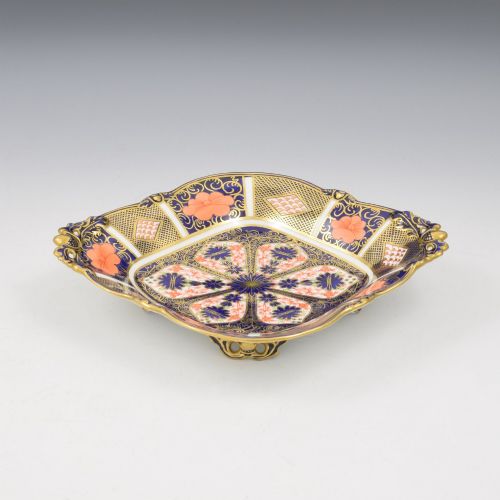
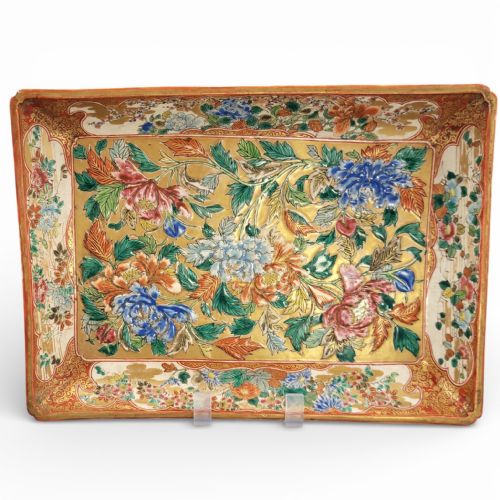
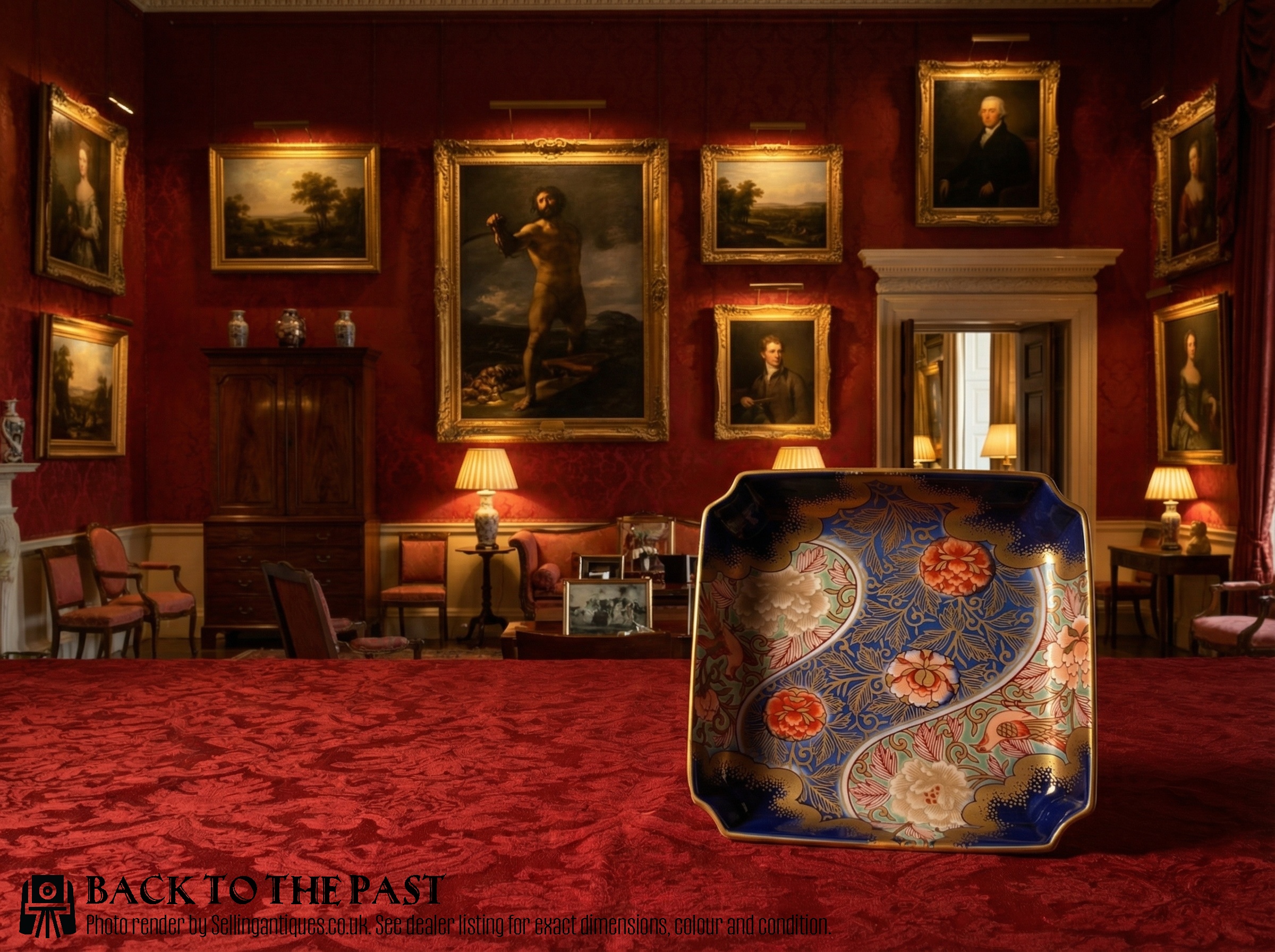
Stylistic influences stretch from Japanese Imari and Kutani patterns to French Rococo Revival and English floral painting. The pieces reflect both domestic utility and ornamental luxury across the nineteenth century.
Materials and Manufacture
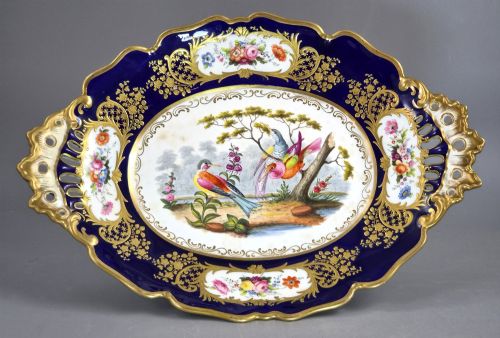
The foundation of these objects lies in porcelain and bone china, fired at high temperatures to create smooth, durable bodies. Artisans applied enamel colours by hand, often incorporating cobalt blue underglazes or polychrome scenes of birds, fruit, and mythological figures.
Metal mounts in gilt bronze, ormolu, and brass frequently frame the ceramics, requiring skilled casting and chasing. Gilding, gold leaf, and champlevé enamel further enrich the surfaces, uniting metalwork and ceramic art in pieces like French centrepieces.
Listings feature porcelain, bone china, enamel, and gold leaf alongside metal mounts in ormolu and brass.
Differentiating Quality
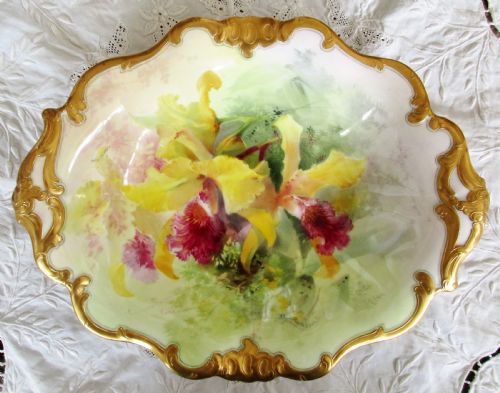
Quality rests upon the precision of the hand-painting, particularly in detailed botanical studies or narrative scenes signed by known artists. Crispness in the moulding of pierced rims, fan shapes, and twin handles distinguishes superior pieces from standard production.
The integration of metal mounts also defines the tier of craftsmanship, where finely chased ormolu or champlevé enamel mounts complement the porcelain body. Well-preserved gilding and vibrant enamel retention elevate the standing of a dish.
Royal Crown Derby·Royal Doulton·Royal Worcester·Helena Wolfsohn
The Decorative Porcelain Tray Glossary
- Imari
- A style of Japanese porcelain characterised by underglaze blue, iron red, and gold, which heavily influenced European factories. English makers readily adopted these rich palettes for serving dishes.
- Ormolu
- Gilded bronze used for mounts and decorative bases on nineteenth-century pieces. It provides a bright metallic contrast to the fired porcelain.
- Bone china
- A type of porcelain incorporating bone ash for added strength and whiteness. Many English cabinet dishes utilise this body.
- Champlevé
- An enamelling technique where troughs are carved into metal and filled with vitreous enamel before firing. It appears on mounts for French centrepieces.
- Cabinet dish
- An ornamental plate or tray intended for display in a cabinet rather than functional service. These often feature elaborate painted subjects.
Decorative Porcelain Tray: Frequently Asked Questions
How were decorative porcelain trays used?
These pieces served multiple functions, ranging from desk accessories and cabinet display items to serving dishes for fruit or dessert. Many were designed primarily to be shown in drawing rooms rather than used for daily dining.
Larger examples like centrepieces and platters graced dining tables on special occasions, while smaller trays held visiting cards or inkwells.
What periods do these trays come from?
The selection spans from the eighteenth century through to the early twentieth century, taking in the Georgian, Victorian, and Edwardian eras. The nineteenth century yields a particularly high volume of French and English pieces.
Stylistic shifts trace a path from classical hand-painted florals to elaborate Rococo Revival forms and Japanese-inspired Imari patterns.
How do I identify a painted fruit dish?
Twentieth-century and Victorian dessert dishes often feature detailed naturalistic fruit studies, sometimes signed by artists like David Dewsberry or R Sebright. These paintings display meticulous attention to shading and texture.
Matching the factory mark on the reverse helps confirm the provenance and date of the botanical or fruit composition.
What is the difference between Imari and Japanese Kutani?
Imari pieces typically feature a distinct palette of cobalt blue, iron red, and gilt, a style replicated by English factories such as Royal Crown Derby. Kutani wares often highlight peony motifs and gold platters originating from Japan.
Both styles influenced nineteenth-century European porcelain production significantly.