
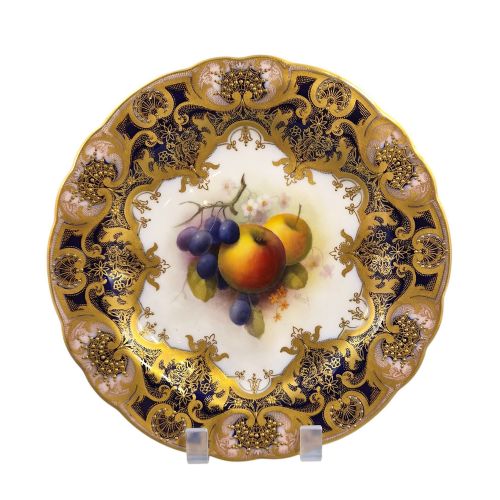
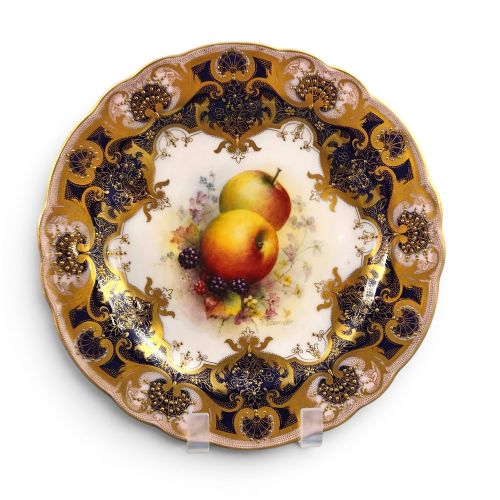
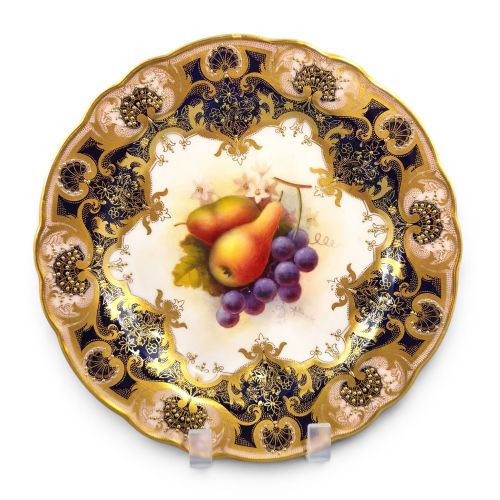
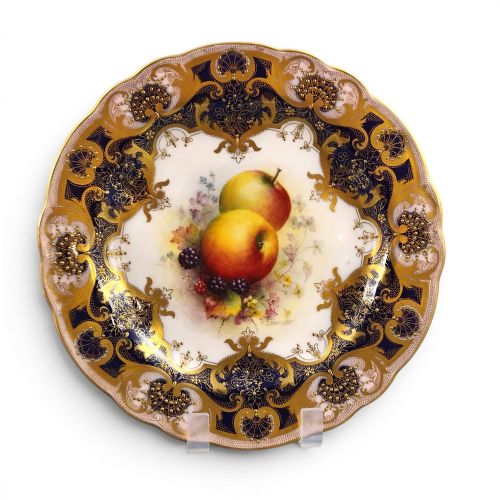


Decorative Porcelain Fruit Plate
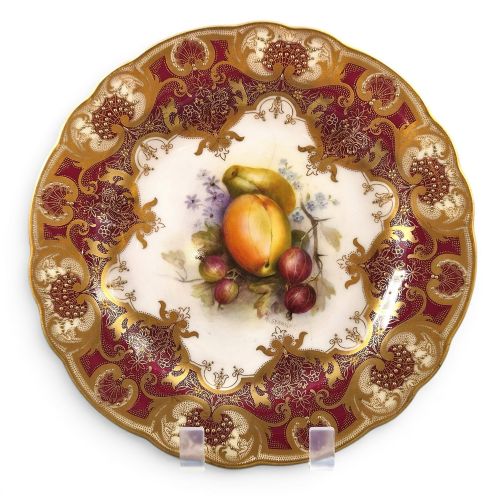
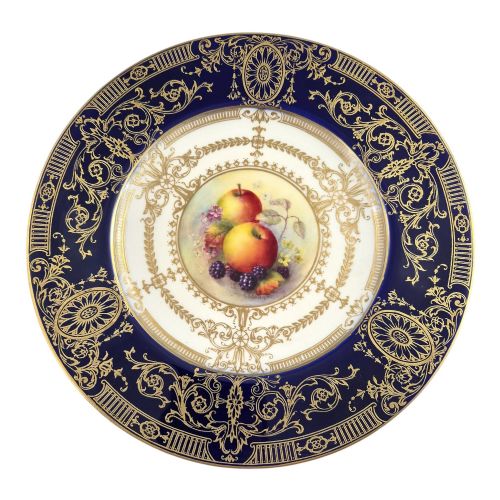
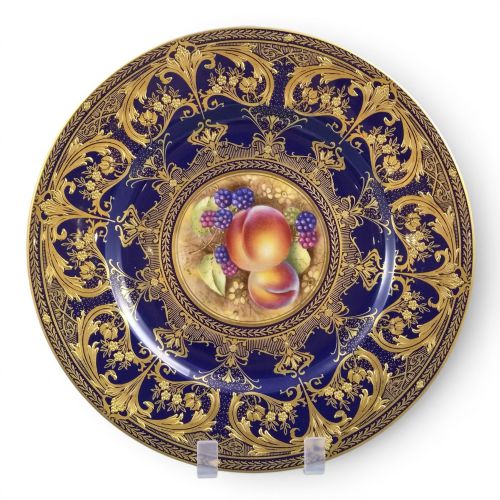
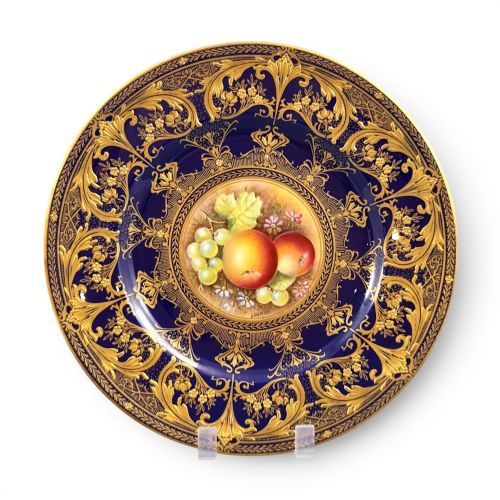
These decorative porcelain fruit plate examples bring hand-painted artistry to the table, offering a refined blend of botanical subjects and rich gilding that collectors prize.
Decorative Porcelain Fruit Plate
A decorative porcelain fruit plate functions as a visual centrepiece, originating from dessert services and cabinet displays rather than everyday dining. When searching for a decorative porcelain fruit plate, buyers encounter pieces intended for showcase display rather than heavy use.
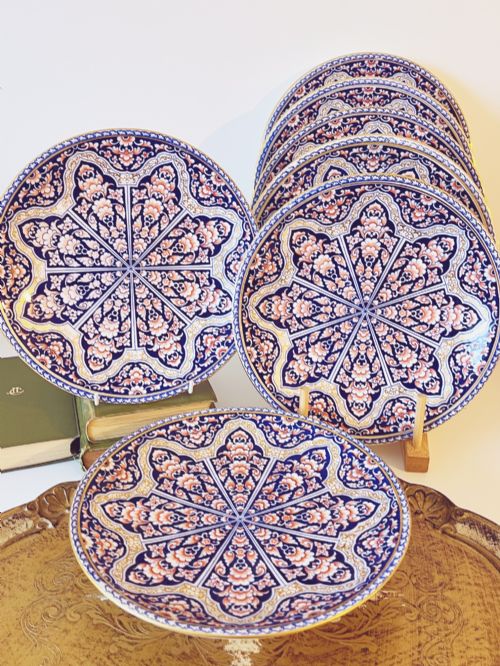
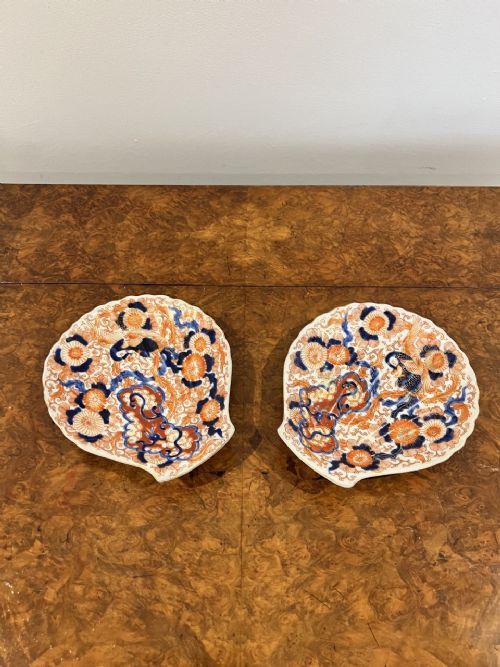
The selections span Victorian, Edwardian, and mid-twentieth-century periods, capturing styles from traditional English aesthetics to Art Deco and Victorian Imari. Forms range from individual cabinet dishes and large rope-edge plates to paired shell-shaped plates and matched dessert services.
Makers represented include Royal Worcester and Royal Doulton alongside Japanese Imari pieces, offering diverse regional interpretations of fruit and floral motifs. Most items arrive as cabinet plates or dessert service components designed to be displayed on stands or walls.
Materials and methods
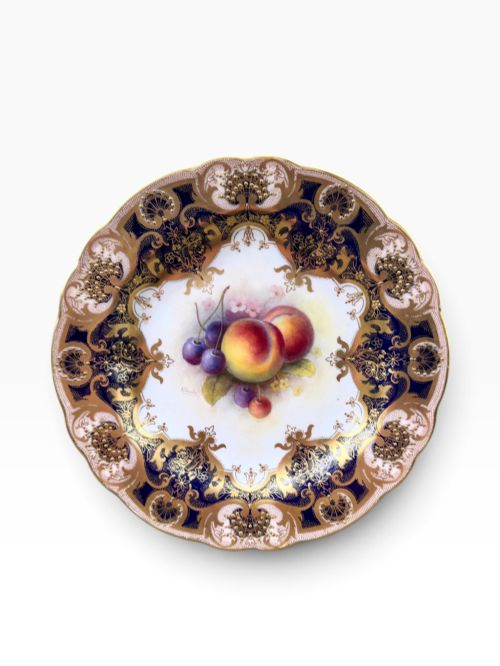
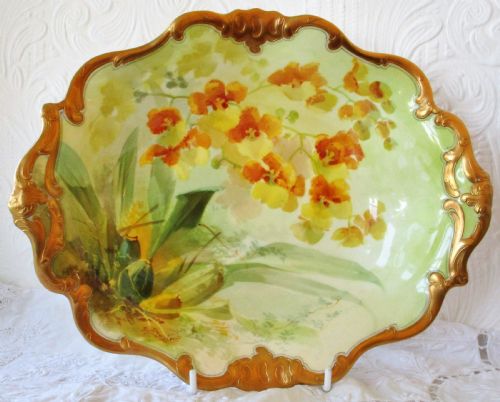
Makers utilised fine porcelain and bone china as the primary canvas, providing a smooth white surface suited for detailed brushwork. Artisans applied hand-painted enamel and paint to depict naturalistic fruit subjects with botanical precision.
Gilding, gold leaf, and gold gilding frame the central painted reserves, adding reflective highlights that complement the fired colours. Specific pieces feature moulded rope edges or shell-shaped forms shaped before glazing and firing.
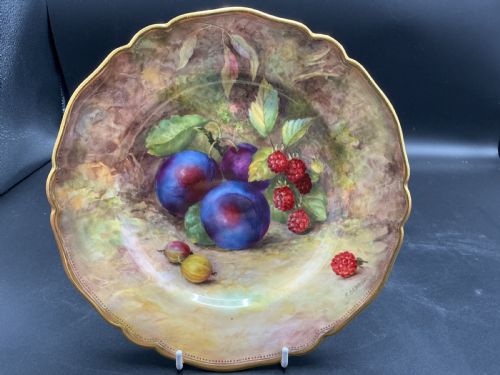
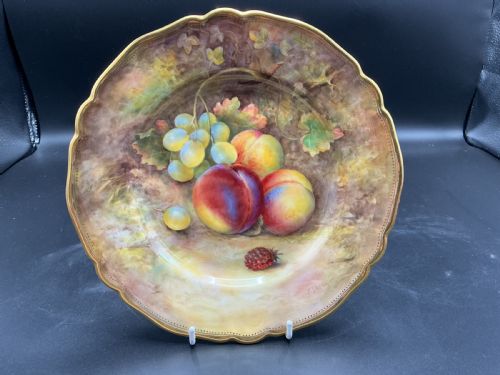
Several plates bear the signatures of notable painters who spent decades immortalising peaches and plums in porcelain.
Markers of distinction
The skill of the painter dictates the upper tier of the range, visible in the depth of the fruit, the shading of the leaves, and the subtlety of the background wash. Master artists executed compositions that capture light and texture with remarkable fidelity.
The application of gold leaf and gilding varies from simple borders to heavy, chased, and burnished gold framing that requires expert kiln work. The clarity of the porcelain body and the crispness of date or maker marks also influence the standing of each piece.
Royal Worcester·Royal Doulton·Royal Crown Derby
The Decorative Porcelain Fruit Plate Glossary
- Cabinet plate
- A decorative plate intended for display in a cabinet or on a wall rather than for practical dining use. These items often feature elaborate hand-painted scenes and rich gilding.
- Dessert service
- A matched set of plates and serving pieces, such as comports, created for the final course of a formal meal. Services frequently include multiple fruit plates sharing a unified decorative theme.
- Gilding
- The application of gold leaf or gold paint to ceramic surfaces to create metallic decorative borders and accents. Skilled artisans burnish this gold to achieve a bright finish.
- Imari
- A style of ceramic decoration originating in Japan, characterised by a palette of underglaze blue, iron red, and gold. Victorian adaptations of this style appear in British porcelain production.
- Enamel
- Opaque glass-like material fused to the porcelain surface through firing to impart vibrant, permanent colour. Enamel pigments hold their hue securely over decades.
Decorative Porcelain Fruit Plate: Frequently Asked Questions
How do I display a cabinet plate safely?
Use a secure wall hanger or a dedicated cabinet stand designed specifically for heavy porcelain plates. Ensure the mounting device supports the rim firmly without putting pressure on the painted centre.
Keep display locations away from direct sunlight to protect the hand-painted enamel colours from fading over time. Regular dusting with a soft, dry cloth keeps the surface clean.
Can I use these plates for serving food?
Most of these pieces function as cabinet plates or display items meant for visual appreciation rather than functional dining. The delicate hand-painted surfaces and heavy gilding are vulnerable to cutlery marks and frequent washing.
If a piece belongs to an assembled dessert service, it remains advisable to treat it as decorative art. Hand washing in lukewarm water with mild soap is necessary if cleaning ever becomes required.
How do I identify the date of a piece?
Examine the underside for printed or impressed factory marks, which often include specific date codes or cyphers unique to the manufacturer. Royal Worcester and Royal Crown Derby utilised systematic marking systems that indicate the year of production.
Stylistic clues such as Edwardian Neo-Rococo scrollwork or Art Deco geometric framing also help narrow down the era of manufacture.
What is the difference between bone china and porcelain?
Bone china incorporates bone ash into the traditional ceramic paste, resulting in a lighter, slightly translucent body with a warm white tone. Standard porcelain relies on kaolin and petuntse, yielding a denser and whiter structure.
Both materials served as premium bases for hand-painted fruit decoration during the Victorian and Edwardian periods.