

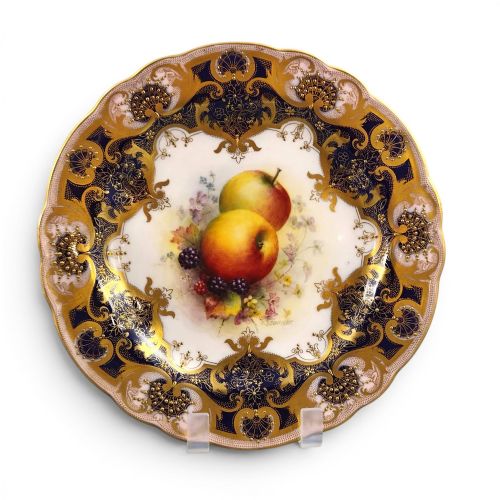


Hand Painted Fruit Study
A hand painted fruit study brings rich colour and botanical exactness to a room, showing lush orchard harvests rendered in fine porcelain.
Hand Painted Fruit Study
A hand painted fruit study captures apples, peaches, grapes, and berries with striking realism across various decorative forms. When someone searches for a hand painted fruit study, they find intricately decorated cabinet plates, vases, trays, and wall pictures.
The pieces on this page span several decades, originating from the Victorian era through the Edwardian period, Art Deco, and into the mid-twentieth century. English traditional styles dominate, produced primarily on porcelain and bone china bodies.
Forms range from large cabinet plates and bowls down to small cream jugs and coffee cups. Wall art also appears, offering framed painted fruit studies for display.
How they were made
Makers utilised fine porcelain and bone china as the canvas for detailed brushwork depicting natural subjects. Artists applied multiple layers of paint to build depth and texture within each fruit study.
Many examples incorporate gold leaf, gilding, and gilt accents to frame the central painted motifs. Rope edges and elaborate borders often complement the fruit imagery.
Hand Painted Fruit Study Retail Price Guide 2026
Typical asking prices for hand painted fruit study among the pieces listed under this phrase on Sellingantiques today, from the lower quarter to the upper quarter. They describe what is for sale here now, not the wider market.
Artists occasionally painted tiny caterpillars or hidden blemishes on the fruit to prove the realism of the study.
What varies in quality
The precision of the brushwork and the realism of the fruit dictate the standing of a piece. Skilled artists captured natural bruising, bloom on grapes, and light reflection with notable accuracy.
The richness of the gilding and the complexity of the porcelain blank also influence distinction. Items featuring signed artistry from known painters generally command greater attention from collectors.
Royal Worcester·Albert Shuck·Richard Sebright·P Love·Price·Ricketts
The Hand Painted Fruit Study Glossary
- Cabinet plate
- A decorative plate intended for display in a cabinet rather than for dining. These often feature elaborate painted scenes and gilded borders.
- Bone china
- A type of porcelain containing bone ash, known for high strength, chip resistance, and a milky white appearance. It provides a smooth surface for detailed painting.
- Gilding
- The application of gold leaf or gold paint to surfaces. This technique highlights rims, handles, and borders on ceramic pieces.
- Pot pourri vase
- A decorative vessel with a pierced lid designed to hold dried fragrant plant material. These often feature hand painted botanical or fruit motifs.
- Rope edge
- A moulded ceramic rim textured to resemble twisted rope. It frequently frames painted scenes on traditional plates and trays.
Hand Painted Fruit Study: Frequently Asked Questions
What are hand painted fruit studies?
These items are ceramic pieces and wall art decorated with detailed, realistic depictions of orchard fruit. Artists use fine brushes and mineral colours to render the subjects.
Most examples date from the Victorian era to the mid-twentieth century. They served as decorative items for wealthy households.
How do I display a cabinet plate?
Cabinet plates fit well mounted on walls using secure plate hangers or stood upright in display cabinets. Their detailed painted surfaces benefit from good lighting.
Keep them away from direct sunlight to protect the painted colours and gilding from fading over time.
How do I identify the artist?
Look closely at the painted surface for a signature, which is often written in script near the edge of the fruit study. Maker marks on the underside also help date the piece.
Reference books and maker databases match specific signatures to the painters working in British potteries.
Were these pieces used for dining?
Cabinet pieces and decorative bowls were meant for visual appreciation rather than daily use. Their delicate gilding and fine paintwork remain vulnerable to cutlery and washing.
Cream jugs and coffee cups offer functional forms, though many collectors still treat them as display items.