


Decorative Chinese Punch Bowl
These decorative chinese punch bowl pieces are generous porcelain vessels made for serving, carrying hand-painted motifs across centuries from the eighteenth onward.
Decorative Chinese Punch Bowl
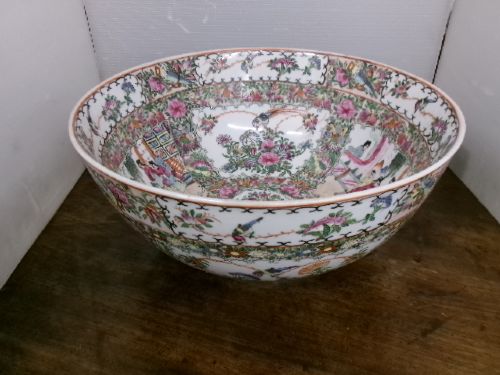
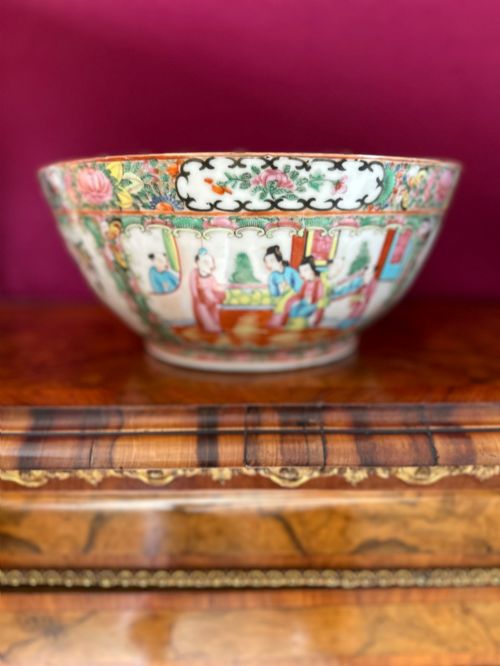
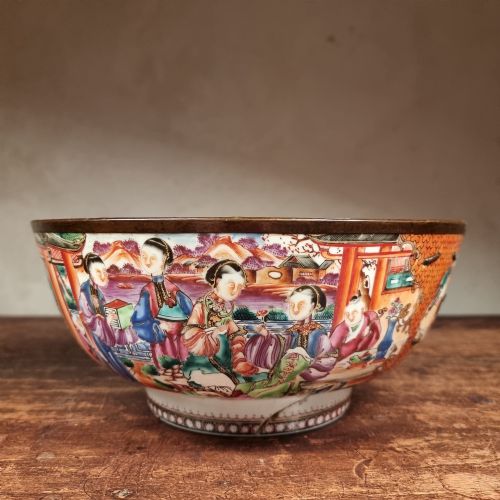
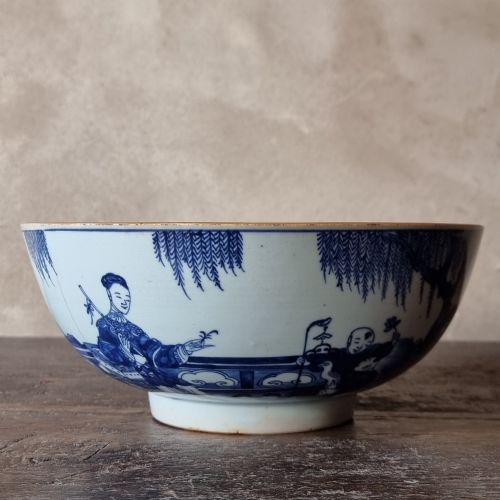
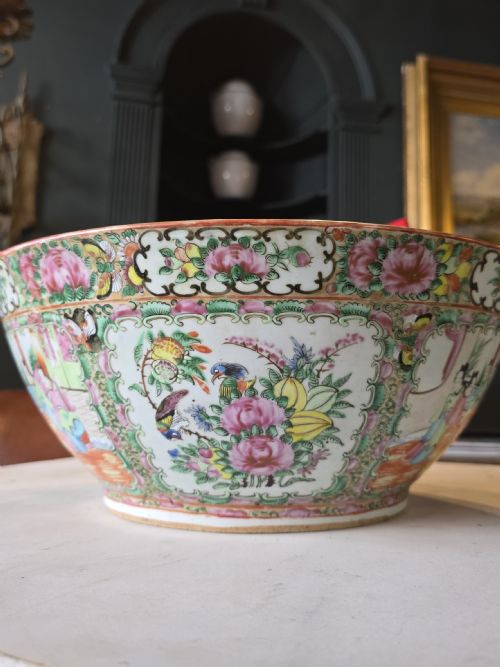
A decorative chinese punch bowl brings traditional form and hand-painted artistry to the table, appearing frequently in eighteenth-century and nineteenth-century periods. These vessels range from blue and white scholars porcelain to large Cantonese famille rose and rose medallion examples.
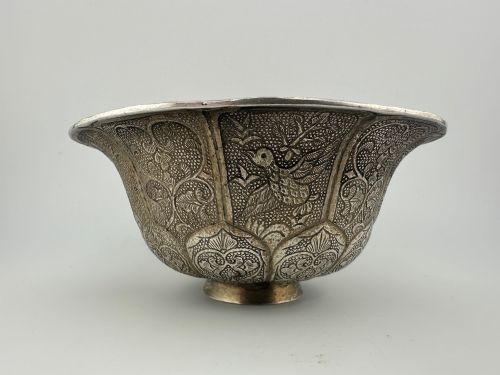
Most pieces seen here arrive as porcelain bowls, punch bowls, and decorative bowls originating from Chinese export and Qing dynasty traditions. Certain items include mounts in white metal or sit upon separate stands.
How they were made
Makers shaped these pieces from porcelain, applying cobalt glaze for blue and white designs or utilising overglaze enamel and polychrome pigments for intricate floral and figural scenes. Gilding and gilt highlights frequently enrich the surface details.
Some nineteenth-century export pieces incorporate white metal rims or mounts, reflecting the cross-cultural exchange of the period.
Listings span the eighteenth century, nineteenth century, and early twentieth century, incorporating porcelain, enamel, cobalt glaze, and white metal materials.
What varies in quality
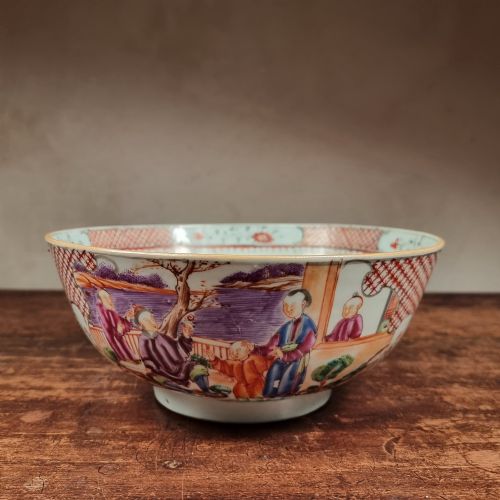
The distinction lies in the precision and density of the hand-painted brushwork, separating standard floral decoration from meticulously detailed mandarin and figural scenes. Early eighteenth-century examples display greater age and potting character compared to later nineteenth-century revival pieces.
The richness and preservation of the enamel colours and gilding dictate the visual impact of the bowl.
The Decorative Chinese Punch Bowl Glossary
- Famille Rose
- A palette of opaque pink and rose enamel colours introduced during the Qing dynasty. This technique allowed artists to create shaded floral and figural compositions.
- Chinese Export
- Porcelain manufactured in China specifically for Western markets. These pieces often combined traditional Chinese forms with European or American heraldic motifs.
- Cobalt Glaze
- A blue underglaze pigment applied directly to the porcelain body before firing. It produces deep blue motifs beneath a clear protective glaze.
- Rose Medallion
- A distinct decorative pattern featuring alternating panels of figures, birds, and flowers. The design is heavily gilded and filled with vibrant enamel colours.
- White Metal
- An alloy used for mounts, rims, or structural supports on certain export vessels. It provides durability and contrast to the porcelain body.
Decorative Chinese Punch Bowl: Frequently Asked Questions
How are these bowls dated?
Dating relies on stylistic evidence, including the specific palette of the enamel colours, the character of the hand-painted motifs, and the potting techniques characteristic of periods like the eighteenth century or the Victorian era.
Examining the foot ring and any wear to the cobalt glaze or gilding further helps determine the age of the porcelain.
Were these bowls used for punch?
These large porcelain vessels were traditionally manufactured for mixing and serving communal punch at gatherings, particularly during the eighteenth and nineteenth centuries in both China and Western export markets.
Their generous capacity made them central dining table pieces for festive occasions.
How should I display a punch bowl?
Displaying these pieces safely requires a stable surface that can support their substantial diameter and weight, such as a sturdy dining table, sideboard, or dedicated stand.
Keeping them away from direct foot traffic and heavy vibrations protects the porcelain and any delicate white metal mounts.
What is the difference between Canton and Famille Rose?
Cantonese porcelain generally refers to wares decorated in Canton using the famille rose palette, which is defined by its dominant pink enamel and rich polychrome floral or figural scenes.
Famille rose describes the specific pink enamel colour family itself, which can appear across various styles of Chinese export porcelain.