




Chinese Enamel Porcelain Bowl
When you search for a chinese enamel porcelain bowl, you enter a world of vibrant overglaze decoration spanning the Qing Dynasty and Victorian eras.
Chinese Enamel Porcelain Bowl
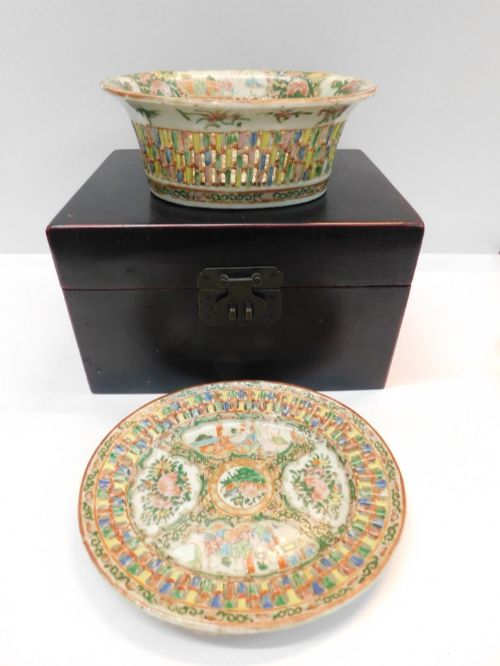
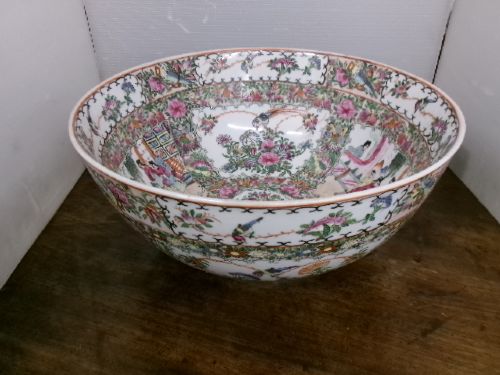
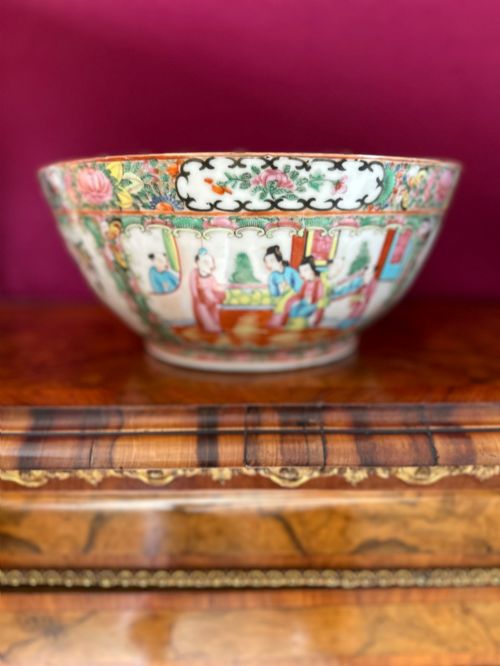
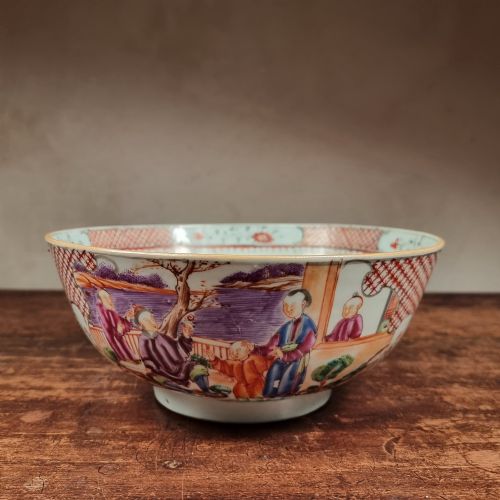
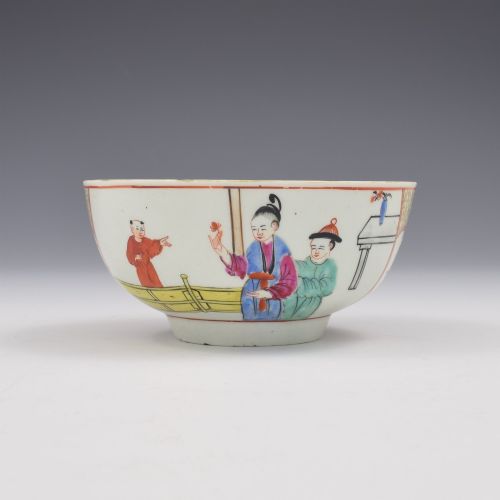
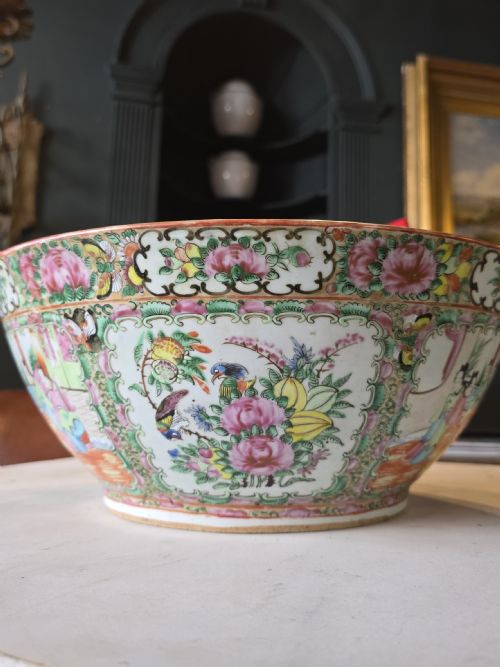
A chinese enamel porcelain bowl encompasses a variety of vessel types, ranging from large Canton punch bowls and pedestals to delicate eggshell tea bowls.
Most examples encountered on this page originate from the 18th and 19th centuries, reflecting the height of Qing Dynasty production and Chinese Export wares.
Forms include deep tableware, lobbed rectangular vessels, and jardinieres, alongside related dishes and saucers decorated in the Mandarin palette.
Materials and Techniques
Potters utilised porcelain and soft-paste porcelain as the primary ceramic body, shaped into bowls, dishes, and jars.
Decoration relied on overglaze enamel, gold leaf, and gilding, often applied by hand in intricate painted motifs depicting figures, flowers, and animals.
Object forms span punch bowls, tea bowls, jardinieres, and lobbed rectangular vessels.
Assessing Quality
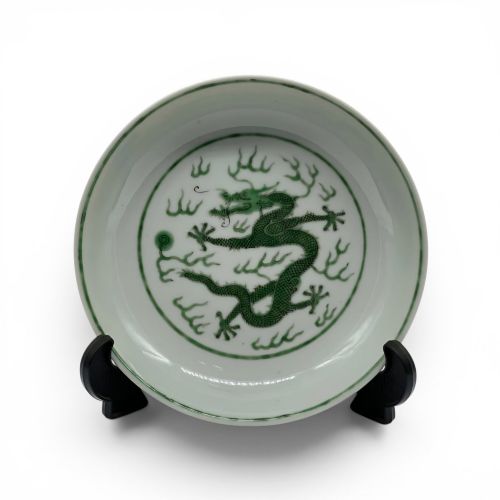
Quality depends on the precision of the hand-painted enamel work and the complexity of the design, such as detailed melon and butterfly scenes or imperial dragon motifs.
The refinement of the porcelain body, whether standard ceramic or fine eggshell porcelain, distinguishes standard tableware from imperial-style pieces.
The Chinese Enamel Porcelain Bowl Glossary
- Famille Rose
- A major palette of Chinese ceramic glazes featuring opaque pink or rose enamel, introduced during the Qing Dynasty.
- Canton
- A style of Chinese export porcelain heavily decorated with colourful figures and floral panels, produced for Western markets.
- Overglaze enamel
- A technique where coloured glass is painted on a previously fired and glazed porcelain surface before a second, lower-temperature firing.
- Soft-paste porcelain
- A type of ceramic body containing glassy ingredients that fire at a lower temperature than hard-paste porcelain.
- Qing Dynasty
- The final imperial dynasty of China, lasting from 1644 until 1912, known for prolific ceramic output.
Chinese Enamel Porcelain Bowl: Frequently Asked Questions
How do I date a chinese enamel porcelain bowl?
Dating relies on stylistic markers, reign marks, and historical periods such as the Qianlong or Guangxu eras. Examining the style of the overglaze enamel and the ceramic body helps place the vessel in the 18th or 19th century.
Changes in palette and brushwork over the decades provide further clues to the precise decade of manufacture.
What is the difference between Canton and Famille Rose?
Famille Rose refers to the pink enamel palette used across various Chinese ceramic styles, while Canton specifically denotes export porcelain decorated with distinct panel scenes of figures and flowers.
Many Canton pieces utilise the Famille Rose palette, creating an overlap in terminology used by collectors.
How were large punch bowls used historically?
Large punch bowls served communal gatherings, particularly during the 18th and 19th centuries when punch was a popular social drink.
Export pieces often travelled to European and British households specifically for display and hospitality during formal dining.
Are reign marks reliable indicators of age?
Imperial reign marks often name earlier emperors like Qianlong as a tribute to historical standards rather than indicating the actual year of production.
Context, material quality, and the character of the enamel work determine whether a piece belongs to the stated period or a later 19th-century revival.