





Decorative Bronze Pedestals
Decorative bronze pedestals bring classical weight to a room through cast metal vessels raised on marble bases.
Decorative Bronze Pedestals
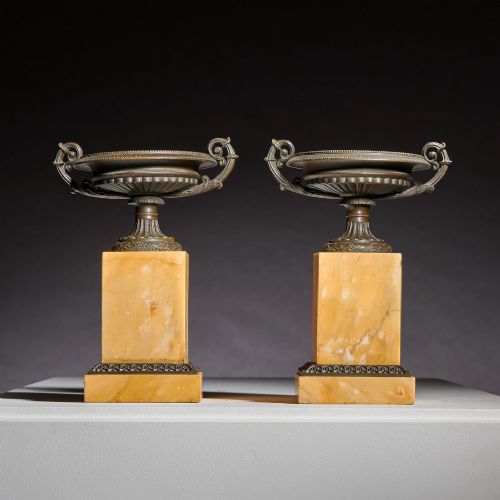
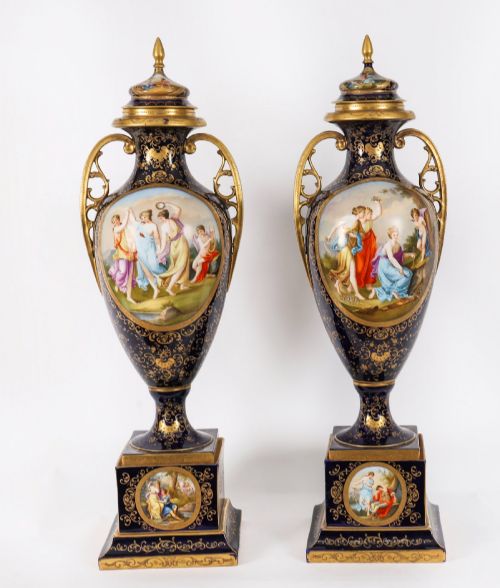
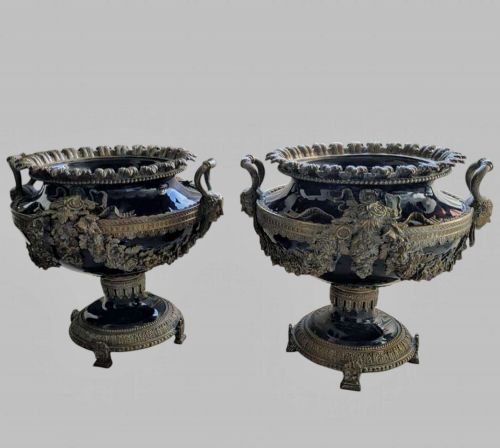
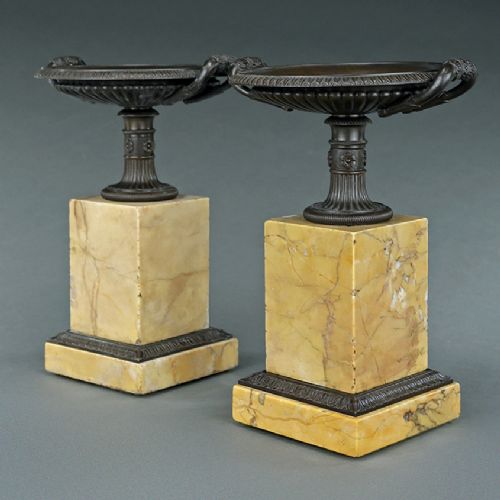
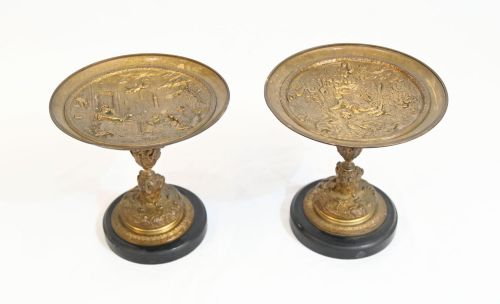
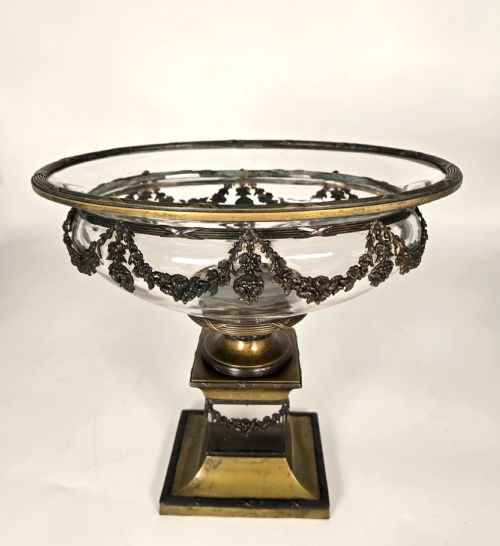
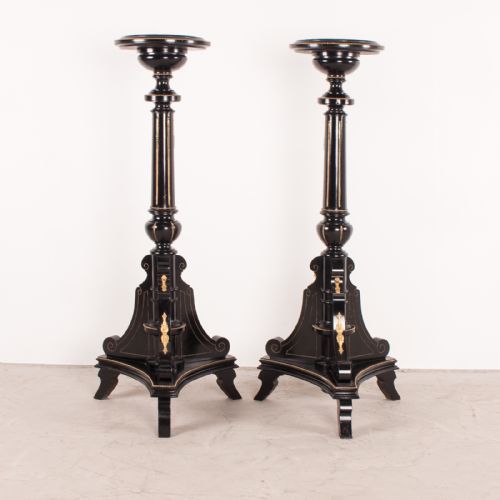
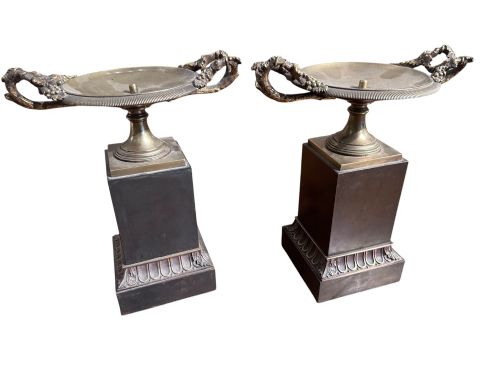
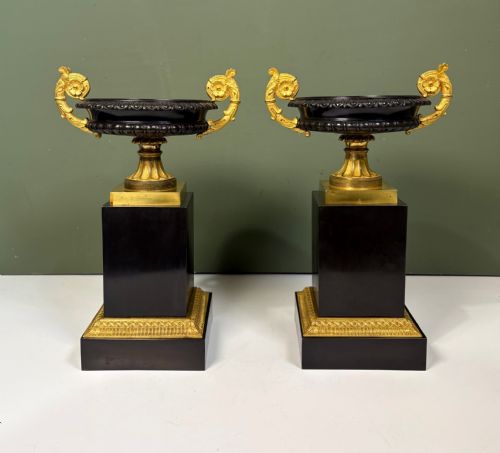
When searching for decorative bronze pedestals, collectors typically encounter nineteenth-century French and Italian pieces designed in the Neoclassical and Grand Tour traditions. These items frequently take the form of tazzas, campana urns, and coupes mounted on marble plinths or columnar supports.
The objects span the Victorian era, the Regency period, and the late nineteenth century, often appearing as matched pairs. Makers drew inspiration from classical antiquity, resulting in vessels intended for display on tables, mantelpieces, or dedicated stands rather than practical utility.
Materials and Technique
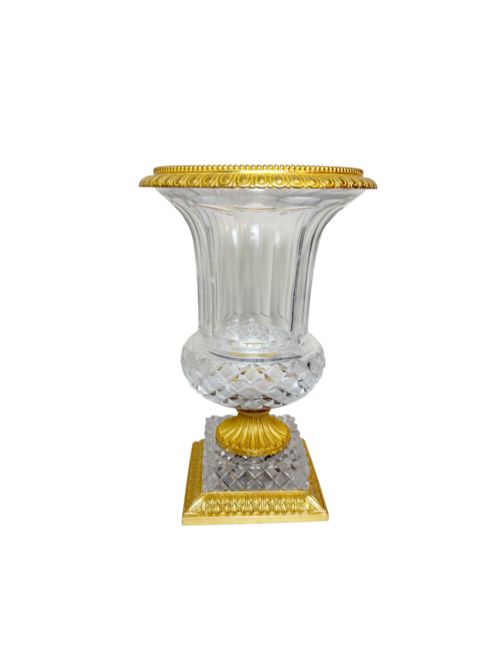
Foundries cast these pieces in bronze, brass, or spelter, frequently applying ormolu, gilt bronze, or silver plating to highlight raised decorative details. Patination ranges from deep brown and black to bright mercury gilding.
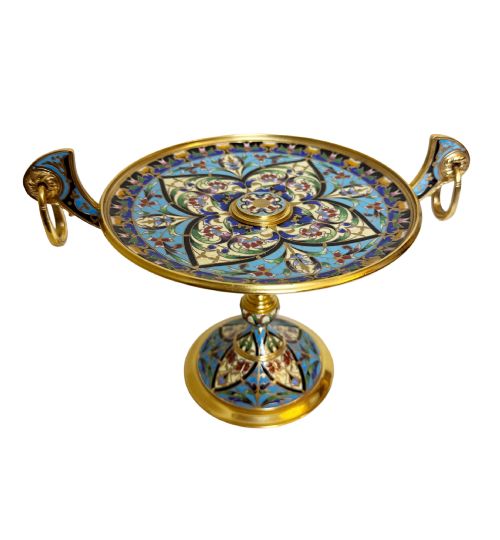
Casting is combined with natural stone elements, pairing bronze figures and bowls with bases carved from white marble, Siena marble, or black marble. Details such as agate cabochons, champleve enamel, and malachite inset work appear across the selection.
Decorative Bronze Pedestals Retail Price Guide 2026
Typical asking prices for decorative bronze pedestals among the pieces listed under this phrase on Sellingantiques today, from the lower quarter to the upper quarter. They describe what is for sale here now, not the wider market.
Listings feature nineteenth-century materials including Siena marble, malachite, and fire-gilt bronze.
Defining Quality
Superior examples demonstrate crisp chasing and precise hand-finishing on the cast metal surfaces, whereas inferior pieces rely on soft, mass-produced mouldings with indistinct relief. The integration between the bronze vessel and its marble pedestal reveals the standard of assembly.
The Decorative Bronze Pedestals Glossary
- Tazza
- A shallow bowl or cup mounted on a stem and foot, originating from classical drinking vessels and used primarily for decorative display.
- Ormolu
- Finely ground high-carat gold applied to a bronze base using a mercury amalgamation process, yielding a durable golden surface.
- Grand Tour
- A nineteenth-century tradition where travellers collected classical souvenirs, including bronze statues and miniature urns, during journeys through Italy and France.
- Campana Urn
- A bell-shaped vessel with a flared lip and foot, styled after ancient Roman garden vases and adapted for interior ornamentation.
- Champleve
- An enamelling technique where troughs are dug into a metal surface and filled with vitreous paste before firing.
Decorative Bronze Pedestals: Frequently Asked Questions
What is a tazza?
A tazza is an ornamental shallow bowl raised on a central stem and foot, functioning as a centrepiece or display vessel.
These pieces draw from classical forms and often feature cast bronze handles, classical figures, or inlaid hardstones.
What is Grand Tour bronze?
Grand Tour bronzes are nineteenth-century souvenirs modelled on classical antiquities encountered by travellers on educational journeys through Europe.
Italian and French workshops produced these miniature urns, tazzas, and architectural models for domestic display.
How do I identify ormolu?
Ormolu consists of a mercury-gilt coating applied to cast bronze, producing a warm golden tone that resists tarnishing over time.
Unlike modern electroplate, genuine ormolu displays a deep, soft lustre with hand-chiseled surface detailing.
Where were these pieces displayed?
Nineteenth-century interiors incorporated these bronze vessels on mantelpieces, side tables, and pedestals as focal points for formal rooms.
They served decorative purposes in libraries, drawing rooms, and cabinets of curiosity rather than dining use.