

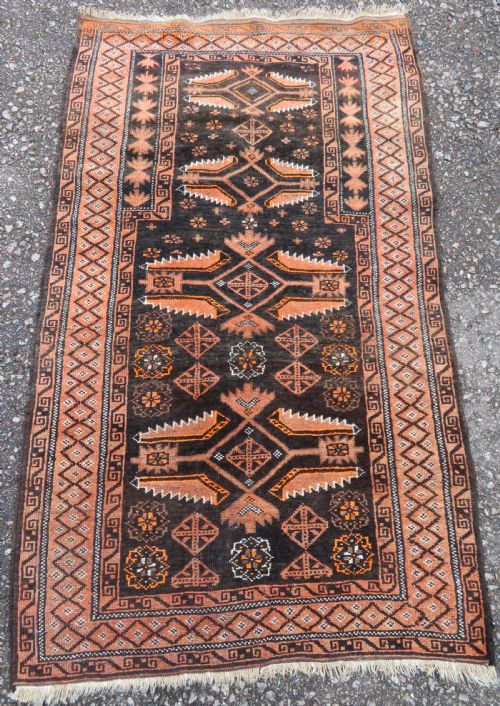
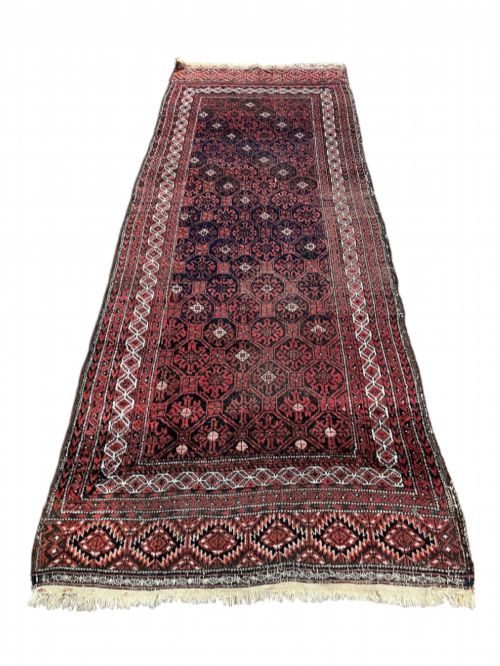
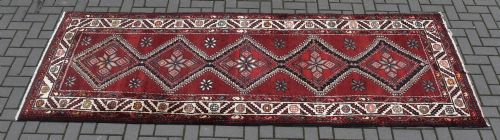

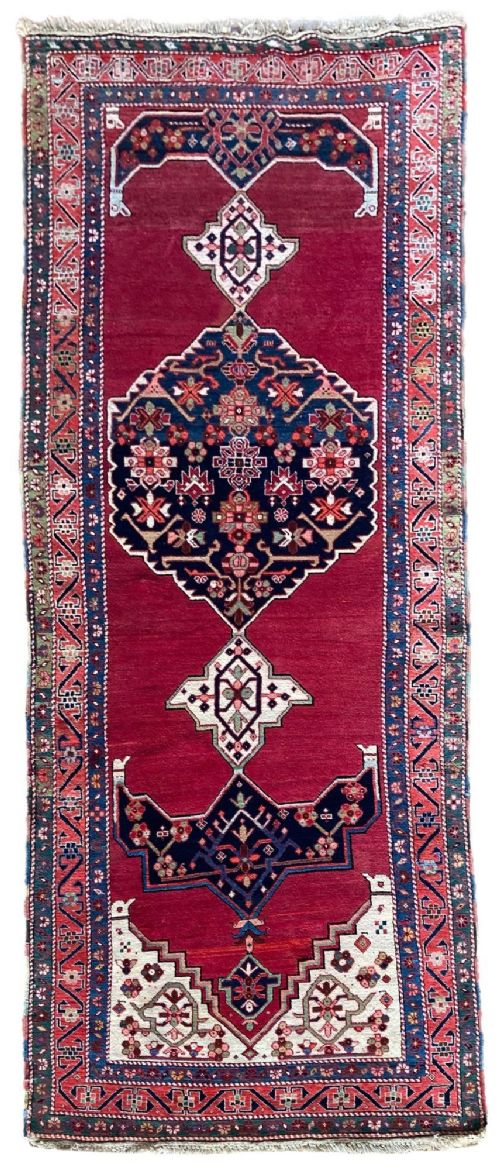


Dark Wool Runner Rug
A dark wool runner rug brings deep indigo and madder warmth to a narrow hallway through tribal knots and heavy hand-spun pile.
Dark Wool Runner Rug
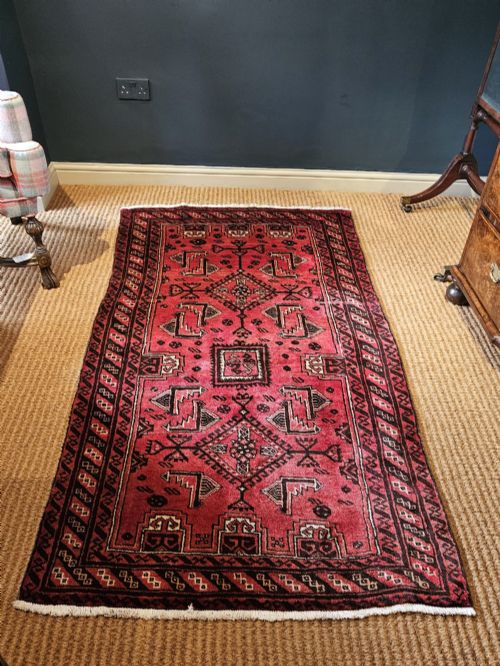
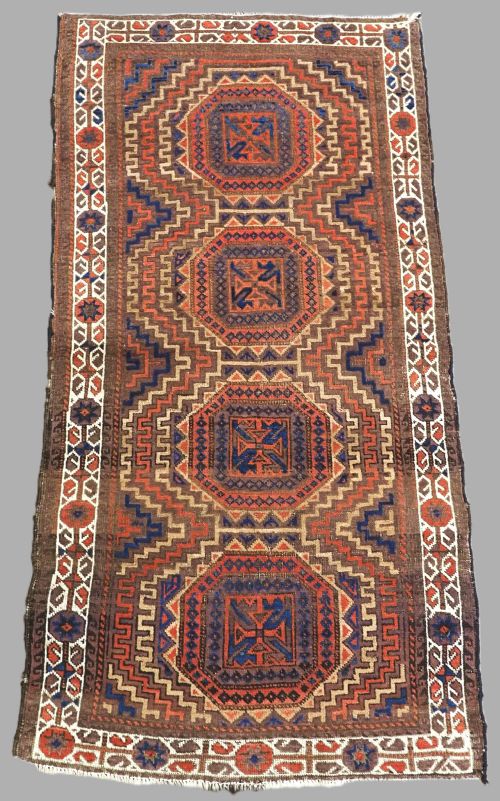
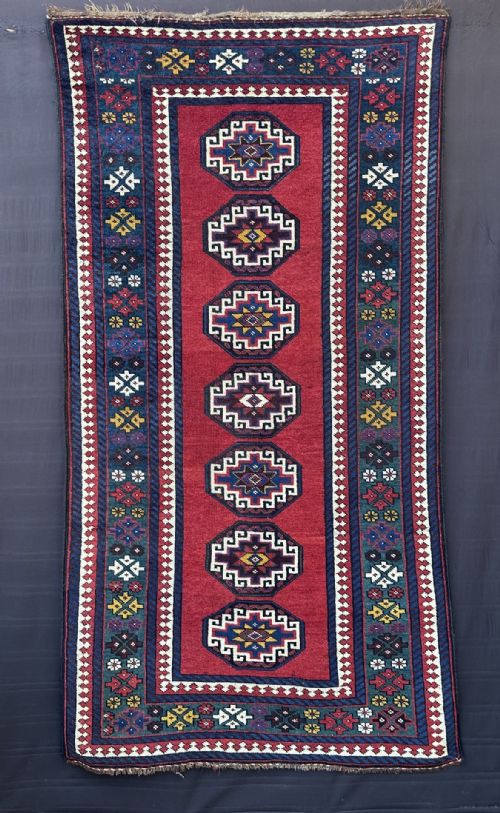
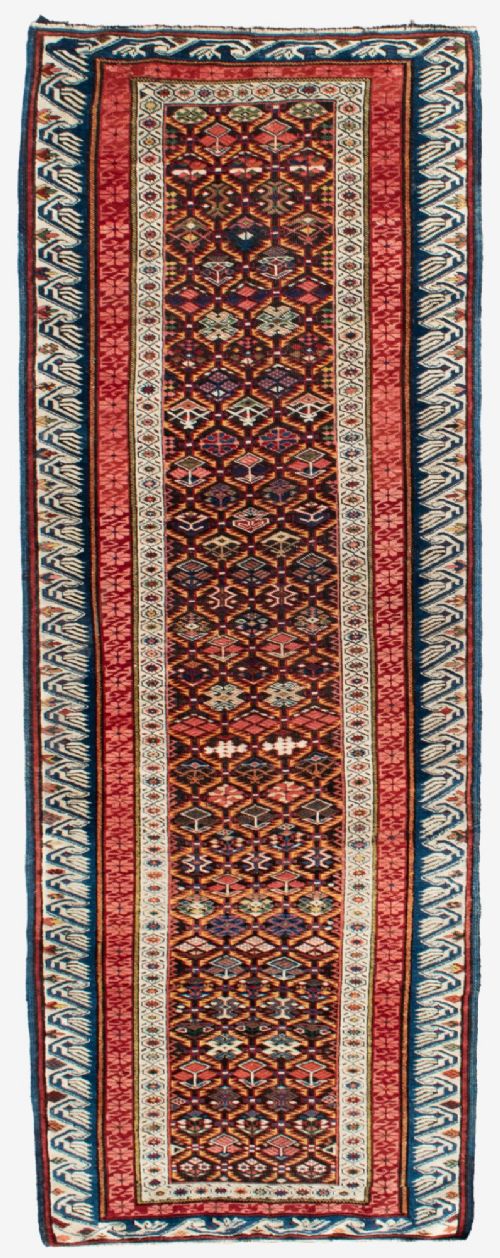
A dark wool runner rug spans nineteenth-century and early twentieth-century village and nomadic weaving traditions from Persia, Afghanistan, and the Caucasus. These narrow carpets take the form of elongated floor coverings designed for corridors, landings, and narrow spaces.
Tribal pieces dominate this selection, featuring styles such as Baluch, Afghan, Kurdish, and Caucasian village weaves. The most common iteration met on this page is the antique runner or long rug utilising heavy wool foundations and deep, saturated colour palettes.
Weavers constructed these long formats for practical utility in domestic settings, incorporating motifs like guls, prayer mihrabs, and geometric medallions. The resulting textiles provide durable floor coverings rooted in historic regional aesthetics.
Materials and Construction Methods
Constructed primarily from wool, hand-spun wool, and goat hair, these textiles rely on resilient natural animal fibres for both pile and foundation. Cotton occasionally appears in the warps and wefts of specific regional workshops, though village pieces favour sturdy wool throughout.
Natural dyes provide the deep tones characteristic of these pieces, utilising organic sources to achieve saturated reds, indigos, and dark browns. Hand-weaving techniques bind the wool pile firmly to the warp threads, creating dense structures designed to endure generations of foot traffic.
Assessing Quality and Execution
Quality rests upon the fineness of the knotting and the integrity of the wool. Tighter knots and heavier, well-prepared hand-spun wool produce a denser pile that retains its structural definition over decades of use.
The sophistication of the natural dye palette and the crispness of tribal motifs distinguish superior examples. Variations in dye saturation and the precision of geometric layouts separate standard village production from master-woven tribal pieces.
The Dark Wool Runner Rug Glossary
- Gul
- An octagonal or medallion motif frequently repeated across tribal carpets, especially those from Turkmen and Baluch traditions. This design element often serves as a primary identifier for specific regional weaving groups.
- Mihrab
- A niche design representing the prayer focal point, commonly found in Islamic prayer rugs and small format hangings. It guides the user in prayer and structures the central field composition.
- Kelleh
- A large format long rug with proportions narrower than a standard carpet but wider than a runner. These pieces traditionally occupied the sides of a larger room.
- Torba
- A small storage bag face produced by nomadic tribes, featuring decorative pile weaving on the front panel. Collectors prize these fragments for their concentrated design work.
- Warp
- The stationary vertical threads stretched onto a loom that form the structural skeleton of the textile. Weft threads pass horizontally through these foundational lines to secure the knots.
Dark Wool Runner Rug: Frequently Asked Questions
Where should I place a long runner rug?
These narrow formats suit hallways, corridors, and gallery spaces where floor protection and visual warmth are required.
The elongated dimensions bridge rooms while withstanding heavy daily movement along high-traffic passages.
How do I care for antique wool runners?
Regular gentle vacuuming without a beater bar removes embedded grit that cuts the pile fibres over time. Professional cleaning by specialists in antique textiles preserves the natural lanolin and dyes.
Rotating the piece periodically ensures even wear across high-traffic areas.
What defines a tribal rug style?
Tribal rugs emerge from nomadic or village communities working from memory and tradition rather than fixed cartoon patterns. Artisans incorporate regional motifs like geometric guls and stepped medallions.
These designs reflect the specific heritage of groups such as the Baluch, Kurds, and Afshar.
How do natural dyes age?
Natural dyes mellow gradually through exposure to light and air, developing a softer patina known as abrash. This subtle tonal variation adds depth to the wool surface.
Such dyes retain their rich undertones better than early synthetic alternatives.