

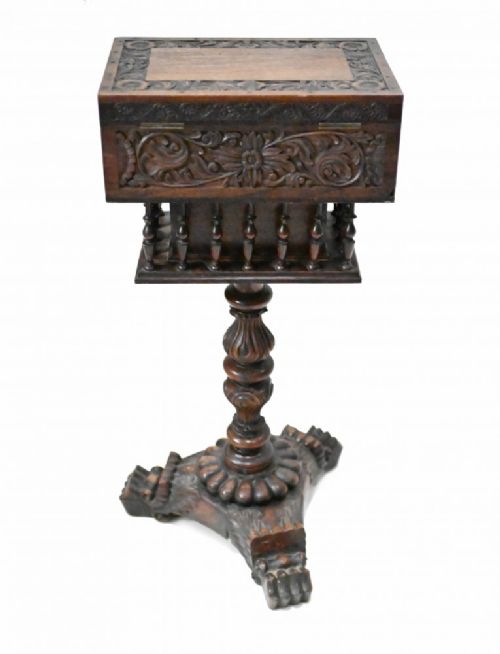


Dark Wood Tea Box
A dark wood tea box brings the tactile weight of Georgian and Regency craft into a room, holding dry leaf behind secure brass locks.
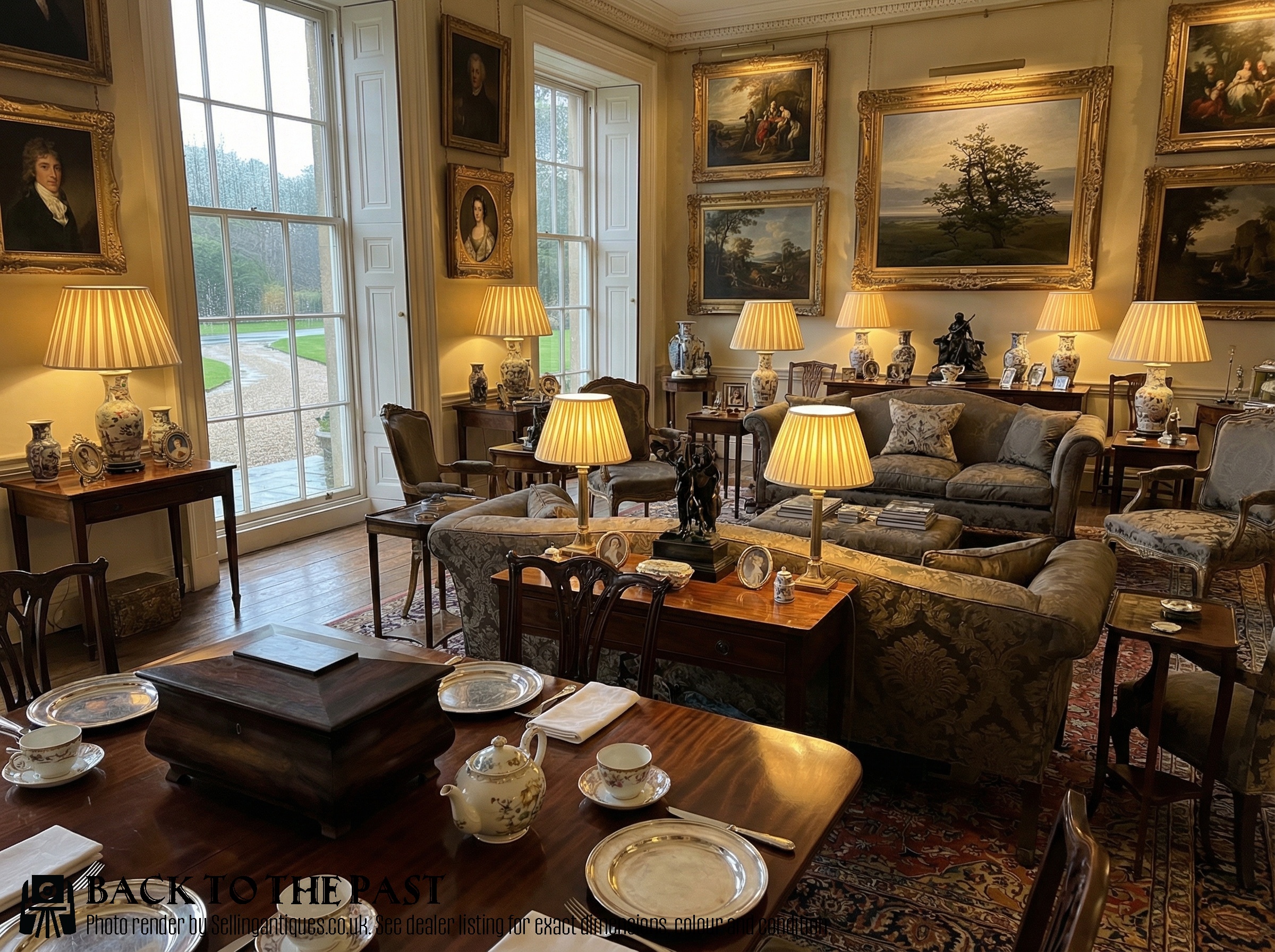
Dark Wood Tea Box
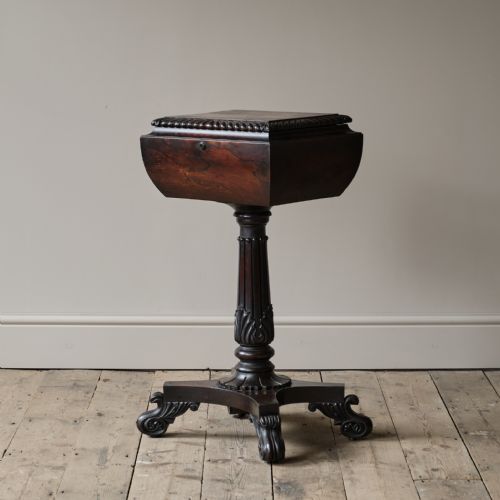
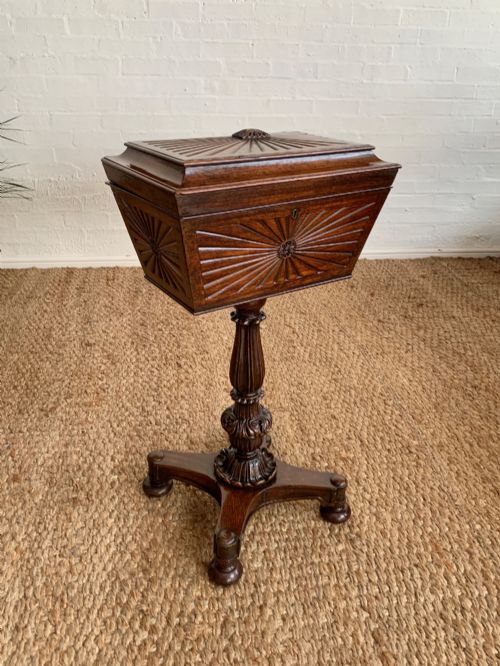
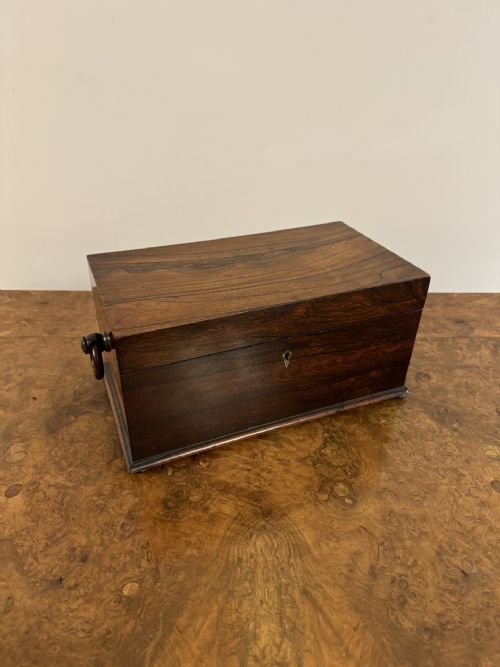
When you examine a dark wood tea box, you are looking at containers built to store and preserve costly tea leaves during the eighteenth and nineteenth centuries. The examples on this page span the Georgian, Regency, William IV, and Victorian periods, taking forms from tabletop caddies to freestanding teapoys.
Rosewood and mahogany dominate the selection, often shaped into sarcophagus forms or rectangular boxes with fitted compartments inside. You will encounter tabletop caddies alongside larger teapoys resting on pedestals or stands.
The objects serve as miniature case furniture, showing the joinery and decorative ambition of their era in a compact scale.
How they were made
Cabinet makers built these boxes using dense timbers like rosewood, mahogany, and coromandel, often lining the interior compartments with thin secondary woods and foil. They applied decorative surfaces through brass inlay, parquetry in satinwood and boxwood, and intricate mosaic work.
Surfaces received hand-rubbed finishes that brought out the natural grain of the dark wood, while hardware such as lion mask handles and escutcheons were cast in brass and secured with small screws.
Dark Wood Tea Box Retail Price Guide 2026
Typical asking prices for dark wood tea box among the pieces listed under this phrase on Sellingantiques today, from the lower quarter to the upper quarter. They describe what is for sale here now, not the wider market.
Many survive with tiny working brass keys that still lock the tea away from midnight nibblers.
What varies in quality
The distinction between ordinary and exceptional pieces lies in the precision of the cabinet work and the ambition of the ornamentation. Fine boxes display tight mitred joints, perfectly flush brass stringing, and balanced wood grain selection across the lid and sides.
The Dark Wood Tea Box Glossary
- Teapoy
- A small stand or table designed specifically to hold tea caddies, often featuring a storage box on a pillar or four legs. They became popular during the Regency period for use in drawing rooms.
- Sarcophagus
- A box form with a sloping or domed lid reminiscent of a stone coffin, favoured by Regency and Victorian cabinet makers for tea caddies and work boxes.
- Stringing
- A narrow line of contrasting wood or metal inlay used to outline the edges and panels of a box. It requires steady hand-cutting to set flush into the primary timber.
- Parquetry
- Geometric patterns formed by fitting small pieces of veneered wood together on a surface. Satinwood and boxwood frequently provided the lighter contrast against dark rosewood grounds.
Dark Wood Tea Box: Frequently Asked Questions
What is the difference between a tea caddy and a teapoy?
A tea caddy is a tabletop box designed to hold loose tea leaves in internal compartments. It can be picked up and moved easily.
A teapoy is typically a larger piece of furniture featuring a box mounted on a central pillar with feet, or upon a dedicated stand.
How were these boxes used originally?
Tea was a valuable commodity in the Georgian and Victorian eras, kept under lock and key by the head of the household. The box protected the leaves from moisture and pilfering.
Inside, lidded canisters kept green and black teas separate, alongside a central glass bowl used for blending leaves before brewing.
How do I tell a Regency box from a Victorian one?
Regency boxes often feature crisp brass inlay, bold rosewood grain, and architectural sarcophagus shapes reflecting classical design influences. They date roughly from the early nineteenth century.
Victorian examples tend to incorporate heavier mouldings, differing internal layouts, and sometimes specialised decoration such as Tunbridge Ware mosaic panels.
Can I still use a dark wood tea box for storage today?
These boxes function well for organising small keepsakes, jewellery, or stationery on a desk or dressing table. The interior compartments suit modern trinkets just as well as historical ones.
Care should be taken to keep them away from direct heat sources and strong sunlight to protect the aged wood and polish.