

Dark Wood Table Mirror
A dark wood table mirror brings warmth and practicality to any room, offering polished timber frames and adjustable glass.
What these pieces are
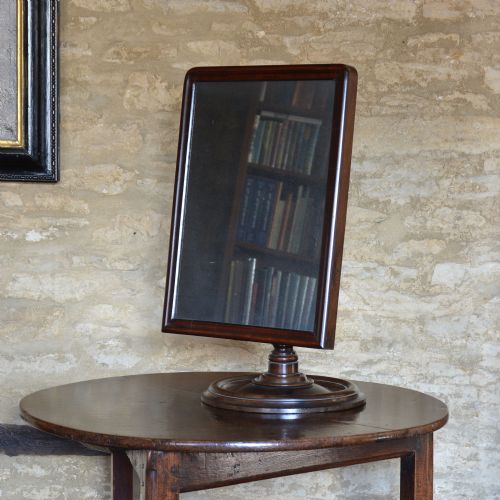
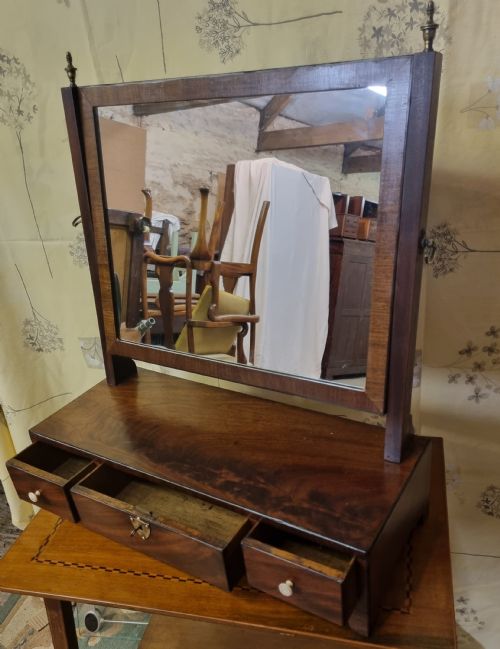
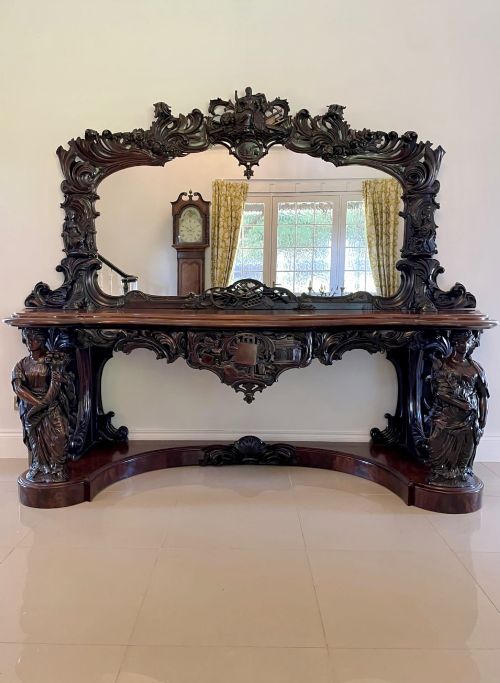
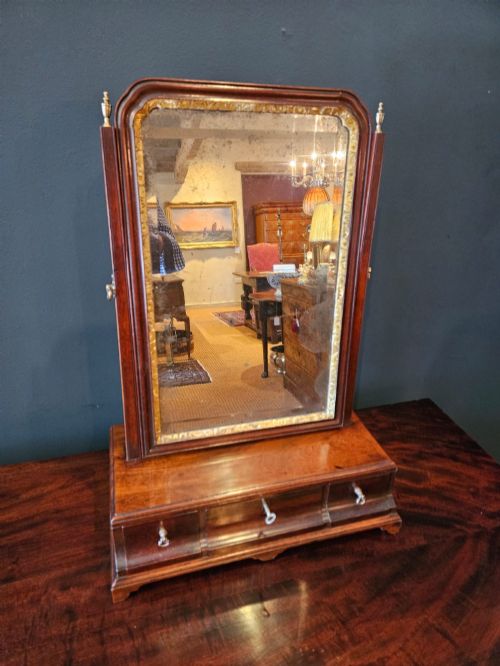
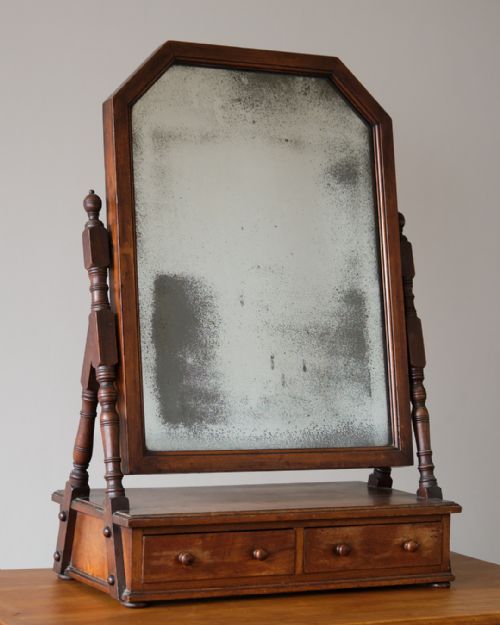
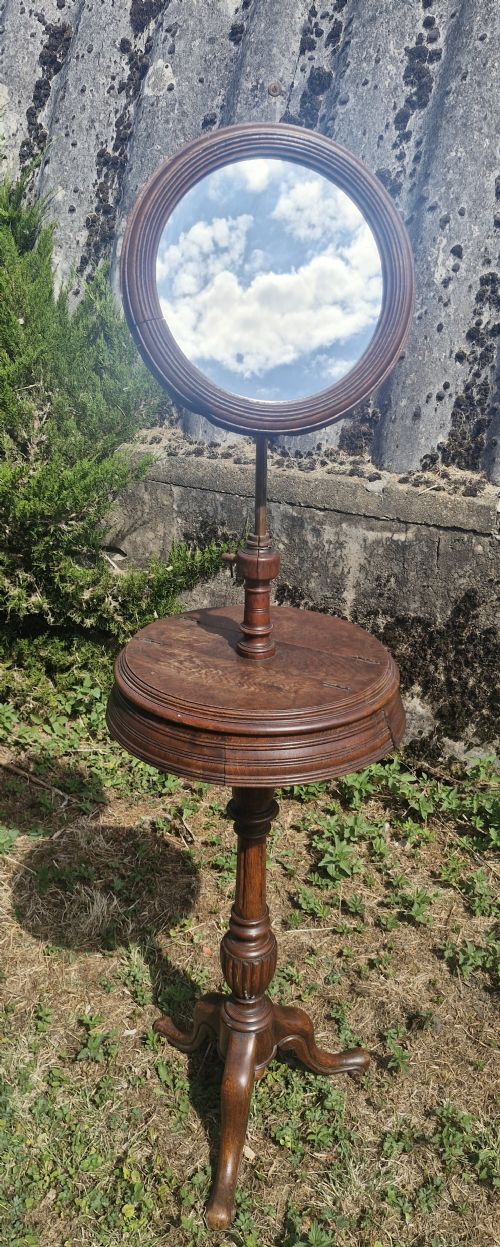
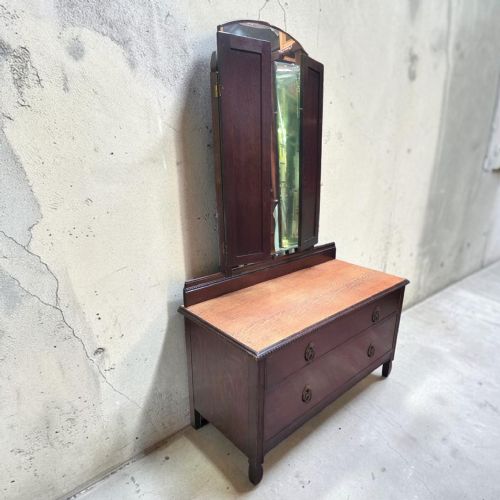
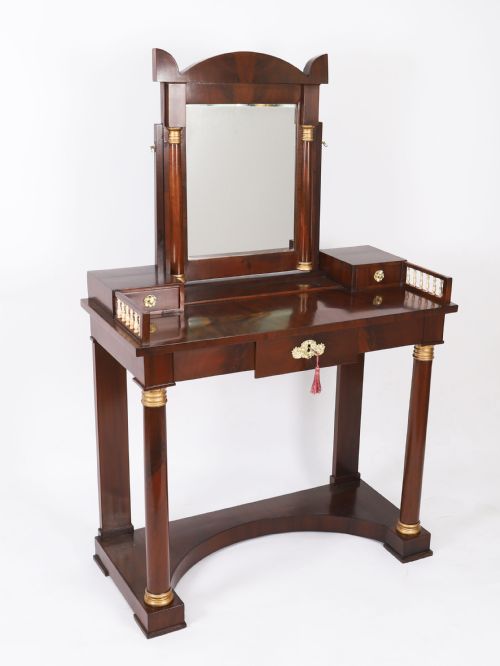
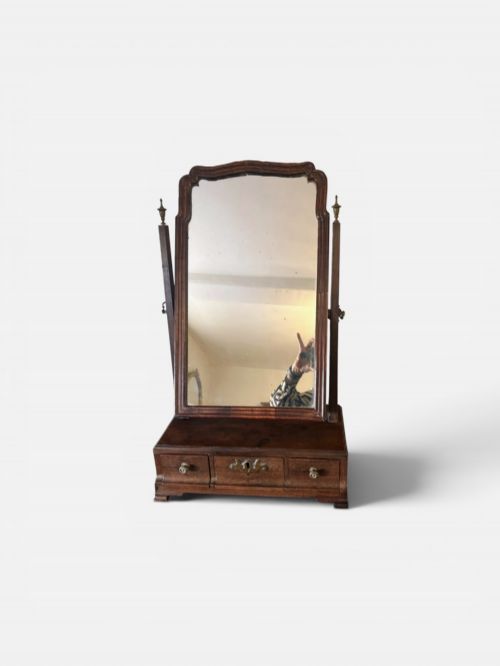
A dark wood table mirror sits upon a chest or dressing table, providing a movable glass surface for daily grooming. These pieces range from compact toilet mirrors to larger swivel designs.
You meet examples spanning the seventeenth century through to the Victorian era and the Arts and Crafts movement. Mahogany, walnut and various hardwoods dominate the selection.
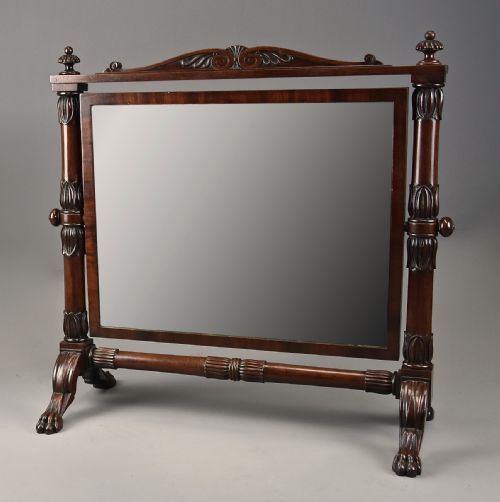
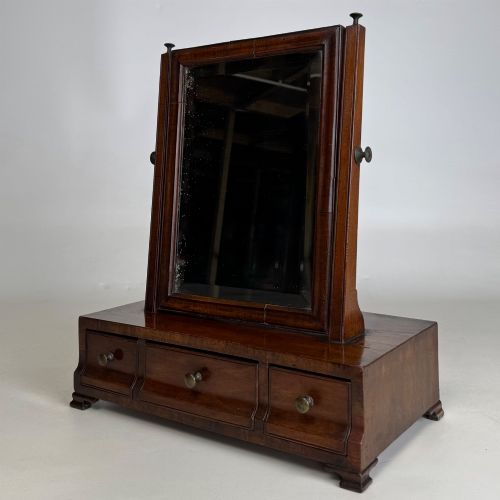
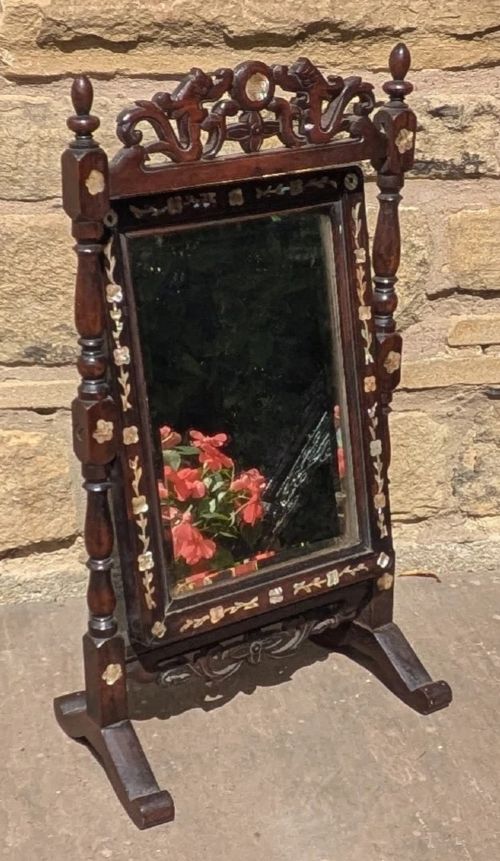
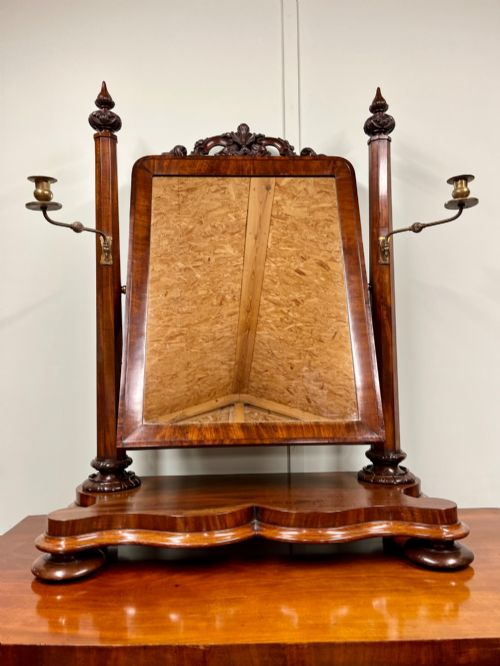
Forms include classic swing mirrors on box bases, inlaid cheval mirrors and specialised shaving glasses. Each style reflects the craftsmanship of its period, from Georgian symmetry to nineteenth-century utility.
How they were made
Joiners utilised dense timbers such as mahogany, walnut and ebony to construct sturdy frames and supporting pedestals. Boxwood and mother-of-pearl often provided delicate contrasting inlay work.
Mirrors incorporated brass pivots, hinges and candle sconces to allow tilting of the glass. Silvered copper combined with wood in later Arts and Crafts interpretations.
Retail Price Guide 2026
Typical UK retail prices for dark wood table mirror, calculated from the Sellingantiques database of over a million retail prices indexed since 2003. This retail price guide relies exclusively on Sellingantiques data; no external sources or auction records are used, so the figures do not describe the wider market.
Some mirrors feature stylised honesty seed pods made from silvered copper.
What varies in quality
Quality rests in the selection of timber grain and the precision of the joinery rather than mere age. Finely figured mahogany and intricate boxwood stringing elevate a piece above standard workshop production.
The sophistication of the hardware, including original brass turning knobs and weighted swing arms, separates superior examples from ordinary utilitarian items.
Gillows
The Dark Wood Table Mirror Glossary
- Toilet mirror
- A small mirror designed to stand on a dressing table or chest of drawers. These often feature small drawers within the base.
- Cheval mirror
- A full-length mirror suspended in a frame that allows it to swing freely. The evidence shows an inlaid hardwood version from the Qing dynasty.
- Stringing
- A narrow inlay of contrasting wood, such as boxwood, used to outline panels and drawers. It adds delicate linear detail to darker timbers.
- Swing mirror
- A glass plate hung on pivots within vertical uprights, enabling the user to tilt the angle. This mechanism sits atop a stable base.
Frequently Asked Questions
Where should I place a table mirror?
Position your mirror on a sturdy chest of drawers, dressing table or sideboard where the height allows comfortable use.
Ensure the surface is level so the swing mechanism functions smoothly without slipping.
How do I date an antique mirror?
Examine the timber species, construction methods and inlay styles against known historical periods. Georgian pieces often feature mahogany with fine stringing, whereas seventeenth-century examples utilise walnut and boxwood.
Hardware such as brass screws and pivot nuts also offer clues to the manufacturing decade.
Can I adjust the mirror angle?
Most table mirrors use side pivots or screws that connect the frame to the upright arms. Tightening or loosening these fittings controls the resistance of the swing movement.
Take care not to force seized brass fittings without applying appropriate lubrication.
What woods were used?
Cabinetmakers relied on durable dark timbers including mahogany, walnut and dense hardwoods. Contrasting details were achieved using boxwood, ebony and mother-of-pearl inlay.
Secondary woods of lesser visibility were often employed for internal drawer construction.