
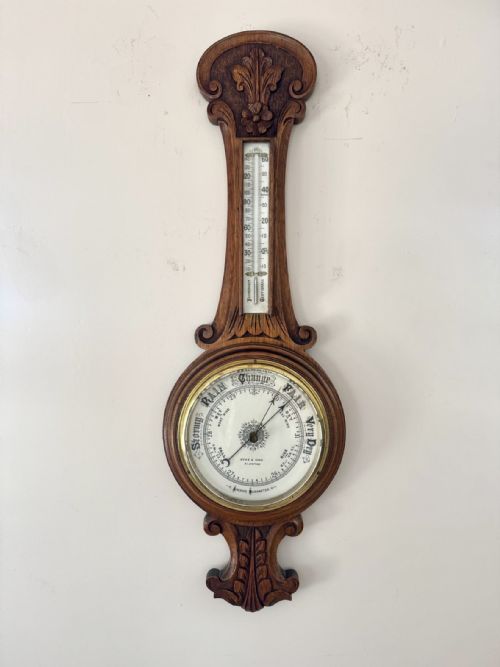
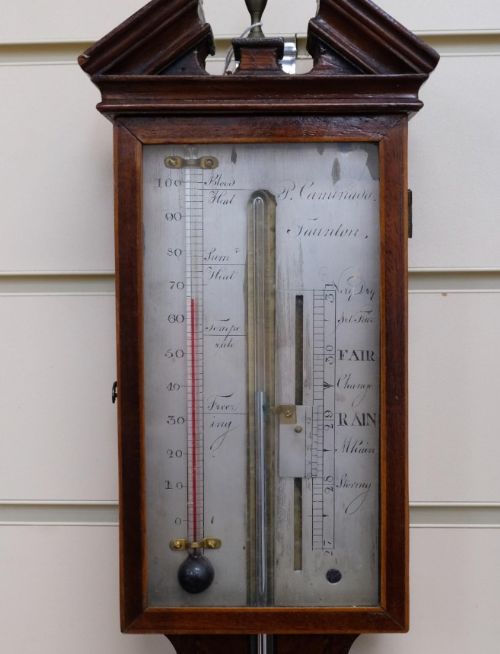

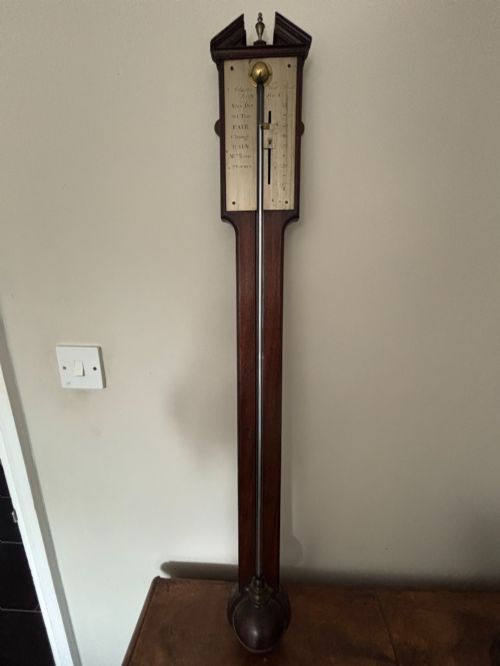
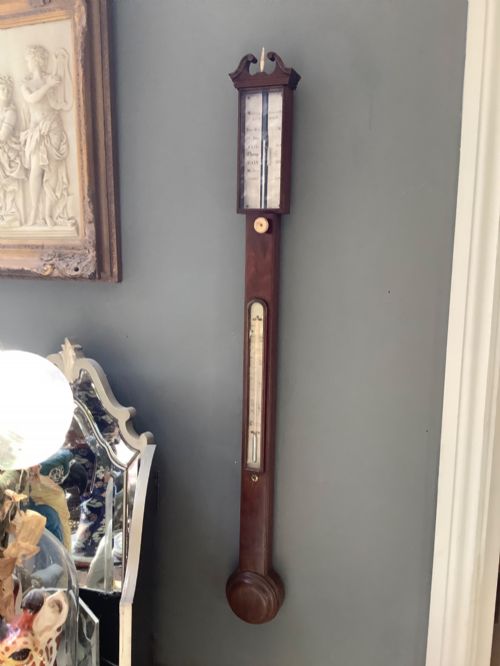


Dark Wood Stick Barometer
A dark wood stick barometer brings precision instrument-making into a room, recording atmospheric pressure with straightforward architectural dignity.
Dark Wood Stick Barometer
A dark wood stick barometer is a tall, slender weather instrument housed in timber cases of mahogany, oak, walnut, or rosewood. When you search for this phrase, you are looking for vertical instruments designed to hang on a wall or stand in a hallway, tracking mercury or aneroid pressure changes.
The versions you are most likely to meet on this page hail from the Georgian, Regency, and Victorian periods. These pieces range from simple domestic indicators to refined scientific instruments signed by makers in London and provincial towns.
What varies in quality
The distinction between standard and exceptional pieces lies in the fidelity of the maker's signature and the crispness of the brass scale engraving. Prominent instrument makers utilised finer graduations and superior optical glass.
Cabinetwork quality separates ordinary workshop output from master production, shown in the selection of figured mahogany or walnut veneers and the integrity of the original cistern cover.
Periods represented span from the early eighteenth century through the Georgian, Regency, and Victorian eras to nineteen-hundred.
George Adams London·Negretti & Zambra London·Dollond of London·Alexander Wright
The Dark Wood Stick Barometer Glossary
- Stick barometer
- A vertical weather glass that measures atmospheric pressure through a column of mercury visible in a long tube.
- Silvered brass
- A brass dial plate treated with a silver compound to create a bright, legible surface for engraved numbers and weather descriptions.
- Cistern
- The reservoir at the base of the barometer tube that holds the reserve mercury exposed to atmospheric pressure.
- Vernier scale
- A small auxiliary sliding scale that allows the user to read barometric pressure measurements with greater precision.
- Aneroid barometer
- A weather instrument that measures pressure using a flexible metal capsule rather than liquid mercury.
Dark Wood Stick Barometer: Frequently Asked Questions
How do I read a stick barometer?
You read the height of the mercury column against the engraved scale, using the sliding vernier to pinpoint fractions of an inch. Rising levels indicate improving weather while falling columns point towards rain.
Compare the current reading with the previous position to determine the atmospheric trend over recent hours.
Where should I hang a stick barometer?
Mount the instrument on an interior wall away from direct sunlight, radiators, and heavy draughts. Stable indoor temperatures ensure the internal mechanism responds accurately to barometric shifts.
Ensure the wall fixing supports the full vertical weight securely, as these tall instruments require stable backing.
Are these barometers filled with mercury?
Many traditional examples on this page contain original mercury columns within their sealed glass tubes. Handle the instruments with care to avoid disturbing the sensitive liquid column.
Certain later Victorian examples utilise aneroid movements instead of liquid columns, operating without mercury.
How do I date a dark wood stick barometer?
Examine the timber species, case profile, and style of the engraved brass dial plate. Georgian and Regency pieces often feature architectural pediments and distinct signature styles.
Signatures on the scale plate often link directly to recorded working dates of London and provincial instrument makers.