






Glass Mercury Barometer
A glass mercury barometer brings atmospheric precision into domestic spaces through refined woodwork and sensitive mercurial columns.
Glass Mercury Barometer
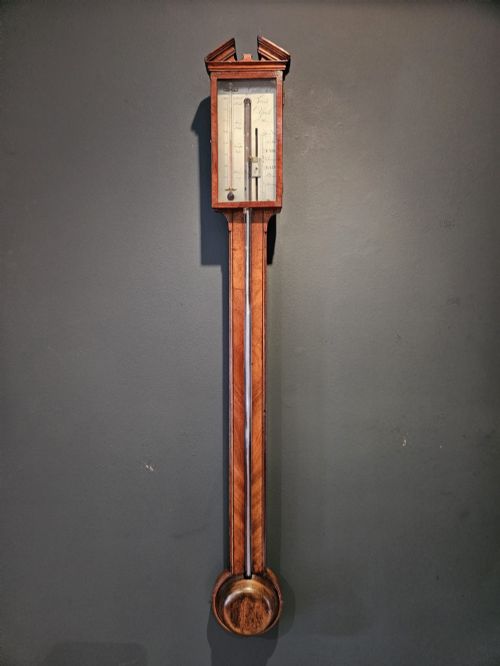
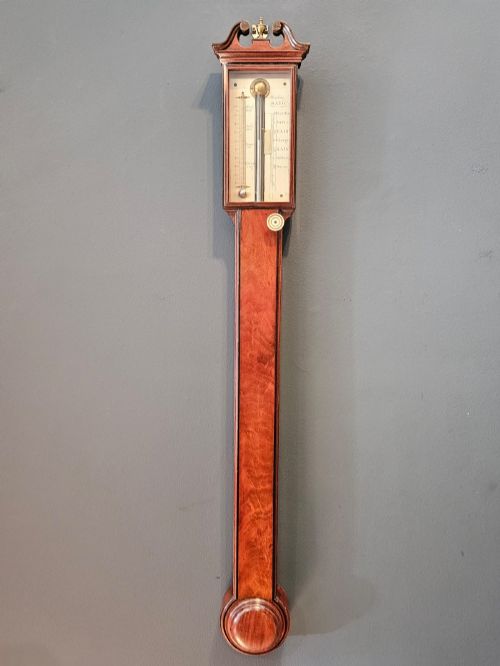
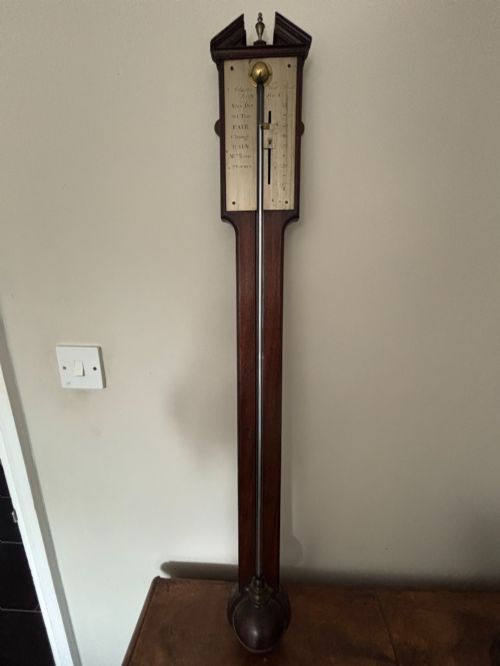
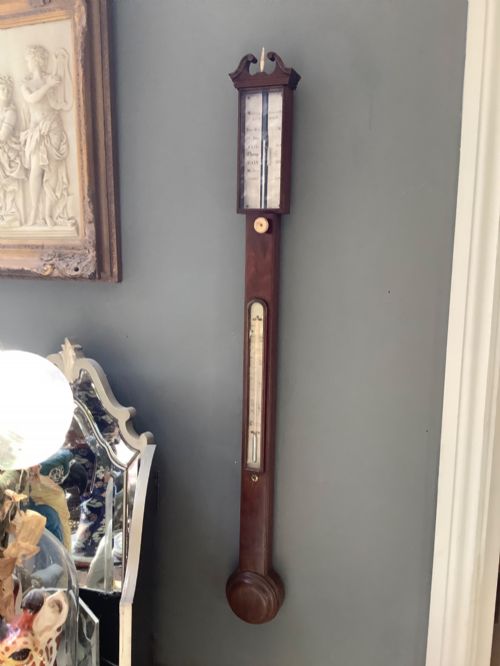
A glass mercury barometer tracks atmospheric pressure changes to indicate impending weather variations within residential interiors. These instruments emerge primarily in stick and wheel forms, housed in timber cases suited to period parlours and hallways.
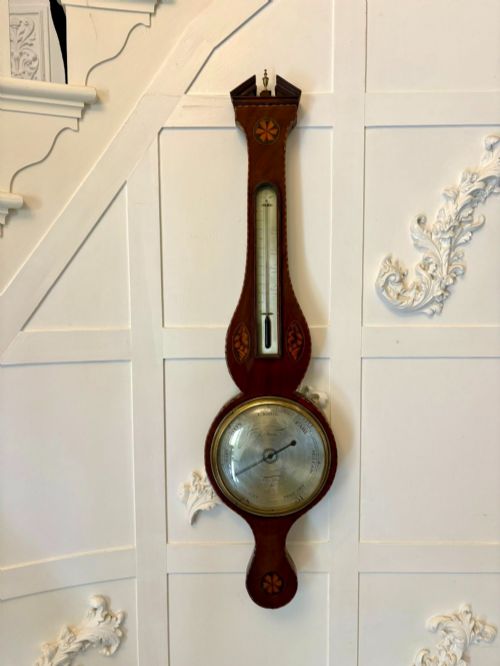
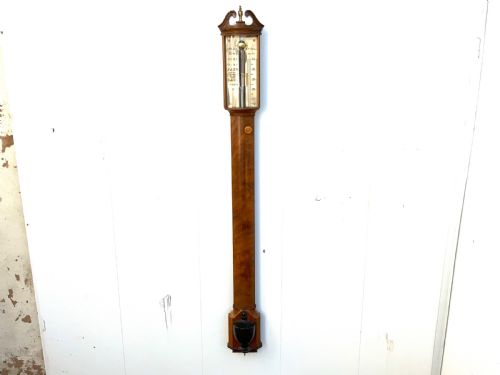
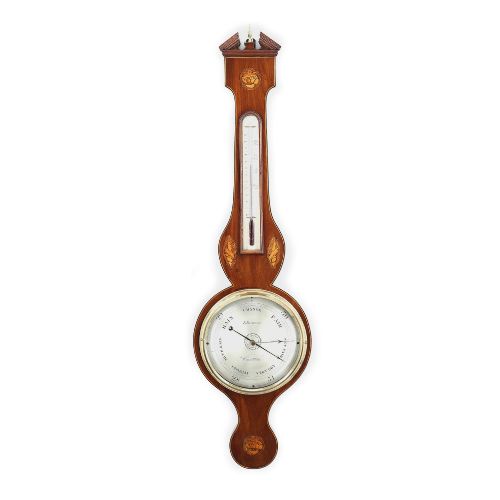
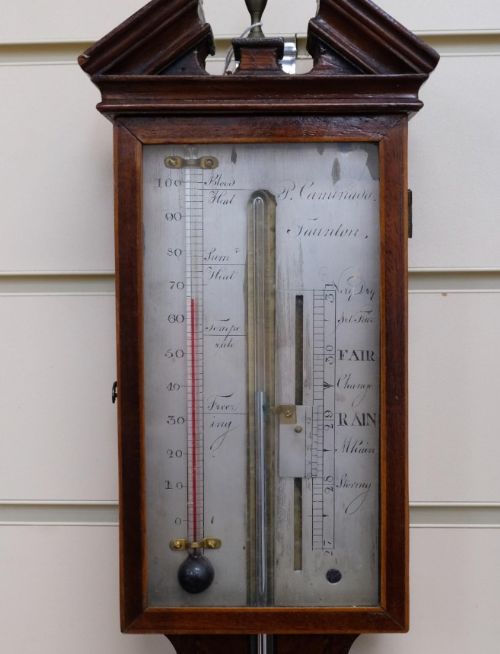
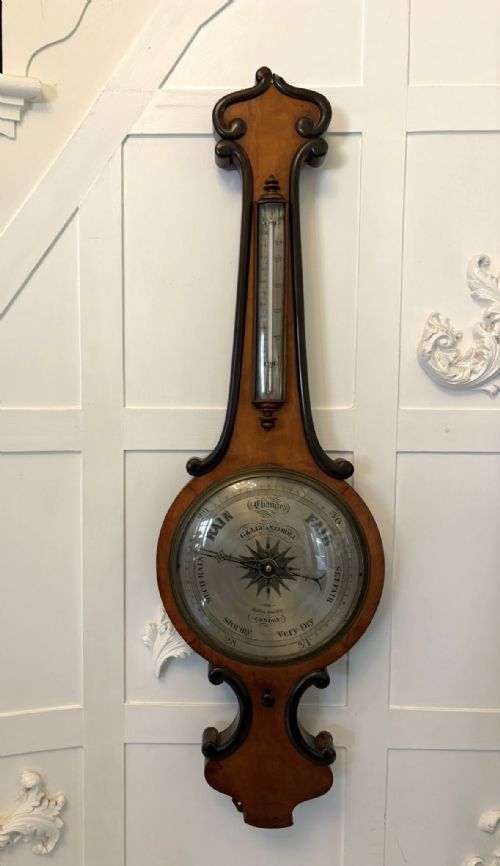
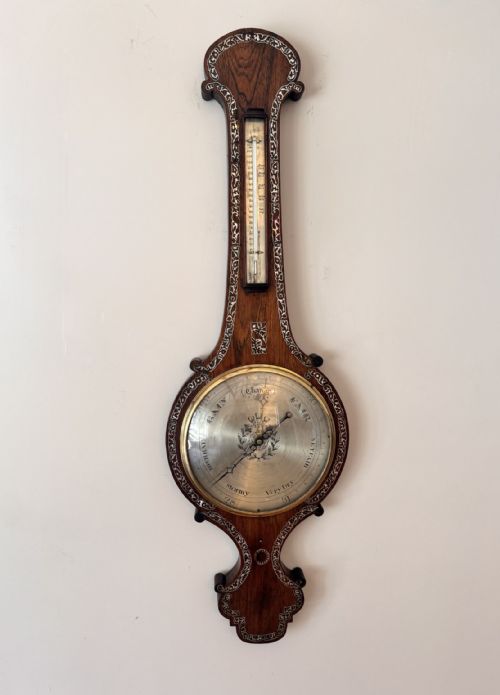
The most frequent encounter on this page is the Georgian or Victorian mahogany stick barometer, displaying a tall vertical column alongside a silvered scale. Buyers also encounter wheel or banjo variants incorporating dials, mirrors, and auxiliary thermometers.
Origins span provincial English workshops to notable London makers, with dates stretching from the eighteenth century through the nineteenth century. Woods selected for the casework include mahogany, rosewood, walnut, oak, and satinwood.
Materials and construction methods
Timber selection dictated the visual presence of each glass mercury barometer, utilising dense hardwoods like mahogany and rosewood that accepted fine veneers and shell or mother-of-pearl inlay. Craftsmen shaped these timbers into architectural cornices, bow-fronted trunks, and generous banjo frames.
The delicate interior mechanics relied upon blown glass tubes filled with liquid mercury, paired with engraved silvered metal scales for reading barometric pressure. Brass fittings, bone adjustment knobs, and carved walnut details completed the assembly of the instrument.
Glass Mercury Barometer Retail Price Guide 2026
Typical asking prices for glass mercury barometer among the pieces listed under this phrase on Sellingantiques today, from the lower quarter to the upper quarter. They describe what is for sale here now, not the wider market.
Distinctions in craftsmanship
Quality separates through the crispness of the engraved silvered scale and the architectural ambition of the timber casework. Superior examples demonstrate finely executed string inlay, mother-of-pearl detailing, and well-proportioned pediments.
Makers inscribed signatures onto the metal plates, and those bearing recognised names often exhibit higher levels of cabinetmaking skill. The integrity of the original glass tube and mercury fill remains central to the integrity of the instrument.
P. Caminada·George Adams·B. Besozzi·G & L Guanziroli·Negretti & Zambra·JB Bergna·Molton of Norwich·Luisetti of London·J Hughes London
The Glass Mercury Barometer Glossary
- Stick barometer
- A vertical instrument configuration showing the full length of the mercurial column behind a glass panel. This form provides a direct and uncompromised reading of atmospheric shifts.
- Wheel barometer
- A circular dial instrument often referred to as a banjo barometer due to its silhouette. It employs a mechanical pulley system to translate mercury movement into pointer rotation.
- Silvered metal
- A brass plate treated to achieve a silvery matte finish before being engraved with graduations and scale numerals. This surface contrasts cleanly against dark mahogany or rosewood surrounds.
- Marine barometer
- A specialised stick barometer designed with gimbals or special suspension to counteract shipboard motion. They frequently feature robust wooden or metal cistern covers.
Glass Mercury Barometer: Frequently Asked Questions
How do I read a glass mercury barometer?
Observing the height of the mercury column against the silvered scale reveals current atmospheric pressure. Rising levels suggest improving weather while falling columns point toward approaching rain or wind.
Secondary dials on wheel variants often feature manual pointers that allow users to mark the existing pressure and track subsequent movement.
Where should I hang a wall barometer?
Mount the instrument on an interior wall away from direct sunlight, radiators, and heavy foot traffic doors. Stable indoor temperatures prevent inaccurate pressure expansions inside the glass tube.
Ensure the timber case fastens securely to wall studs, particularly with heavier rosewood and mahogany banjo configurations.
How do I tell a Georgian barometer from a Victorian one?
Georgian instruments tend toward restrained architectural lines, often featuring plain mahogany stick cases with broken pediment tops. Their scales are typically straightforward and understated.
Victorian pieces frequently embrace more exuberant ornamentation, incorporating rich rosewood veneers, carved walnut, mother-of-pearl inlay, and complex banjo dial layouts.
What is an Admiral Fitzroy barometer?
This specialised nineteenth-century design includes extended printed remarks alongside the glass tube and thermometer to help forecast marine conditions. Admiral Robert Fitzroy championed these clear weather instructions for coastal communities.
They are typically housed in oak or mahogany cases with prominent curved glass doors protecting the written forecast paper.