


Dark Wood Music Stand
A dark wood music stand brings warmth and structural elegance to a room, holding scores or books with quiet authority.
Dark Wood Music Stand
A dark wood music stand encompasses a range of traditional supports designed for reading scores, folios and books in domestic spaces. These pieces span several distinct historical periods, including Georgian, Regency, William IV and Victorian eras.
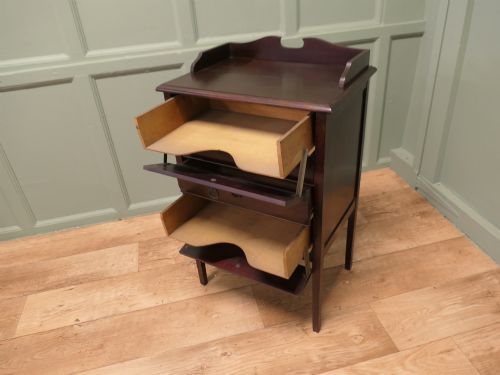
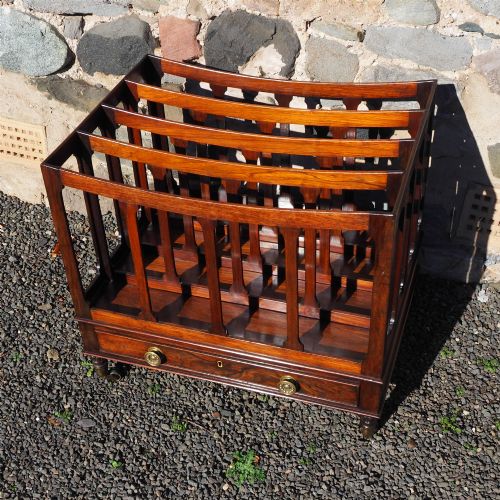
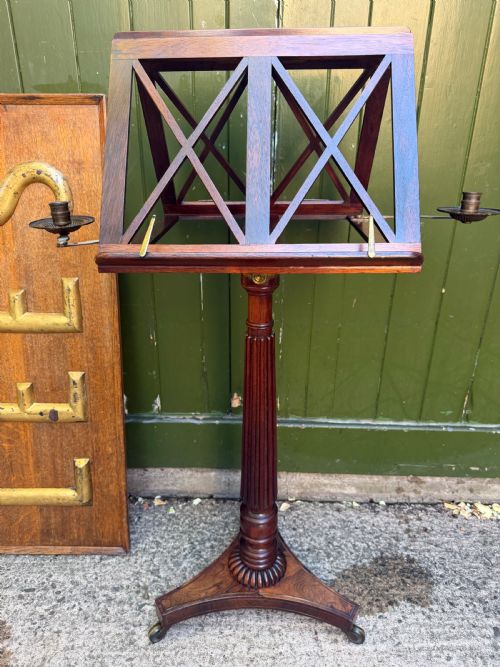
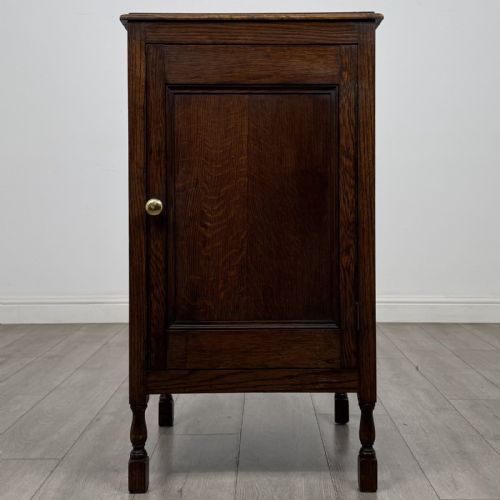
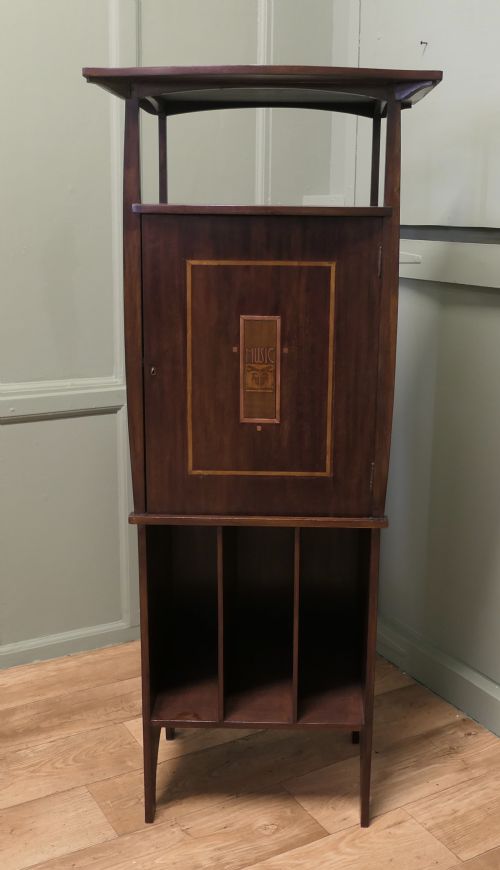
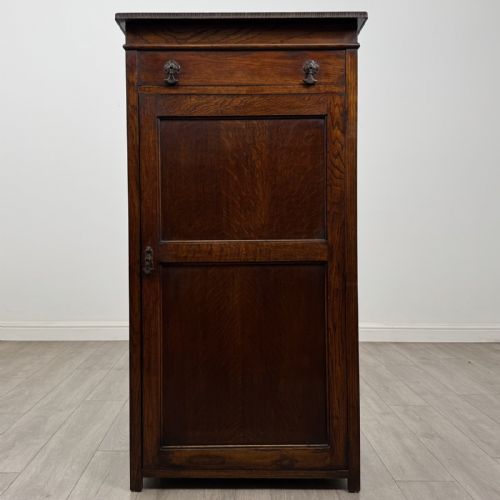
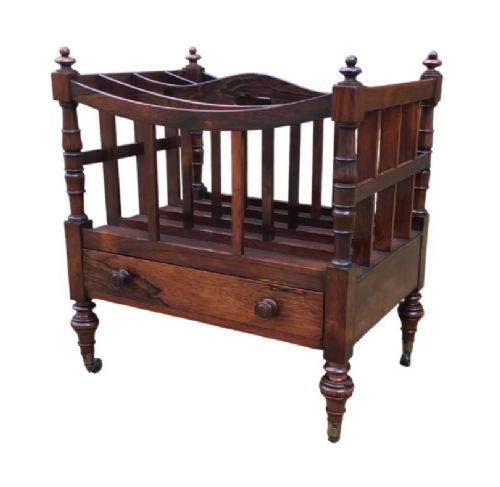
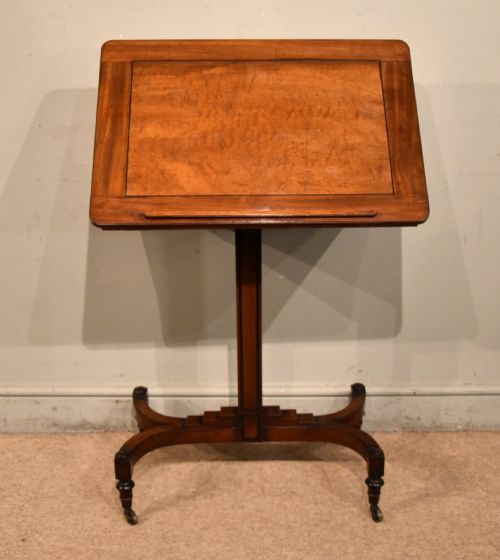
The selection on this page centres heavily on mahogany and rosewood forms, from adjustable duet stands to compartmented canterburys and upright music cabinets. Buyers frequently encounter freestanding reading tables, tripod stands and multi-functional side cabinets.
Originating from cabinet makers working across the nineteenth and early twentieth centuries, these objects combine practical utility with refined decorative carving, fretwork and turned supports.
How they were made
Cabinet makers utilised dense hardwoods such as mahogany, rosewood and walnut, often selecting figured veneers and incorporating subtle wood inlay for visual depth. Brass fittings, including adjustable ratchets, hinges and castors, provide the mechanical articulation necessary for reading desks and duet stands.
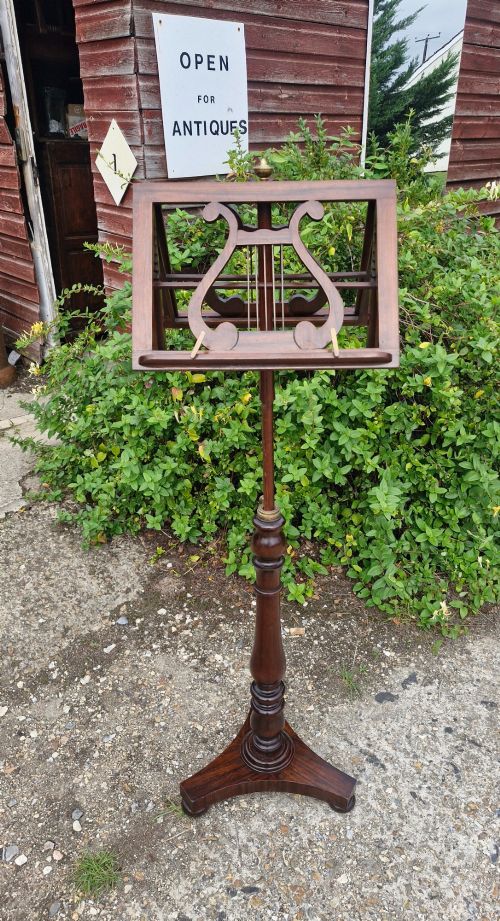
Construction techniques rely on traditional joinery, turning and fretting, seen in the slender lyre forms of music stands and the slatted dividers of canterburys. Carved details such as Prince of Wales feathers or reeded columns reflect the aesthetic priorities of Georgian, Regency and Victorian workshops.
Dark Wood Music Stand Retail Price Guide 2026
Typical asking prices for dark wood music stand among the pieces listed under this phrase on Sellingantiques today, from the lower quarter to the upper quarter. They describe what is for sale here now, not the wider market.
Some nineteenth-century canterburys include tiny built-in compartments intended exclusively for holding ivory tuning forks.
What varies in quality
Quality rests upon the choice of timber, the crispness of carved or fretted details, and the integrity of moving mechanisms. Superior examples exhibit finely figured grain, robust structural joinery and smoothly functioning adjustable height or angle controls.
The distinction between standard production items and exceptional pieces lies in the refinement of brass hardware, the balance of tripod bases, and the harmonious integration of storage compartments within canterburys and cabinets.
GM Elwood for JS Henry·Gabriel Viardot·Gillows·U Phone of Leeds
The Dark Wood Music Stand Glossary
- Canterbury
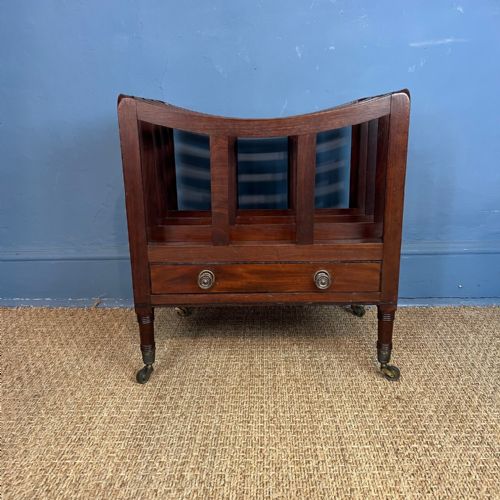
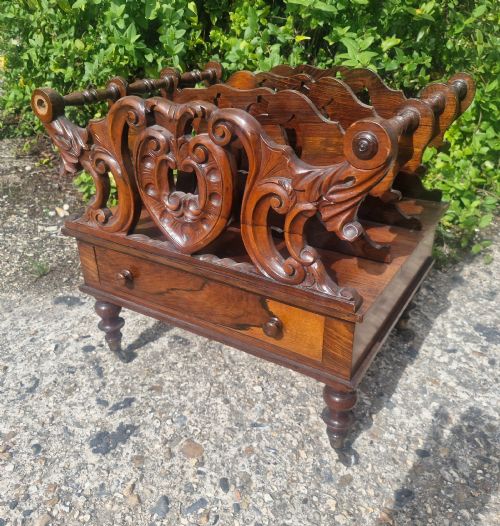
- A low, freestanding stand featuring vertical partitions, originally designed to hold sheet music or folios beneath a carrying handle. These pieces often incorporate a small drawer at the base.
- Duet stand
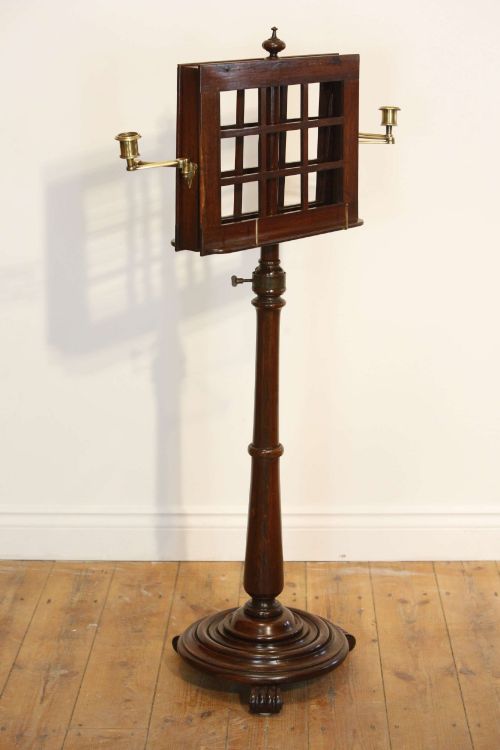
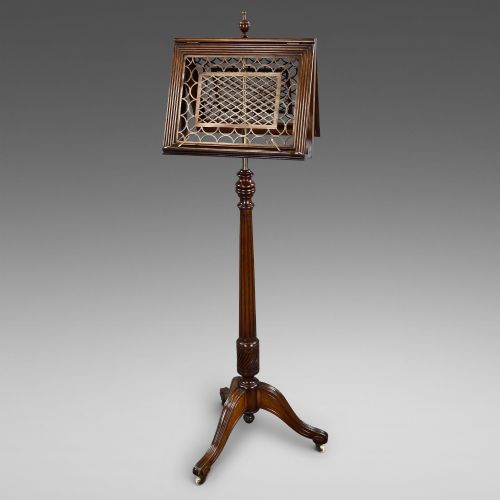
- A music stand constructed with a broader desk surface or dual reading ledtes, allowing two musicians to share a single score simultaneously.
- Gonçalo Alves
- A dense, highly figured tropical hardwood with contrasting dark streaks, occasionally utilised in high-status nineteenth-century furniture.
- Lyre-form
- A decorative framework shaped like the ancient musical instrument, frequently employed as a central support pillar in nineteenth-century music stands and reading tables.
- Whatnot
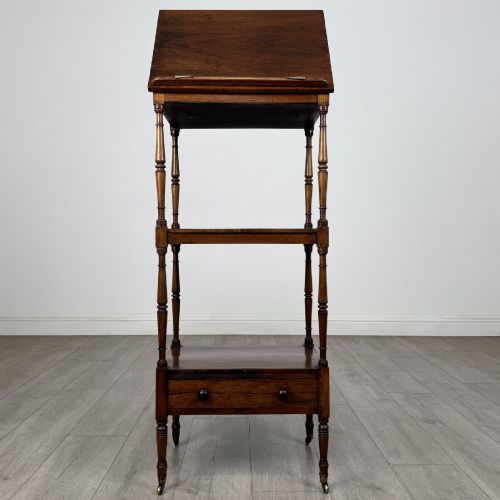
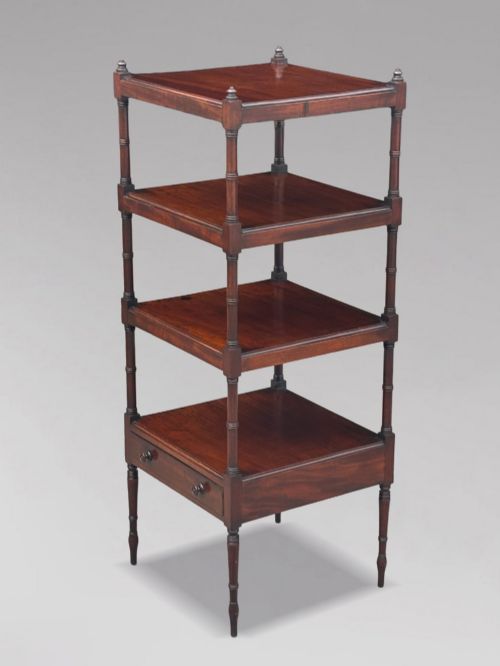
- An open set of shelving supported by slender columns, utilised for displaying or storing books, music and decorative objects.
Dark Wood Music Stand: Frequently Asked Questions
What is a cantebury used for?
A canterbury serves as a compartmentalised rack designed to hold sheet music, folios and periodicals upright. The divisions prevent large papers from slumping while keeping scores accessible near a piano or reading chair.
Many examples include a low drawer beneath the main compartments for smaller accessories. Their portability made them central fixtures in nineteenth-century parlours.
How do I adjust the height?
Adjustable stands typically employ a brass thumb screw or ratchet mechanism concealed within the central column or behind the desk. Loosing the fitting allows the stem to slide to the desired reading level.
Care should be taken to support the weight of the desk while operating vintage brass mechanisms to prevent undue strain on the wood.
How do I distinguish Regency from Victorian?
Regency pieces generally display restraint, linear classical motifs and lighter proportions influenced by Grecian and Roman design. Mahogany and rosewood are common, often accented with brass inlay or lyre supports.
Victorian pieces tend toward heavier ornamentation, deeper carving, and more robust dimensions. Styles from this later period embrace gothic revivalism and more eclectic aesthetic influences.
Can these hold heavy modern books?
Sturdy freestanding reading stands and duet desks can accommodate substantial heavy volumes safely. The solid timber construction and stable tripod or four-legged bases provide reliable support for large folios.
Lighter canterburys and small music cabinets are engineered specifically for paper scores and magazines rather than heavy folio volumes.
How do I care for rosewood?
Rosewood benefits from a stable indoor environment away from direct sunlight and sudden temperature shifts. Maintaining moderate humidity prevents the dense timber from drying or splitting.
Dusting with a soft cloth preserves the polished surface without requiring heavy chemical polishes.