




Dark Wood Hall Settle
Dark wood hall settle pieces offer solid seating and storage, bringing centuries of craftsmanship directly into your hallway.
Dark Wood Hall Settle
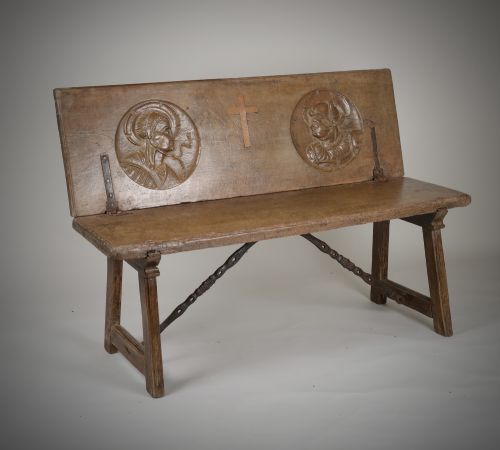
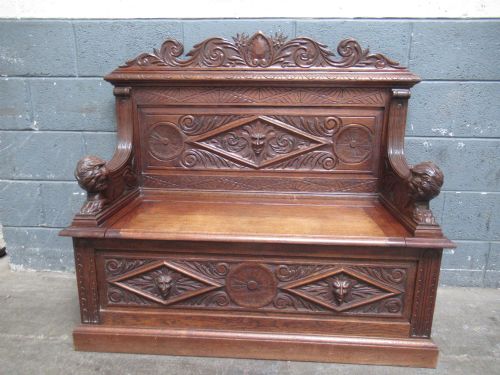
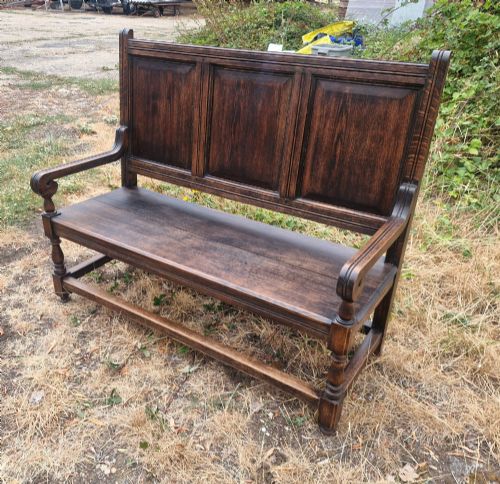
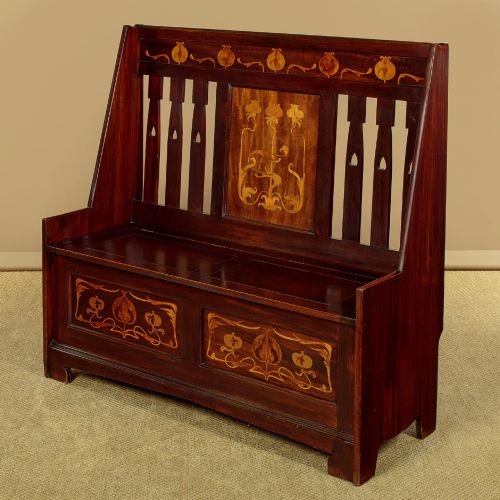
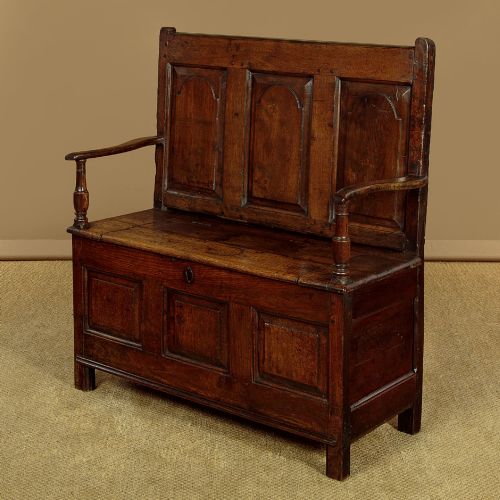
A dark wood hall settle provides a substantial seating option designed historically for draughty entryways and corridors. When exploring this selection, a buyer encounters high-backed benches, box seats with lift-up lids, and convertible monks benches spanning several centuries.
The pieces appearing most frequently originate from the nineteenth and early twentieth centuries, though examples stretch back to earlier periods. Craftsmen built these benches primarily as functional hall furniture, often incorporating hinged storage compartments beneath the seat.
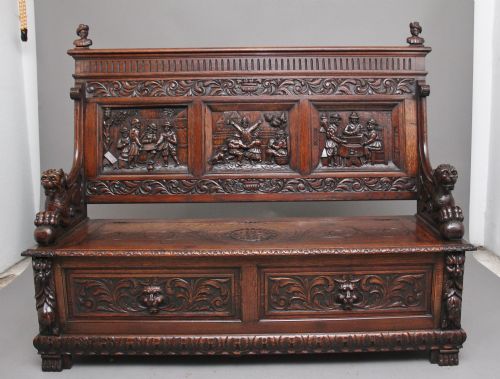
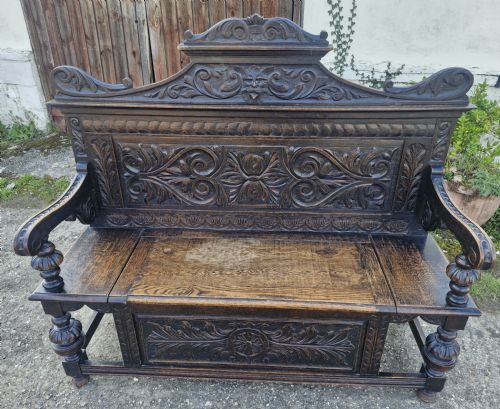
Regional variations span British styles alongside continental European and Chinese export pieces. Forms range from rustic pine and oak vernacular benches to heavily carved Jacobean revival and Gothic revival showpieces.
Materials and construction
Makers relied heavily on sturdy timbers such as oak, mahogany, and exotic hardwoods to withstand heavy daily use in busy entryways. These dark woods were often finished with wax or polish to highlight the natural grain.
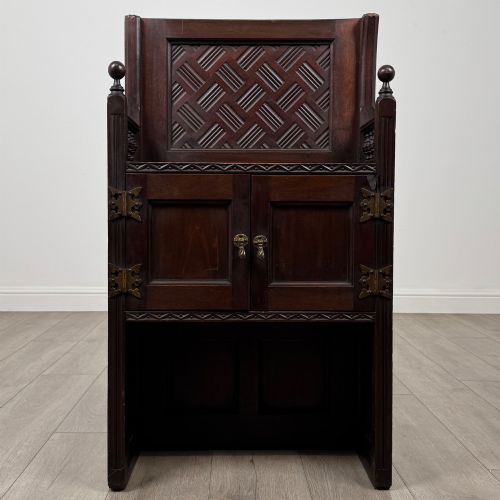
Joinery methods typically involved traditional mortise and tenon joints, panelled construction, and pegged frames that ensured long-term durability. Iron and brass fittings occasionally appeared as hinges, handles, or decorative mounts on storage compartments.
Listings feature oak, mahogany, rosewood, teak, and pine spanning periods from the seventeenth century through to the Edwardian era.
Assessing quality
The depth and crispness of hand-carved ornamentation separate standard vernacular furniture from exceptional workshop pieces. Relief carvings depicting figures, foliage, or mythological motifs show the sculptor's direct skill.
The integrity of the structural timber and the originality of the hardware dictate the overall standard of a piece. Retaining the original lift-up seat mechanisms and uncompromised joints marks a superior survival.
James Shoolbred & Co.
The Dark Wood Hall Settle Glossary
- Settle
- A wooden bench with high back, solid arms, and often a closed base or storage box beneath the seat. This form protected sitters from cold draughts in old hallways.
- Monks Bench
- A convertible piece of furniture featuring a hinged back that folds down flat to transform the seat into a table. It served multiple practical purposes in compact living spaces.
- Box Settle
- A settle featuring a concealed compartment under the hinged seat used for storing boots, blankets, or household goods. This design maximised utility in historical interiors.
- Jacobean Revival
- A nineteenth-century historicist style copying seventeenth-century ornamentation, characterised by geometric moulding and dark stained surfaces. It dominated Victorian interior tastes for heavy oak furniture.
- Vernacular Furniture
- Everyday items made by local tradespeople using regional materials rather than following high-style metropolitan fashions. These pieces often display charming regional eccentricities.
Dark Wood Hall Settle: Frequently Asked Questions
Where should I place a settle?
A dark wood hall settle fits naturally in an entryway, hallway, or boot room where its narrow profile accommodates foot traffic. The high back creates a welcoming focal point against a blank wall.
Positioning the piece away from direct heat sources prevents the timber from drying out and splitting over time.
How did people use monks benches?
A monks bench served as a dual-purpose item in historical homes, functioning as a comfortable seat during the day. Flipping the hinged back forward converted the top into a sturdy dining or writing table.
This clever design saved valuable floor space in smaller period properties.
How do I care for dark wood?
Maintain the finish by applying a quality beeswax periodically to nourish the timber and preserve its deep lustre. Avoid chemical cleaners that strip the historic patina.
Keep the wood away from extreme temperature fluctuations to protect the ancient joinery.
How do I identify the period?
Dating relies on examining tool marks, timber selection, construction methods, and stylistic carving details. Eighteenth-century pieces often show hand-sawn board edges and pegged joints.
Later Victorian and Edwardian revivals frequently incorporate machine-cut elements alongside period-mimicking ornamentation.