

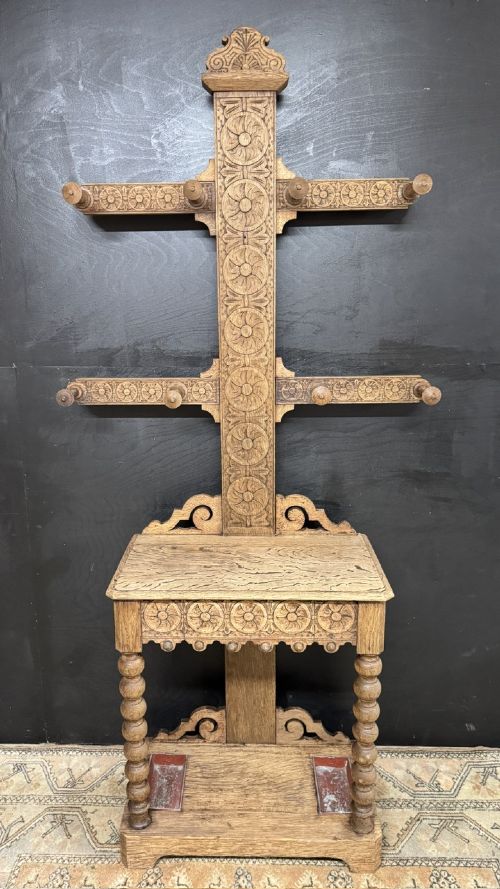
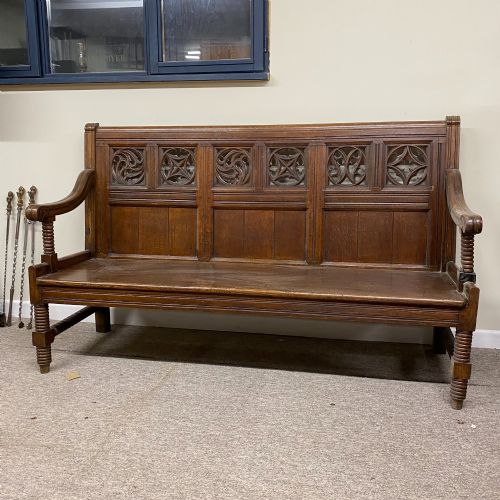
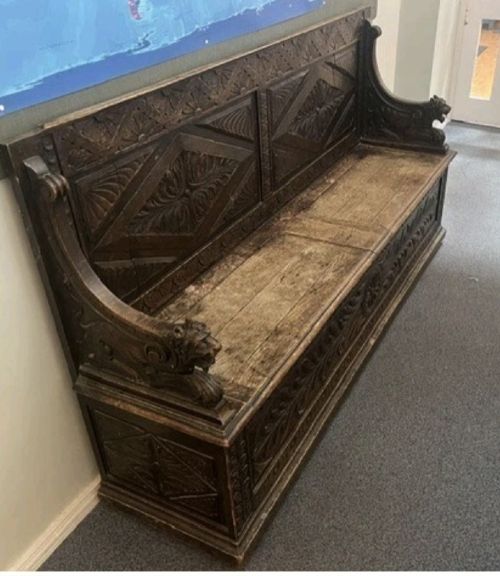
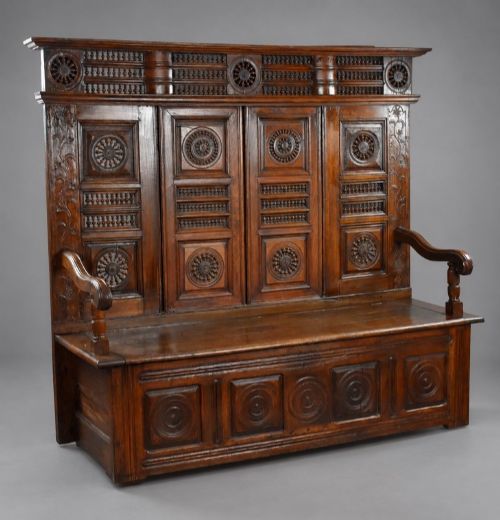






Carved Oak Entry Bench
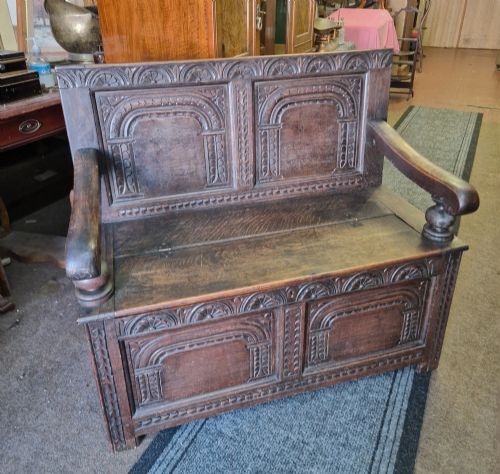
A carved oak entry bench anchors a hallway with heavy timber, dark grain and decades of hard utility.
Carved Oak Entry Bench
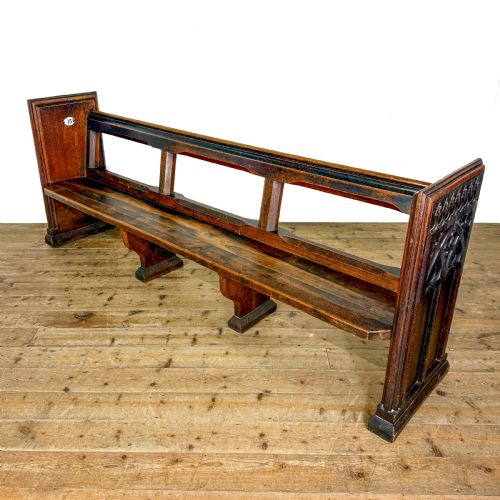
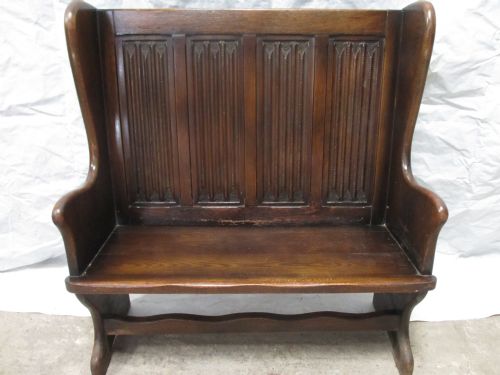
A carved oak entry bench provides seating and storage in a hallway or vestibule, utilising dense timber designed to withstand heavy daily use. The pieces gathered here span centuries of craftsmanship, ranging from simple country pews to high-back settles with linenfold panelling and hinged storage compartments.
The most common forms on this page include Victorian hall benches, Jacobean Revival settles and monk's benches that double as tables. These items originate from British and European workshops, utilising robust framing and deep relief carving typical of the Gothic and Renaissance revival movements.
Materials and construction methods
Cabinetmakers constructed these frames using solid oak joined with mortise and tenon joints, secured by wooden pegs rather than metal nails. Surfaces feature hand-carved ornamentation such as strapwork, foliage and geometric panels executed with gouges and chisels.
Hardware consists of forged iron, brass hooks and hinged mechanisms that allow seat lids to lift smoothly. Secondary timbers occasionally appear in concealed areas, while fabric upholstery or leather pads are sometimes integrated into later seats.
Carved Oak Entry Bench Retail Price Guide 2026
Typical asking prices for carved oak entry bench among the pieces listed under this phrase on Sellingantiques today, from the lower quarter to the upper quarter. They describe what is for sale here now, not the wider market.
Some monk's benches doubled as dining tables, letting medieval diners eat close to the warmth of the hall fire.
Assessing quality and authenticity
Superior examples exhibit crisp, deep hand-carving that follows the natural grain of the timber without mechanical routing. The weight and thickness of the oak panels determine the structural integrity of the piece over centuries of use.
Patina and original surface finish separate untouched period pieces from later alterations or heavy restorations. The integration of period hardware, such as original brass hinges and iron hooks, preserves the historical integrity of the frame.
Shapland and Petter·Liberty·Hampton and Son·Shoolbred
The Carved Oak Entry Bench Glossary
- Settle
- A wooden bench with a high back, solid arms and often a box base beneath the seat for storage. This form kept drafts away from occupants in unheated hallways.
- Monk's bench
- A convertible piece of furniture featuring a hinged back that folds down flat to form a table top. The lower compartment provides enclosed storage for hats and gloves.
- Linenfold
- A style of relief carving on wooden panels that resembles folded vertical strips of cloth. This motif appears frequently on Tudor and revival furniture.
- Strapwork
- Ornamentation consisting of flat bands or ribbons crossed in intricate geometric patterns. Carvers used this technique extensively during the Elizabethan and Jacobean periods.
- Hall stand
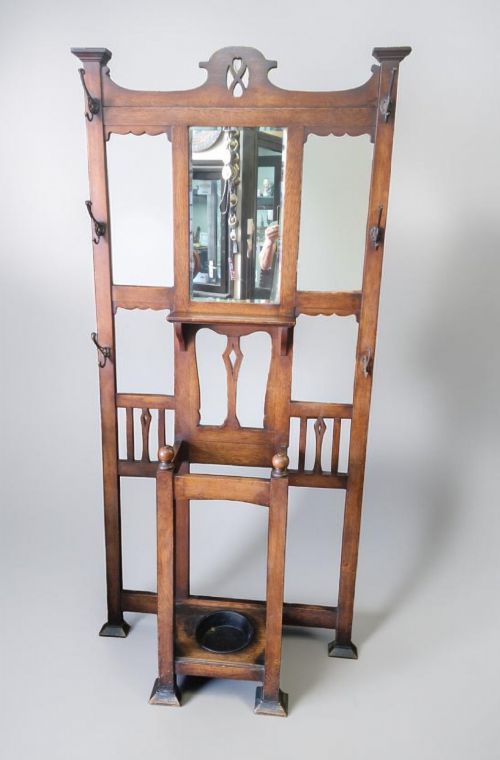
- A piece combining a bench seat with vertical panels, umbrella wells and brass or iron coat hooks. These items dominated Victorian entrance halls for visitor storage.
Carved Oak Entry Bench: Frequently Asked Questions
Where should I put a carved oak entry bench?
Position the bench in a spacious hallway, entrance vestibule or boot room where the heavy timber can handle outer garments and daily foot traffic. Ensure there is adequate clearance for high backs or folding tabletops.
Allow enough space for guests to sit down while removing shoes, keeping the surrounding floor clear of heavy coats and umbrellas.
How do I care for antique oak?
Maintain the timber by applying natural beeswax sparingly and buffing with a soft cloth to preserve the historic patina. Avoid placing the bench near direct heat sources or in damp environments that cause the wood to split.
Dust intricate carvings regularly with a dry brush to prevent dirt accumulation in the recessed grain.
How do I date an oak bench?
Examine the joinery methods, tool marks and construction details visible on the underside and interior panels. Peg construction, hand-sawn board edges and timber shrinkage indicate older periods.
Stylistic motifs like Gothic tracery, Jacobean strapwork or Arts and Crafts simplicity provide further clues to the decade of manufacture.