
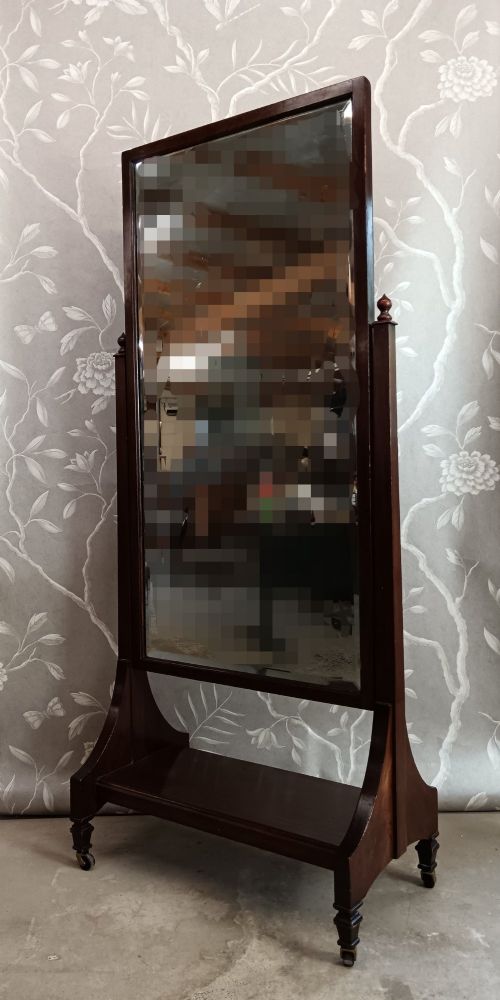


Dark Wood Floor Mirror
A dark wood floor mirror brings scale and reflection to a room, offering the full-length view every dressing space requires.
Understanding the Dark Wood Floor Mirror
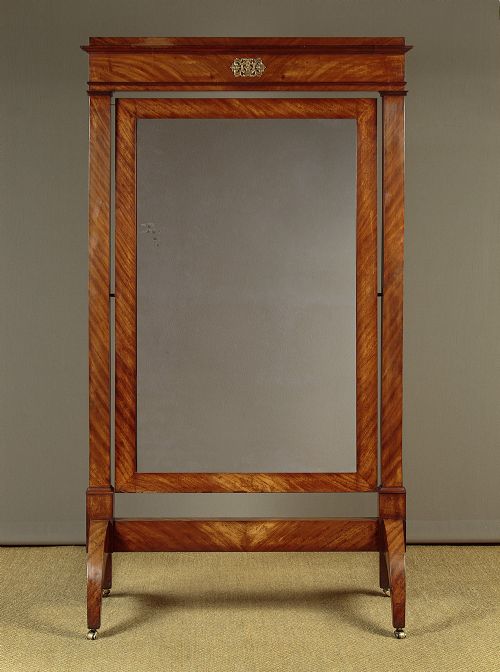
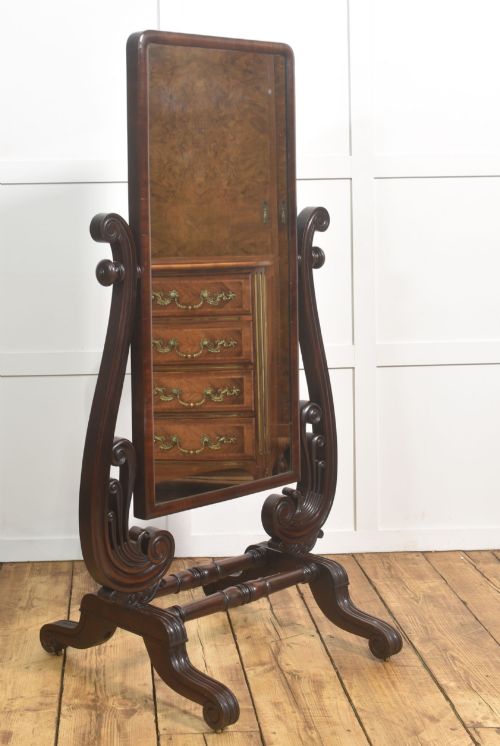
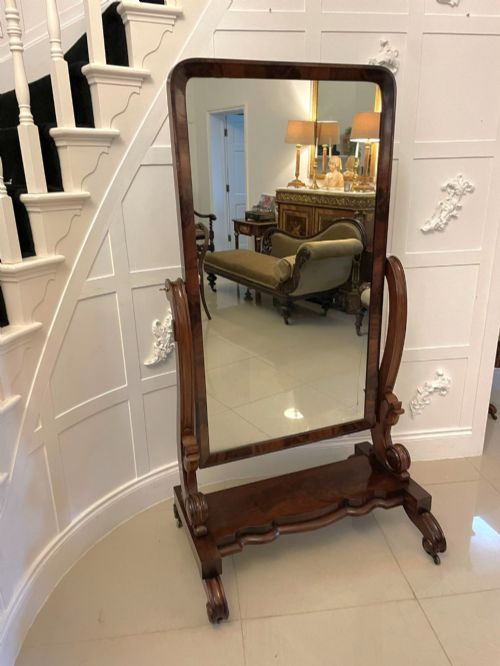
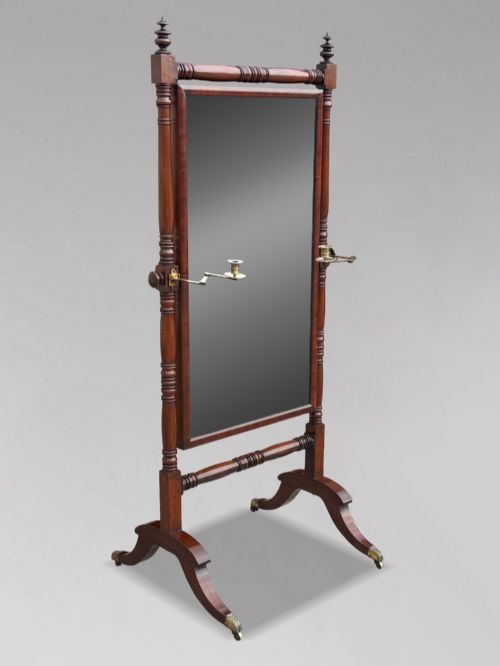
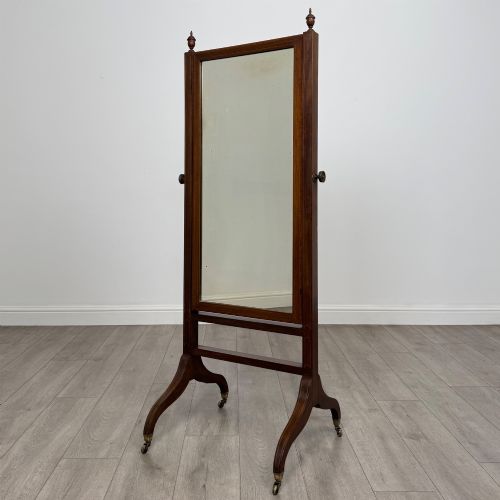
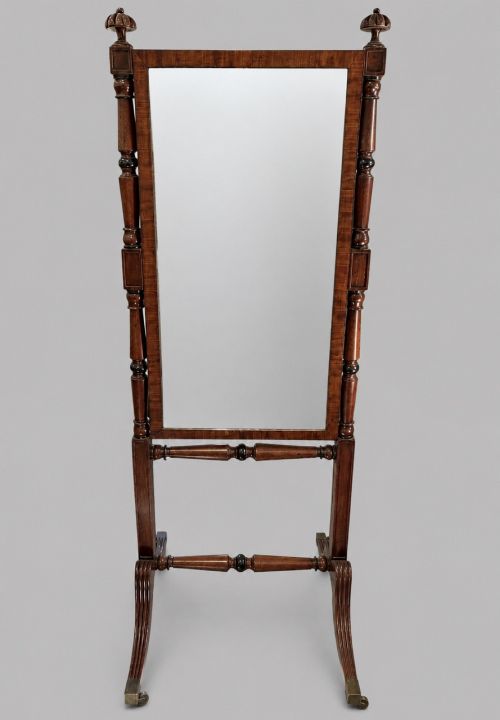
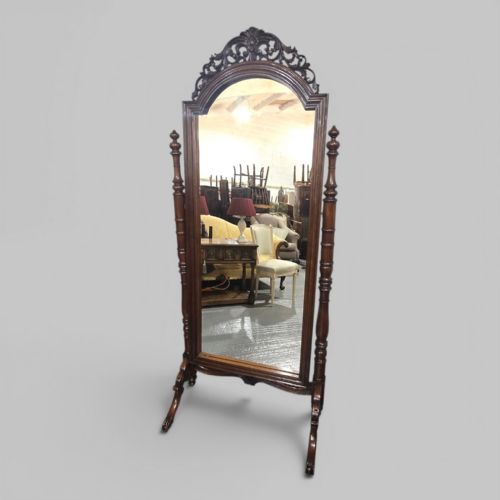
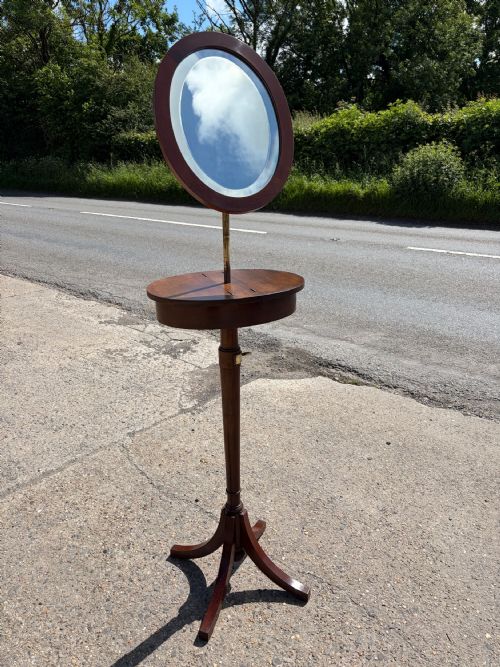
A dark wood floor mirror stands tall to capture a full-length reflection, anchored by a sturdy timber frame that rests directly on the floor. When searching for a dark wood floor mirror, collectors encounter substantial freestanding pieces designed to tilt and pivot within a supportive frame. The selection spans the nineteenth and early twentieth centuries, drawing on Victorian, Regency, Edwardian, and Neoclassical traditions.
The dominant material format is mahogany, appearing alongside oak and walnut frames that ground the reflective glass. These pieces function as both practical dressing glasses and significant decorative fixtures within a room. Most examples take the form of cheval mirrors, allowing the glass to adjust its angle effortlessly.
The timeline stretches from mid-nineteenth-century Victorian designs through to early twentieth-century Edwardian interpretations. Each piece reflects the cabinet-making standards of its respective period, utilising dense timbers and traditional joinery. Buyers find that these mirrors balance utility with architectural presence.
Materials and Construction
Frames are constructed from dense hardwoods including mahogany, oak, and walnut, often selected for deep grain patterns and strength. Cabinet makers shaped these timbers into substantial floor-standing supports that could bear the weight of heavy mirror glass safely.
Metal components such as brass fittings and gilt metal accents provide the pivoting mechanisms and decorative mounts. The glass itself is securely housed within rebated frames, while adjustable tilt mechanisms rely on robust side pins and screws.
Retail Price Guide 2026
Typical UK retail prices for dark wood floor mirror, calculated from the Sellingantiques database of over a million retail prices indexed since 2003. This retail price guide relies exclusively on Sellingantiques data; no external sources or auction records are used, so the figures do not describe the wider market.
Early morning dress checks relied entirely on these pivoting giants catching the first weak rays of winter light.
Markers of Quality
Superior quality rests in the density of the timber and the architectural refinement of the frame. Finer examples display meticulous carving, balanced proportions, and substantial brass hardware that operates smoothly without slack.
The integration of the pivoting mechanism reveals the maker's competence, where solid framing prevents the tall glass from warping or sagging over time. High-end pieces achieve a harmonious balance between the weight of the mirror plate and the stability of the supporting legs.
Waring and Gillow
The Dark Wood Floor Mirror Glossary
- Cheval mirror
- A freestanding full-length mirror supported by a frame with four legs and pivoting side pins. This design allows the glass to tilt back and forth.
- Tilt dressing glass
- An alternative term for a pivoting mirror used in dressing areas. It enables the user to adjust the angle of reflection.
- Victorian
- A design period spanning the reign of Queen Victoria, characterised by robust proportions and eclectic revivals. Pieces from this era often feature deep mahogany and ornate detailing.
- Regency
- A style spanning the early nineteenth century defined by classical restraint and neoclassical motifs. Furniture from this period frequently incorporates rich timbers and brass mounts.
- Neoclassical
- An artistic movement drawing inspiration from classical antiquity. It emphasises symmetry, restrained ornamentation, and architectural dignity.
Frequently Asked Questions
How do I secure a floor mirror safely?
Freestanding mirrors rely on a wide footprint and solid leg placement for stability. Positioning them on level flooring prevents undue strain on the pivot pins.
For added security, particularly with large examples, discreet wall tethers can be employed to prevent accidental tipping without altering the frame.
What is a cheval mirror?
A cheval mirror is a tall, freestanding glass mounted in a frame that allows it to swing or tilt. The term derives from the French word for horse, referencing the four-legged frame.
These pieces emerged as essential bedroom furniture during the Georgian and Victorian eras for full-length attire checks.
How do I date an antique floor mirror?
Dating relies on examining the timber species, joinery techniques, and hardware used in the frame. Victorian and Edwardian pieces show distinct shifts in proportion and decorative carving styles.
Additionally, the bevel and backing of the glass plate provide clues to the manufacturing period.
Can I adjust the angle of the glass?
Yes, most traditional floor mirrors feature brass side screws or pivot pins that allow the glass to tilt. Tightening these mechanisms holds the mirror securely at the desired viewing angle.
Over time, these fittings may require gentle adjustment to maintain tension.