

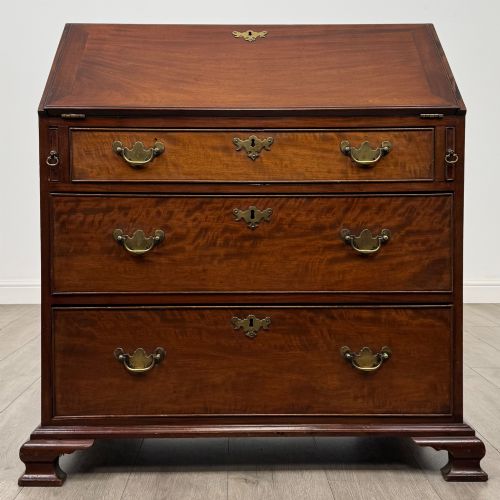
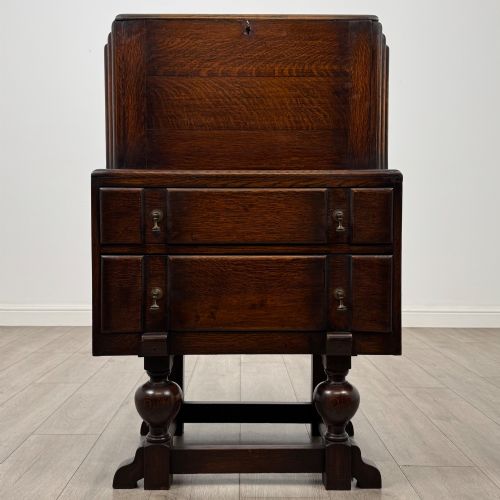
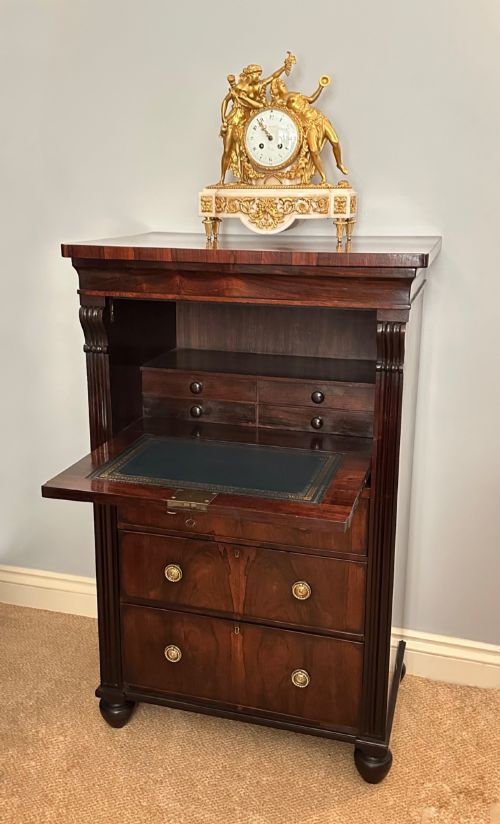
Dark Wood Desk Cabinet
A dark wood desk cabinet brings solid timber and fitted drawers together for writing and storage across Georgian, Victorian and Edwardian rooms.
Dark Wood Desk Cabinet
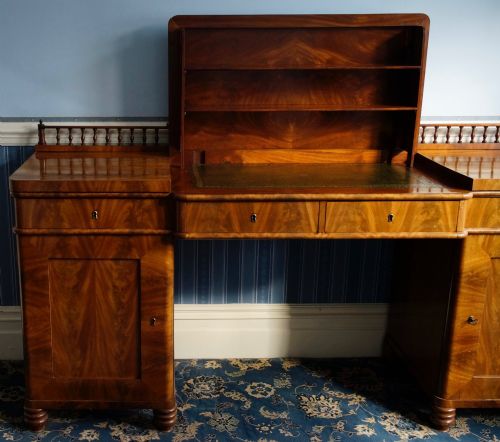
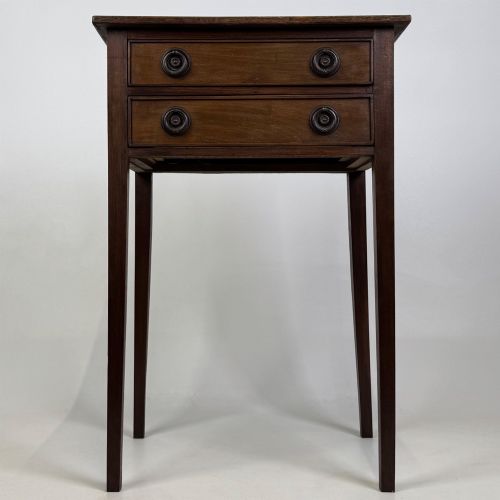
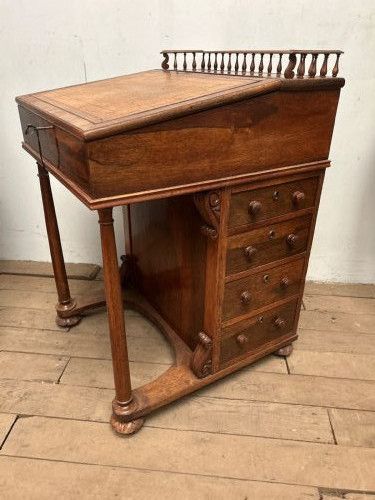
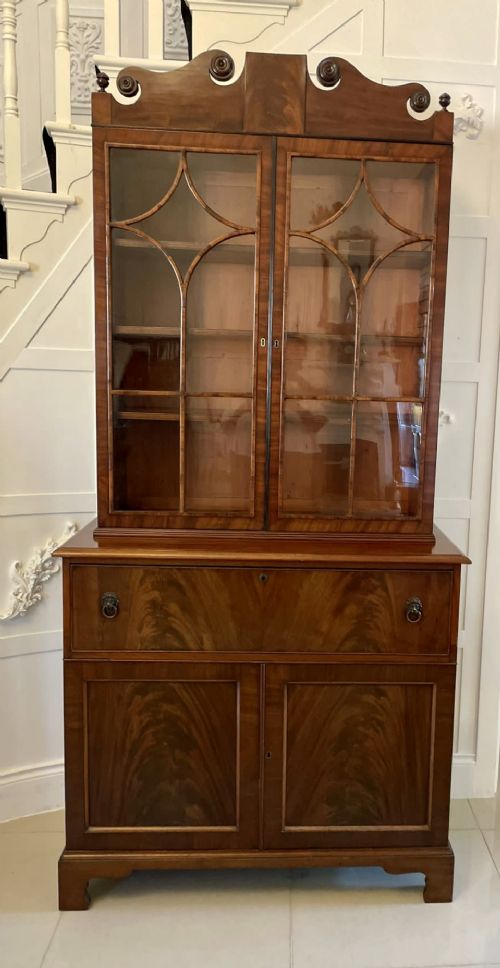
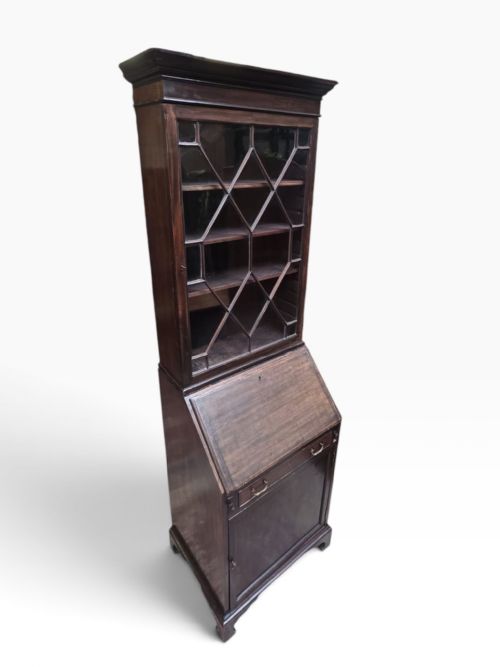
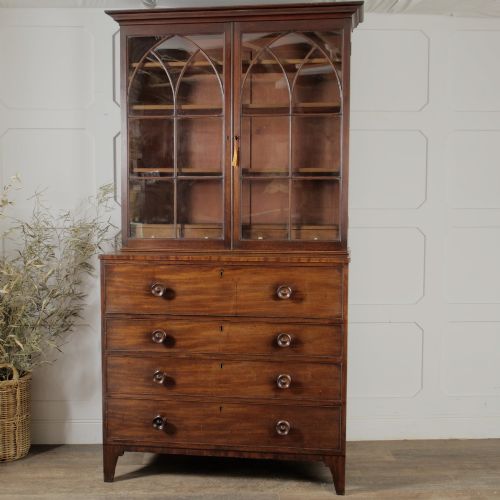
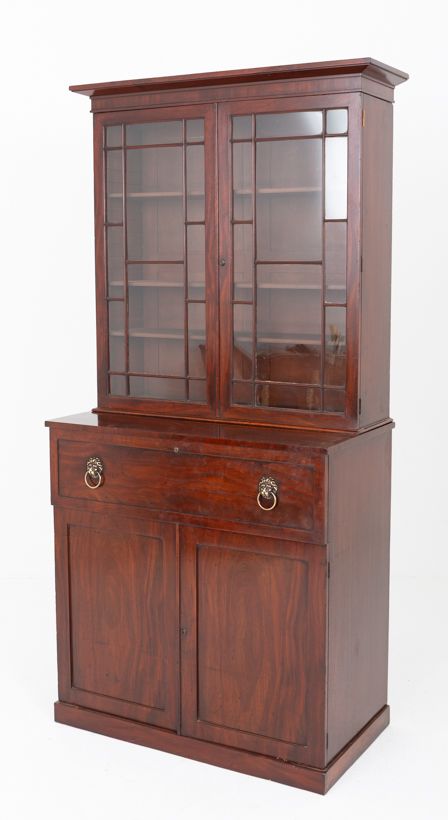
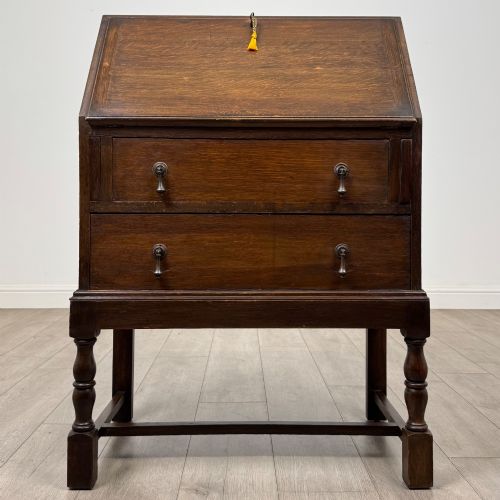
A dark wood desk cabinet combines writing surfaces with enclosed compartments, spanning forms from bureau bookcases to freestanding Davenports and smaller table cabinets. These pieces emerge predominantly from the 18th, 19th and early 20th centuries, reflecting the changing domestic and office requirements of Georgian, Victorian and Edwardian households.
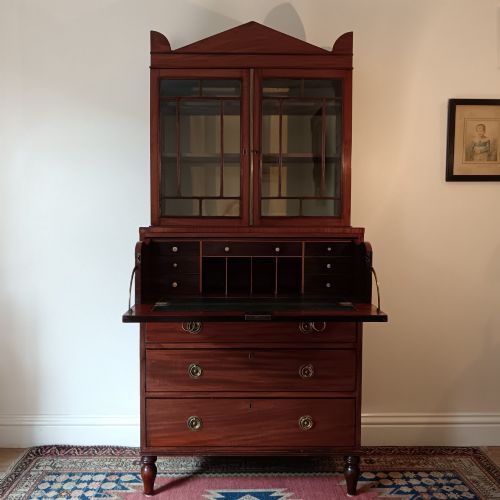
The buyer most frequently encounters mahogany and oak constructions configured as secretaire bookcases or compact writing cabinets. Such examples originate across British and continental workshops, ranging from substantial library pieces with glazed upper sections down to miniature apprentice pieces and stationary boxes.
Regional variations appear in domestic timbers like oak alongside imported hardwoods such as rosewood and teak. Cabinet makers shaped these materials into functional writing furniture incorporating drop-front writing slopes, pigeonholes and nested drawers behind secure locking doors.
Materials and Technique
Makers constructed these cabinets using solid hardwoods and selected veneers over secondary softwoods, employing traditional dovetail joinery for drawer construction. Mahogany, rosewood and oak dominate the structural framing, often finished with hand-rubbed wax to highlight the natural grain.
Secondary detailing incorporates brass hardware, leather writing inserts, satinwood inlay and boxwood stringing to accentuate the dark primary timbers. Glazed upper doors utilise individual timber glazing bars, while fall-front writing surfaces rely on supportive lopers or brass quadrants to bear weight during use.
Some Victorian miniature chests served as apprentice pieces, built by trainees to prove their mastery before joining the cabinet makers' guild.
Judging the Standard
Distinctions in standard arise from the selection of timber figures, such as highly figured flame mahogany or dense grain rosewood, paired with the precision of interior pigeonhole arrangement. Superior examples exhibit seamless dovetailing, matching grain patterns across drawer fronts and original working locks with matching keys.
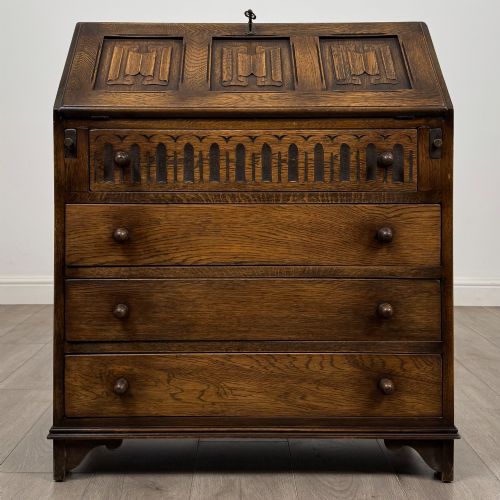
Refined execution shows in subtle details like fine stringing, crisp carving on linenfold or panelled doors, and intact secondary woods without extensive timber replacement. The integration of mechanical elements, such as sliding pop-up compartments or balanced tambour fronts, separates standard workshop production from master cabinet work.
George Oakley·Gillows·J A Mein·Maison Krieger
The Dark Wood Desk Cabinet Glossary
- Secretaire
- A cabinet or desk featuring a drop-front drawer that pulls down to reveal a fitted writing surface and pigeonholes. This allows a standard chest or bookcase to function as a writing desk.
- Davenport
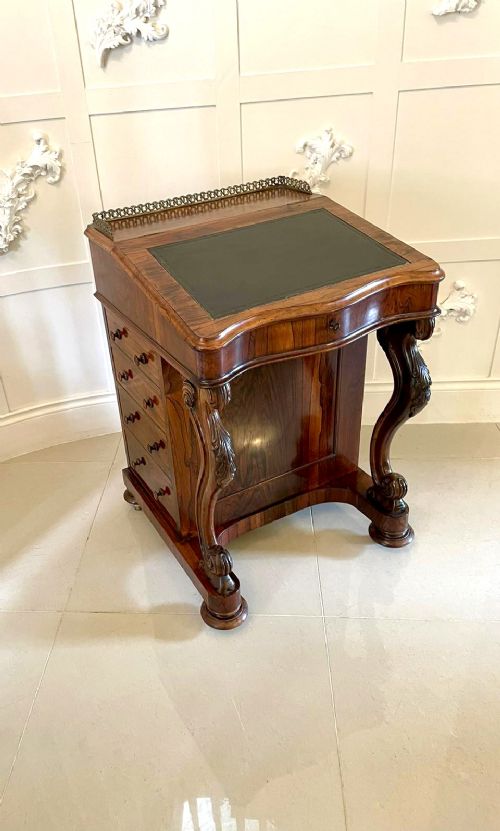
- A compact writing desk featuring a sloped, hinged writing top with drawers opening to one side. Originating in the early 19th century, this form often includes interior stationery compartments.
- Bureau Bookcase
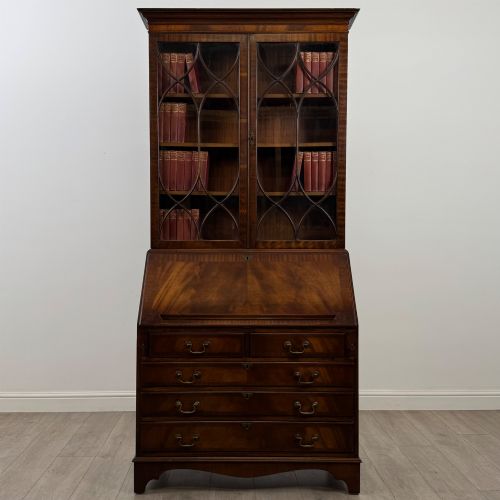
- A piece of furniture combining a lower sloping writing desk with an upper enclosed shelving or bookcase section. These dual-purpose items served as both library storage and private writing spaces.
- Tambour
- A flexible shutter formed of narrow strips of wood glued to canvas, allowing a sliding closure over desk cubbyholes. This technique appeared frequently on early 20th-century office and cabinet furniture.
- Linenfold
- A style of carved wooden panelling resembling folded linen fabric. This motif is commonly found on early 20th-century oak cabinets and revival pieces.
- Astragal
- A moulding profile used to hold panes of glass within a cabinet door. Fine astragal bars divide glazed bookcase doors into distinct geometric lights.
Dark Wood Desk Cabinet: Frequently Asked Questions
What is a secretaire bookcase?
A secretaire bookcase combines an upper glass-fronted library cabinet with a lower section housing a pull-out writing drawer. The drawer front drops down on hinges to reveal a fitted interior of small drawers and pigeonholes.
This form served collectors and readers who needed both book storage and an enclosed writing desk within a single floor footprint.
How do I identify a Davenport desk?
A Davenport is characterised by a small, box-like body topped with a sloping leather-lined writing surface. The side of the cabinet incorporates a bank of small drawers, often balanced by false drawers on the reverse.
These pieces were designed as moveable writing tables for sitting rooms and boudoirs during the Regency and Victorian eras.
What woods were used for these cabinets?
Makers relied heavily on mahogany, oak and rosewood, supplemented by walnut, coromandel and teak in specific periods. Solid timber formed the structural frames, while figured veneers decorated prominent exterior surfaces.
Inlays of satinwood and boxwood provided contrast, while secondary woods like pine or oak appeared inside drawer linings.
How do I care for dark wood furniture?
Maintain dark wood cabinets by applying natural beeswax polish periodically to nourish the timber grain and protect the surface. Avoid placing furniture in direct sunlight or near heat sources to prevent timber shrinkage and veneer splitting.
Dust regularly with a soft, dry cloth and lift items rather than sliding them across writing surfaces.
How do I tell Victorian from Georgian pieces?
Georgian pieces from the 18th century tend to feature clean architectural lines, solid bracket feet and rich mahogany patination with minimal exterior fuss. Victorian items from the 19th century often introduce bolder proportions, richer grain variations like rosewood, and more ornate applied mouldings or carvings.
Examining internal construction methods, such as hand-cut dovetails and secondary woods, helps clarify the period of manufacture.