




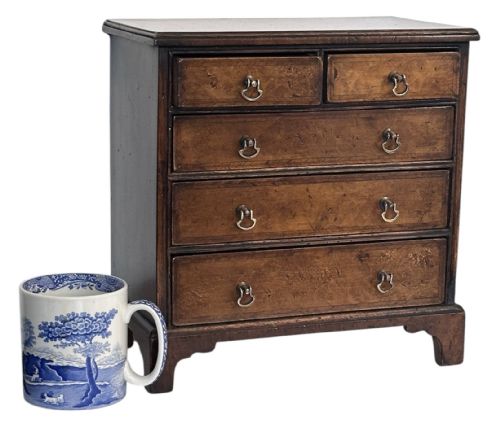
Desktop Collectors Cabinet
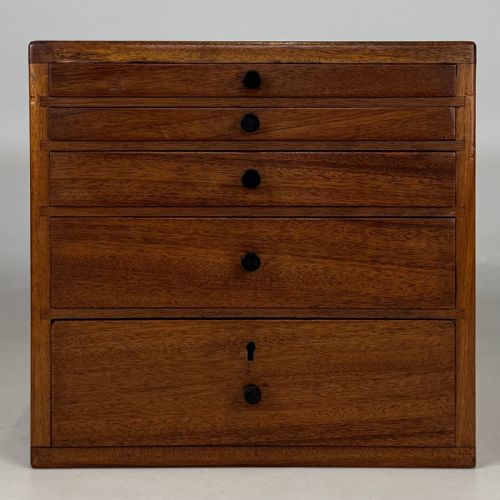
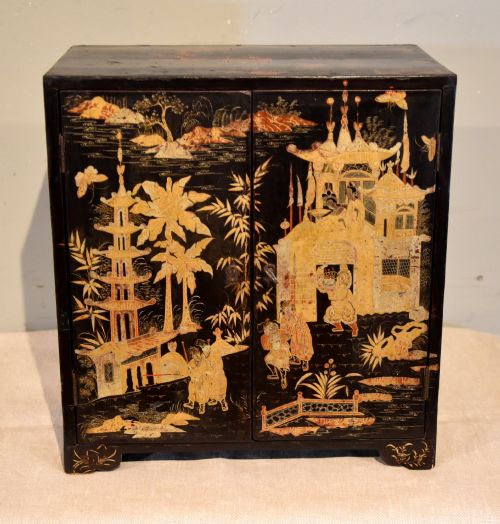
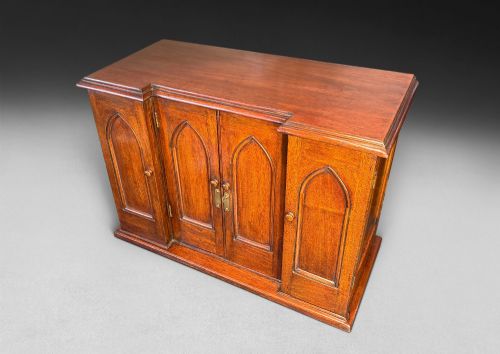
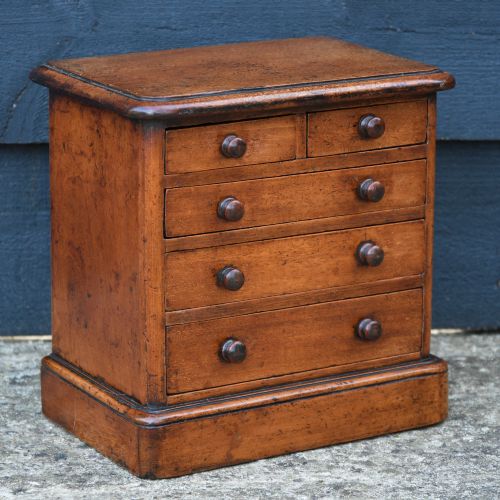
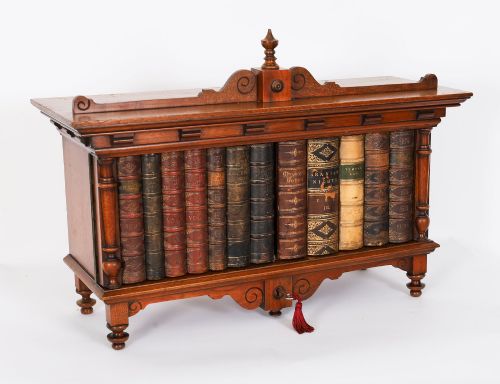
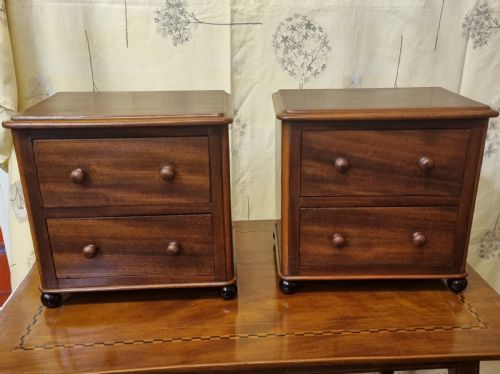
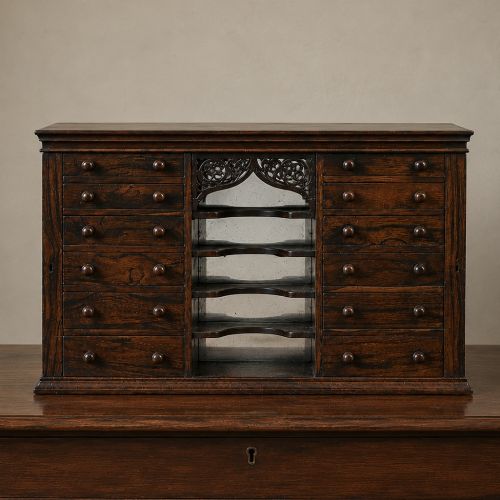
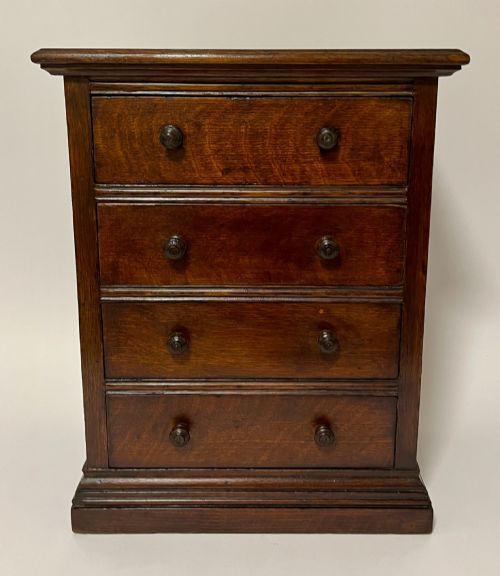
A desktop collectors cabinet gathers small treasures and natural specimens within reach, rendered in timber from the nineteenth and early twentieth centuries.
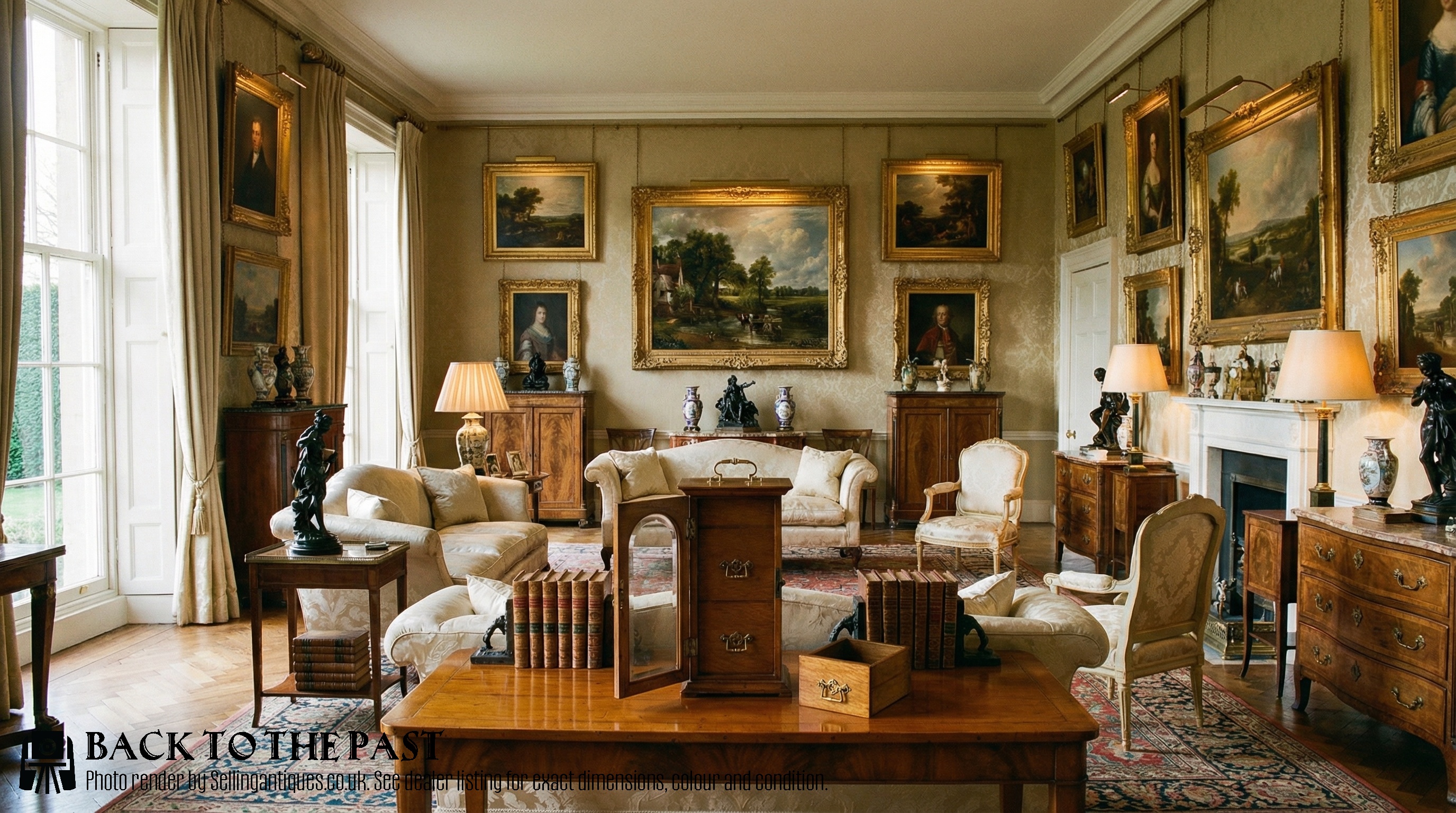
Desktop Collectors Cabinet
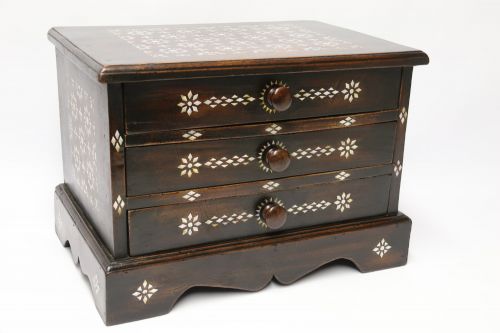
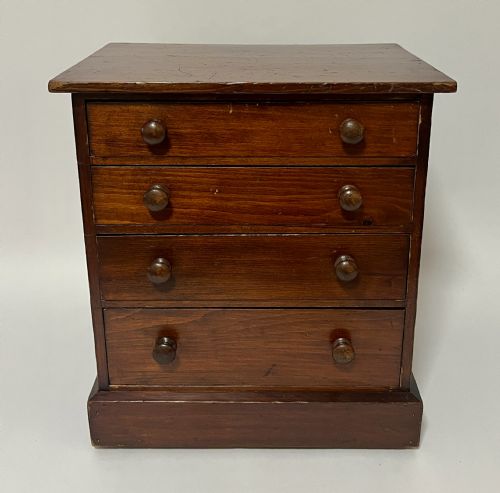
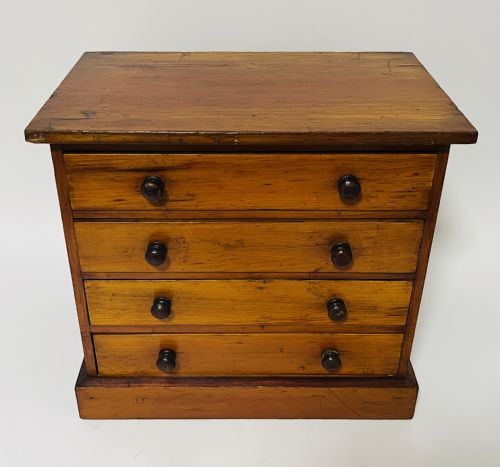
A desktop collectors cabinet serves to organise miniatures, specimens, and small valuables within domestic and workspace settings. The examples seen here encompass Victorian and Edwardian periods, stretching from Georgian eras through to the 1930s.
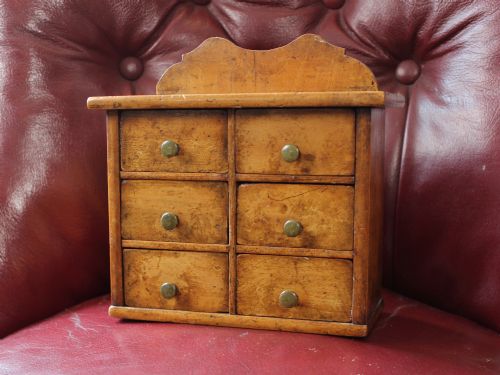
Most frequent are tabletop chests of drawers and miniature chests in mahogany, walnut, and oak, alongside specialist forms such as watchmaker cabinets, spice drawers, and seed chests. These pieces range from apprentice works to utilitarian shop fittings and refined display cases.
Construction styles draw upon Regency, Gothic Revival, and Flemish Baroque traditions, demonstrating how master cabinetmakers applied full-scale architectural detailing to diminutive proportions.
Materials and Construction
Makers utilised dense hardwoods including mahogany, walnut, burr walnut, rosewood, and satin walnut, frequently complemented by secondary pine, fruitwood, and oak carcases. Surfaces often display decorative veneers, boxwood stringing, or brass handles and locks.
Joinery techniques relied on precise dovetail joints for drawer construction and sturdy mortise and tenon frames to support repetitive daily use. Glass doors, mirrored panels, and brass fitments appear on specialised display and locking cabinets.
Desktop Collectors Cabinet Retail Price Guide 2026
Typical asking prices for desktop collectors cabinet among the pieces listed under this phrase on Sellingantiques today, from the lower quarter to the upper quarter. They describe what is for sale here now, not the wider market.
Some miniature drawers still carry the faint, sweet aroma of stored cigars from Victorian smoking rooms.
Assessing Quality and Execution
Quality rests upon the selection of timber figures, such as burr walnut or figured mahogany, and the precision of the underlying cabinetmaking. Superior examples exhibit tightly fitted drawers, matched grain patterns, and intact original brass hardware.
The degree of hand-carved ornamentation or delicate inlay work separates standard utility pieces from exceptional table cabinets made for prominent displays. Internal drawer linings and functioning original locks further distinguish the finest specimens.
Manoah Rhodes & Sons Ltd
The Desktop Collectors Cabinet Glossary
- Apprentice piece
- A small-scale item created by a trainee artisan to demonstrate mastery of joinery before entering a guild.
- Wellington chest
- A tall, narrow chest of drawers secured by a hinged locking stile on one vertical edge.
- Specimen cabinet
- A piece designed with shallow drawers specifically for housing botanical, geological, or entomological collections.
- Humidor
- A specialised box or cabinet lined to maintain humidity for the storage of cigars.
- Stringing
- Thin lines of contrasting wood inlay used to border drawer fronts and tabletops.
Desktop Collectors Cabinet: Frequently Asked Questions
What were desktop collectors cabinets used for?
These miniature pieces provided secure, organised storage for natural history specimens, coins, medals, and small personal valuables. Collectors utilised the shallow drawers to protect delicate items from dust and light.
Over time, they transitioned from utilitarian scientific storage into decorative desktop accessories for studies and drawing rooms. Their compact footprints allowed owners to keep prized possessions close at hand.
How do I date a desktop collectors cabinet?
Dating relies on observing timber choices, construction methods, and prevailing decorative styles. Mahogany and oak dominate nineteenth-century pieces, while burr walnut and rosewood often indicate high-status Victorian or Regency examples.
Secondary woods, dovetail tightness, and the presence of original brass locks or handles offer further clues. Comparing the form against documented Georgian, Victorian, and Edwardian periods helps narrow the manufacturing window.
Where should I place a table cabinet at home?
A table cabinet sits comfortably on top of desks, sideboards, or chests where its detailed grain and hardware remain visible. Placing it out of direct sunlight preserves vulnerable veneers and polished wood finishes.
Ensure the supporting surface is level so that small drawers operate smoothly without binding. They function well both as display focal points and as functional storage for modern trinkets.