



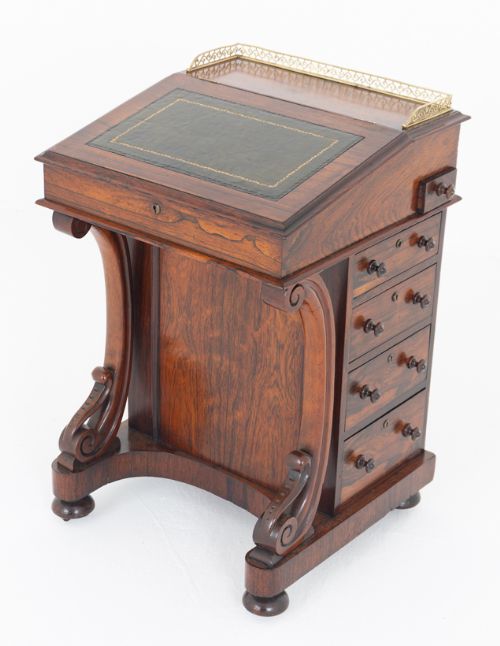


Dark Wood Davenport
These dark wood davenport desks combine compact utility with rich timber surfaces, offering a stately writing solution for smaller spaces.
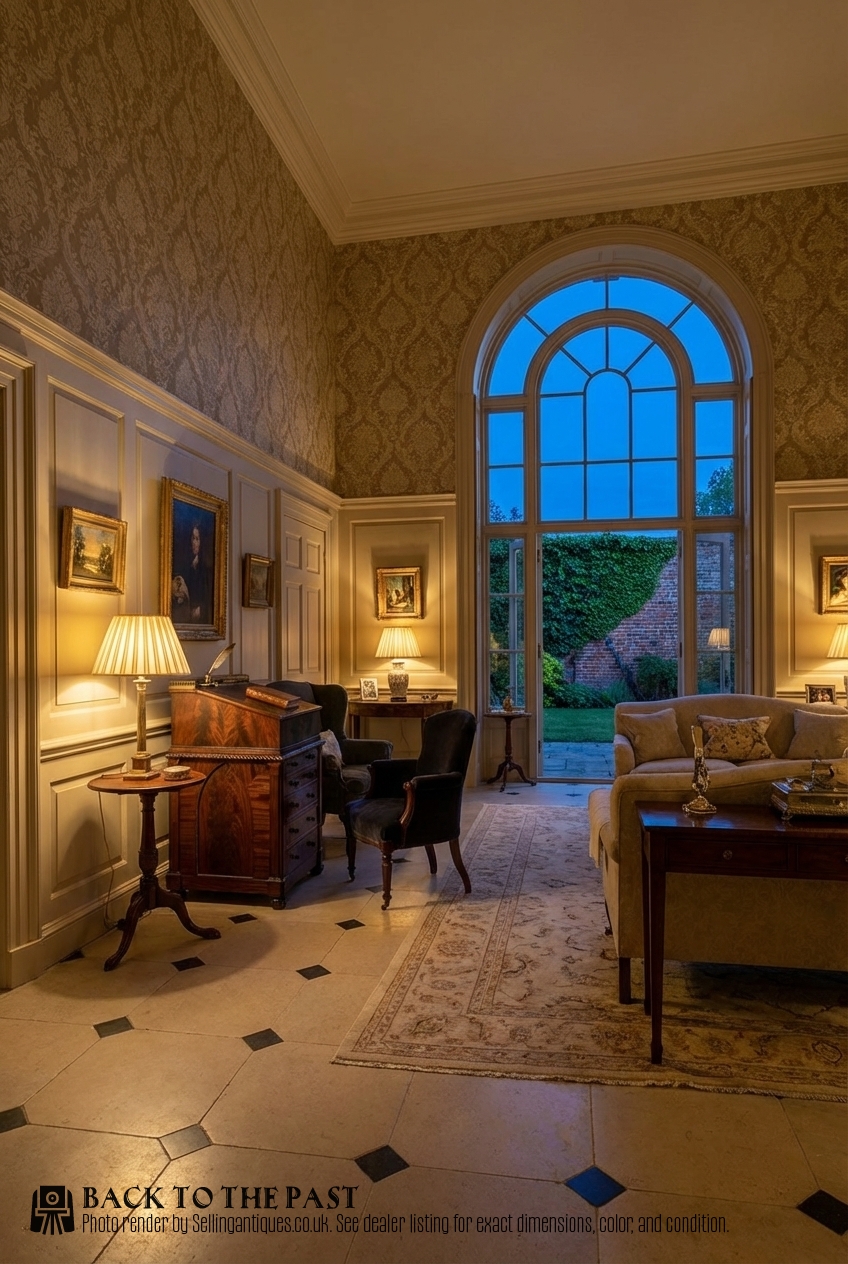
Dark Wood Davenport
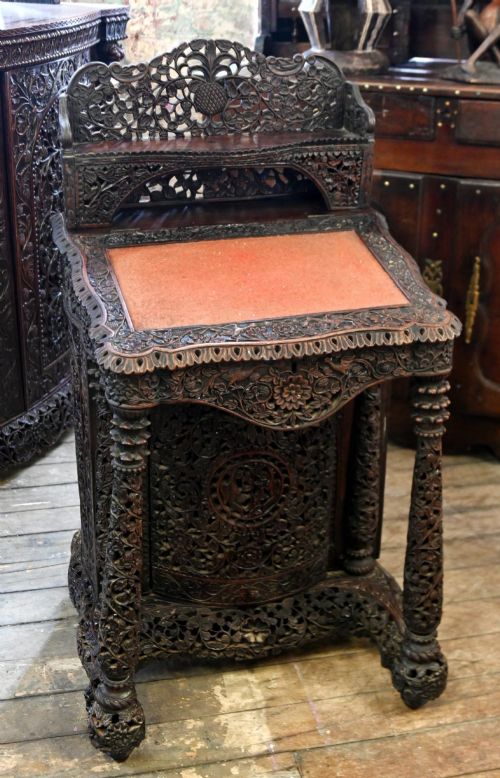
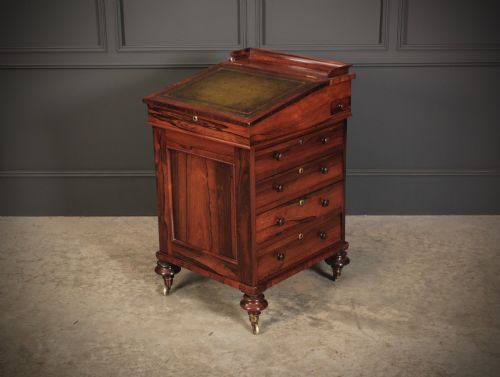
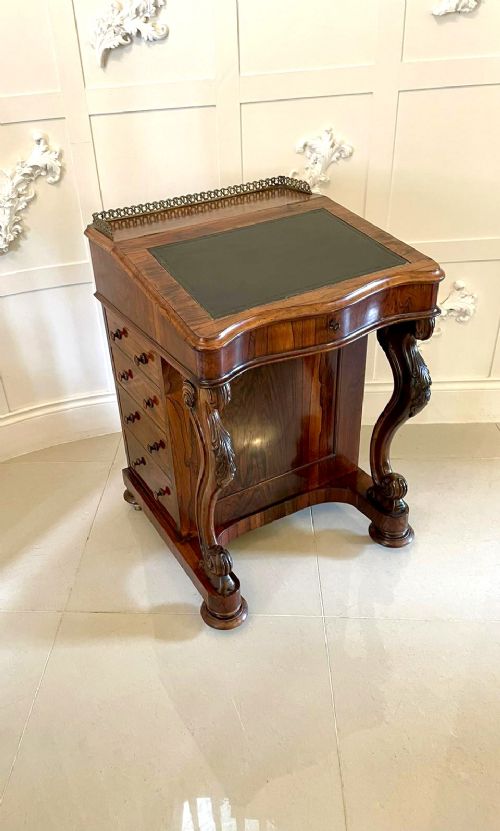
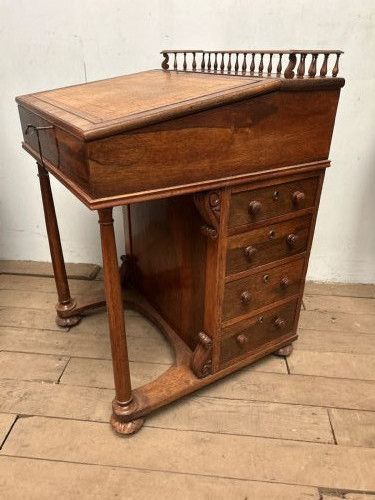
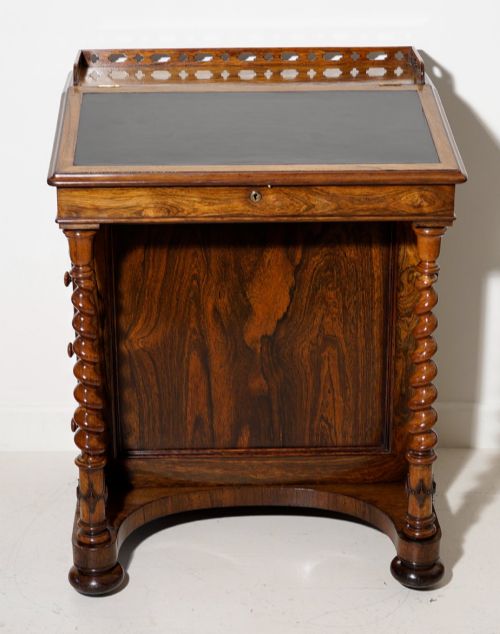
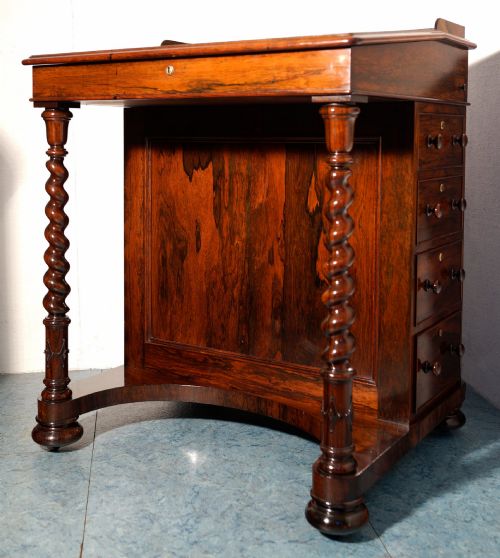
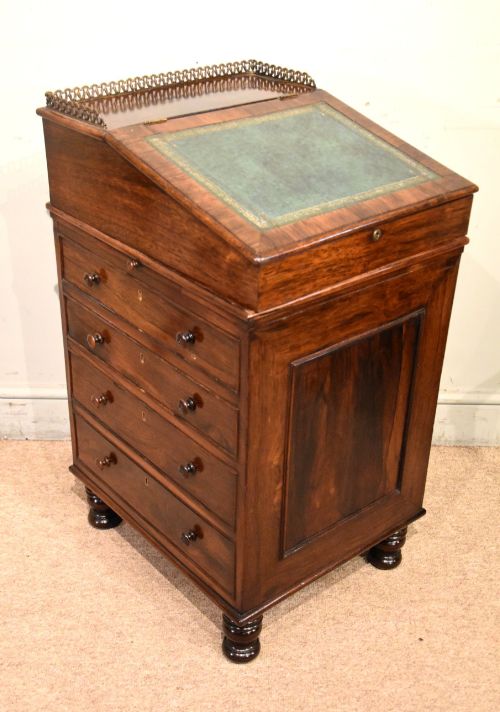
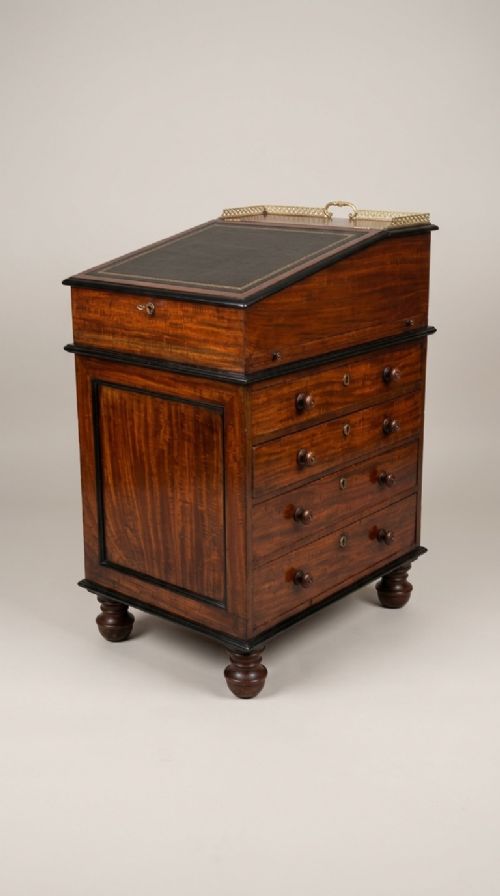
A dark wood davenport takes the form of a compact writing desk equipped with a sloping top and banks of side drawers. These pieces emerge across the Georgian, Regency, William IV, and Victorian eras, carrying designations such as Early Victorian, Aesthetic Period, and Sheraton Revival.

Materials and construction
Cabinet makers utilise dense hardwoods including mahogany, rosewood, walnut, and coromandel to build the carcass of each desk. Surfaces frequently incorporate contrasting satinwood inlay and ebonised wood details to delineate panels and edges.
Functional elements integrate leather writing surfaces inset into the sloping lids, alongside brass hardware and operational keys for the drawers. Desks are constructed to stand independently, including freestanding configurations finished on all sides.
Dark Wood Davenport Retail Price Guide 2026
Typical asking prices for dark wood davenport among the pieces listed under this phrase on Sellingantiques today, from the lower quarter to the upper quarter. They describe what is for sale here now, not the wider market.
Listings feature woods including mahogany, rosewood, walnut, coromandel, and ebonised wood across Regency and Victorian periods.
Distinctions in quality
The upper tier of pieces displays meticulous timber selection, where figured grains in rosewood or mahogany are matched symmetrically across the writing slope and drawer fronts. Cabinet work of higher ambition includes integrated satinwood inlay and sophisticated freestanding capabilities.
Execution of secondary details, such as the precision of brass fittings and the integration of functional keys, separates standard production from workshop-attributed pieces. The presence of specific stylistic movements, like Aesthetic Period detailing or Sheraton Revival motifs, influences the refinement of the final form.
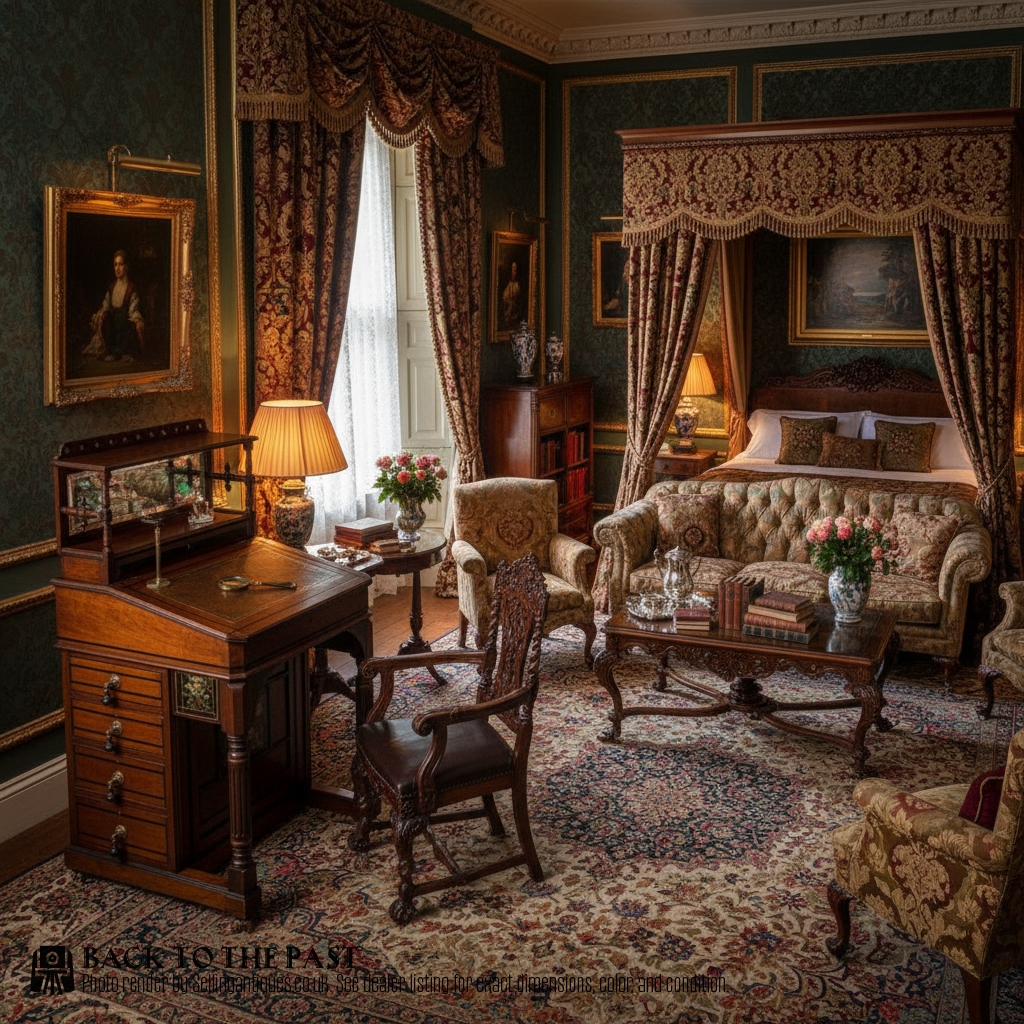
Gillows
The Dark Wood Davenport Glossary
- Davenport
- A compact writing desk featuring a sloping lid that lifts or opens for storage, typically mounted above a pedestal of drawers. This form provides a smaller footprint than a traditional partner desk while maintaining storage capacity.
- Freestanding
- Finished on all four sides so the piece can sit in the middle of a room rather than against a wall. This indicates a higher grade of original commission.
- Satinwood inlay
- Contrasting light timber inserted into darker wood surfaces to create decorative borders and motifs. This technique demands precise woodworking skills.
- Ebonised wood
- Timber treated to resemble ebony, providing dark, uniform contrast against lighter inlays or primary woods. It appears frequently in nineteenth-century decorative schemes.
Dark Wood Davenport: Frequently Asked Questions
What is a davenport desk used for?
A davenport provides a dedicated writing surface with a sloping lid, accompanied by internal compartments for stationery and side drawers for papers. Its compact footprint made it suitable for drawing rooms and boudoirs.
Historically, writers utilised the slanted top for correspondence while keeping ink and nibs stored within the superstructure. The accompanying drawers secured personal documents and small valuables.
How do I date a dark wood davenport?
Dating relies on identifying stylistic markers from periods such as Regency, William IV, or Victorian eras, alongside timber choices like rosewood and mahogany. Specific construction methods and hardware also indicate the decade of manufacture.
Evidence from dates associated with pieces ranges from the 1830s through to Sheraton Revival examples from 1890. Comparing handles, inlay styles, and secondary woods helps narrow the timeframe.
Are davenports freestanding pieces?
Many davenports are designed to sit against a wall, with plain backs and functional drawers accessible from one side only. Others are built as freestanding items finished fully on all sides.
Freestanding versions allow placement in the centre of a room, showcasing timber grain and craftsmanship from every angle. Cabinet makers reserved this treatment for superior commissions.
What woods were used for davenports?
Cabinet makers predominantly used dense dark hardwoods including mahogany and rosewood for primary surfaces. Walnut and coromandel also appear among nineteenth-century examples.
Secondary decorative elements frequently include satinwood inlay and ebonised wood details. Leather panels are traditionally inset into the writing slopes.