
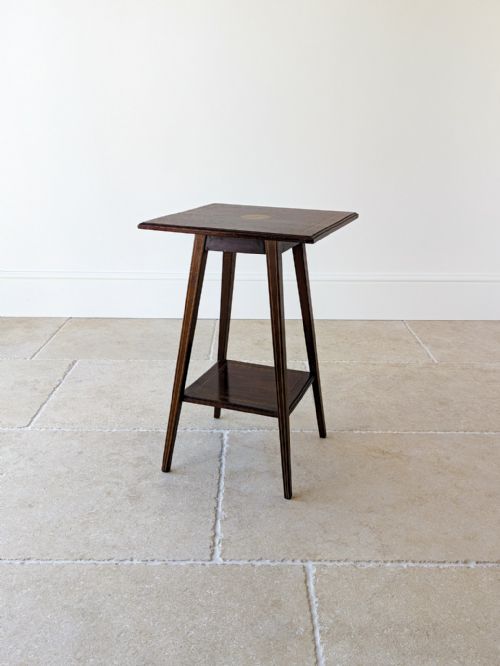
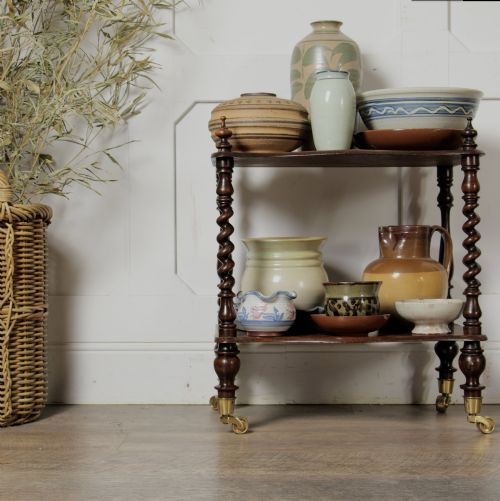
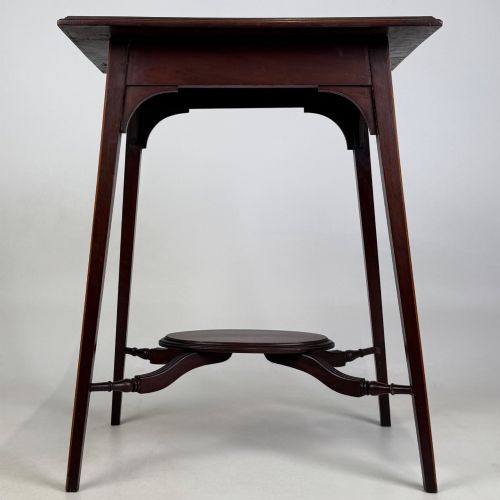
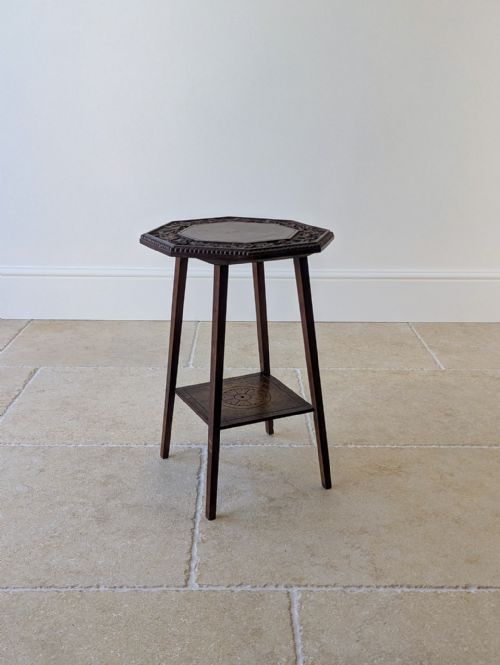

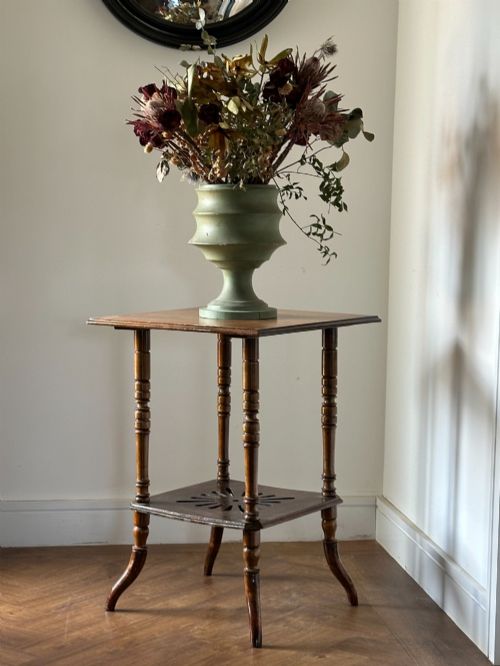
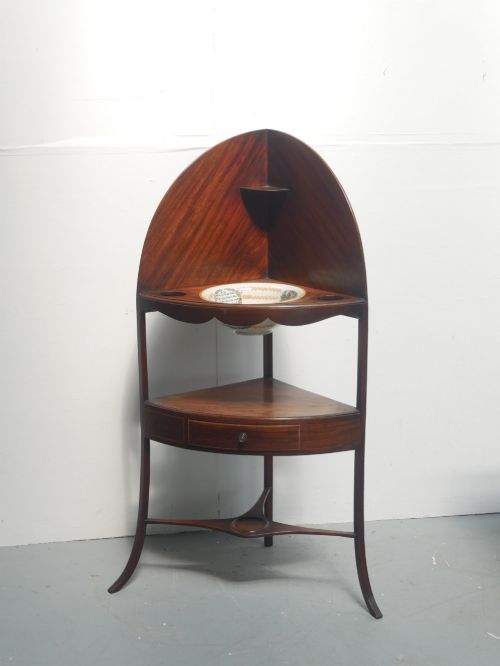
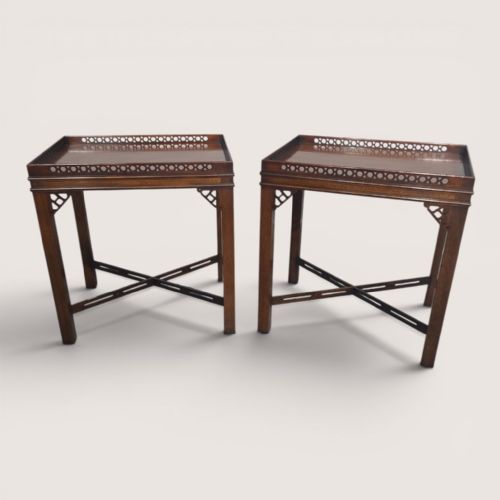

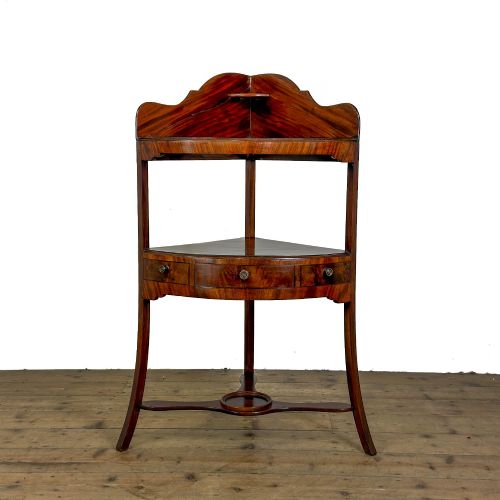
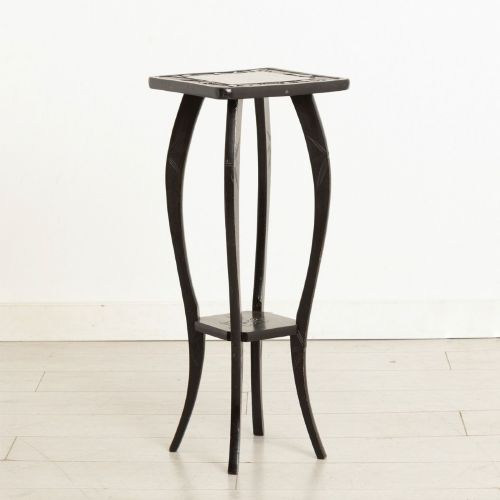
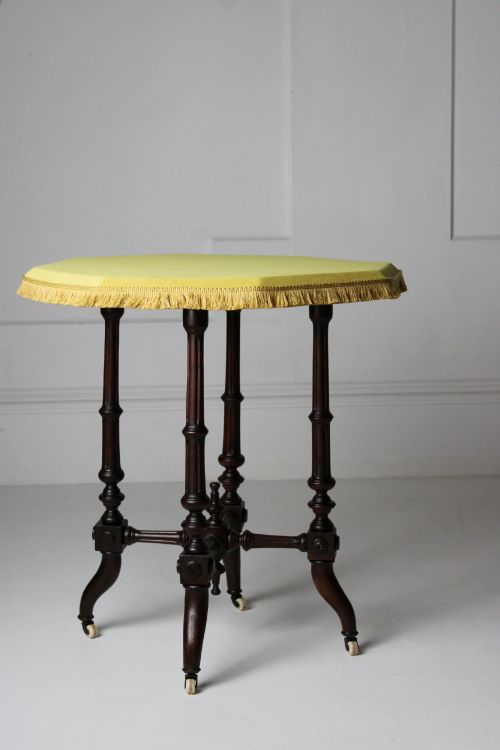
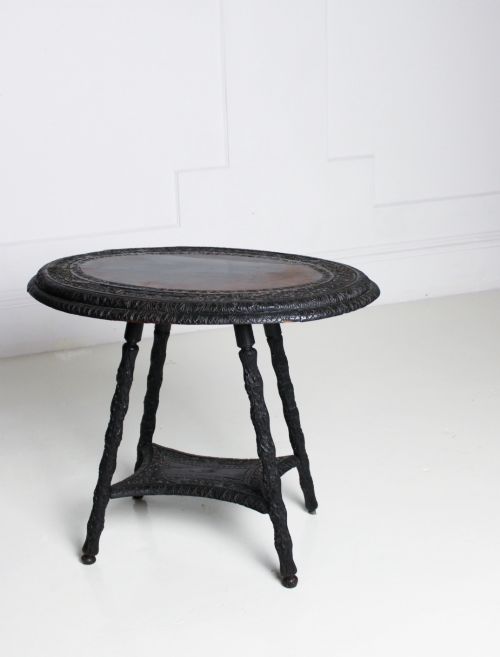
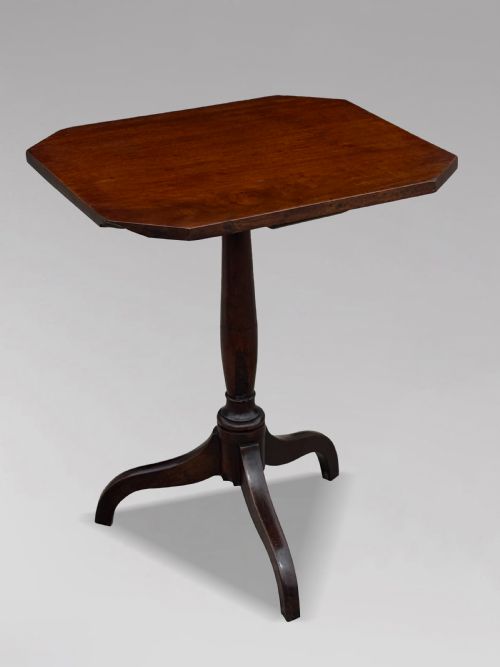
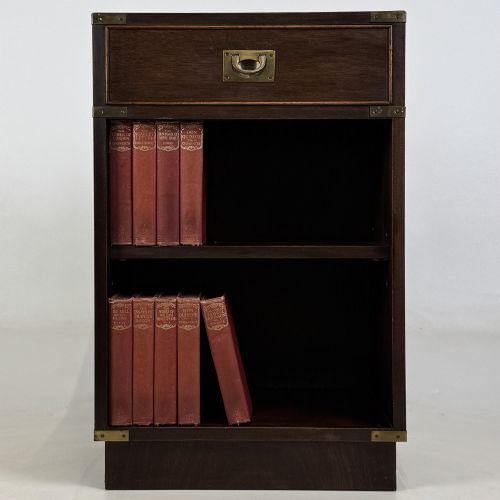
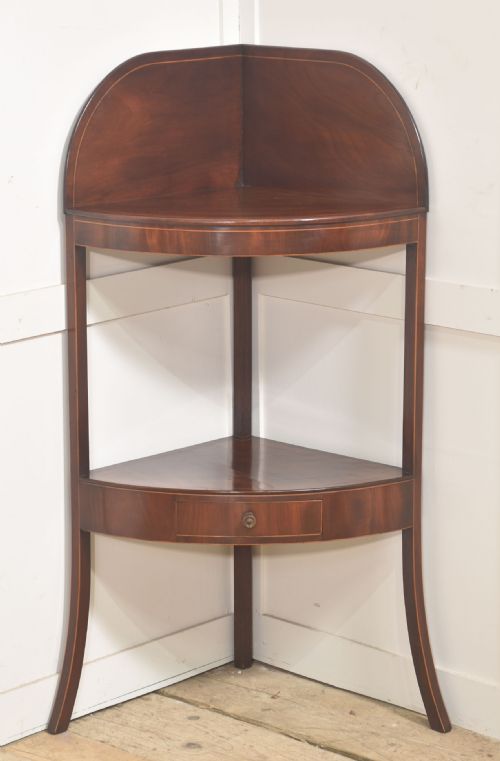
Dark Wood Corner Table
A dark wood corner table turns awkward angles into useful surfaces, bringing warmth and character to neglected corners.
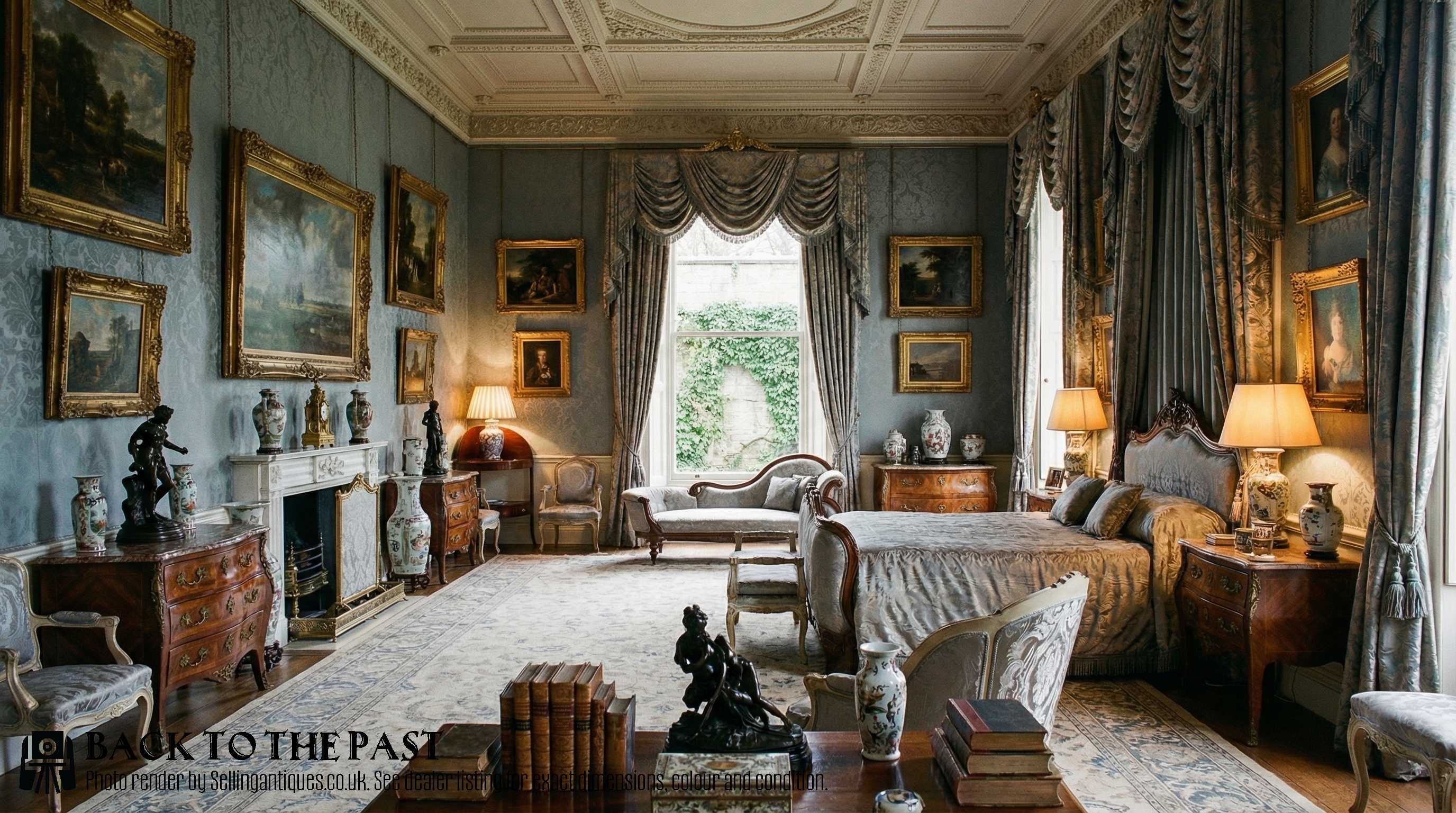
Dark Wood Corner Table
A dark wood corner table serves as a practical space-saving solution designed to fit snugly into room angles. These pieces range from Georgian and Victorian washstands to drop-leaf tables and cupboards, utilising rich timbers to anchor empty spaces.
Originating across the 18th, 19th, and early 20th centuries, these tables reflect the domestic needs of past interiors. Makers adapted standard furniture forms to fit domestic corners, resulting in distinct triangular and multi-sided shapes.
Materials and Construction
Cabinet makers relied heavily on dense hardwoods like mahogany, oak, and walnut, often accentuating the grain with brass hardware or contrasting boxwood and satinwood inlay. These durable timbers provided the structural integrity required for three-legged tripod frames and rigid corner supports.
Construction techniques varied from traditional joinery in Georgian workshops to turned spindle bases and carved details seen in Victorian and Arts and Crafts examples. Drop-leaf mechanisms and folding table tops demonstrate clever engineering designed for flexibility in smaller rooms.
Some corner tables were originally built with hidden basins, proving that even Georgian ancestors liked to keep their morning routines neatly tucked away.
Assessing Quality and Craftsmanship
Quality in a dark wood corner table rests on the selection of timber and the precision of the joinery where the sides meet the wall. Superior pieces display carefully matched wood grains, crisp hand-carving, and original brass fittings that remain tight and true.
The distinction between standard utility furniture and finer examples lies in the refinement of the secondary woods and the subtlety of decorative details such as string inlay or turned legs. Pieces retaining their original structural elements and patination command greater appreciation among collectors.
Liberty & Co.·Liberty of London
The Dark Wood Corner Table Glossary
- Washstand
- A piece of furniture designed to hold a basin and pitcher, frequently built into a corner shape during the Georgian and Victorian periods to save space.
- Drop-leaf table
- A table featuring hinged flaps that can be raised to expand the surface area or lowered when space is restricted.
- Whatnot
- An open set of tiered shelves used for displaying ornaments or books, often designed to fit into room corners.
- Inlay
- A decorative technique where contrasting woods like boxwood or satinwood are inserted into recesses within the primary timber surface.
- Tripod table
- A freestanding table supported by a single central pillar resting on three spreading feet for stability.
Dark Wood Corner Table: Frequently Asked Questions
What is a dark wood corner table used for?
These tables provide a practical surface in room angles that standard rectangular furniture cannot occupy efficiently. Historically, they served as washstands, lamp tables, or display surfaces for decorative objects.
Today, they function well as lamp tables, plant stands, or small writing surfaces in hallways and living rooms. Their specific triangular or multi-sided footprints allow them to utilise dead space effectively.
How do I identify a Georgian corner table?
Georgian examples typically feature solid mahogany construction, understated lines, and functional design elements like enclosed cupboards or cut-outs for washbasins. They rely on proportion and timber quality rather than heavy ornamentation.
Look for period-appropriate joinery methods and secondary woods such as pine or oak on the interior surfaces. The patination on older pieces generally exhibits a deep, warm lustre developed over centuries.
Are these tables suitable for small rooms?
Their primary historical purpose was to occupy unused room angles, making them ideal for compact spaces. Drop-leaf variants offer adjustable surface sizes depending on daily requirements.
Because they sit flush against two walls, they project less into open floor areas than standard occasional tables. This geometry makes them particularly effective in narrow hallways or snug corners.
What woods were used for these pieces?
Mahogany is the most frequent material seen in these listings, valued for its strength and rich colour. Oak, walnut, and rosewood also appear across various 19th and early 20th-century examples.
Finer pieces sometimes incorporate lighter contrasting woods like boxwood and satinwood for inlaid geometric or floral patterns. Unseen interior components often utilise secondary timbers characteristic of their period of manufacture.