


Mahogany Wash Basin Stand
A mahogany wash basin stand is a practical piece of Georgian or Victorian bedroom furniture designed to hold a basin and washing equipment.
Mahogany Wash Basin Stand
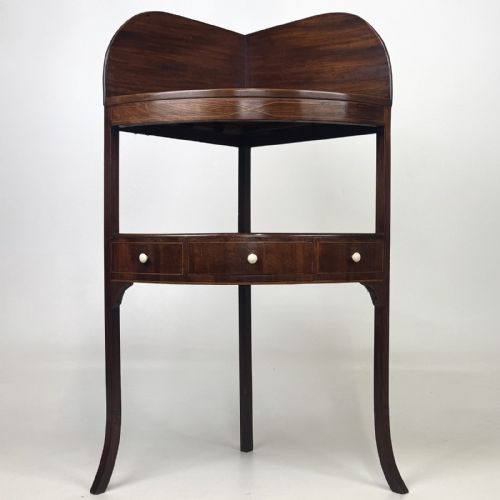
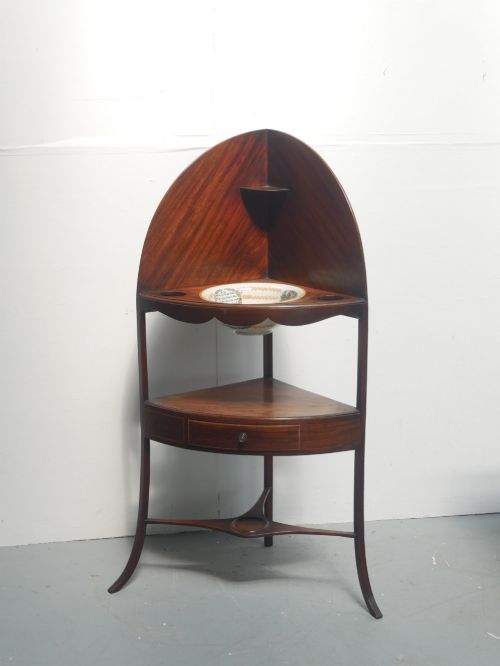
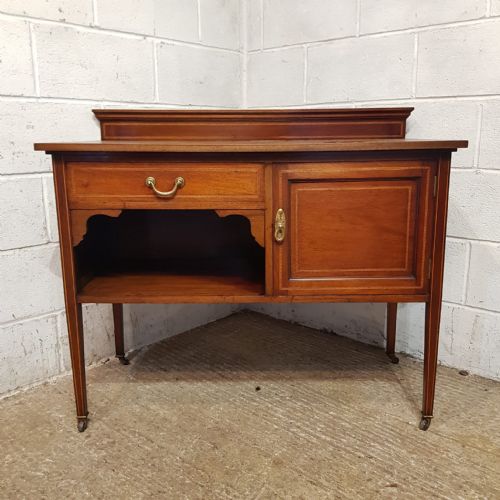
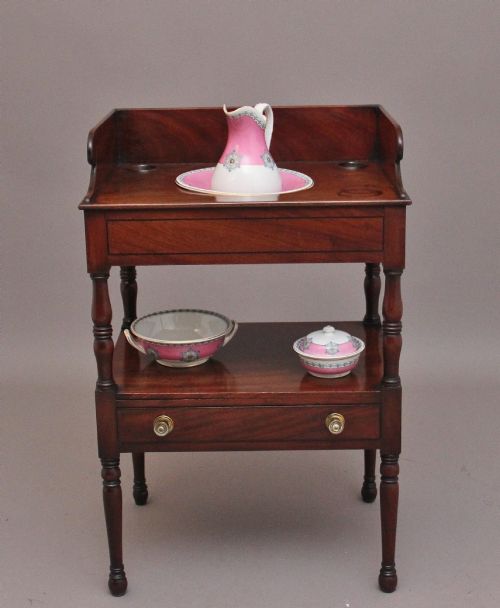
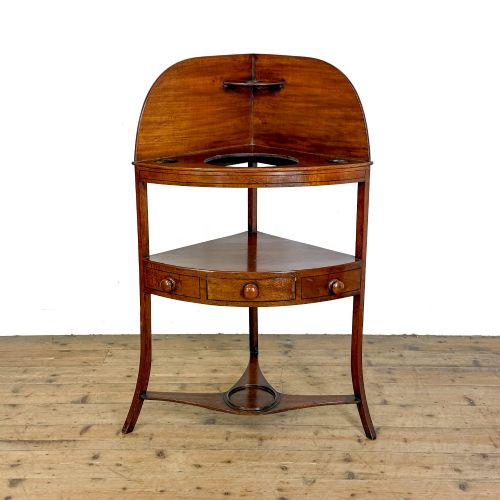
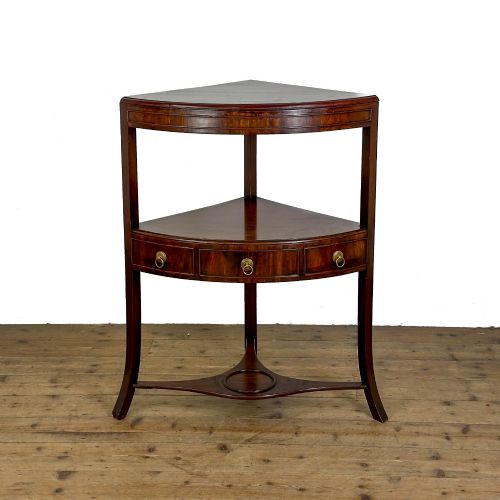
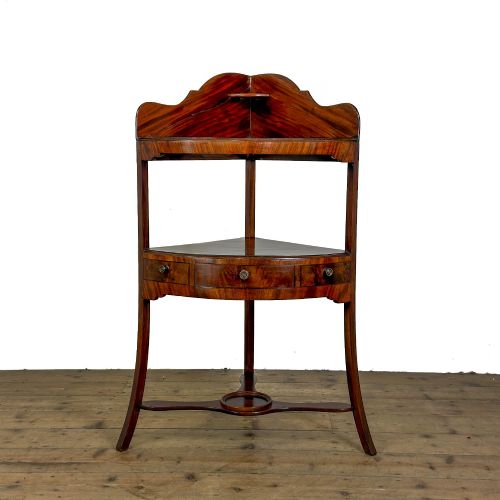
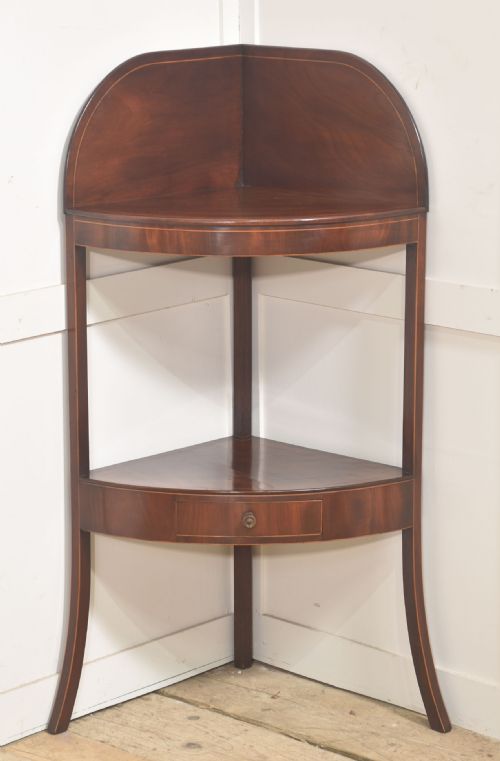
When you search for a mahogany wash basin stand, you encounter several distinct forms spanning the Georgian, Regency, and Victorian periods. The corner washstand is by far the most common layout, engineered to fit neatly into room angles with tiered shelves for water jugs and soap.
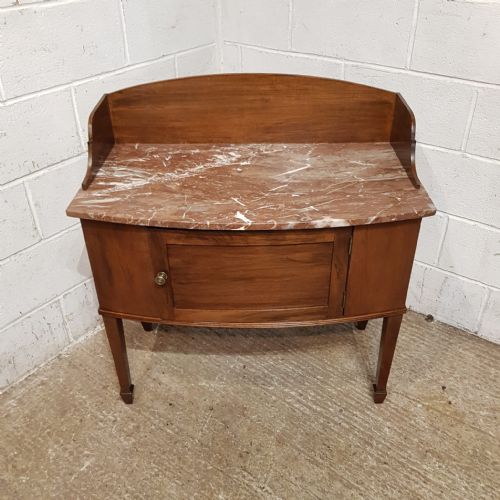
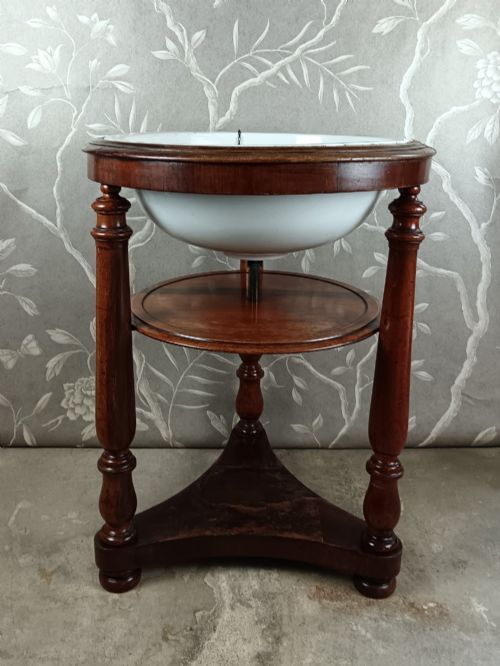
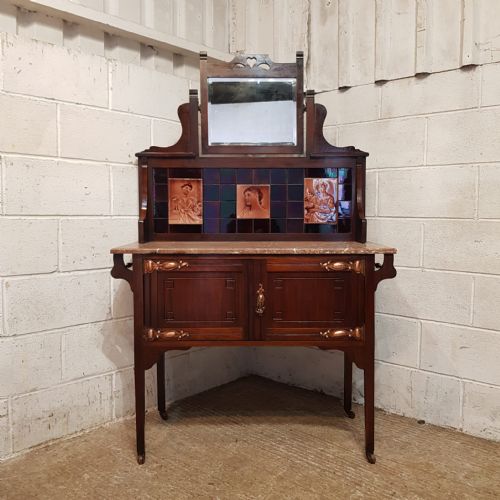
Beyond corner configurations, pieces appear as freestanding bow front units, round campaign frames, and occasional plant stands or wig stands. Construction dates range from the eighteenth century through to Edwardian variations, incorporating ceramic basins, marble tops, and fold-down lids.
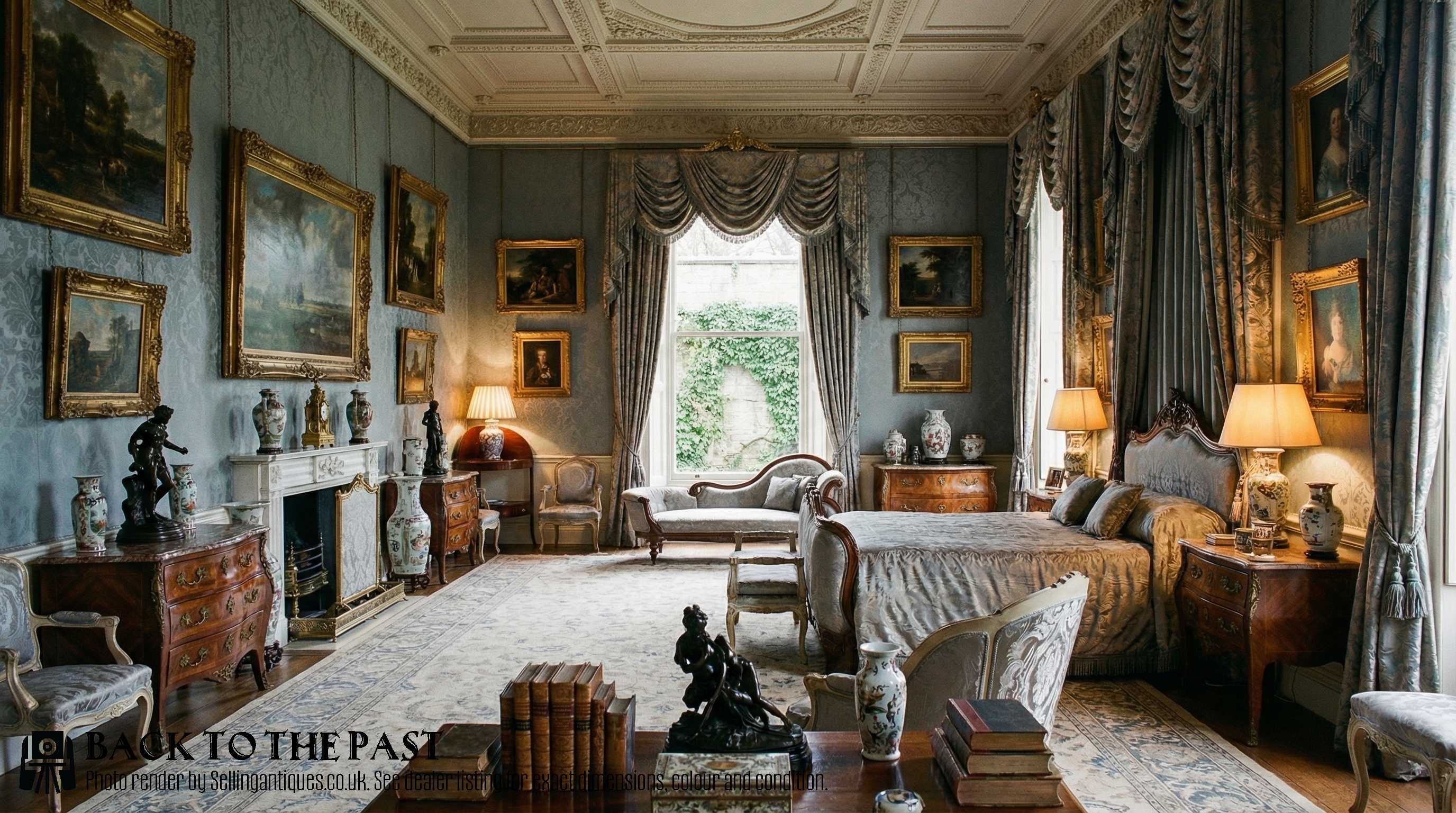
Stylistic influences vary from plain George III designs to inlaid boxwood borders and Art Nouveau touches. Many surviving examples retain functional secondary uses as lamp or plant tables within modern homes.
What varies in quality
The degree of refinement in timber selection and secondary woods dictates the standing of an individual piece. Superior examples display tighter grain figures, crisp boxwood stringing, and precise corner joints that withstand decades of use.
Listings feature mahogany wash basin stands across Georgian, Regency, Victorian, and Edwardian periods, utilising marble, ceramic, and boxwood inlay.
Gillows Lancaster
The Mahogany Wash Basin Stand Glossary
- Corner washstand
- A triangular piece of furniture designed to slot into the corner of a room, saving floor space while providing tiered surfaces for washing equipment.
- Bow front
- A convex curved cabinet front that projects outward, commonly found on later Georgian and Victorian washstands.
- Boxwood inlay
- Narrow strips of pale boxwood embedded into mahogany surfaces to create decorative geometric borders.
- Campaign washstand
- A portable, often collapsible piece designed for travel, featuring a round basin supported by a triform stand.
Mahogany Wash Basin Stand: Frequently Asked Questions
How were washstands used?
Owners used washstands for morning hygiene routines, placing a ceramic bowl and pitcher on the top tier. Lower shelves provided space for soap, sponges, and slop buckets.
In modern interiors, many people repurpose them as plant stands, lamp tables, or hallway corner units.
How do I date a mahogany washstand?
Dating relies on stylistic clues and construction methods. Georgian pieces tend to have simpler, elegant proportions and occasional boxwood stringing, whereas Victorian models often feature heavy marble tops.
Cabinetry details and secondary woods inside the drawers also help pinpoint the era of manufacture.
Are marble tops original?
Marble tops appear frequently on Victorian washstands to provide a waterproof surface for washing equipment. Earlier Georgian versions generally featured solid mahogany tops with shaped cutouts for basins.
Checking the fit and edge finish helps determine whether a stone insert matches the period of the wooden frame.