


Period Corner Table
A period corner table makes clever use of overlooked domestic angles, uniting practical surface space with distinct cabinet-making traditions.
Period Corner Table
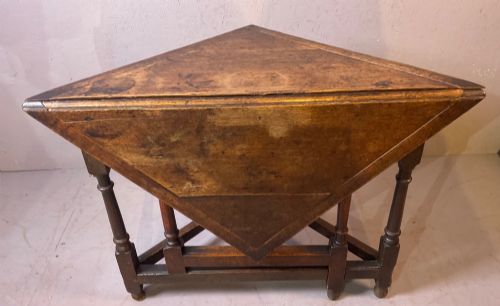
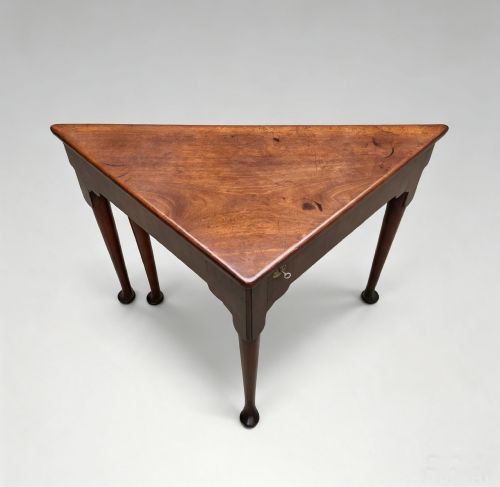
A period corner table fills awkward domestic angles with purpose, appearing in forms ranging from washstands and tea tables to tiered etageres. These pieces solve spatial puzzles by fitting snugly into room corners while offering functional tops and undertiers.
The most common examples on this page date from the Georgian and Regency eras, executed primarily in mahogany and oak. Buyers encounter designs adapted specifically for corners, such as triangular washstands with bowl apertures or folding tea tables designed to expand against walls.
Materials and Construction
Cabinet-makers relied heavily on figured mahogany and sturdy oak, often selecting timber for its grain pattern and structural resilience. Joinery techniques such as dovetailed drawers and pegged joints ensured these angled pieces remained stable under daily use.
Detailing often included boxwood inlay, reeded legs, and brass hardware to elevate the appearance of the timber. Surfaces were finished to highlight the natural warmth of the wood rather than masking it with heavy pigments.
Some corner tables hide hinged tops and clever compartments designed specifically to hold secret tea canisters.
Evaluating Quality
Quality rests in the precision of the joinery where angled panels meet and the retention of original brass fittings and timber patination. Superior examples show careful selection of grain across visible surfaces, ensuring the wood looks intentional from every angle.
The integrity of structural elements, such as the legs and tiers on etageres, distinguishes workshops that prioritized durability alongside elegance. Alterations to washstand cut-outs or replaced secondary timbers lower the standing of a piece.
The Period Corner Table Glossary
- Washstand
- A specialised piece designed for personal ablutions, featuring surface cut-outs for basins and lower shelves for ewers. These items often include small drawers and mirrored splashbacks.
- Etagere
- An open tiered shelving unit used for displaying decorative objects or books. They provide multiple surfaces without dominating floor space.
- Whatnot
- A multi-tiered stand similar to an etagere, utilised for holding ornaments and miscellaneous items. They grew in popularity during the Georgian and Regency periods.
- Tripod Table
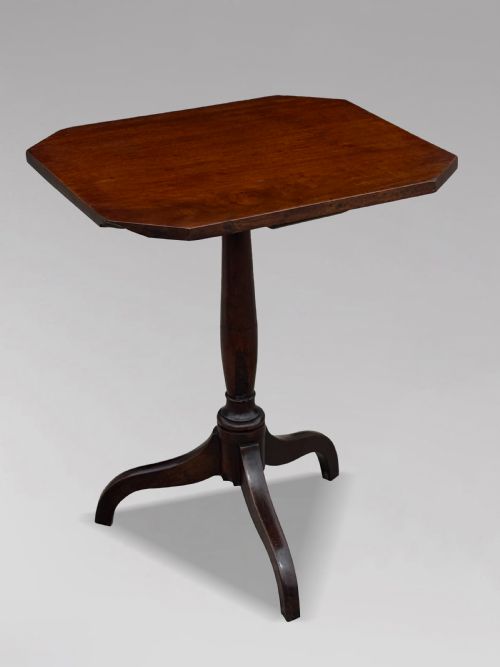
- A small occasional table supported by a central pillar and three splayed legs. This construction allows the table to stand firmly on uneven floors.
Period Corner Table: Frequently Asked Questions
Where do these tables work best?
These tables naturally suit unused corners in reception rooms, hallways, or bedrooms where a standard rectangular table would obstruct traffic flow. Their angled backs allow them to sit flush against adjoining walls.
They serve effectively as display surfaces for lamps, ceramics, or small collections without demanding significant floor space.
How do I identify a Georgian piece?
Georgian pieces generally exhibit proportions derived from classical architecture, utilising solid mahogany or oak with restrained decorative carving. Look for honest construction methods, such as hand-cut dovetails in drawer construction.
Secondary woods like pine or oak are typically found on interior linings and framing components, matching the period of manufacture.
What is an etagere used for?
An etagere provides multiple open tiers for organising and displaying decorative objects rather than heavy storage. They became fashionable in the Regency period for exhibiting porcelain and small curiosities.
The stepped shelves allow light to pass through the unit, keeping the piece visually light in a corner.
Are corner washstands still practical?
Corner washstands adapt easily to modern interiors as plant stands, bathroom shelving, or unique hall tables. The original basin apertures can sometimes hold decorative bowls or planter inserts.
Their compact triangular footprints make them exceptionally useful for narrow corridors and small powder rooms.