


Mahogany Wash Table
A mahogany wash table offers practical surface space combined with traditional craftsmanship, making it a versatile addition to period interiors.
Mahogany Wash Table
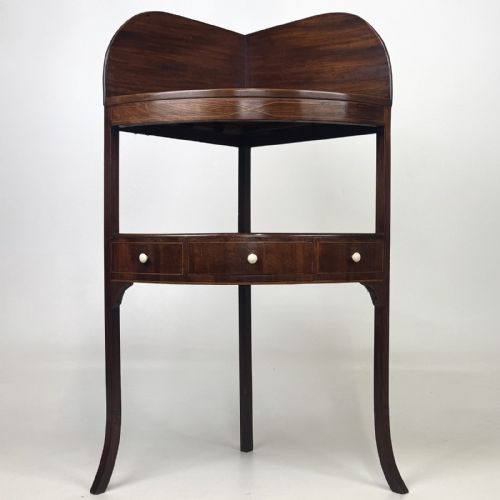
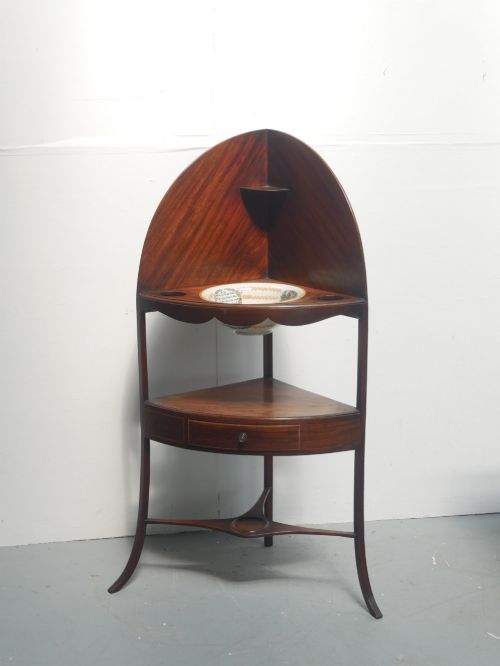
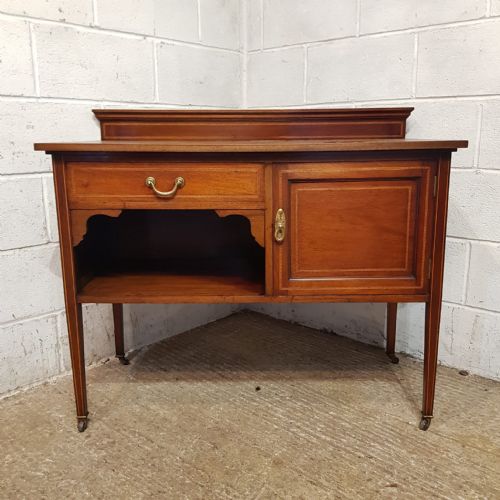
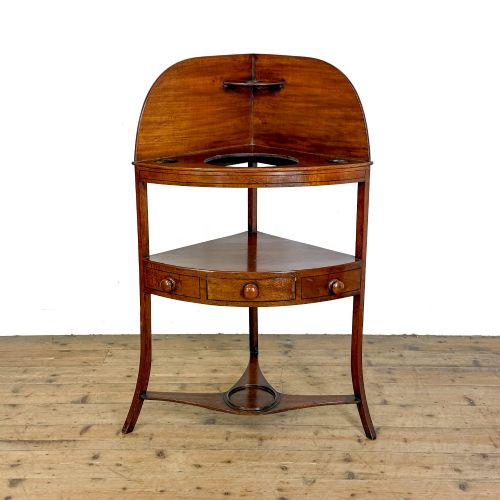
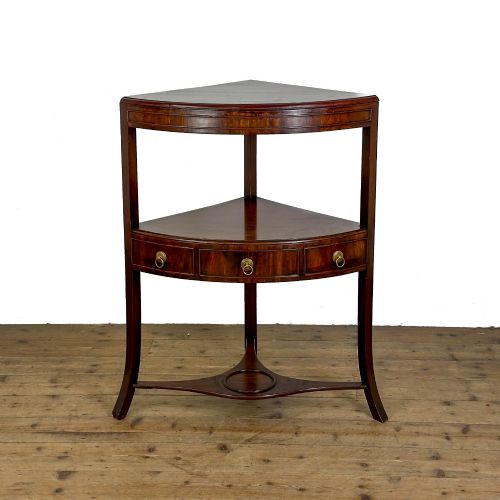
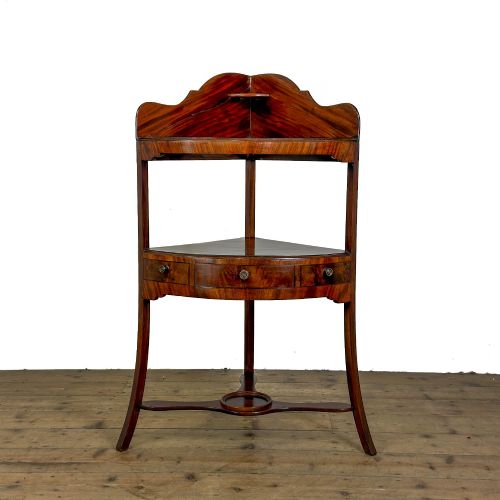
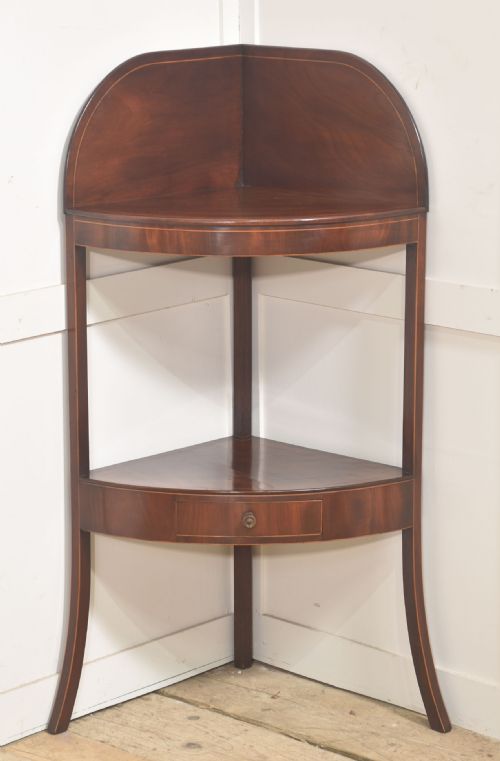
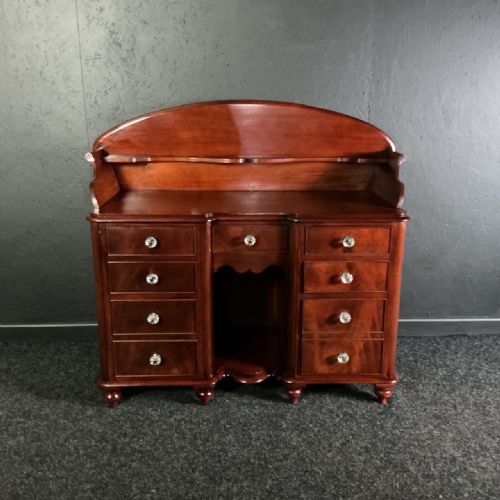
A mahogany wash table is a functional piece of antique furniture designed for personal hygiene before modern plumbing became standard in bedrooms. These pieces range from compact corner units intended to fit snugly in smaller rooms to substantial bow-fronted dressing tables fitted with stone surfaces.
The versions most commonly met on this page date from the Georgian period through to the Edwardian era, spanning the eighteenth, nineteenth, and early twentieth centuries. Many examples survive as corner washstands, bedside tables, or low side tables adapted over time for alternative household uses.
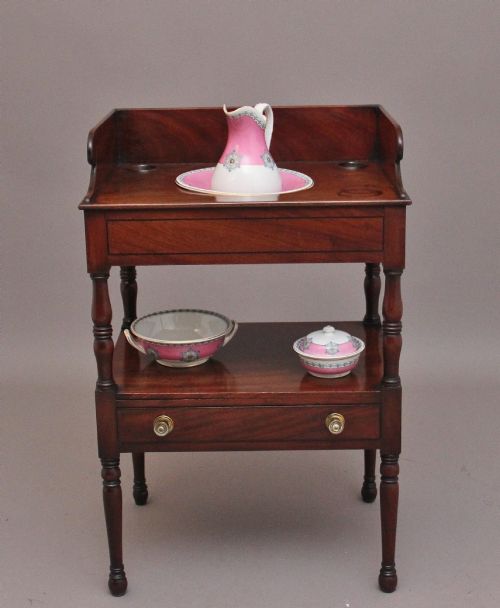
Makers designed these items to house basins, pitchers, and toiletries, frequently incorporating apertures in the top surface, lower tier shelves, and small drawers. Their proportions allow them to function easily as occasional tables, plant stands, or lamp tables in contemporary rooms.
How they were made
Cabinet makers constructed these pieces primarily using solid mahogany and mahogany veneers, often accented with contrasting boxwood inlay or stringing. Structural elements frequently incorporated secondary timbers, whilst finer George III and Regency examples deployed satinwood details and brass mounts.
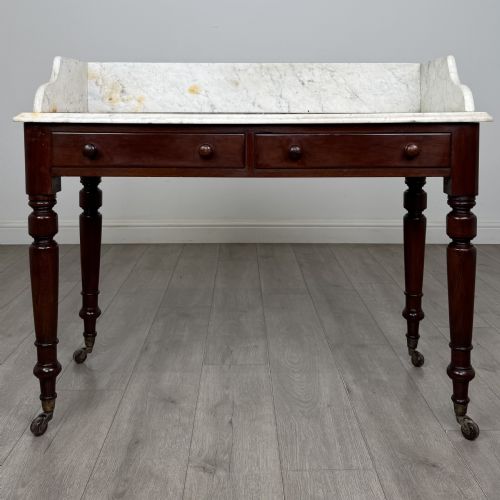
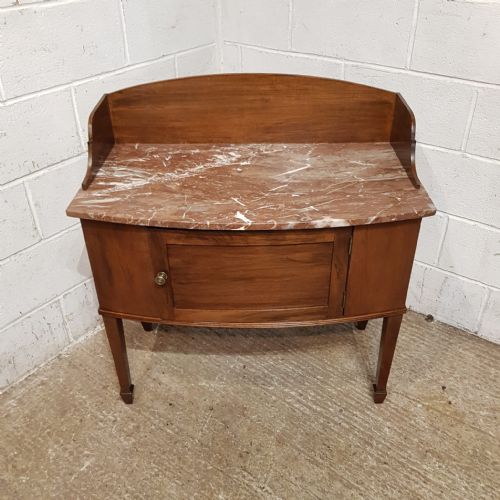
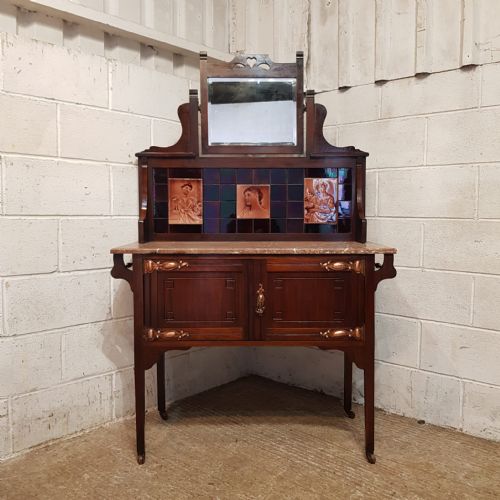
Later Victorian and Edwardian iterations frequently introduced heavy marble tops, particularly rouge or white varieties, alongside inset ceramic basins and glass components. Joinery techniques relied on traditional dovetailed drawers and sturdy corner bracing to support the weight of stone and water vessels.
Many a solid mahogany wash table spent its retirement holding a potted fern rather than a basin.
What varies in quality
The grade of timber selection and the precision of the cabinet work dictate the distinction between standard utilitarian items and high-end examples. Figured mahogany grain, crisp boxwood inlay, and well-executed cock-beaded drawer edges indicate superior workshop origins.
Proportion and structural integrity separate workshop output, particularly in corner formats where the curve of a bow front or the integration of a lower undertier demonstrates careful planning. Original hardware, intact marble slabs, and uncompromised structural joints preserve the integrity of the piece.
The Mahogany Wash Table Glossary
- Washstand
- A piece of furniture designed to hold washing equipment, water jugs, and basins. They appear in corner configurations, rectangular side table formats, and larger dressing table designs.
- Tray top
- A raised rim around the upper edge of a table designed to prevent washware or bottles from sliding off. This feature is particularly common on Georgian bedside tables and washstands.
- Bow front
- A convexly curved front facade found on certain Victorian and Regency examples. This shaping softens the angles of room corners and adds visual depth to smaller furniture.
- Undertier
- A lower shelf connecting the legs of a table, often shaped to receive a pitcher or basin. It adds structural stability while providing additional storage space.
- Boxwood inlay
- Contrasting light-coloured wood inserted into the darker mahogany surface in decorative lines or geometric patterns. It outlines panels and drawers on Georgian and Edwardian pieces.
Mahogany Wash Table: Frequently Asked Questions
How were wash tables used originally?
These tables served as the primary washing station in bedrooms before plumbed bathrooms existed. They held bowls, pitchers, soap dishes, and shaving gear.
Lower shelves and enclosed cupboards kept chamber pots, clean linen, and water supplies stored neatly out of sight.
Can I use a wash table as a bedside table?
Many smaller Georgian and Regency formats function well beside modern beds due to their compact footprints and surface heights. Drawer space accommodates bedside items while the top surface holds lamps and books.
Corner versions fit tightly into bedroom angles where standard rectangular nightstands fail to clear doors or windows.
How do I tell a Georgian wash table from a Victorian one?
Georgian versions typically feature lighter frames, elegant tapering legs, and tray tops designed for wooden or ceramic basins. They rely purely on timber construction with subtle stringing or inlay.
Victorian and Edwardian pieces frequently incorporate heavy marble slabs, tiled splashbacks, and broader proportions to accommodate changing interior styles and sturdier washware.
Are marble top wash tables original?
Stone tops became increasingly popular during the mid-nineteenth century as sanitation standards shifted and heavier materials were introduced. Victorian and Edwardian iterations frequently paired mahogany frames with white or rouge marble slabs.
Earlier eighteenth-century variants relied almost exclusively on wooden tops with raised rims rather than stone inserts.