


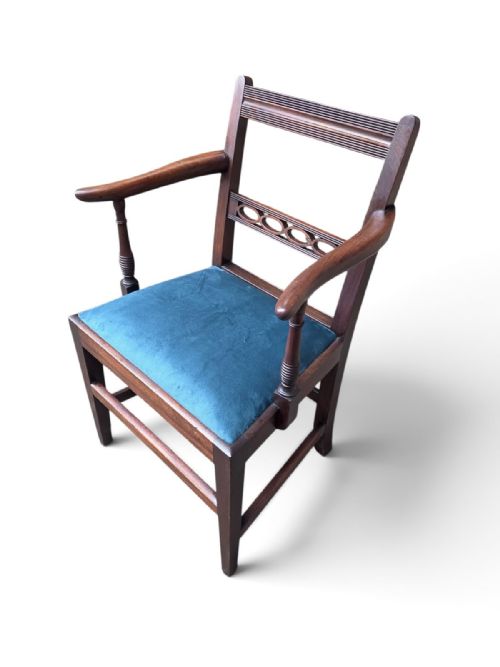
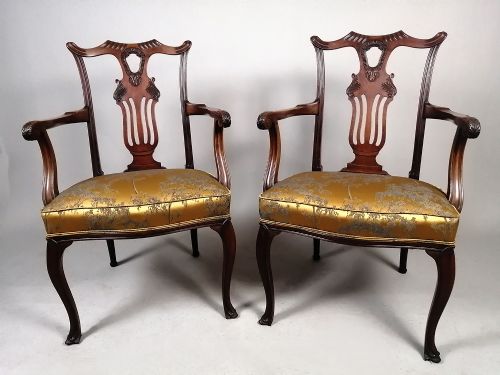
Dark Wood Carved Armchair
A dark wood carved armchair brings heavy timber and deep relief into a room, offering a seat built to anchor a study or a hallway.

Dark Wood Carved Armchair
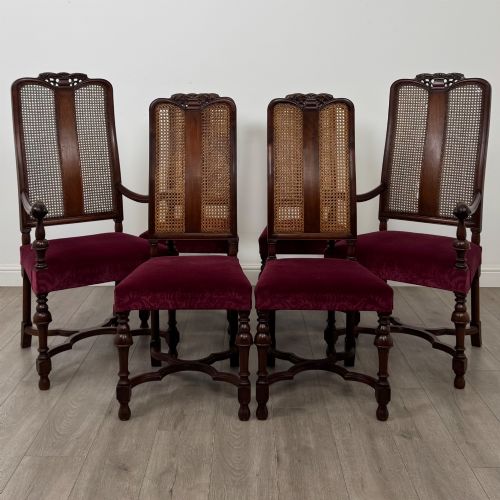
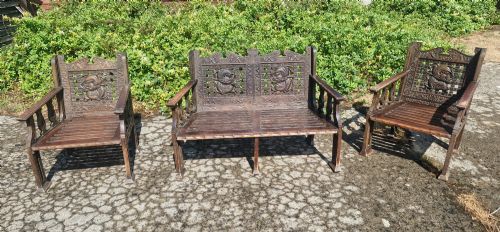
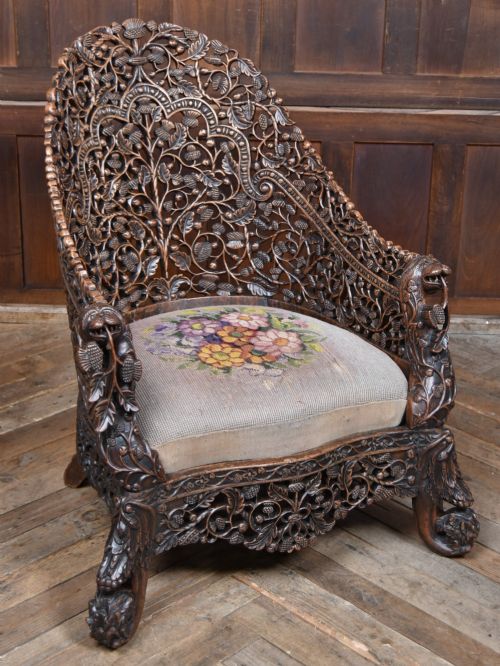
When you search for a dark wood carved armchair, you encounter heavy timber seating built across centuries, from seventeenth-century wainscot forms to nineteenth-century revival styles. The pieces on this page span diverse regions, including English oak and mahogany, Anglo-Indian blackwood, Burmese hardwoods, and Chinese elm.
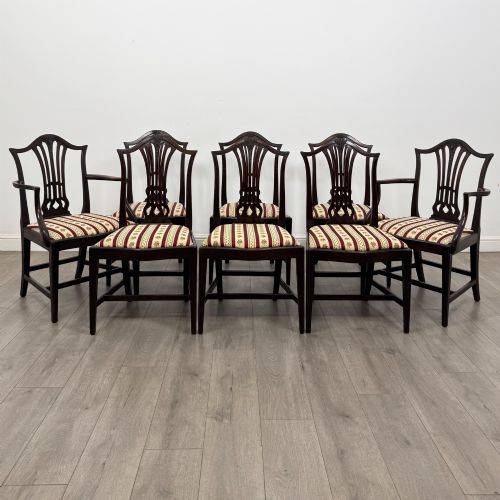
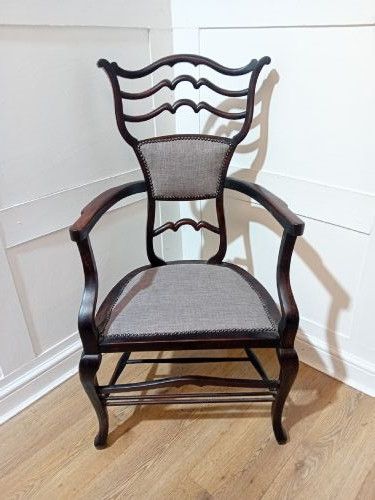
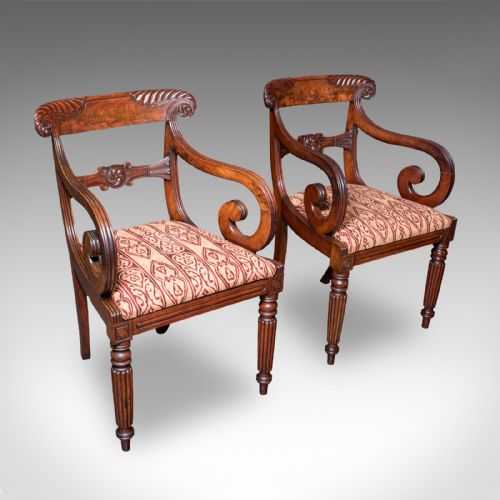
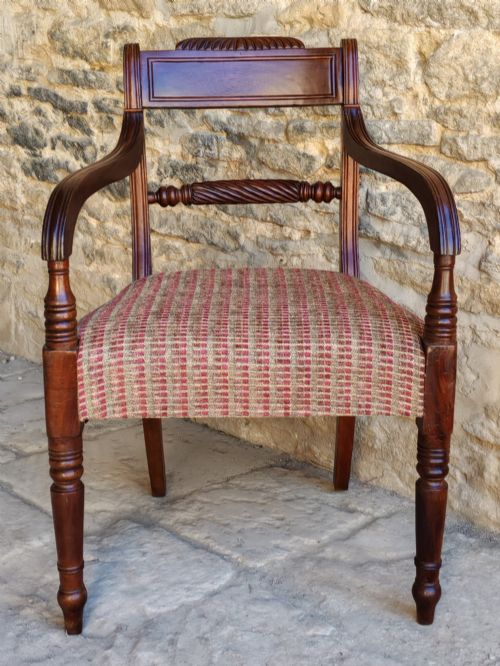
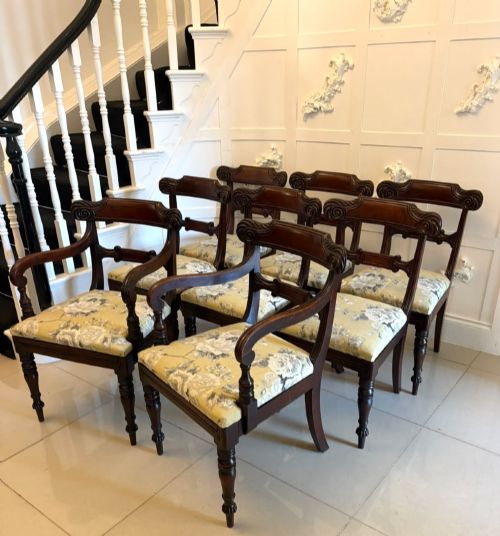
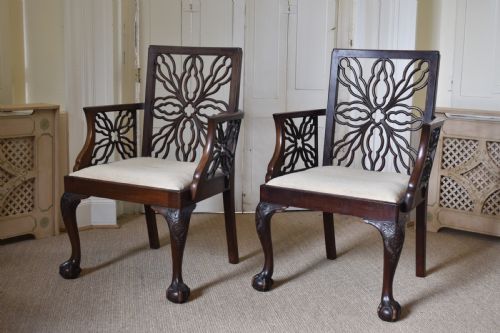
You are most likely to meet nineteenth-century mahogany and Victorian interpretations, alongside Georgian library chairs and twentieth-century cane-seated varieties. These seats take the form of open armchairs, desk chairs, carvers from dining sets, and imposing hall chairs.
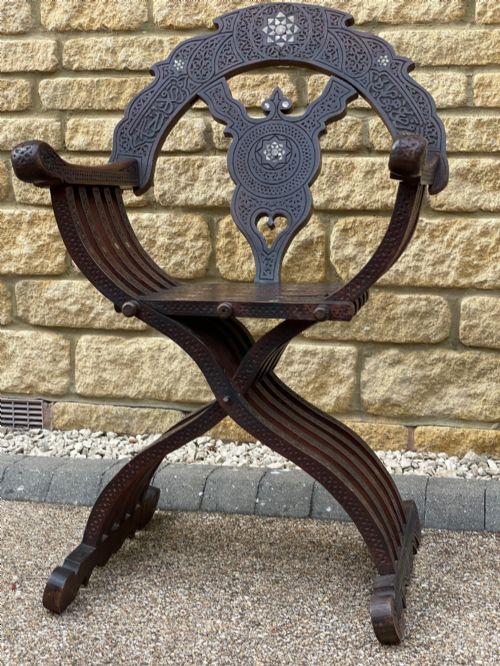
Regional details shape the selection profoundly, shifting from European walnut and oak to oriental hardwoods adorned with mother-of-pearl or intricate pierced carving. Each period brings distinct proportions, turning a simple functional seat into an architectural statement for the interior.
Materials and Technique
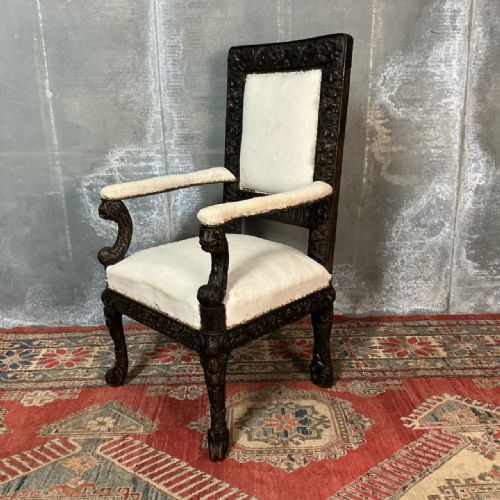
Cabinetmakers worked predominantly in dense timbers such as mahogany, oak, walnut, elm, and exotic blackwood, choosing materials that resisted splitting during deep chisel work. Timber selection dictated the depth of the relief, allowing carvers to execute crisp acanthus leaves, lion monopodia, or geometric strapwork.
Construction relied on traditional joinery like mortise and tenon frames, pinned joints, and steam-bent components for curved elements such as shield backs or horseshoe arms. Surfaces received hand-applied finishes, leaving visible grain and deep patinas that developed across generations of use.
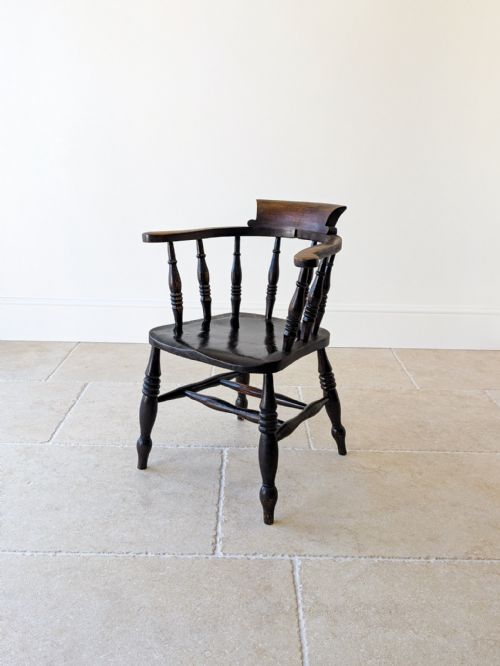
Seating forms range from Chinese horseshoe-back and yoke-back armchairs to English captain's chairs and Regency scroll arm carvers.
Assessing Quality and Execution
The distinction between ordinary and exceptional seating lies in the depth and crispness of the carving, where master carvers achieved sharp undercut details rather than shallow, rounded stampwork. Proportions play a critical role, ensuring that structural members like arm supports and legs harmonize with the scale of the backrest.
Timber selection and original surface condition dictate the upper tier of pieces, rewarding those retaining rich, undisturbed patinas and untouched joinery. Maker attribution or documented regional provenance elevates certain examples, separating standard workshop production from exhibition-quality works.
Alfred Allen of Birmingham·Andrea Brustolon·Thomas Hope
The Dark Wood Carved Armchair Glossary
- Carver
- An armchair designed to match a set of dining chairs, usually featuring open arms to accommodate wider clothing. These pieces often sat at the head of a table.
- Wainscot chair
- An early wooden armchair constructed primarily from oak with panelled backs, heavy turnings and solid plank seats. They represent seventeenth-century joinery traditions.
- Monopodia
- Furniture supports carved in the form of a single lion leg and paw, popularised during the Regency period after classical Roman models. This motif projects strength and antiquity.
- Yoke-back
- A traditional Chinese chair style featuring a top crestrail shaped like a yoke, curving upwards at the ends. It provides ergonomic support for the sitter's shoulders.
- Patina
- The surface sheen and softening of colour developed by wood over decades of handling, polishing and exposure to light. A good patina indicates age and regular maintenance.
Dark Wood Carved Armchair: Frequently Asked Questions
How do I date an antique wooden armchair?
Dating relies on examining the timber species, joinery methods, and the specific decorative vocabulary of the carved ornament. Regional characteristics and tool marks left by saws or chisels provide further clues to the decade of manufacture.
Comparing the structural proportions against known period styles helps narrow the origin, whether an eighteenth-century library seat or a Victorian revival piece.
Were these armchairs used at desks or dining tables?
Many examples functioned as carvers accompanying a set of dining chairs, while others served independently as writing, library, or hall seats. Their robust construction suited them for prominent positions in reception rooms and private studies.
The inclusion of open arms allowed sitters wearing voluminous historical garments to settle comfortably without restriction.
What is the difference between oak and mahogany pieces?
Oak chairs typically belong to earlier periods such as the seventeenth century, displaying visible grain, pegged joinery, and stiff rectilinear proportions. Mahogany emerged later, allowing for sharper, deeper carving and more fluid curves like scroll arms and lyre backs.
Choosing between them often depends on whether you prefer the rustic warmth of English oak or the dark, reddish polish of nineteenth-century mahogany.
How should I care for a carved wooden seat?
Protect the timber by maintaining stable humidity levels in the room, keeping the chair away from direct heat sources and strong sunlight. Regular dusting with a dry, soft cloth preserves the historic surface without stripping the natural oils.
Occasional application of appropriate microcrystalline wax helps nourish the wood and maintain its protective barrier against moisture.