


19th Century Indian Chair
These heavy, carved 19th century indian chair examples bring colonial craftsmanship and dense tropical hardwoods straight into a modern interior.
19th Century Indian Chair
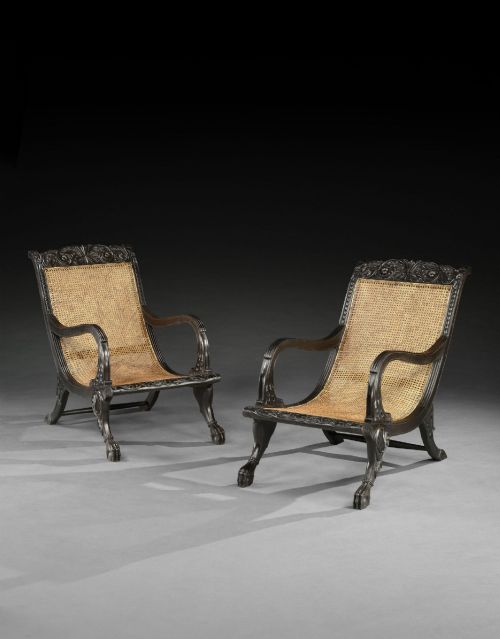
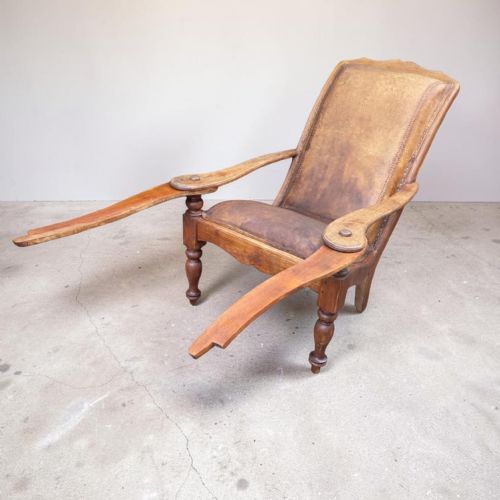
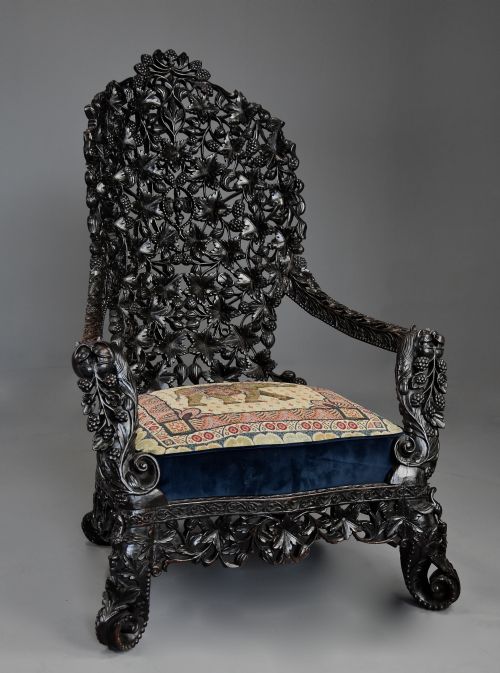
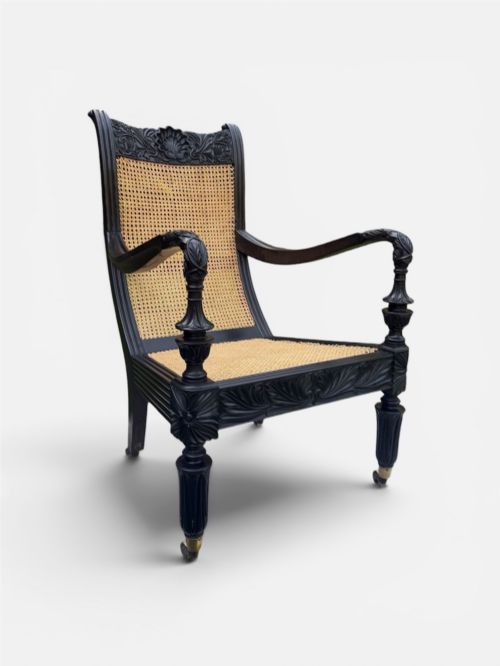
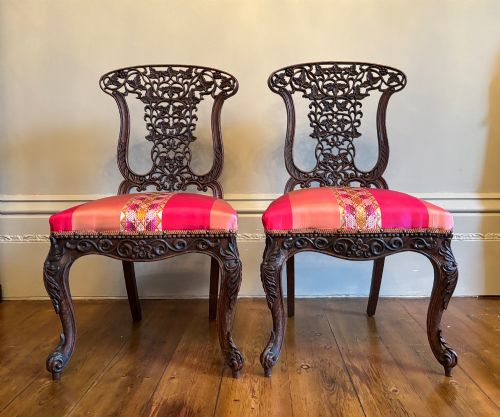
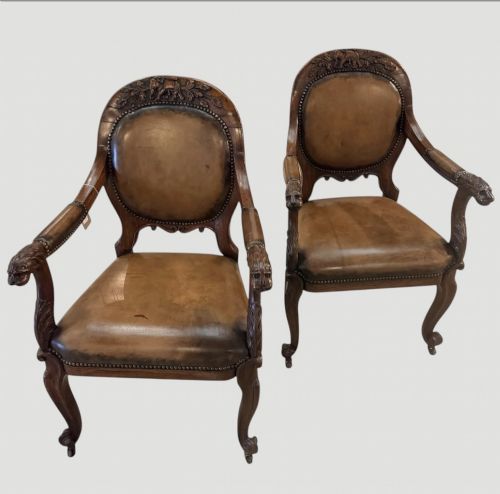
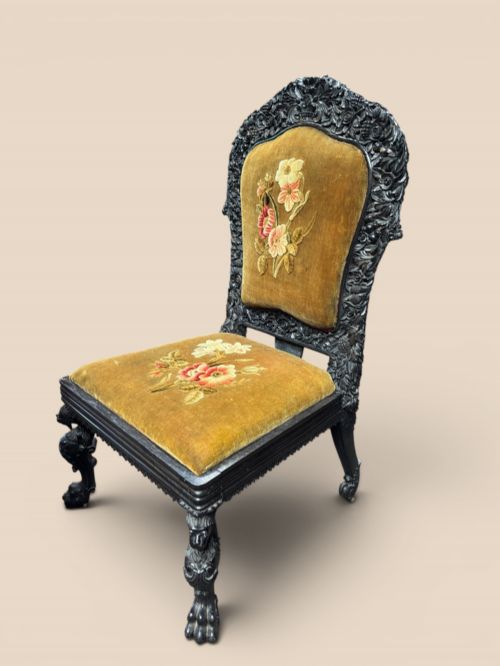
A 19th century indian chair encompasses a rich variety of seating forms made during the British colonial period, ranging from formal dining chairs to deep reclining plantation chairs with extending arms. Buyers looking at this phrase will frequently encounter Anglo-Indian designs, Ceylonese ebony pieces, and Burmese ceremonial thrones.
The regional styles vary from the ornate scrolling foliage of Bombay work to the solid dense timbers of Ceylon and the figural carvings of Burma. Armchairs and side chairs predominate, often appearing in matched pairs or larger dining sets alongside occasional hall seats and folding campaign chairs.
How They Were Made
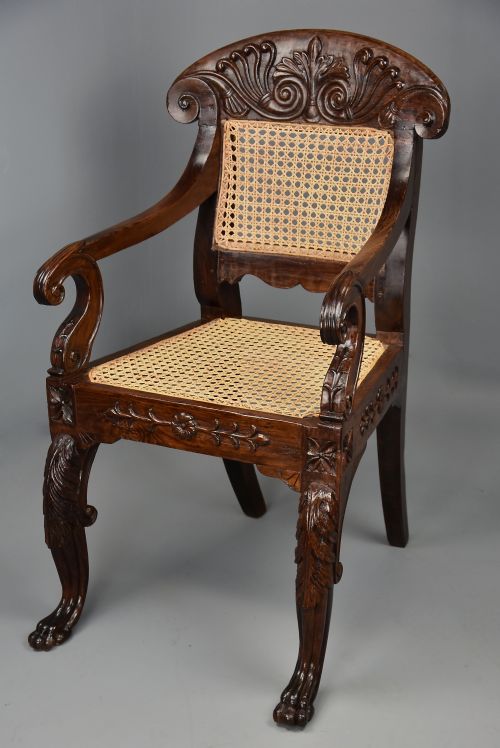
These seats rely on dense, heavy tropical timbers including ebony, padauk, rosewood, teak, and satinwood, which were chosen for their ability to hold intricate, deep relief carving. Artisans utilised traditional joinery combined with heavy piercing and undercutting to create elaborate floral, animal, and geometric motifs across the backrests and frames.
Upholstery materials range from woven cane seats to original leather, velvet, and brass details, while some examples feature applied gilt wood or dark ebonised finishes. Structural ingenuity appears in specialist forms like plantation chairs with pull-out leg rests and folding campaign frames designed for colonial travel.
Peacock armchairs bring avian splendour indoors with fans of carved wood.
What Varies in Quality
The distinction between standard examples and top-tier pieces rests entirely on the depth, crispness, and ambition of the hand carving. Superior specimens display high-relief figures, deep undercut foliage, and dense, heavy timbers like solid ebony or padauk without soft secondary woods.
Proportion and structural integrity also dictate worth, as grander library armchairs, monumental planter's chairs, and matched dining sets demand greater joinery skill than smaller occasional side chairs. Original surface finishes and intact cane work further elevate the standing of a piece.
The 19th Century Indian Chair Glossary
- Anglo-Indian
- Furniture made in India by local craftsmen adapting traditional British furniture forms for colonial officials. It blends European Regency and Victorian silhouettes with native carving techniques.
- Planter's chair
- A specialised colonial armchair featuring broad, flat extending arms designed for resting feet. These chairs often incorporate reclining backs and cane panels for ventilation in hot climates.
- Padauk
- A heavy, durable tropical hardwood with a reddish-brown hue utilised extensively in colonial cabinetmaking. It resists decay and accepts extremely fine hand carving.
- Cane
- Woven rattan peel used for seats and back panels to provide cool, flexible support. It requires skilled hand-weaving around the frame aperture.
- Bergere
- An enclosed upholstered armchair with a wooden frame and cane sides or back panels. This French-derived form was widely adopted in colonial workshops.
19th Century Indian Chair: Frequently Asked Questions
What is a plantation chair?
A plantation chair is a deep reclining armchair featuring long, flat extending arms designed for resting the legs. They were built for colonial verandas to provide maximum comfort and airflow in tropical heat.
These chairs often include adjustable backrests and cane seating panels. Their substantial size and functional design make them striking statement pieces in modern living spaces.
How do I care for tropical hardwood?
Tropical hardwoods like ebony, padauk, and teak require minimal maintenance beyond regular dusting with a soft, dry cloth. Avoid placing them near direct heat sources or in fluctuating humidity to prevent timber splitting.
Feeding the wood occasionally with a suitable natural wax helps maintain its deep lustre. Cane seats should be kept clean and lightly humidified if the indoor air becomes excessively dry.
Can I use these chairs daily?
Most of these sturdy hardwood chairs are entirely suitable for everyday seating when placed on level floors. Dining chairs, side chairs, and armchairs provide robust daily support due to their dense tropical timber construction.
Delicately carved ceremonial thrones or fragile antique cane work require a slightly more mindful placement. Selecting the right chair depends on whether it will serve as a functional seat or a decorative focal point.