
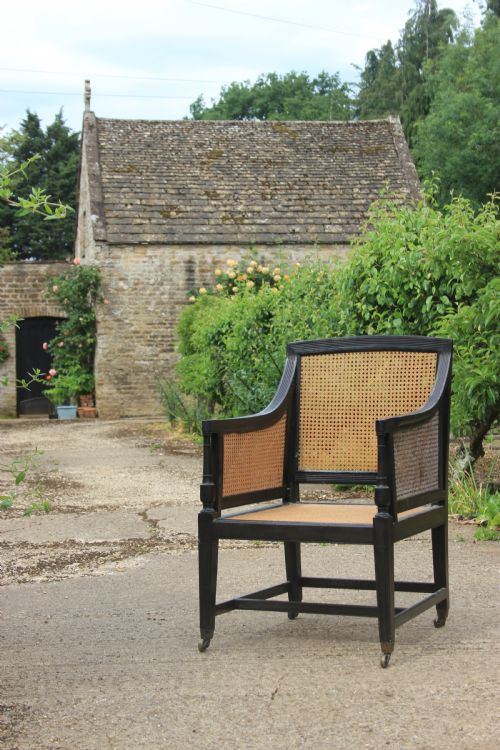
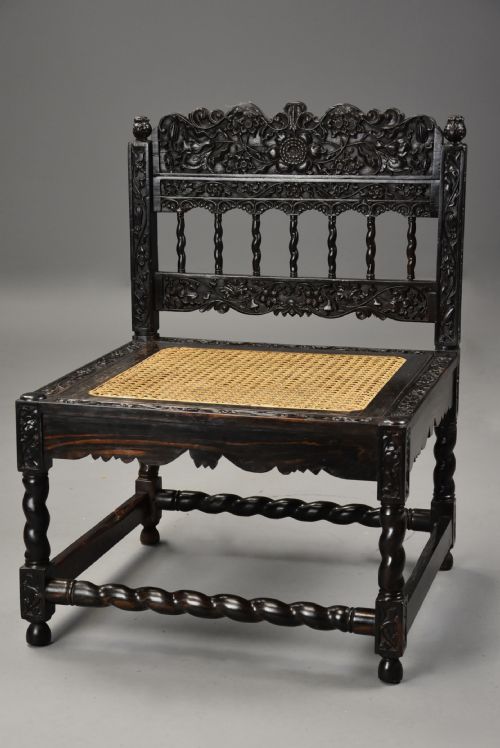


Black Ebony Chair
A black ebony chair brings dense, dark timber and intricate colonial carving into a room, offering a striking seat with substantial presence.
Black Ebony Chair
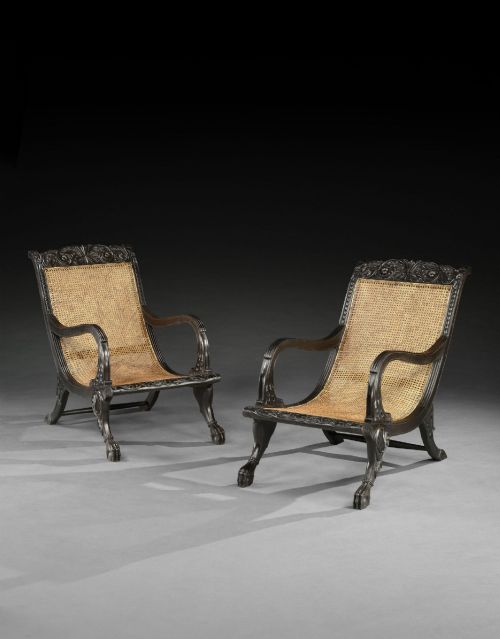
When you search for a black ebony chair, you encounter seating constructed from heavy tropical hardwoods, often shaped with rich decoration.
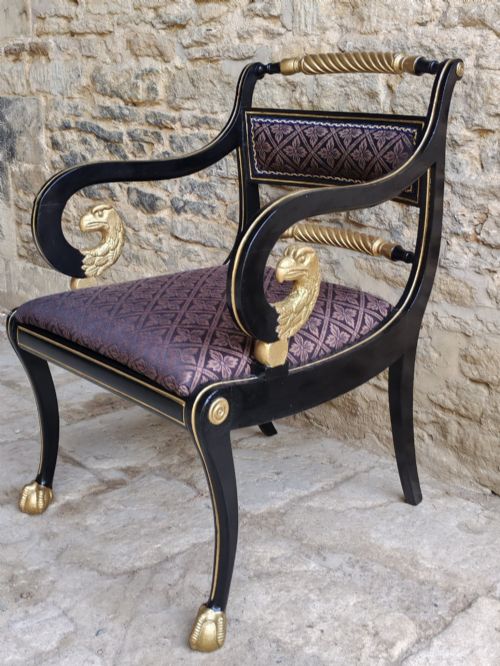
The pieces on this page span the seventeenth, nineteenth, and Regency periods, drawing upon Anglo-Indian, Indo-Portuguese, and Grand Regency styles.
Armchairs, side chairs, dining chairs, library chairs, and low chairs dominate the selection, alongside bergere forms and pairs or larger sets.
How they were made
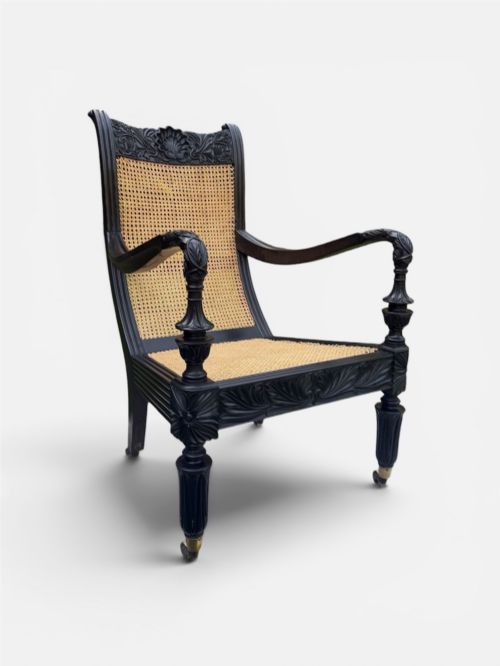
Constructed from solid ebony or ebonised wood, these pieces utilise dense materials capable of holding deeply detailed surface work.
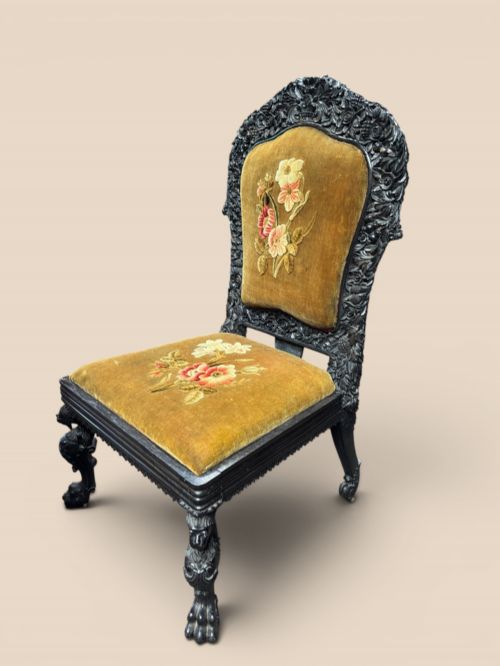
Craftsmen incorporated cane, brass, parcel gilt, fabric, and velvet elements to complement the dark timber frames.
Many examples display finely carved surfaces and rich decoration typical of Ceylonese and Indian workshops from the period.
Some nineteenth-century makers carved tropical hardwoods so deeply that the dark chairs resemble dark stone or cast iron at a distance.
What varies in quality
The depth and crispness of the carving distinguish finer examples from simpler production, separating standard joinery from exceptional craftsmanship.
The choice of materials, such as the use of solid ebony rather than ebonised secondary woods, shifts the standing of a piece.
The integrity of the original frame construction and the preservation of decorative elements like parcel gilt determine the overall standard.
The Black Ebony Chair Glossary
- Ebony
- A dense, heavy black or very dark brown wood derived from tropical trees. It allows for sharp, detailed carving without splintering.
- Ebonised wood
- Timber that has been treated or stained to imitate the dark colour of true ebony. This technique was common in European cabinet making.
- Bergere
- An enclosed upholstered armchair with a wooden frame. The sides often incorporate cane work.
- Parcel gilt
- The practice of applying thin gold leaf or powder to specific carved highlights on a dark object. This creates contrast against the black timber.
Black Ebony Chair: Frequently Asked Questions
Where were these chairs made?
The pieces originate from regions such as Ceylon and the Coromandel Coast of India, reflecting colonial trade and craftsmanship during the seventeenth and nineteenth centuries.
European makers also produced ebonised seating influenced by these global styles during the Regency period.
How do I style a black ebony chair?
The dark timber and intricate carving work well as accent pieces in both traditional and contemporary interiors. Pairing them with neutral backgrounds lets the detail stand out.
Their substantial presence suits studies, libraries, or drawing rooms.
What is an Anglo-Indian chair?
Anglo-Indian furniture combines traditional European furniture forms with local Indian carving techniques and materials. These pieces were often made for export or colonial residents.
The resulting style merges Regency shapes with dense floral and foliage motifs.