




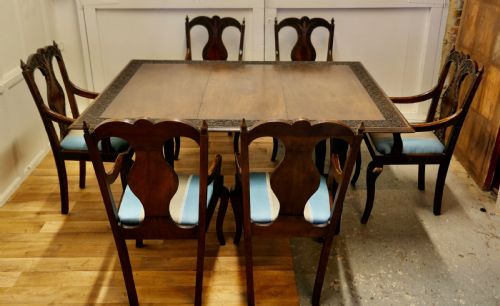


Indian Carved Dining Chair
An indian carved dining chair brings dense tropical timber and deep relief work to the table, offering a seat full of historic craftsmanship.
Indian Carved Dining Chair
An indian carved dining chair encompasses heavy hardwood seating originating from British colonial influence and traditional regional workshops. These pieces frequently appear in styles such as Anglo-Indian, Victorian, and Regency, spanning the nineteenth century through to nineteen thirty.
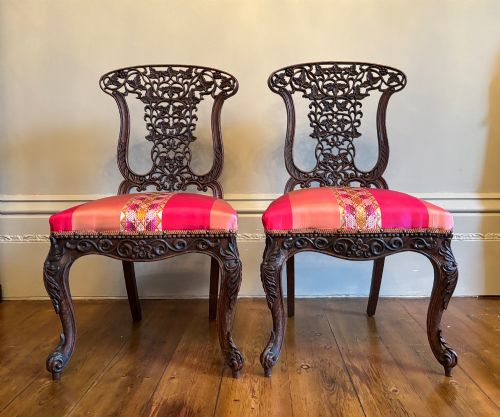
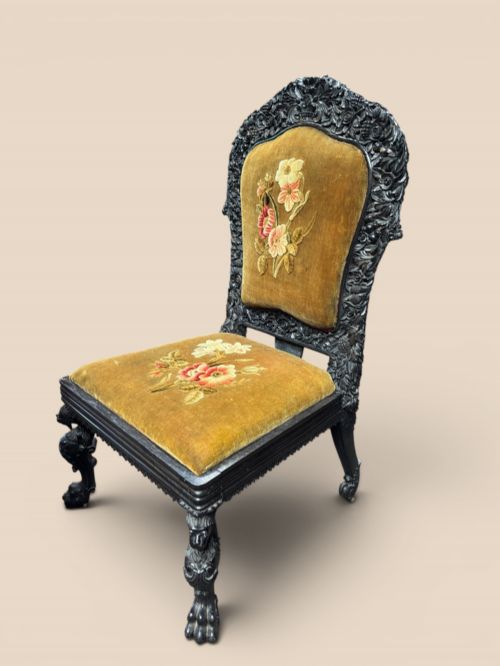
The selections on this page include single side chairs, matched pairs, and larger dining sets intended for formal or occasional use. Woods like ebony, padauk, and rosewood dominate the construction, often paired with cane seating or upholstered pads.
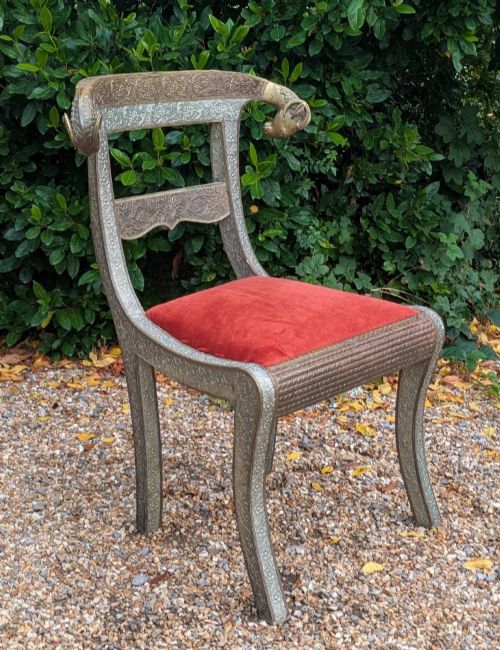
Buyers encounter regional variations including Ceylonese veranda chairs and wedding chairs featuring elaborate animal head motifs or silver metal sheet embellishments. Each version reflects the distinct decorative preferences of its period, from William IV proportions to late nineteenth-century ornamentation.
What varies in quality
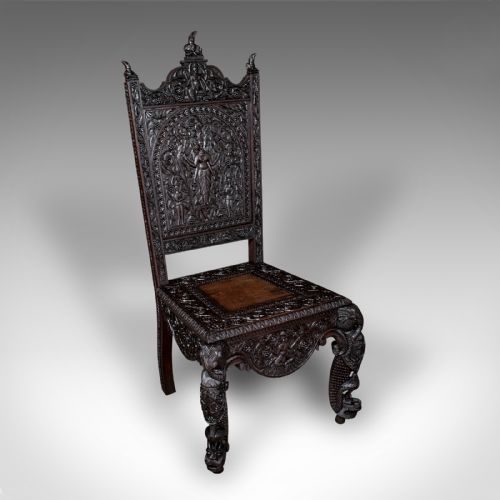
The depth and crispness of the hand-carving separate standard production from superior examples, as master carvers achieved sharper undercut foliage and more lifelike animal motifs. The choice of timber also dictates the tier of the piece, with dense solid ebony or padauk commanding greater presence than standard mixed hardwoods.
Proportion and uniformity across matched sets influence desirability, particularly when dealing with large dining groups spanning fourteen pieces or pairs. Original surface patination and the integrity of structural joinery further distinguish exceptional pieces from later or heavily restored examples.
Listings feature timbers including ebony, padauk, rosewood, and teak across nineteenth-century and early twentieth-century periods.
The Indian Carved Dining Chair Glossary
- Padauk
- A dense, heavy reddish-brown tropical hardwood prized for its stability and suitability for deep carving. It was frequently utilised in nineteenth-century Anglo-Indian furniture production.
- Cane
- Woven rattan material used for seat panels and backrests to provide flexible support in warm climates. It allows for airflow while maintaining a lightweight structural grid.
- Anglo-Indian
- A design style produced in India during the British colonial period, combining European furniture forms with traditional Indian decorative carving techniques and native timbers.
- Veranda chair
- A regional seating form featuring an extended seat or adjustable arms designed for relaxed lounging on open-air porches. Ceylonese examples often display particularly ornate woodwork.
- Side chair
- An upright chair without arms designed primarily for dining tables or occasional placement around a room. These pieces rely on decorative backrests for visual impact.
Indian Carved Dining Chair: Frequently Asked Questions
How do I clean carved wood?
Dust intricate carvings regularly using a soft-bristled brush to prevent dirt accumulation within the recesses of the timber. Avoid liquid polishes that can build up in the detailed crevices.
Feed the dry wood periodically with appropriate microcrystalline wax to preserve the natural sheen of timbers like ebony and rosewood.
Are these chairs comfortable for dining?
Many examples feature upright backs and solid timber seats designed for formal dining rather than prolonged lounging. Some variants include upholstered pads or woven cane inserts to soften the seat.
Adding custom squab cushions can improve daily comfort without altering the historic wooden frame.
Can I mix these with modern tables?
The dark tropical hardwoods and rich carving pair effectively with minimalist modern dining tables to create a striking contrast. Ensure the seat heights align correctly with your table apron.
Using a matched set creates a unified look, while individual accent chairs work well as host seating at the table ends.
How do I identify a nineteenth-century piece?
Examine the timber density, tool marks, and construction methods to gauge the age of the hardwood frame. Nineteenth-century examples often display hand-cut joinery and aged patination on rosewood or ebony.
Stylistic markers such as Regency curves or Victorian proportions help narrow down the production era.