


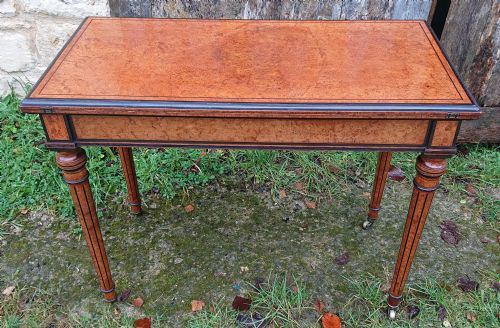


Victorian Ebony Furniture
Victorian ebony furniture brings dense tropical timbers and dark ebonised surfaces into the room, offering heavy carving and striking cabinet work for the collector.
Victorian Ebony Furniture
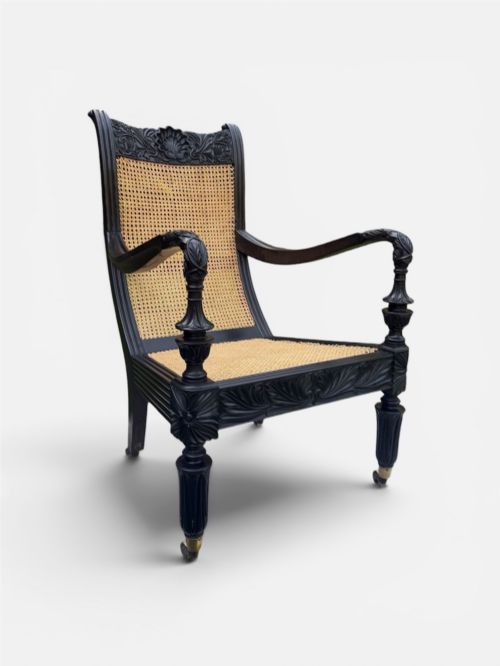
Victorian ebony furniture encompasses a range of seating, tables, and cabinets produced across the nineteenth century, drawing heavily on solid ebony, ebonised wood, and exotic specimen timbers. Buyers searching for victorian ebony furniture encounter pieces spanning simple occasional tables to heavily carved armchairs and elaborate pier cabinets.
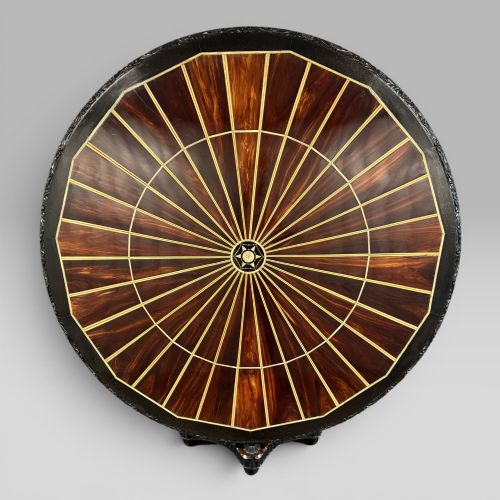
The material vocabulary stretches beyond plain dark timber to include combinations of ebony with burr walnut, satinwood, calamander, and bone. Pieces often reflect colonial production from Ceylon and India alongside domestic British Aesthetic Movement and Regency Revival designs of the eighteen-sixties and eighteen-seventies.
Materials and Construction
Makers utilised solid tropical hardwoods alongside domestic timbers finished with ebonised coatings, pairing dense ebony with contrasting light woods such as satinwood and bone for intricate inlay. Cabinet work relied on precise joinery to stabilize dense exotic timbers against splitting.
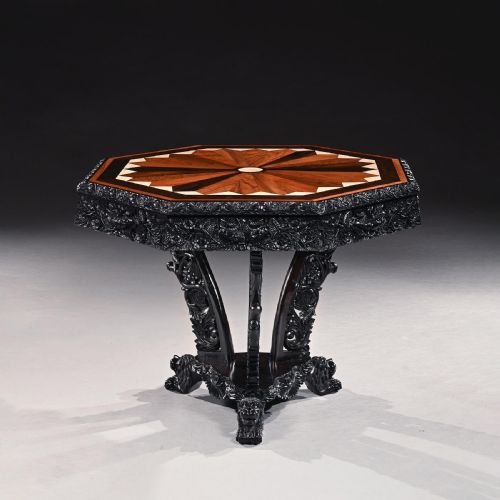
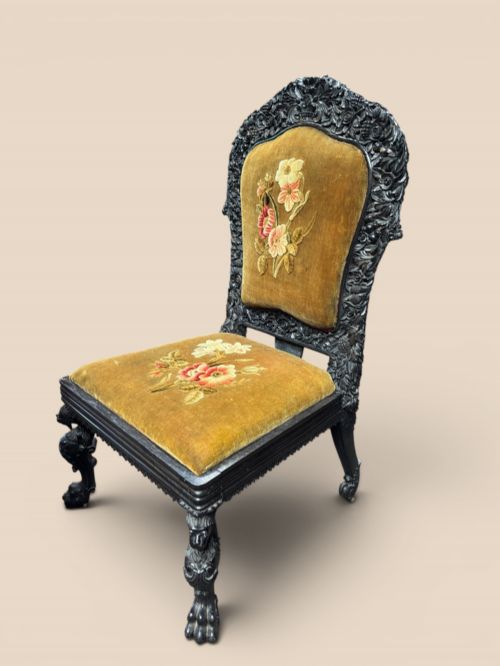
Carving reached high levels of detail on regional armchairs and tables, utilising the natural hardness of ebony to hold crisp edges. Inlay techniques incorporated burr walnut, rosewood, and exotic specimen woods into geometric or botanical motifs across table tops and cabinet doors.
Current listings demonstrate a strong presence of nineteenth-century Ceylonese tables, Aesthetic Movement occasional furniture, and solid ebony seating.
Assessing Quality
The standard of carving sets the upper tier apart from simpler domestic examples, with regional Ceylonese and Indian work showing deep relief and confident figural or floral motifs. The integration of secondary timbers like calamander, amboyna, or burr walnut elevates a piece through considered contrast.
Structural integrity in heavy solid ebony and ebonised frames dictates long-term value, as does the crispness of inlay and parcel gilt details. Pieces that retain their original hardware and stable foundational joinery command greater attention than those with extensive timber replacement.
Gregory and Co
The Victorian Ebony Furniture Glossary
- Ebonised
- Wood treated with a dark stain or finish to imitate true ebony. This technique was widely utilised on domestic Victorian furniture frames and table bases.
- Calamander
- An exotic hardwood sourced from South Asia with distinctive dark brown and light brown striping. It frequently appears alongside ebony in nineteenth-century tables and cabinets.
- Specimen wood
- Timber selected for its unusual grain, colour, or origin and arranged in geometric patterns. These woods feature prominently on colonial Ceylonese tabletops.
- Etagere
- An open tiered piece of furniture designed for displaying small objects or books. Victorian examples in ebony and burr walnut provide multiple open display surfaces.
- Pier cabinet
- A low cabinet designed to fit against the wall space between windows. These pieces often feature glass doors and elaborate ebony and burr walnut inlay.
Victorian Ebony Furniture: Frequently Asked Questions
What is Victorian ebony furniture?
Victorian ebony furniture comprises nineteenth-century items made from solid tropical ebony or ebonised wood, often enhanced with contrasting veneers like satinwood or burr walnut.
These pieces range from heavily carved Anglo-Indian armchairs and centre tables to British Aesthetic Movement cabinets and occasional tables.
How do I care for ebony furniture?
Keep solid ebony and ebonised surfaces away from direct sunlight and sudden temperature shifts to prevent the dense timber from splitting.
Dust regularly with a dry cloth and avoid heavy chemical polishes that can damage nineteenth-century French polish or waxed finishes.
What is Anglo-Indian furniture?
Anglo-Indian furniture refers to pieces produced in India and Ceylon during the nineteenth century under British influence. They combine local carving traditions with European furniture forms.
These items frequently utilise native hardwoods such as ebony, calamander, and satinwood, often featuring intricate floral or figural relief work.
What is an ebonised finish?
An ebonised finish is a staining and polishing process applied to common timbers like oak, walnut, or beech to mimic the deep black appearance of true ebony.
This technique became popular during the Victorian era, particularly in Aesthetic Movement and Regency Revival designs requiring dark contrasting frames.