


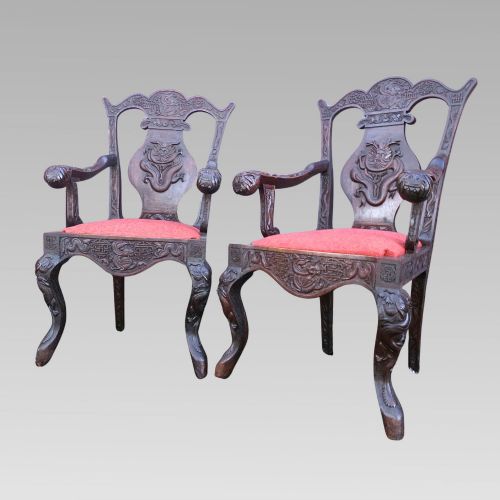

Carved Hardwood Chair
When you search for a carved hardwood chair, you are looking at substantial regional seating fashioned from dense timber with intricate relief work.
Carved Hardwood Chair
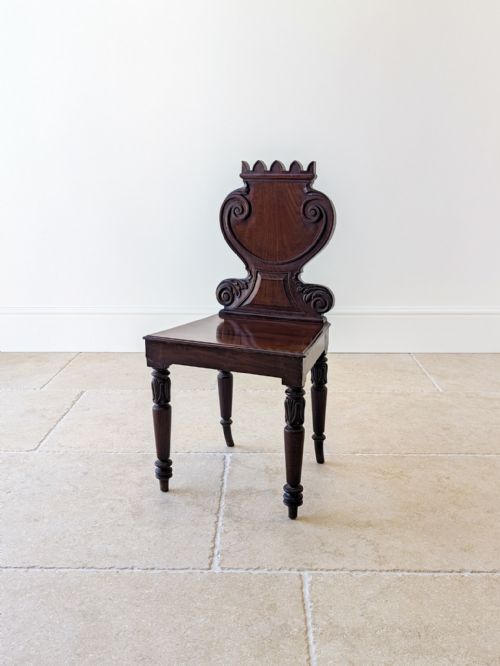
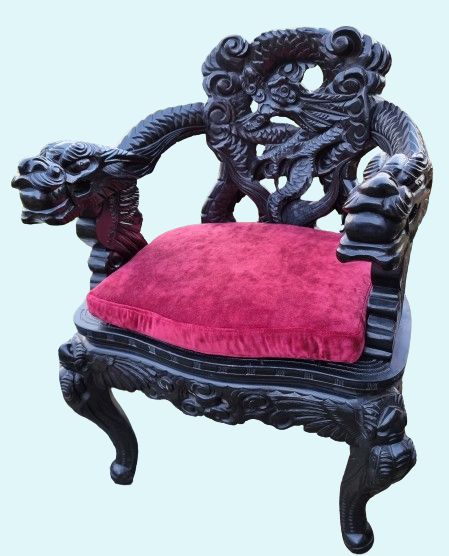
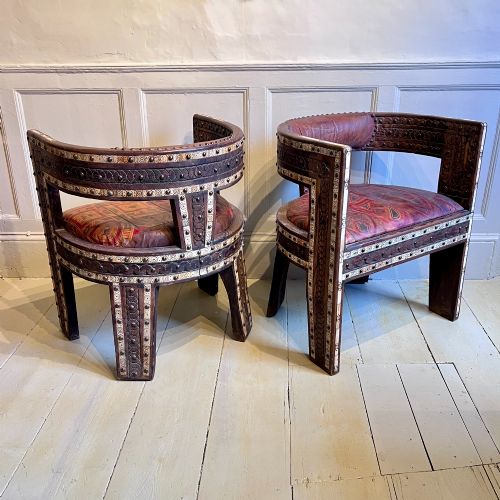
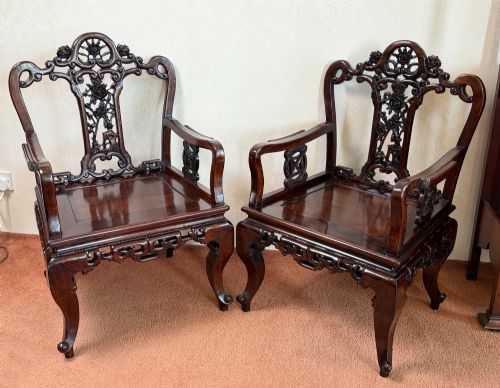
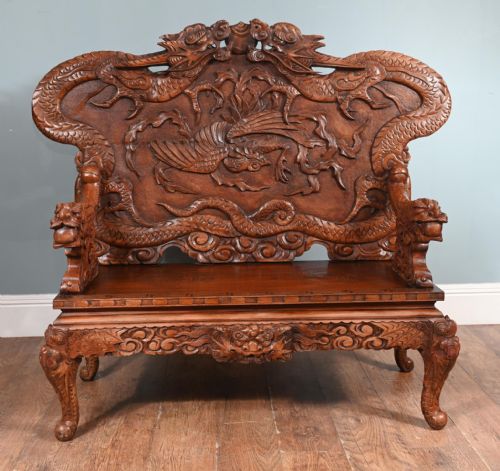
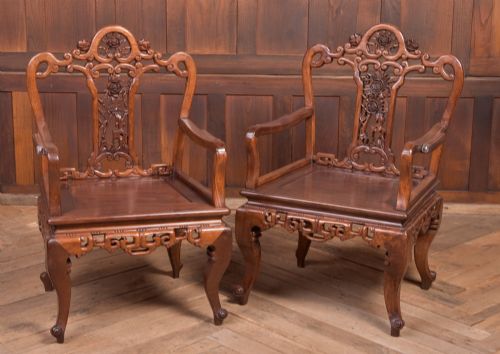
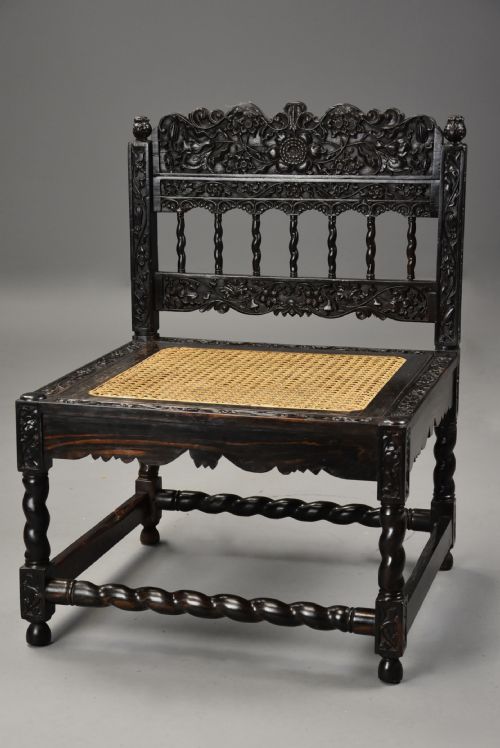
A carved hardwood chair encompasses a wide geographical and stylistic range, spanning nineteenth-century Chinese armchairs and throne seats to Anglo-Indian and North African seating. The examples encountered here most frequently originate from Chinese workshops of the Qing Dynasty, alongside regional British colonial productions in teak, hongmu, and rosewood.
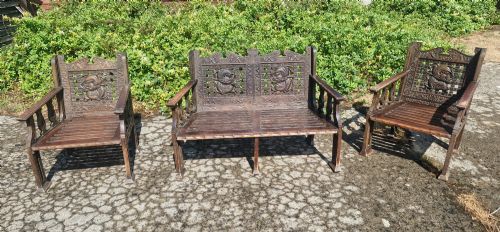
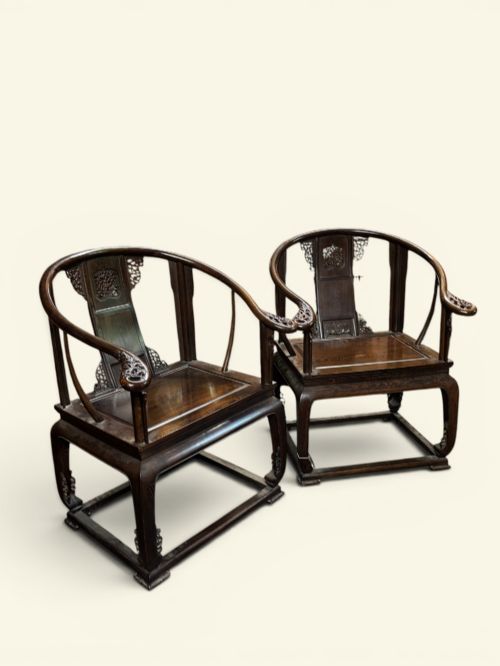
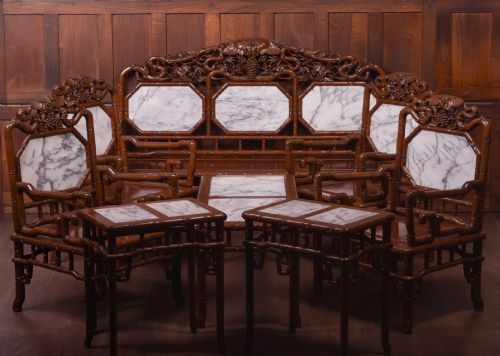
Forms vary significantly, extending from standard side chairs and hall chairs to substantial horseshoe-back armchairs, folding throne seats, and expansive conservatory suites. Many pieces display deeply undercut botanical motifs, dragons, or geometric panels rooted in traditional craftsmanship across Asia and the Middle East.
Originating as practical yet status-laden furnishings, these chairs served domestic, ceremonial, and official roles in grand houses and merchant residences alike. Today, they function as sculptural seating or focal points in contemporary interiors, retaining the robust joinery required to support heavy timber over centuries.
Materials and technique
Makers utilised exceptionally dense woods such as hongmu, ebony, teak, and rosewood, which allowed for crisp, sharp chisel work without splitting along the grain. These timbers were often left with a polished natural finish or enhanced with applications of lacquer and cinnabar.
Construction relied upon traditional joinery techniques, including interlocking mortise and tenon joints, which accommodated the natural movement of heavy timber. Carving was executed entirely by hand, employing gouges and chisels to achieve high-relief figures, scrolling foliage, and pierced splats.
Listings feature examples spanning the seventeenth through the twentieth centuries, utilising materials like rosewood, teak, brass, and lacquer across diverse regional styles.
What separates the tiers
The distinction between standard commercial production and exceptional craftsmanship rests entirely on the depth, clarity, and ambition of the carving. Superior examples exhibit undercut relief work where figures and foliage stand completely free from the background, while lesser pieces rely on shallow, machine-cut or hurried surface incisions.
Material selection and structural integrity define the upper tier, demonstrated by heavy, well-seasoned sections of dense timber that maintain tight joinery without excessive metal bracing. The balance of proportions and the crispness of secondary details, such as arm terminals and foot stretchers, separate utilitarian workshop output from pieces made for high-status patrons.
The Carved Hardwood Chair Glossary
- Hongmu
- A traditional Chinese term denoting dense, heavy hardwoods, often translated as red wood, which includes species like padauk and rosewood. It develops a deep, rich patina with age and handling.
- Horseshoe-back
- A distinctive chair design featuring a continuous, curved crestrail that sweeps downward to form the armrests. This ergonomic form requires advanced steaming and joinery techniques to shape the thick timber.
- Qing Dynasty
- The final imperial dynasty of China, spanning from sixteen-forty-four to nineteen-twelve, known for elaborate decorative arts and deep relief carving in domestic furniture. Pieces from this era often incorporate auspicious motifs such as dragons.
- Cinnabar lacquer
- A decorative technique involving multiple layers of coloured resin applied to a wooden core and subsequently carved with intricate designs. It provides a durable, smooth surface with a characteristic reddish hue.
Carved Hardwood Chair: Frequently Asked Questions
How do I identify a Qing Dynasty piece?
Look for dense timbers such as hongmu or padauk combined with deeply carved motifs like dragons, lotus scrolls, or key-fret borders. The joinery is typically pegged without metal nails, reflecting traditional workshop methods.
Examine the weight and the sharpness of the hand-carved relief work, as earlier pieces display a crispness and depth that later commercial copies rarely achieve.
Are these chairs comfortable for daily use?
Many of these chairs were designed for upright posture rather than lounging, featuring rigid wooden seats and high backs. Some incorporate cushions or woven cane inserts to soften the seating experience.
Armchair versions with horseshoe backs or broad elbow rests offer more support, though they remain firm compared to modern upholstered furniture.
How should I care for dense hardwood?
Maintain a stable room temperature and avoid placing the furniture near direct heat sources or strong sunlight, which can cause timber to dry and split. Regular dusting with a dry cloth preserves the natural sheen of the wood.
Occasional applications of neutral beeswax help nourish unlacquered surfaces, while lacquered pieces require only gentle wiping with a damp cloth.
What distinguishes Anglo-Indian seating?
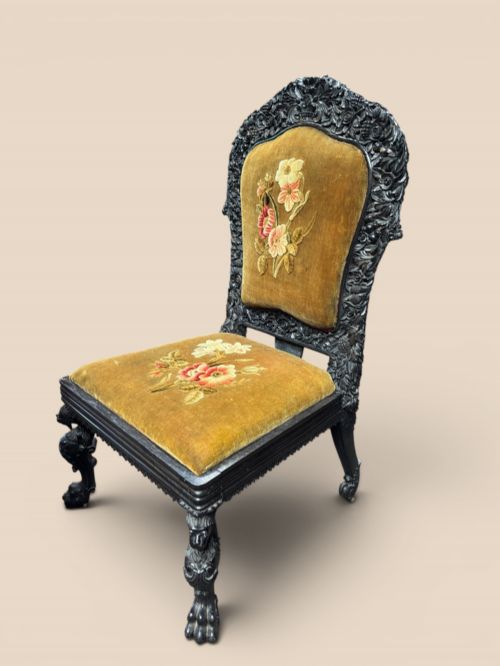
Anglo-Indian furniture combines traditional British furniture forms with intricate indigenous carving styles executed by local artisans in regions such as Bombay and Hoshiarpur. These pieces frequently feature dense rosewood, ebony, or inlaid brass wire.
The resulting designs bridge European comfort with elaborate Eastern floral and faunal motifs, creating distinct hybrids characteristic of the colonial period.