


Carved Ebony Furniture
Carved ebony furniture brings dense tropical timber and intricate regional carving into domestic interiors with weight and presence.
Carved Ebony Furniture
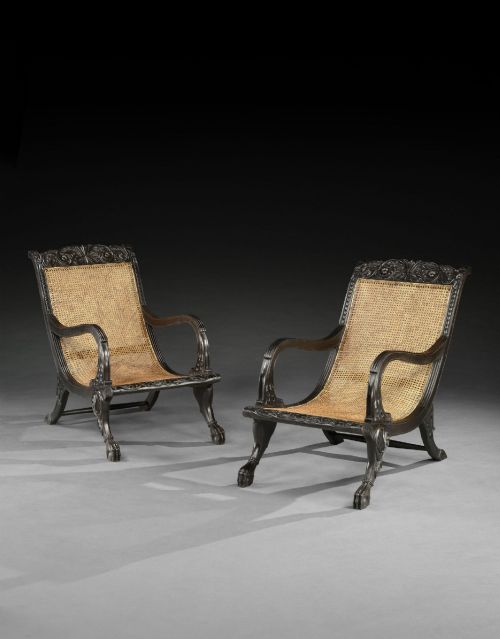
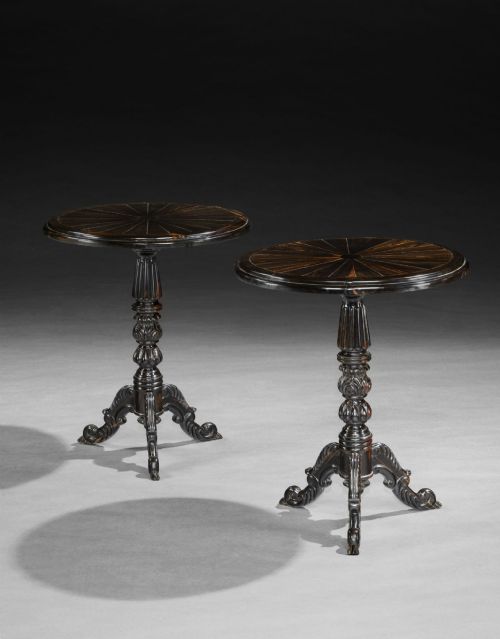
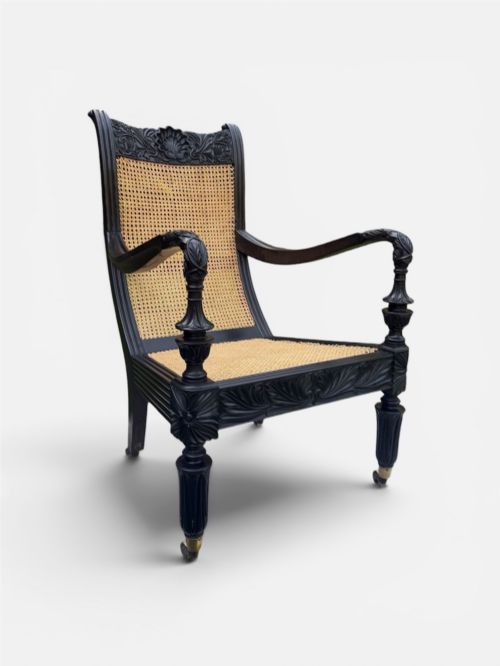
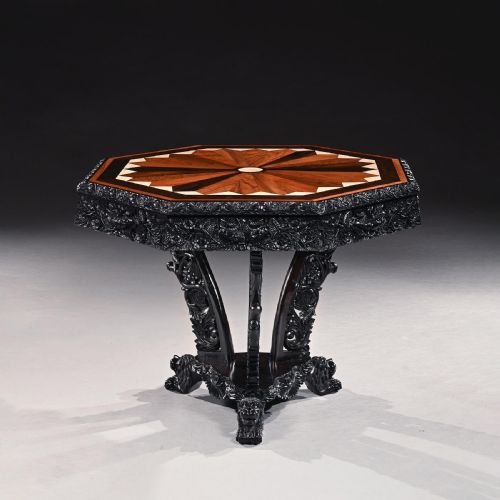
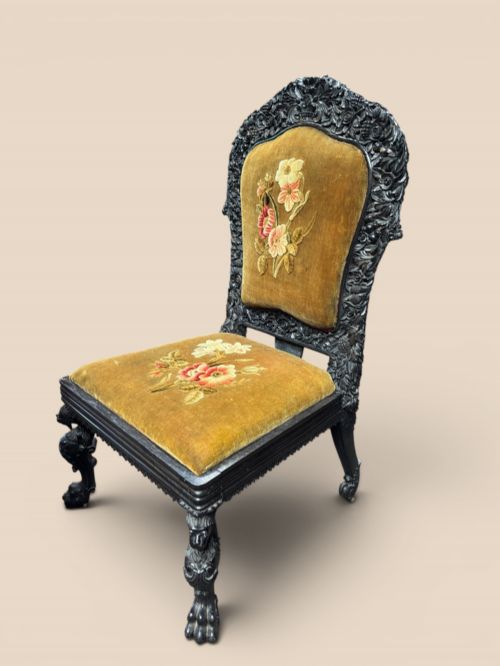
Carved ebony furniture encompasses heavy seating, occasional tables, and storage pieces produced across various global trade routes and colonial centres. When exploring carved ebony furniture, buyers most frequently encounter 19th-century Ceylonese and Anglo-Indian armchairs, side chairs, and tripod tables.
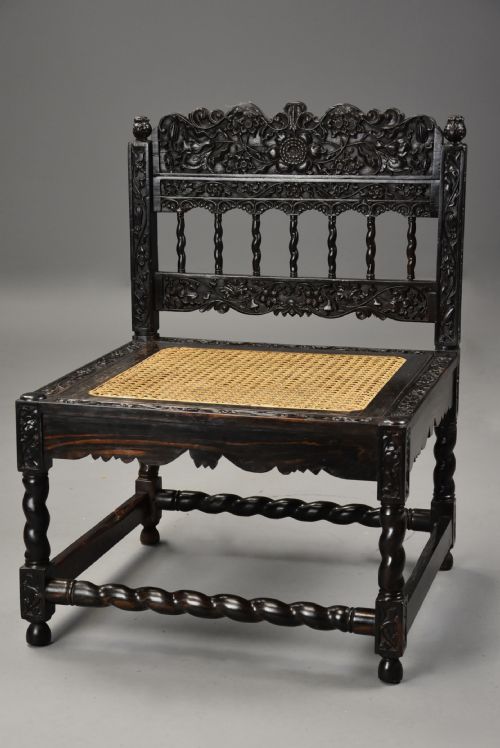
The material appears alongside related tropical timbers such as satinwood, rosewood, and exotic specimen woods. Forms range from heavy solid-wood low chairs originating on the Coromandel Coast to intricate occasional tables and larger storage pieces.
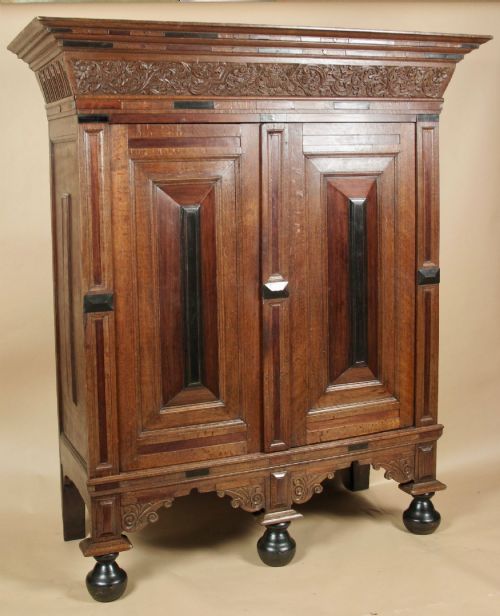
Stylistic influences span Anglo-Indian Regency, Dutch Baroque, and Colonial designs. Pieces vary from functional seating to decorative centre tables and etageres.
Assessing quality in carved pieces
Quality rests upon the crispness, depth, and proportion of the carved decoration relative to the dense timber. Superior examples display fluid, deeply undercut motifs where foliage and figures retain sharp definition without breaking away.
The choice of primary timber and the integration of secondary materials such as contrasting specimen woods or bone inlay also dictate the standing of a piece. Original surfaces and solid timber construction distinguish finer regional workshop output from simpler utilitarian items.
One extraordinary 19th-century item listed here relies on porcupine quills alongside ebony for its unusual surface decoration.
The Carved Ebony Furniture Glossary
- Ebony
- A dense, heavy black or very dark brown heartwood yielded by various trees, prized for its ability to hold intricate carved detail.
- Anglo-Indian
- A term describing furniture made in India during the British colonial period, combining European forms with local carving traditions.
- Ceylonese
- Pertaining to Ceylon, now Sri Lanka, known historically for distinctive carved ebony and calamander furniture production.
- Specimen Wood
- Furniture incorporating multiple varieties of decorative timber arranged to showcase contrasting colours and grain patterns.
- Kussenkast
- A large Dutch cabinet type featuring cushion-moulded doors, occasionally constructed with rosewood and ebony.
Carved Ebony Furniture: Frequently Asked Questions
Where was carved ebony furniture made?
These pieces originated primarily in colonial trading centres, including Ceylon and various regions of India such as the Coromandel Coast. Local workshops adapted European furniture forms to suit indigenous carving skills and native tropical hardwoods.
Production also connected to Dutch colonial networks, resulting in diverse stylistic interpretations that travelled back to European domestic interiors.
How do I care for solid ebony pieces?
Keep solid ebony furniture away from direct heat sources and strong sunlight to prevent timber movement or splitting. Dust regularly with a dry cloth and apply occasional specialist wax sparingly if the finish requires nourishment.
Avoid excessive moisture on carved surfaces and cane panels, as tropical hardwoods react sensitively to sudden changes in humidity.
What is the difference between solid ebony and veneered pieces?
Solid ebony pieces utilise heavy tropical hardwood throughout the structural frame, allowing for deep three-dimensional carving on all exposed surfaces. Veneered or inlaid items apply ebony as a surface layer or decorative accent over secondary timbers like oak or mahogany.
Heavier seating and early regional chairs are typically carved from solid timber blocks, whereas certain tables and cabinets incorporate ebony alongside contrasting woods.
How do I distinguish Anglo-Indian pieces from European copies?
Examine the timber density, secondary woods used in internal construction, and the specific motifs within the carved decoration. Anglo-Indian and Ceylonese pieces often feature native regional flora and fauna executed with local carving techniques not found in domestic European workshops.
The integration of tropical secondary woods like satinwood or porcupine quills further points towards colonial manufacture.