




Indian Carved Throne Chair
These indian carved throne chair pieces are heavily figured seating items from the nineteenth and early twentieth centuries, offering striking ornamental presence.
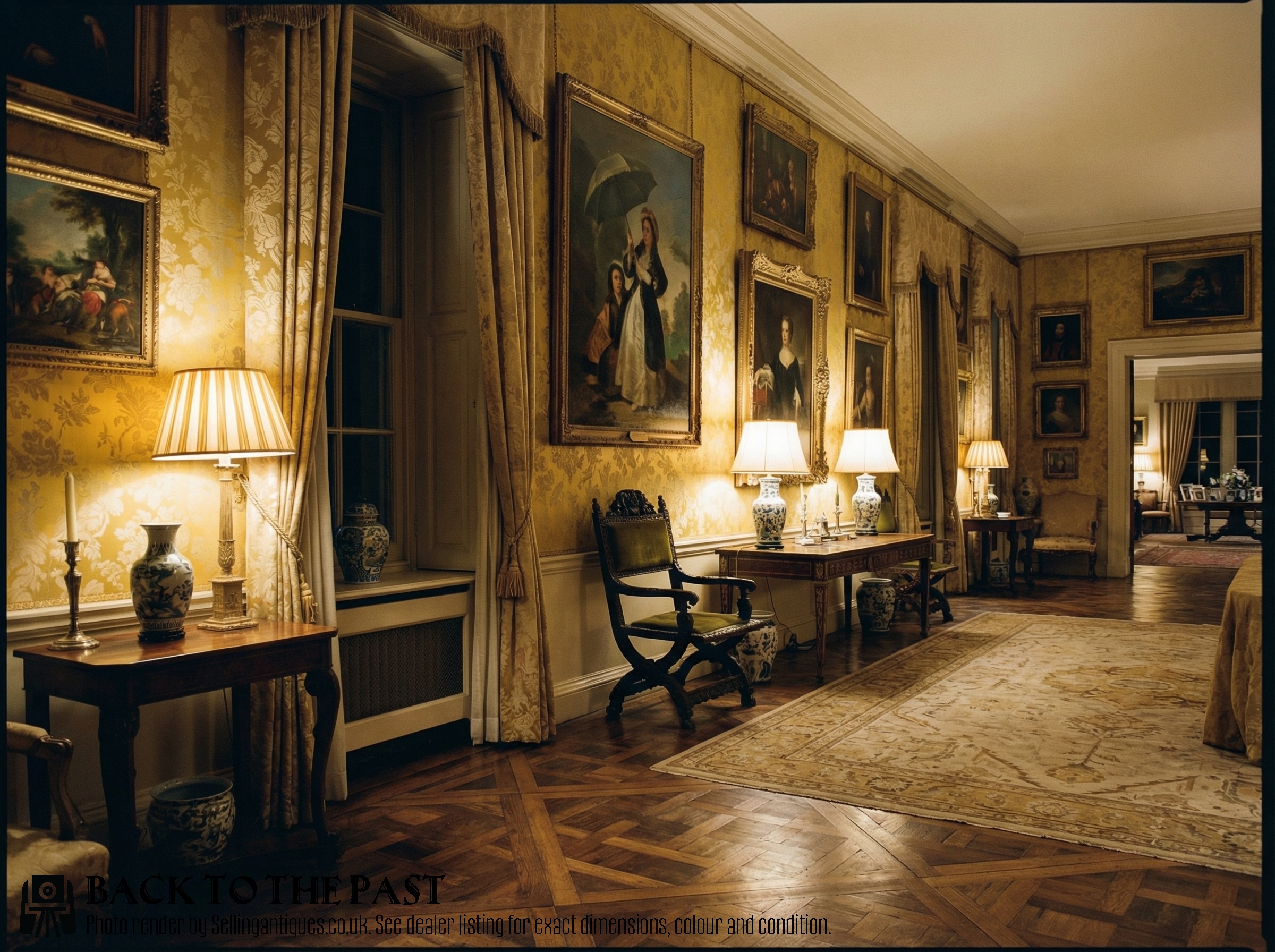
Indian Carved Throne Chair
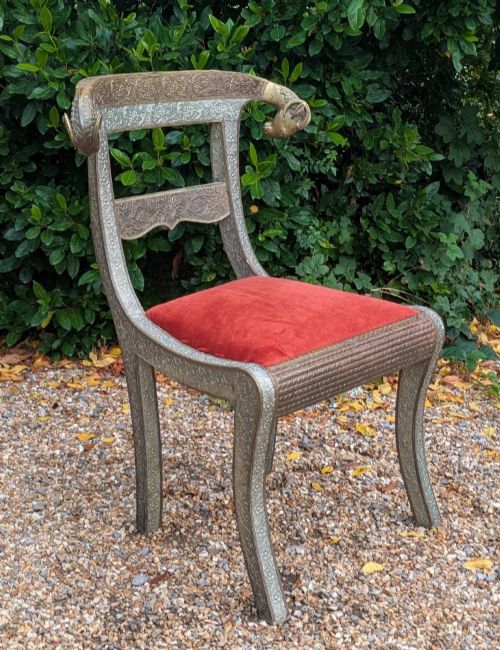
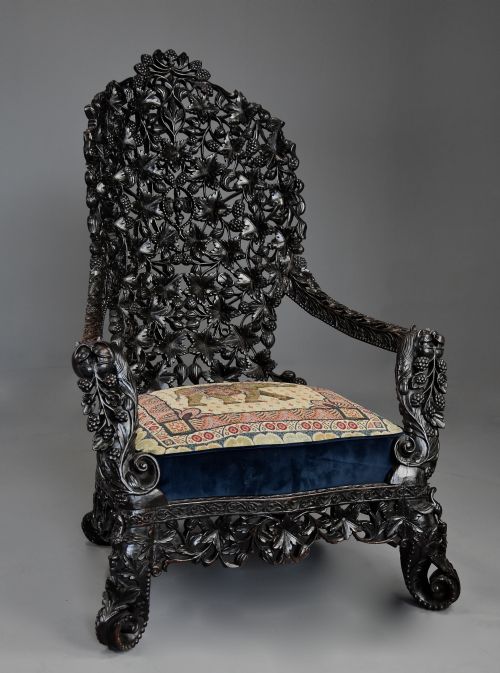
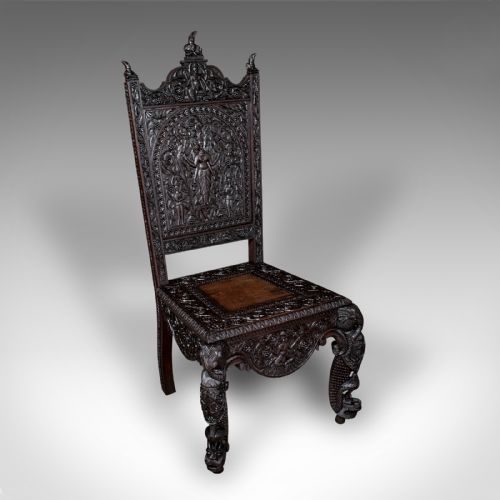
An indian carved throne chair brings together deep relief carving and substantial timber construction from various periods including the nineteenth century and the nineteen-thirties. You meet armchairs, ceremonial seats, and temple chairs finished with intricate details like rams heads and peacock motifs.
The styles range across Anglo-Indian, Burmese, and Victorian colonial designs, showing regional workshops from Bombay to the Coromandel coast. These pieces function as accent chairs or occasional seating while carrying a strong historical narrative.
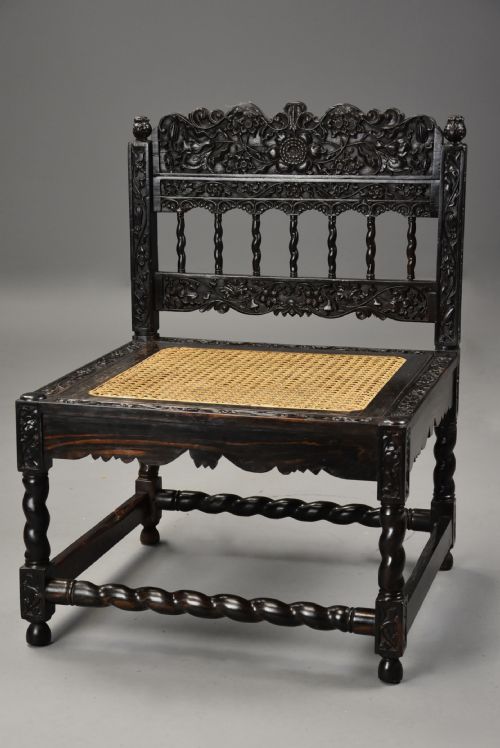
Many examples utilise sturdy frames with low profiles or high backs, upholstered in velvet and tapestry or left as open timber work. The forms draw on traditional motifs executed by skilled carvers working in teak, rosewood, and blackwood.
Materials and construction
Makers constructed each indian carved throne chair using dense timbers such as teak, rosewood, ebony, and blackwood to withstand deep chisel work. These hardwoods provide the weight and stability required for heavy relief carving without splintering.
Workshops applied specialised techniques including brass inlay and silver metal sheet cladding to highlight specific sections of the timber frame. Upholstered variants incorporate velvet and tapestry seat panels fitted within the carved structure.
The documented styles span Anglo-Indian, Burmese, Moghul, and Victorian colonial, incorporating brass inlay and silver metal sheet.
Judging the carving and timber
The depth and crispness of the chisel work separate standard production from superior examples. Master carvers achieved clean undercut details and symmetrical foliage that retain sharp edges.
Timber selection dictates the longevity and visual richness of the chair. Dense blackwood or solid ebony carries a finer finish than softer commercial timbers.
The Indian Carved Throne Chair Glossary
- Anglo-Indian
- A design style produced during the British colonial period in India, blending British furniture forms with local carving traditions.
- Hardwood
- Dense timber derived from broad-leaved trees such as teak and rosewood, essential for detailed carving.
- Savronola Style
- A folding chair design featuring an X-shaped frame, adapted by Indian workshops using brass inlay and carved timber.
- Coromandel Coast
- A coastal region in southern India known for producing distinct hardwood seating, including solid ebony low chairs.
- Silver Metal Sheet
- A thin layer of silver applied to timber frames to accentuate ceremonial and wedding seating.
Indian Carved Throne Chair: Frequently Asked Questions
What is an indian carved throne chair?
An indian carved throne chair is an ornamental seating piece featuring dense relief work in hardwoods like teak and blackwood. These chairs date primarily from the nineteenth and early twentieth centuries.
They reflect regional styles such as Burmese, Anglo-Indian, and Moghul, combining traditional woodworking techniques with colonial forms.
How were these chairs used historically?
These pieces served as ceremonial seating during weddings, temple rituals, and formal gatherings in colonial estates. Their imposing presence marked social status and authority.
Today, they function as occasional chairs or accent pieces that anchor a room with historical character.
How do I date an indian carved throne chair?
Dating relies on examining the timber species, tool marks, and stylistic influences tied to periods like the Victorian era or the nineteenth century. Archival records from Bombay presidency workshops also help place specific construction methods.
Inspect the joinery and the depth of the carving, as older pieces often show hand-wrought pins and more organic chisel patterns.
How do I care for carved hardwood furniture?
Keep these chairs away from direct sunlight and heat sources to prevent the dense timbers from splitting or warping. Dust the deep relief carving regularly with a soft, dry brush.
Apply a minimal amount of appropriate furniture wax only when the wood appears dry, avoiding buildup in the recessed carved channels.