

Carved Wood Hall Chair
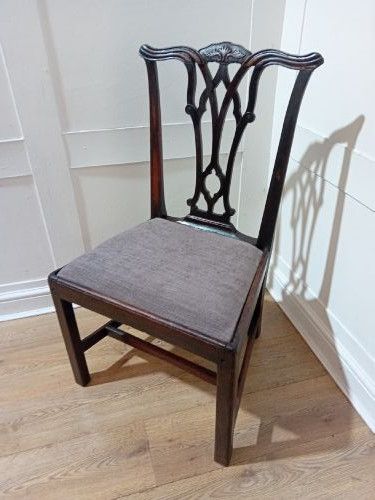
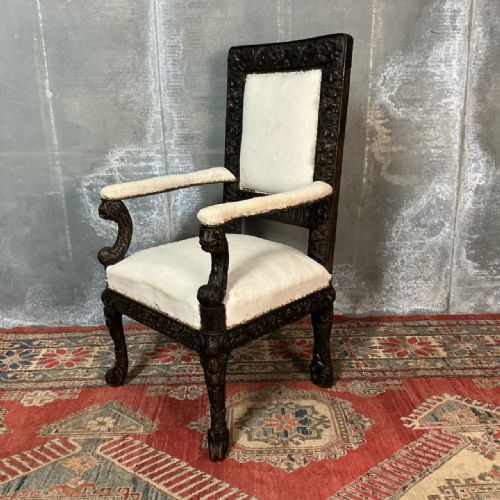
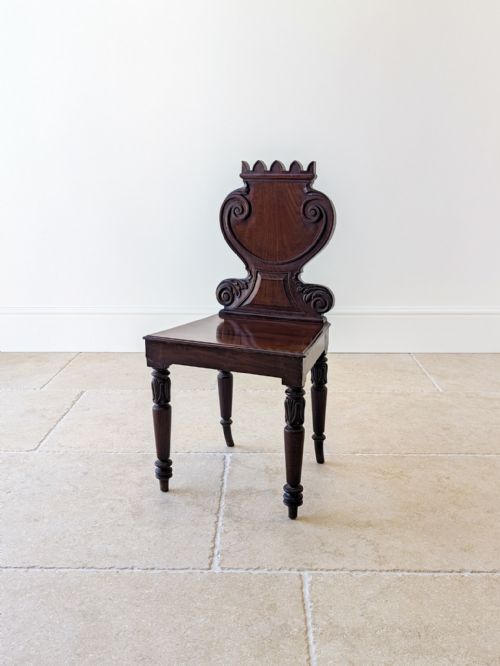
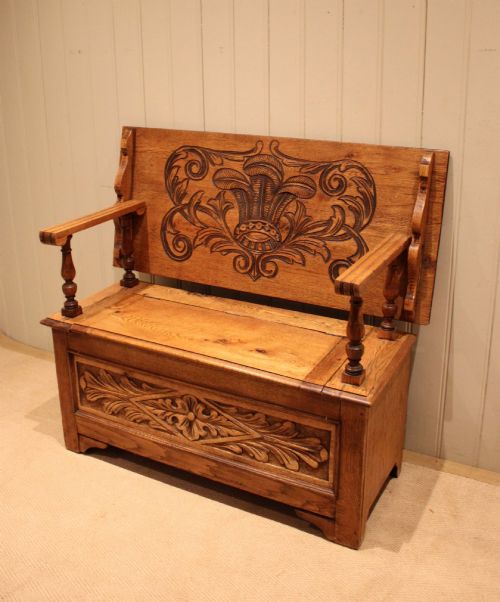
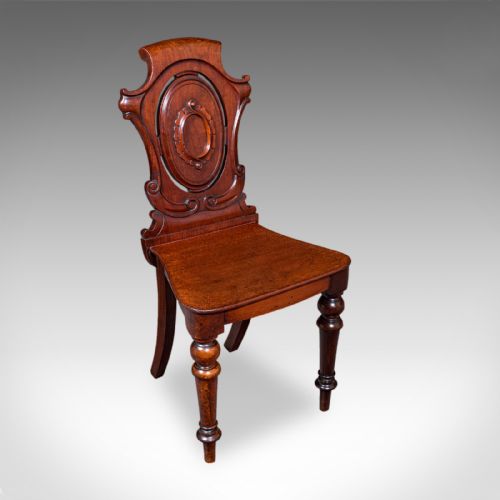
A carved wood hall chair stands ready in an entrance passage, offering a rigid seat and a deeply worked back.

Carved Wood Hall Chair
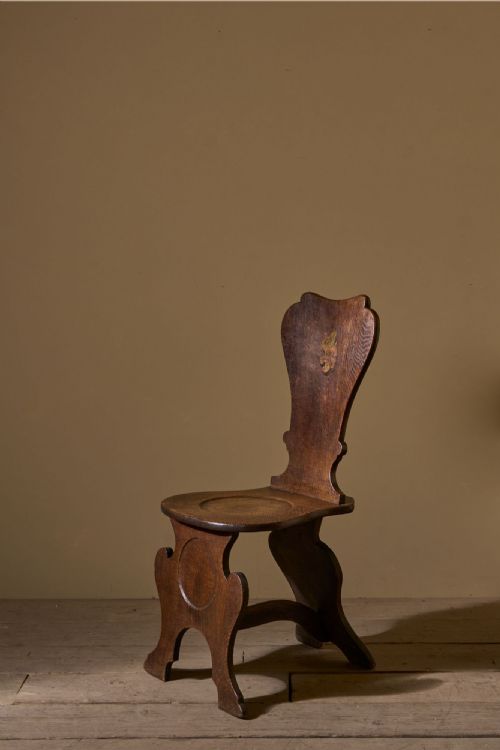
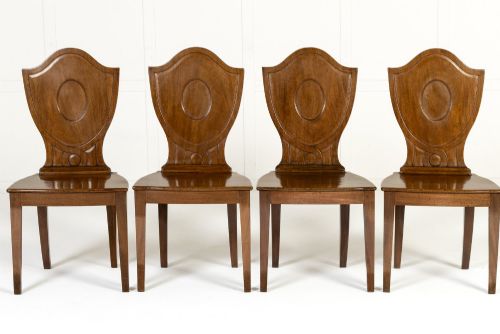
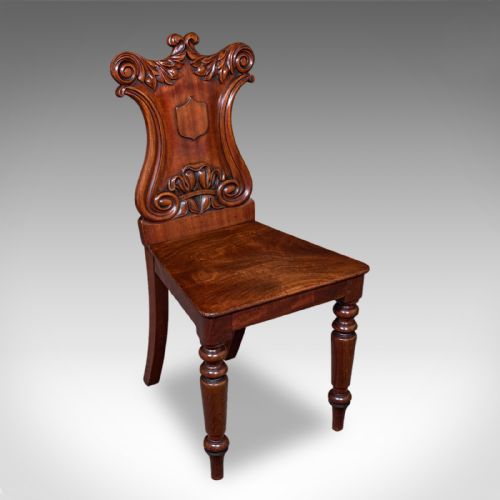
A carved wood hall chair serves primarily as a formal, upright seat for entranceways and corridors rather than for long lounging. These pieces typically dispense with upholstery in favour of solid timber seats and elaborately ornamented backs.
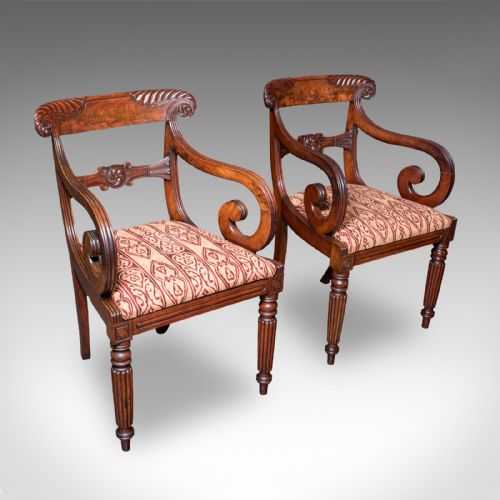
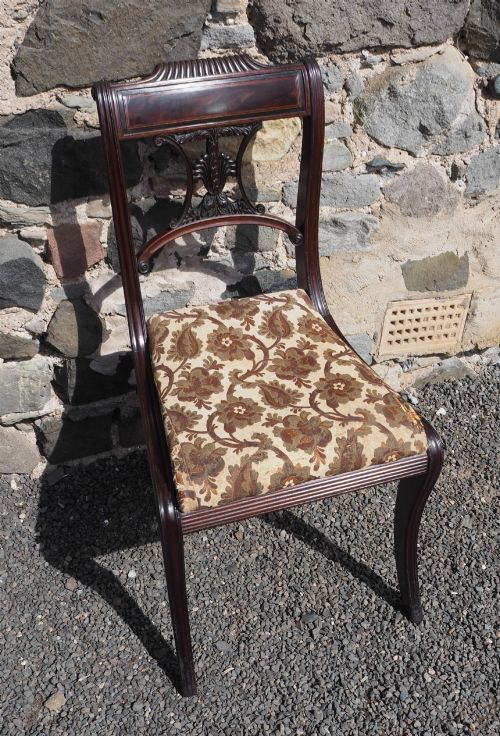
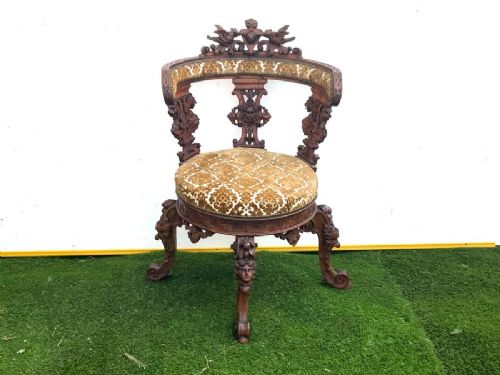
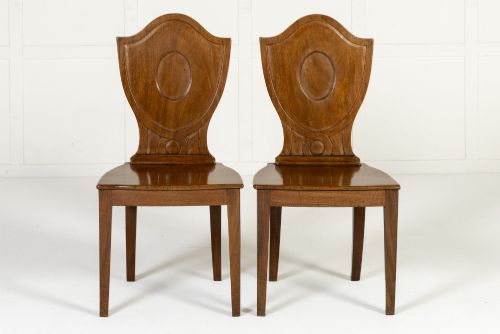
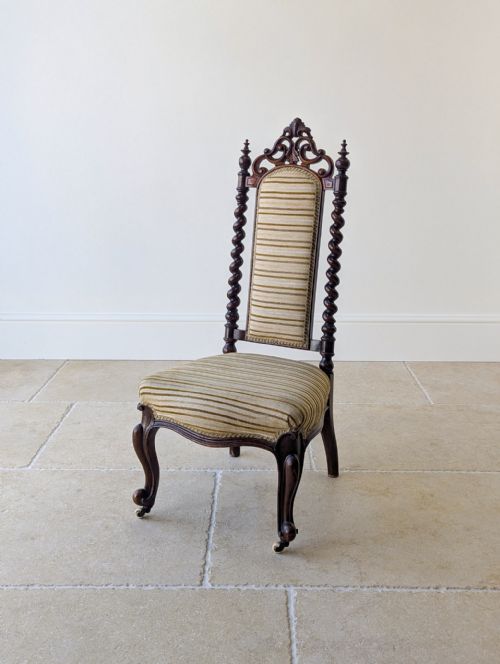
The specimens encountered here span several centuries, with nineteenth-century Victorian and Regency examples appearing alongside eighteenth-century Georgian designs. Mahogany and oak dominate the selection, often carrying carved heraldic crests or shield-shaped backs.
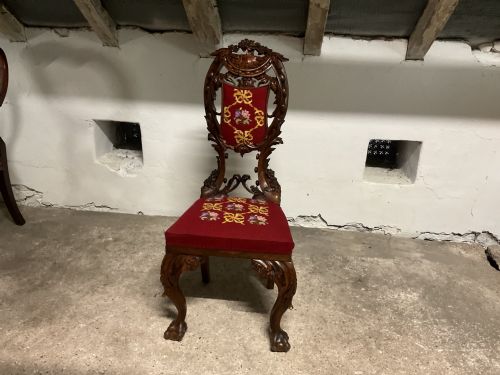
Makers drew upon diverse historical revivals, producing heavy Jacobean styles with turned members, Gothic arched panels, and crisp Chippendale motifs. Alongside standard single seats, the inventory includes matched pairs and occasional arm-bearing variants.
Materials and Construction
Cabinetmakers utilised dense hardwoods such as mahogany, oak, walnut, and rosewood to withstand the rigours of heavy domestic traffic. These timbers were selected for their structural stability and capacity to hold crisp, sharp carved details.
Joinery methods relied on mortise and tenon joints to secure the uprights and rails, while decorative elements like bobbin turnings, scrolling crests, and heraldic shields were hand-carved directly into the solid wood.
Carved Wood Hall Chair Retail Price Guide 2026
Typical asking prices for carved wood hall chair among the pieces listed under this phrase on Sellingantiques today, from the lower quarter to the upper quarter. They describe what is for sale here now, not the wider market.
Several Victorian specimens proudly bear heraldic crests, ready to make your modern postman feel distinctly under-titled.
Assessing Quality and Execution
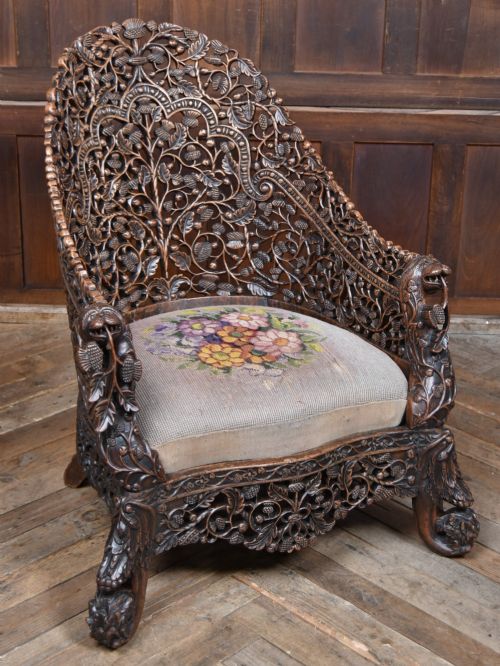
The depth and crispness of the carved detail distinguish standard utility items from exceptional commissions. Master carvers achieved clean, undercut foliage and sharp heraldic edges that retain their definition over centuries of use.
The selection of timber grain and the integrity of the joinery dictate the longevity of the frame. Higher-grade examples display carefully matched timber boards and robust structural joints that resist the loosening caused by constant movement.
The Carved Wood Hall Chair Glossary
- Shield back
- A chair back shaped in the outline of a heraldic shield, frequently embellished with carved drapery or crests.
- Wainscot
- A heavy wooden chair constructed largely of panelled oak, rooted in seventeenth-century domestic joinery traditions.
- Bobbin turning
- A form of lathe-work comprising a series of rounded, spool-like shapes linked together along the length of a furniture leg or stretcher.
- Armorial
- Bearing a coat of arms or family crest, often carved into the wooden central panel of a reception seat.
Carved Wood Hall Chair: Frequently Asked Questions
Where were hall chairs placed?
These seats stood strictly in entrance halls, corridors, and grand reception spaces where visitors waited briefly.
They were intended for temporary posture rather than comfort, keeping guests upright before entering main living rooms.
Are these chairs comfortable?
Most examples provide an entirely rigid wooden seat and a straight, upright back designed for posture.
Buyers seeking plush cushioning generally look toward parlour or drawing-room seating instead of utilitarian passage furniture.
How do I identify a Victorian piece?
Victorian examples often display heavier proportions and draw upon eclectic revival styles like Gothic or Rococo.
Dark dense timbers combined with deep machine-tooled or hand-chiselled relief work typically point toward mid-nineteenth-century production.
Can I use them for dining?
Their narrow proportions and lack of padding make them physically demanding for extended dinner parties.
However, occasional placement around a large table creates a striking visual statement if comfort is secondary.