
Antique Carved Throne Chair
When you search for an antique carved throne chair, you are looking at substantial seating built to project authority through timber and ornament.
Antique Carved Throne Chair
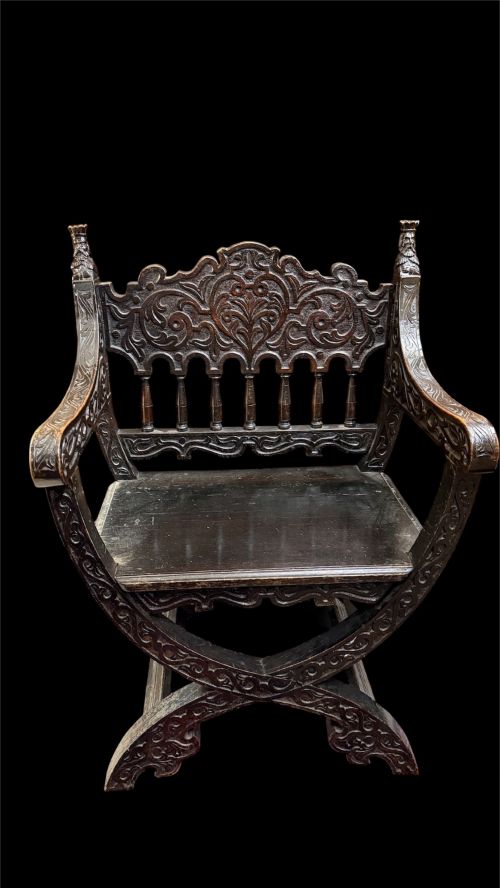
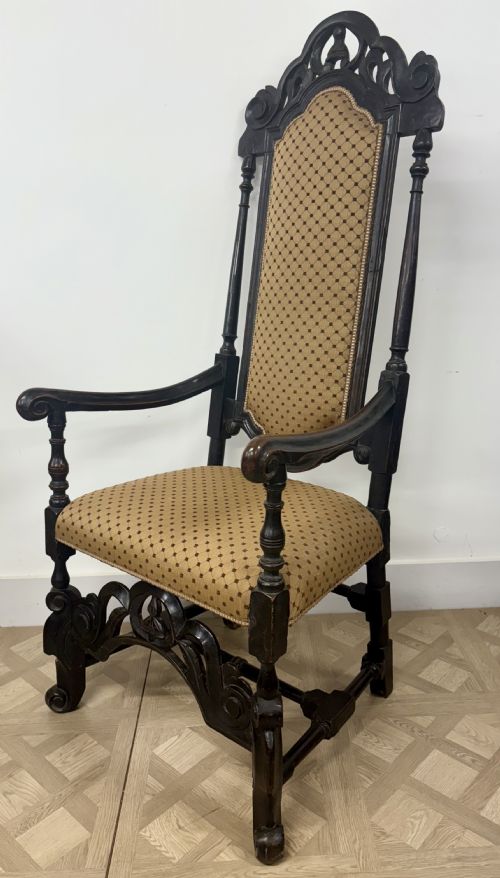
An antique carved throne chair stands as a heavy, high-backed seat designed historically for status rather than casual comfort. These pieces draw on centuries of craftsmanship, ranging from seventeenth-century English wainscot designs to nineteenth-century Gothic and Renaissance revivals.
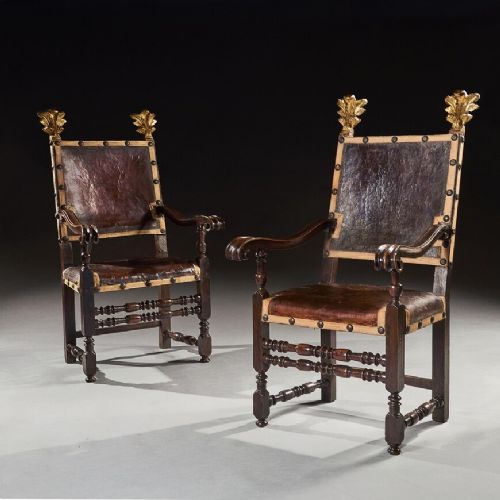
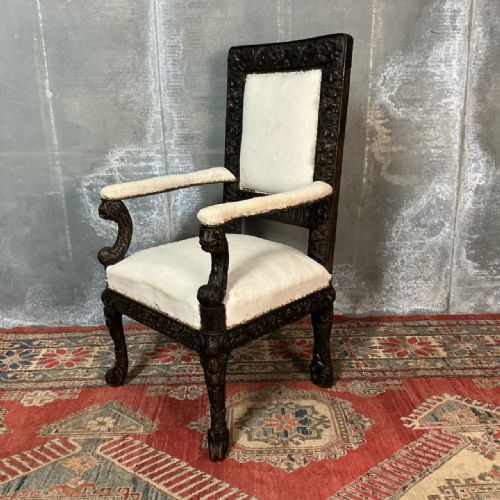
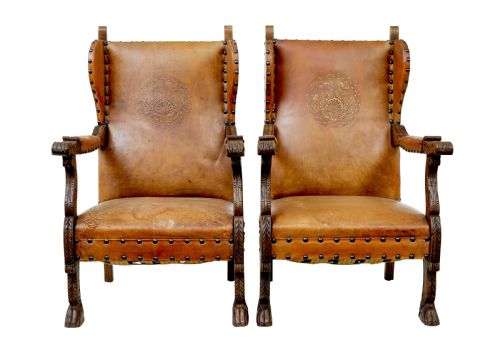
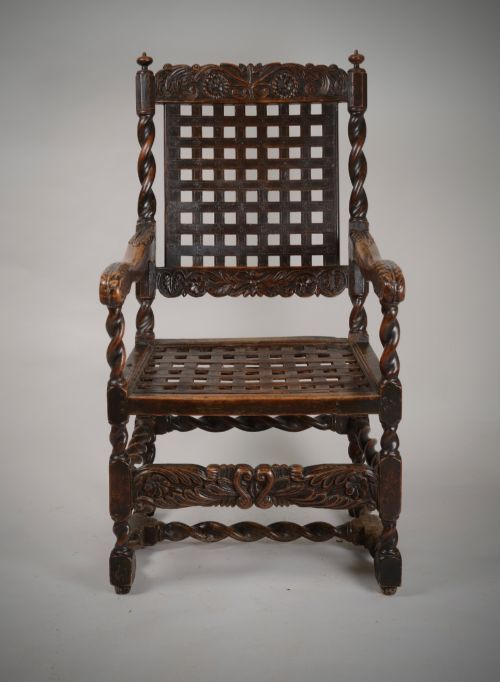
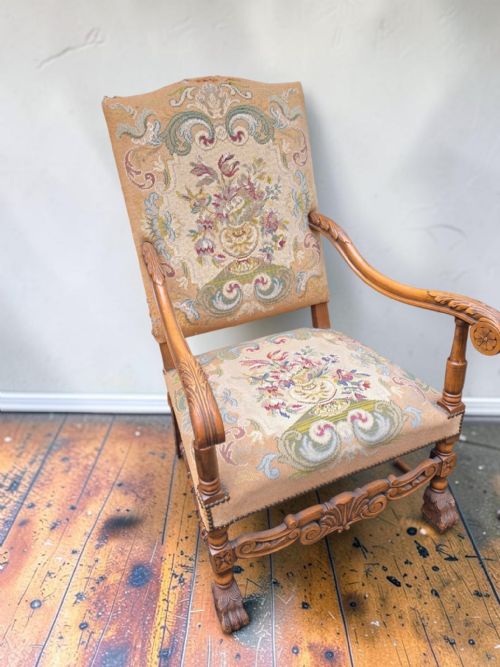
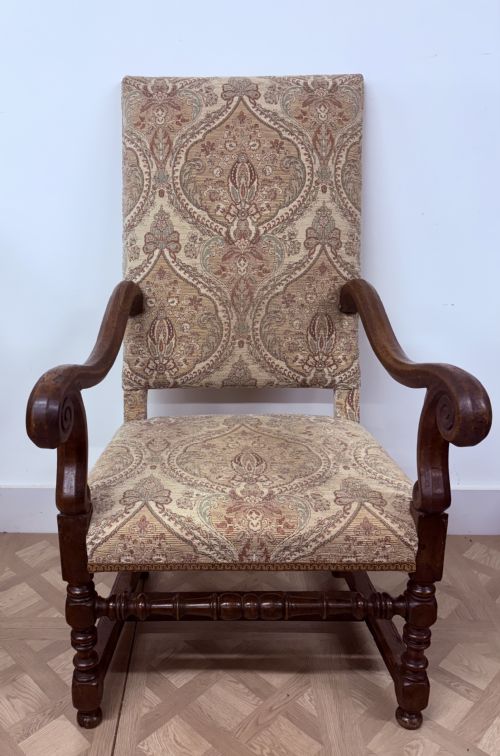
On this page, buyers regularly encounter heavy oak and walnut frames, frequently paired with embossed leather, tapestry, or velvet upholstery. The selection spans sturdy provincial British output alongside continental Baroque and Italian examples bearing deep, figurative carving.
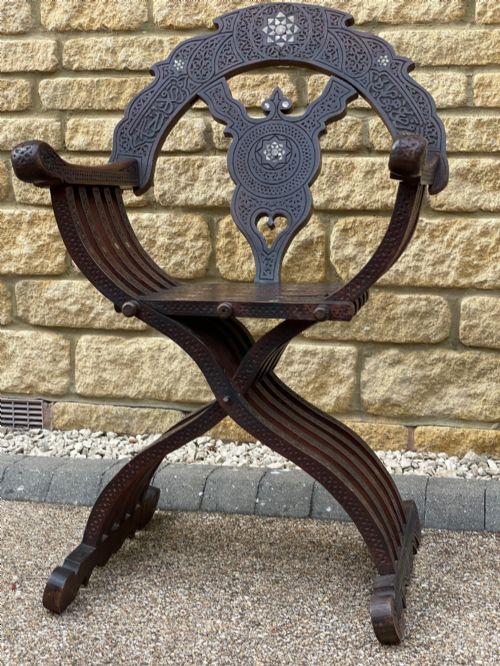
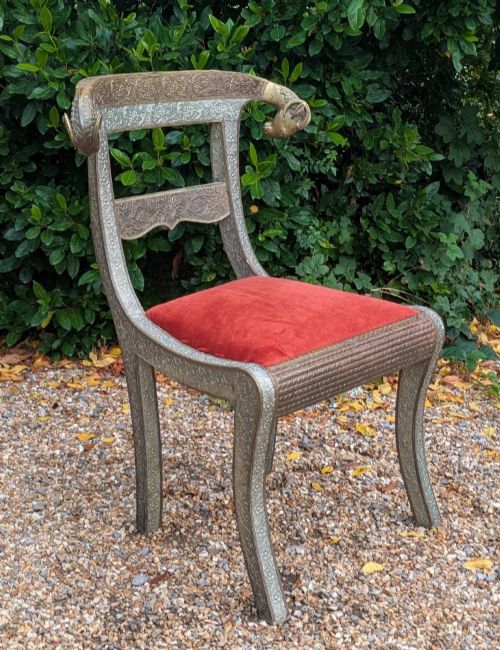
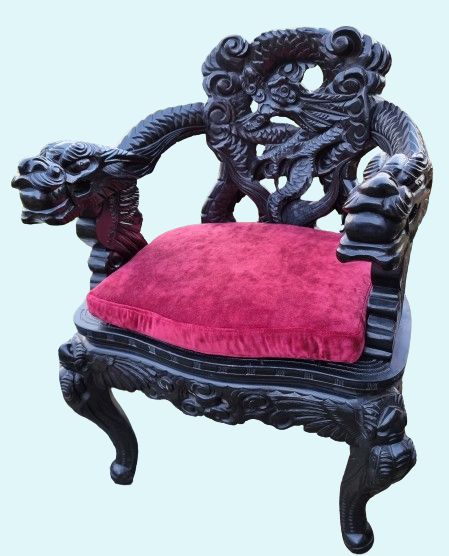
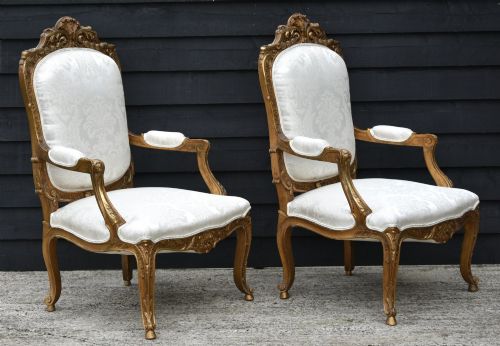
Forms vary from sturdy wainscot armchairs with panelled backs to grand giltwood creations and nineteenth-century exhibition pieces. Such seating originates from diverse regional traditions, encompassing English, French, Italian, and Asian workshops.
What Varies in Quality
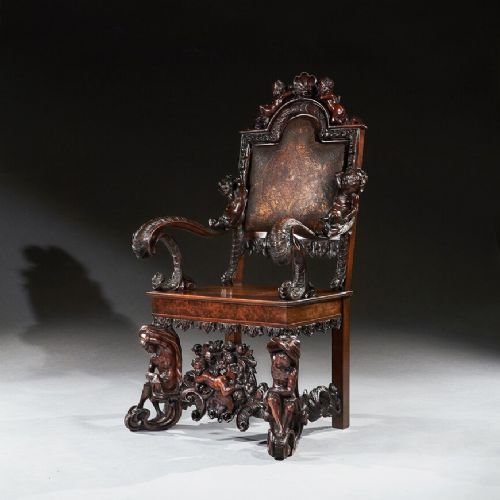
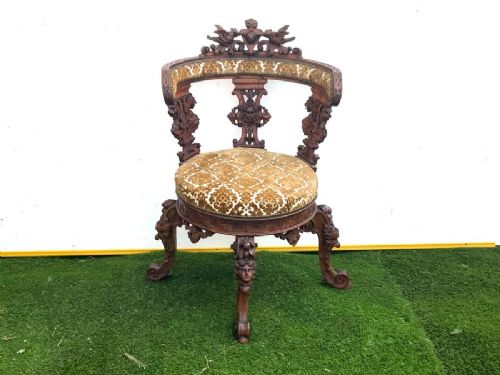
The distinction between ordinary and exceptional examples rests in the depth and crispness of the hand-carved detail. Superior pieces exhibit confident, three-dimensional relief work where figures and foliage retain sharp edges and naturalistic proportions.
Timber selection and structural integrity also dictate overall worth. Examples retaining their original patination and dense, uncompromised primary woods command greater appreciation than those suffering from extensive timber replacement or unsympathetic modern restoration.
Design ambition separates basic regional utility seating from high-status artistic commissions. Pieces echoing specific historic movements or bearing maker attributions demonstrate superior conceptual and technical execution.
Antique Carved Throne Chair Retail Price Guide 2026
Typical asking prices for carved throne chair among the pieces listed under this phrase on Sellingantiques today, from the lower quarter to the upper quarter. They describe what is for sale here now, not the wider market.
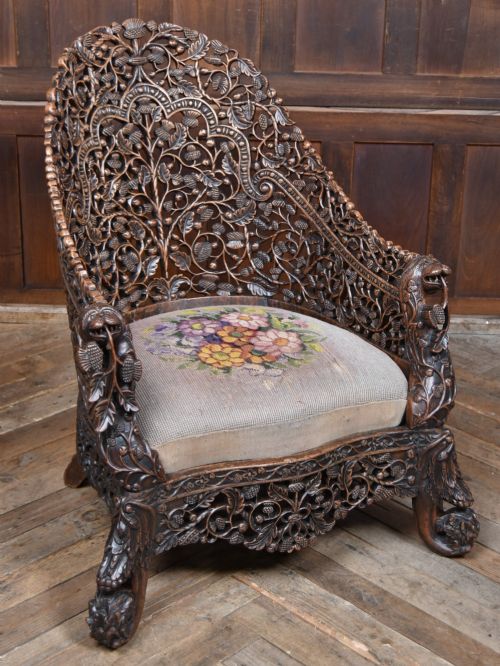
Several fierce carved lion masks glare steadily from nineteenth-century armrests, keeping a silent watch over modern sitting rooms.
Andrea Brustolon·Thomas Hope
The Antique Carved Throne Chair Glossary
- Wainscot chair
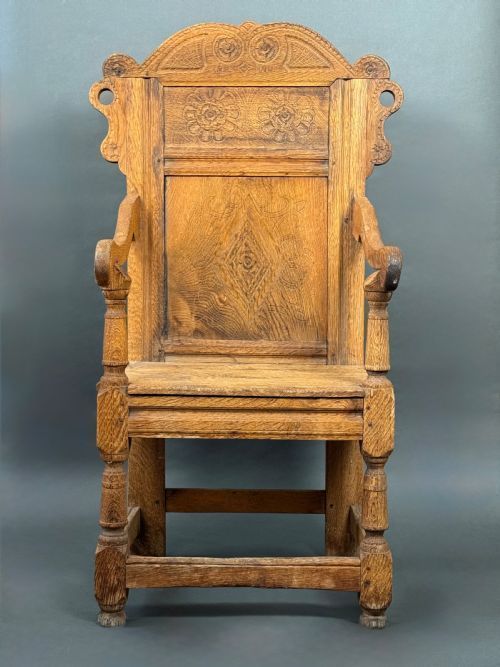
- A heavy wooden armchair of seventeenth-century origin featuring a panelled back and solid wooden seat. These early seats represent some of the earliest domestic forms constructed for household heads.
- Monopodia
- A carved furniture support taking the form of an animal leg, often ending in a paw or hoof. This classical motif appears frequently on nineteenth-century revival seating.
- Giltwood
- Timber coated with a thin layer of gold leaf or metallic paint to simulate solid gold. This finish was utilised on grand Baroque and French revival seats to catch candlelight.
- Baroque
- A flamboyant artistic style characterised by dramatic curves, heavy ornamentation, and rich textures. Pieces from this tradition often display elaborate scrollwork and dynamic figurative carvings.
- Tapestry
- A heavy hand-woven textile featuring pictorial designs used historically for upholstery. Such coverings add significant texture and historical context to large frames.
Antique Carved Throne Chair: Frequently Asked Questions
Where were throne chairs placed historically?
These commanding seats were positioned at the head of a long dining table or in the principal reception room of a grand household. Their imposing height and heavy armrests marked the specific station of the head of the house or an honoured guest.
In domestic settings, they served as functional seating that doubled as a visual statement of social standing. Their substantial build ensured they remained fixed in position rather than moved about casually.
How do I care for antique leather upholstery?
Maintaining vintage leather requires gentle cleaning with a soft, dry cloth and occasional application of traditional wax or leather balsam. Keeping the material nourished prevents it from drying out and cracking over time.
Avoid placing these chairs in direct sunlight or near strong heat sources, which cause the natural hide and timber to warp. Gentle handling preserves the original patination and embossed detailing.
Are these chairs comfortable for daily use?
Most antique throne chairs were built for posture and visual authority rather than modern lounging. Their upright wooden backs and firm padded seats encourage an upright sitting position.
While some larger nineteenth-century upholstered examples offer a softer sit, seventeenth-century wainscot versions are firm and rigid. Cushions are often added discreetly to adapt them for contemporary living.
How do I distinguish 17th-century oak from later revivals?
Seventeenth-century timber displays deep natural patination, hand-cut peg joints, and minor structural irregularities typical of early hand tools. The grain shows distinct medullary rays developed over centuries of exposure.
Nineteenth-century revival pieces often exhibit mechanical saw marks, highly uniform construction, or stylised carving that mimics earlier periods without the genuine wear. Comparing joinery methods helps clarify the true age of the piece.