


Carved Lion Armchair
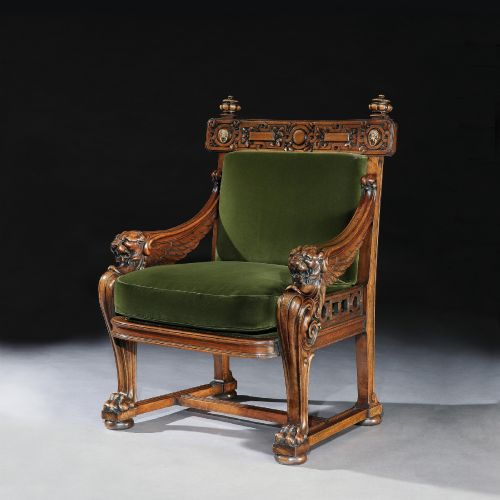
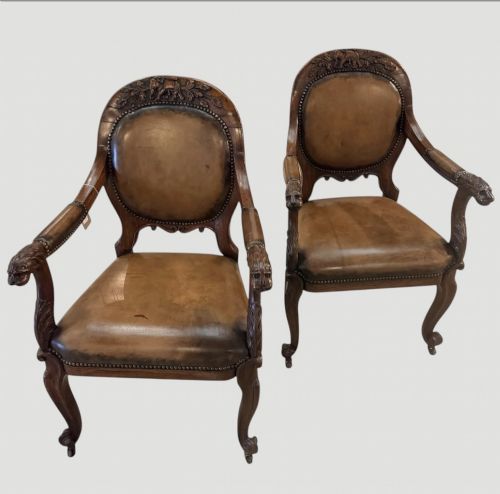
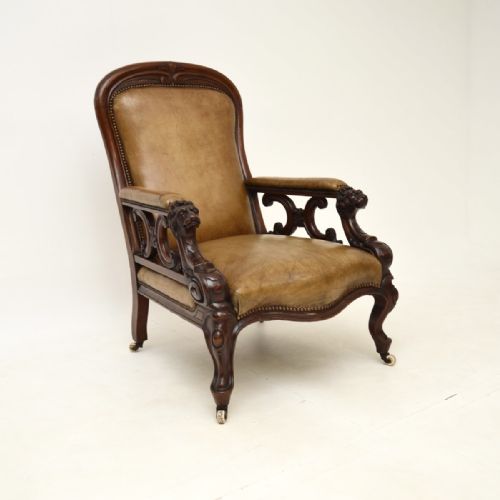
These carved lion armchairs combine robust timber frames with bold feline sculpture, offering a commanding seat for a library or study.
Carved Lion Armchair
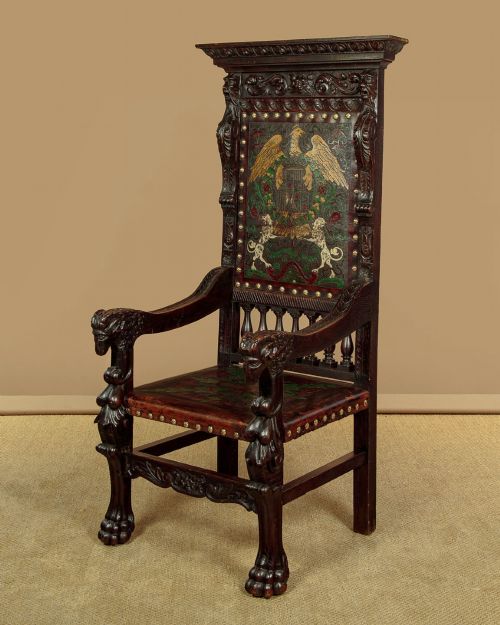
A carved lion armchair is a substantial seating form defined by sculptural terminals shaped as a lion head, paw, or monopodia. When you search for a carved lion armchair on this page, you encounter sturdy library armchairs, monumental throne chairs, and library club suites from the nineteenth century onward.
The Victorian period dominates these listings, frequently rendered in solid oak or mahogany with integrated leather upholstery. Alongside heavy British styles, pieces emerge from Anglo-Indian workshops and Continental makers, showing how diverse regional tastes interpreted the motif.
Makers drew on historic revival idioms, producing pieces that range from academic Gothic Revival and Renaissance Revival schemes to Anglo-Indian colonial hardwoods. Each version uses the leonine carvings either as structural feet or as arm terminals designed to project authority.
Materials and Construction
Upholstery materials were chosen for durability and tactile richness, pairing brass-studded brown leather with damask fabric and velvet. Frames often incorporated secondary techniques like painted leather, ebonising, or intricate inlay work to complement the primary carved ornament.
Several armchairs incorporate actual mythical lion heads, suggesting nineteenth-century carvers occasionally indulged in imaginative zoology.
Distinctions in Execution and Depth
Timber selection and frame scale similarly separate ordinary seating from substantial library thrones. Solid, dense woods like oak and mahogany with integrated joinery and well-preserved upholstery contrast with simpler, lighter frames.
Thomas Hope·George Smith
The Carved Lion Armchair Glossary
- Monopodia
- A single support, often taking the form of a lion's leg and paw, used as a structural terminal beneath an armrest. This classical motif originates in ancient Roman furniture design.
- Throne Chair
- A high-backed, imposing seat of heavy proportions designed to dominate a room. These pieces frequently incorporate full lion arms and elaborate crest rails.
- Gothic Revival
- A nineteenth-century design movement that reinterpreted medieval architectural forms. In these chairs, it manifests in pointed arches, tracery, and dark oak construction.
- Anglo-Indian
- Furniture produced in India during the British colonial period, typically utilising exotic hardwoods like rosewood or satinwood. These items blend British seating forms with intricate indigenous carving traditions.
- Fauteuil
- An open-armed French armchair with upholstered arm pads and an exposed wooden frame. Examples found here often date to the nineteenth century or earlier revival periods.
Carved Lion Armchair: Frequently Asked Questions
What rooms suit a carved lion armchair?
These substantial seats demand space and work best in libraries, studies, or large drawing rooms where their dark timber and bold proportions anchor the interior.
They pair effectively with heavy desks, bookshelves, and traditional club furniture without being easily overpowered by surrounding decoration.
How do I identify a Victorian example?
Victorian versions typically rely on dark oak or mahogany with deep relief carving representing lion heads on the arms and paw feet below.
They frequently feature buttoned brown leather upholstery secured with brass tacks, reflecting the mid-nineteenth-century taste for robust library seating.
How do library chairs differ from standard armchairs?
Library armchairs are built for heavy use, prioritising wide padded armrests and supportive, sprung or stuffed backs covered in durable leather.
Their robust frames and leonine supports were designed to withstand daily study use while maintaining an imposing appearance.