



Carved Teak Armchair
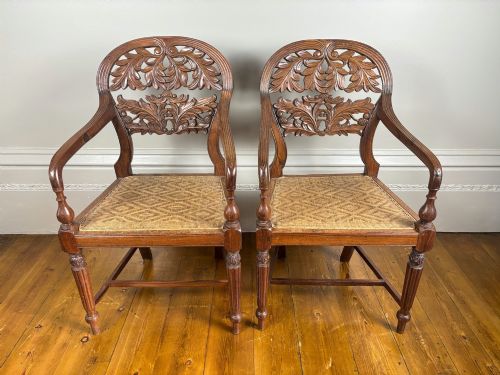
A carved teak armchair brings heavy timber and dense, deep-relief carving straight from the colonial trading ports into a modern room.
Carved Teak Armchair
The carved teak armchair encompasses heavy seating pieces shaped in colonial and eastern workshops during the nineteenth and early twentieth centuries. These chairs frequently emerge from Anglo-Indian, Burmese, and Chinese export traditions, reflecting distinct regional carving vocabularies and structural forms.
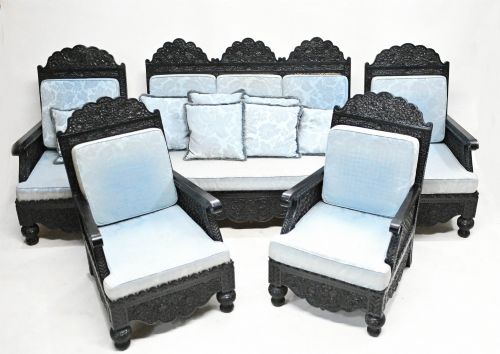
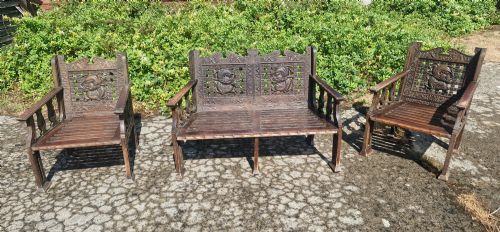
Buyers encounter everything from formal throne chairs and peacock armchairs to folding campaign chairs and planters' seats with cane or leather inserts. Many examples arrive as pairs or matching suites suited to conservatory spaces.
Dating across the listings stretches from the mid-nineteenth century through the 1920s, showing consistent reliance on dense tropical hardwoods capable of holding intricate chisel work.
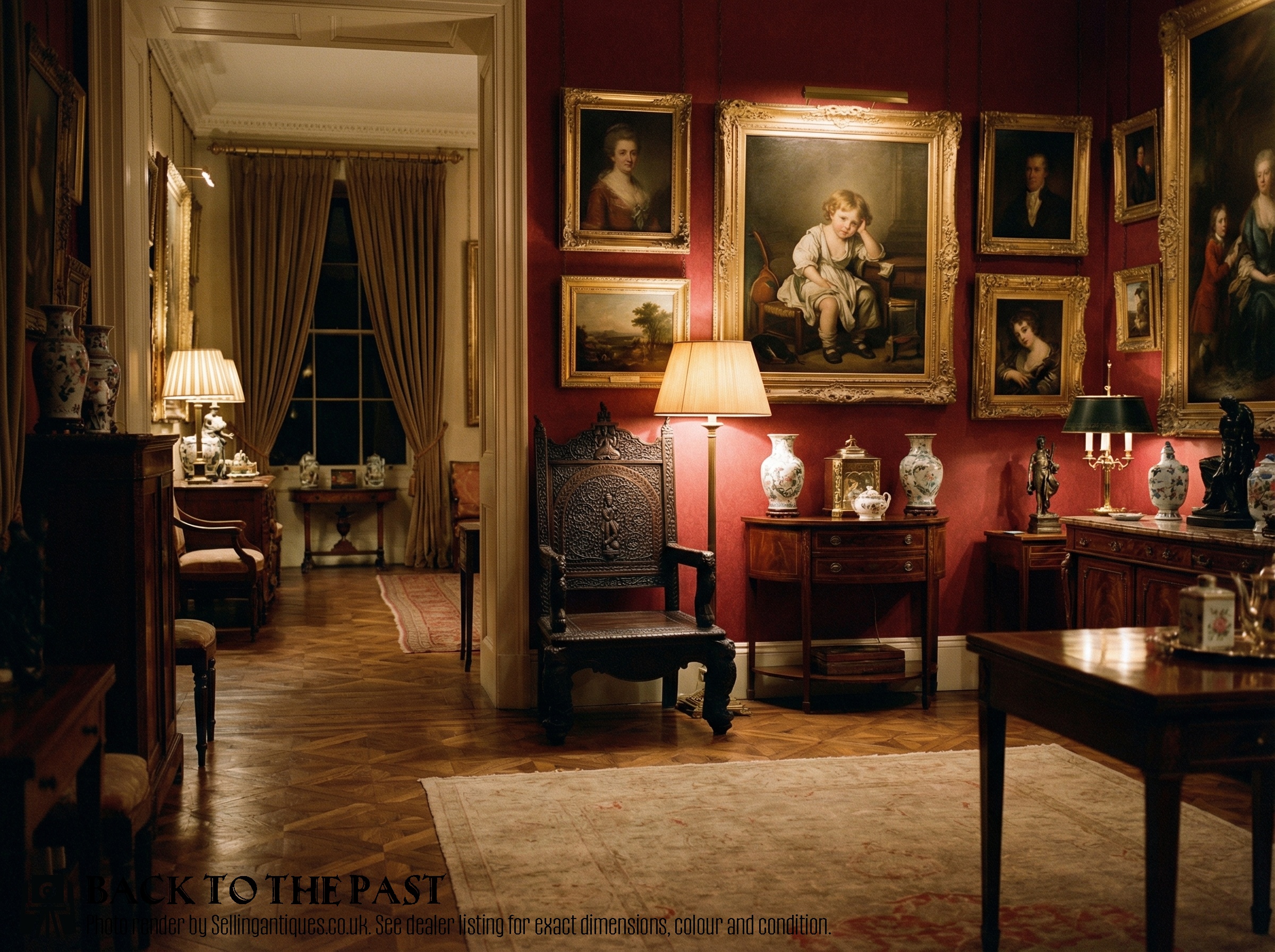
Materials and construction methods
Makers utilised dense teak and related tropical hardwoods that allowed carvers to execute deep, undercut foliage, figures, and geometric patterns without splintering the timber. Structural joints relied on traditional joinery supplemented by brass fixings and hinges in folding or campaign variations.
Secondary materials such as cane, leather, and brass wire inlay were integrated directly into the timber frames to provide seating surfaces or decorative contrast against the dark wood. Surface finishes generally remained true to the natural grain or received traditional dark wax polish applications.
Carved Teak Armchair Retail Price Guide 2026
Typical asking prices for carved teak armchair among the pieces listed under this phrase on Sellingantiques today, from the lower quarter to the upper quarter. They describe what is for sale here now, not the wider market.
Several armchairs incorporate fan-tailed peacock motifs into their carved crest rails.
Assessing quality in carved seating
Quality rests principally on the crispness and depth of the chisel work across the arms, back crests, and legs. Shallower, mechanical stamping contrasts sharply with fully hand-carved relief where backgrounds are meticulously punched or recessed.
Structural integrity also dictates value, particularly in folding campaign chairs and intricate root wood or throne forms where heavy ornament can mask loose joinery or repaired stress fractures in the teak.
The Carved Teak Armchair Glossary
- Teak
- A dense, durable tropical hardwood prized for its oily content and resistance to splitting. It forms the structural base for virtually all the seating on this page.
- Savonarola
- An X-shaped folding chair design popularised during the Italian Renaissance and later adapted in Indian workshops using brass inlay and carved timber slats.
- Cane
- Woven rattan peel used to form breathable seats and back panels in warmer climates. It requires careful inspection for tension and breakage.
- Anglo-Indian
- A stylistic crossover fusing traditional British seating forms with intricate Indian carving techniques and native timbers. These pieces date largely from the colonial era.
Carved Teak Armchair: Frequently Asked Questions
How do I care for teak furniture?
Keep the wood away from direct heat sources and sudden humidity shifts to prevent the dense timber from splitting.
Apply a neutral beeswax periodically to feed the grain and maintain a soft lustre without building up heavy chemical residues.
Are these chairs comfortable for daily use?
Many models were built for tropical lounging or formal display rather than modern ergonomic support.
Planters' chairs with extended arms and low seats offer relaxed postures, while upright throne chairs suit occasional sitting.
How do I identify an Anglo-Indian piece?
Look for dense foliage carving, animal motifs, and heavy teak construction combined with traditional British furniture outlines like elbow chairs or campaign frames.
Regional workshops often blended European upholstery layouts with deeply undercut eastern ornamentation.
What is a campaign chair?
A folding or knockdown seating design created for British officers on the move across colonial territories.
They utilise hinged teak frames and removable leather or canvas components for straightforward transport.