



Dark Wood Balloon Back
Dark wood balloon back chairs combine curved timber frames and generous seating, offering a classic nineteenth-century silhouette for the dining room.
Dark Wood Balloon Back
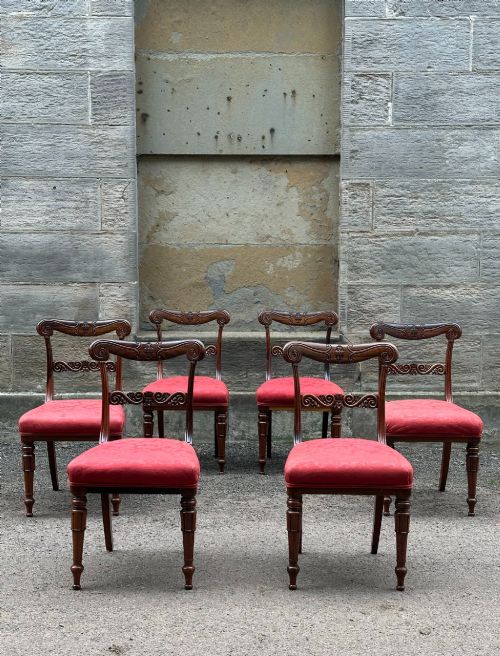
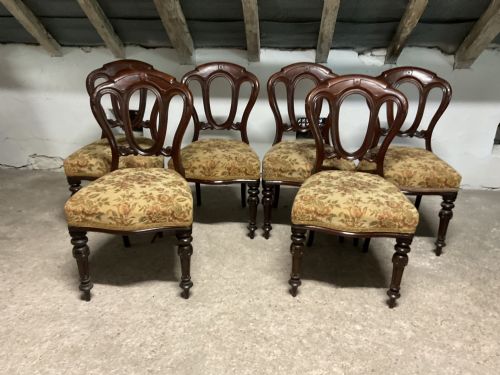
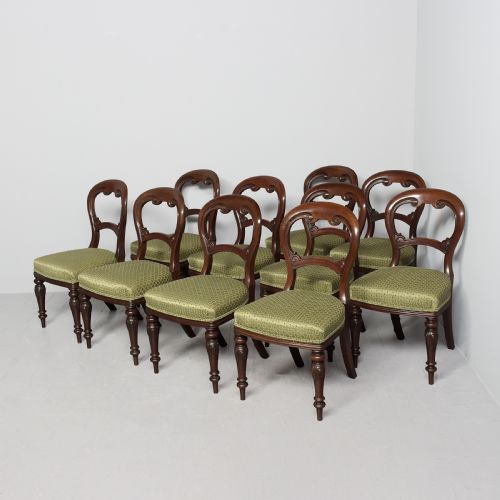
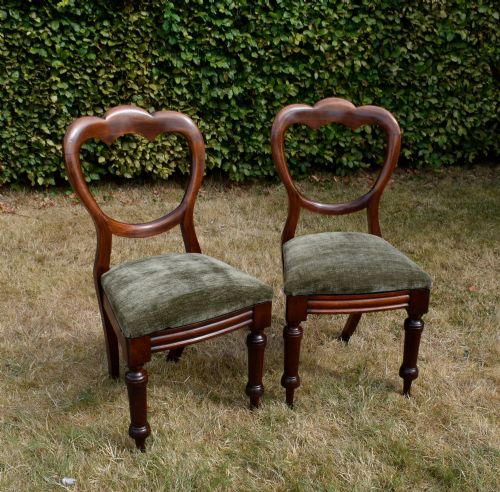
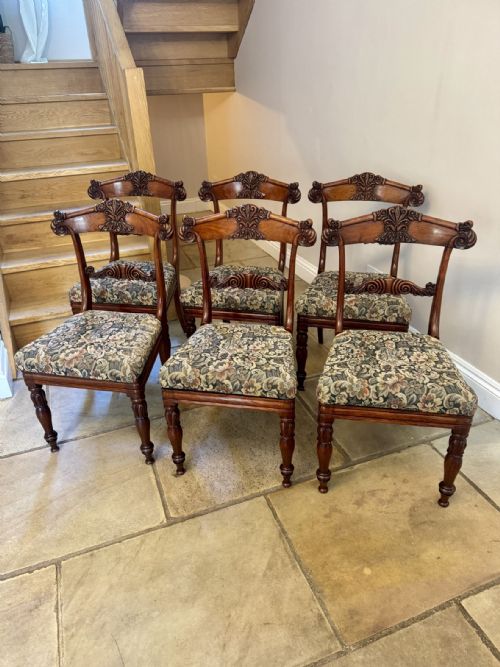
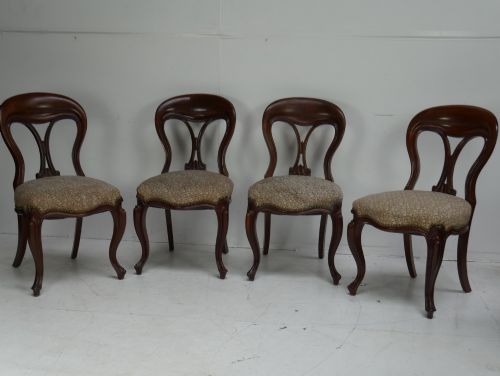
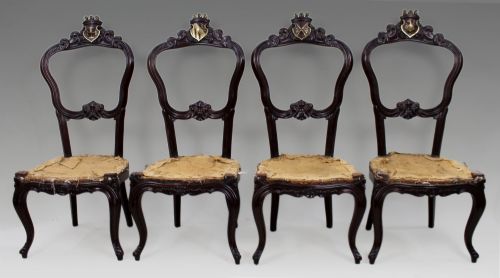
Dark wood balloon back chairs form a distinct group of seating furniture rooted primarily in the Victorian and Regency periods. These pieces take their name from the rounded, ovoid profile of the upper backrest, which resembles the shape of a hot air balloon.
The selections available here lean heavily toward sets of dining chairs, alongside occasional side chairs, hall chairs, and single armchairs. Mahogany and rosewood dominate the material record, giving these nineteenth-century forms their characteristic deep, rich tone.
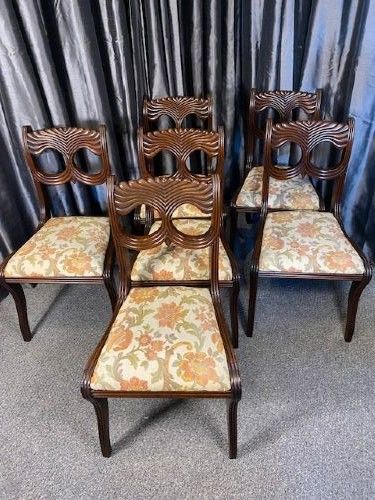
Most examples originate from the middle decades of the nineteenth century, ranging from late Regency experiments to robust Victorian iterations. Buyers encounter both modest four-piece sets and larger groupings designed for formal dining spaces.
Materials and construction methods
Cabinet makers built these frames predominantly from dense hardwoods like mahogany and rosewood, occasionally utilising walnut. These timbers provided the structural strength required to shape the curving top rail without splitting under tension.
Makers formed the iconic balloon silhouette by steaming and bending solid timber or by carefully cutting and joining shaped sections of wood. Carved details, such as floral motifs or heraldic crests, were then hand-chiselled directly into the solid frame.
Seats were upholstered over webbing and stuffing, using a variety of fabrics including velvet, needlepoint, and traditional textiles. Brass components occasionally appeared in castors or structural reinforcements on specific forms.
Some nineteenth-century makers hid handwritten signatures inside the seat frame.
Distinctions in quality and execution
The distinction between standard examples and superior pieces rests largely on the crispness of the timber carving and the selection of the wood. Fatter, highly figured rosewood grains and deeply carved joinery elevate an ordinary set into something exceptional.
Construction rigidity defines the integrity of these chairs over time, separating tightly jointed frames from those that have loosened through generations of use. The fluidity of the curved backrest and the harmony of proportion across a full set indicate the skill of the original workshop.
Gillows
The Dark Wood Balloon Back Glossary
- Balloon back
- A chair back shaped like a rounded oval or hot air balloon. This profile became the defining silhouette for mid-nineteenth-century dining seating.
- Rosewood
- A dense, heavily grained tropical timber prized for its dark colour and polished finish. It appears frequently on higher-end nineteenth-century seating.
- Mahogany
- A durable reddish-brown hardwood utilised extensively for framing dining chairs. Its stability made it ideal for curved joinery.
- Regency
- An architectural and decorative style period spanning the early nineteenth century. Pieces from this era often show neoclassical influences before the heavier Victorian tastes took hold.
- Needlepoint
- A form of counted thread embroidery traditionally worked on canvas. It frequently provides the decorative top layer for period seat upholstery.
Dark Wood Balloon Back: Frequently Asked Questions
What is a balloon back chair?
A balloon back chair is a nineteenth-century seating form defined by its curving, oval-shaped upper backrest. The wooden frame loops continuously from the seat up and around to form the distinctive silhouette.
These pieces were produced in large numbers during the Victorian and Regency eras, primarily intended for formal dining rooms. They combine solid timber frames with padded upholstered seats.
How do I date these chairs?
Dating relies on examining the timber species, secondary woods, and decorative carving styles present on the frame. Regency examples tend to show lighter neoclassical lines, whereas mid-Victorian pieces often feature denser rosewood and deeper relief carving.
Construction marks, screw types, and upholstery methods also offer clues to the decade of manufacture. Comparing the stylistic quirks to documented nineteenth-century furniture helps narrow the timeline.
Are these chairs comfortable for daily use?
Most balloon back chairs were designed for upright dining posture rather than lounging. Their curved backrests provide solid lumbar support, though the seats are typically firm due to traditional webbing and stuffing.
Modern users often place them around a dining table where their compact footprint proves practical. Selecting sets with supportive upholstery ensures they remain functional for everyday meals.
How should I care for rosewood frames?
Rosewood requires stable indoor humidity levels to prevent the dense timber from drying out or splitting. Keeping these pieces away from direct heat sources and strong sunlight preserves the rich natural colour.
Periodic application of appropriate furniture wax maintains the polished surface without building up residue. Gentle dusting with a soft cloth prevents micro-abrasions on the antique finish.