




Pink Velvet Dining Chairs
Pink velvet dining chairs bring soft texture and rich colour to a table, combining period frames with plush textile seats.
Pink Velvet Dining Chairs
Pink velvet dining chairs encompass seating upholstered in soft pile fabrics set across centuries of historic British and continental design. Buyers seeking pink velvet dining chairs encounter pieces spanning Georgian, Victorian, and Edwardian eras, alongside Louis XVI Revival forms.
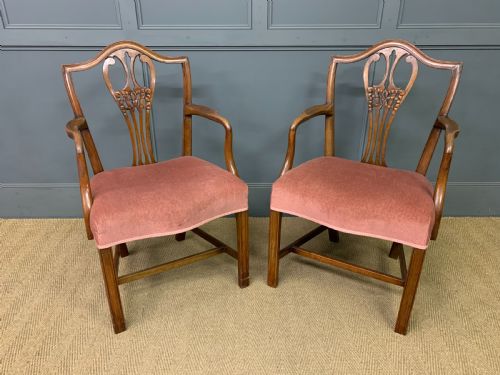
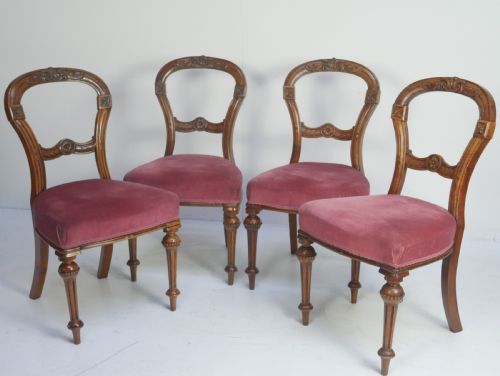
The selection on this page relies on side chairs, armchairs, and salon chairs originally built in mahogany, walnut, rosewood, and giltwood. These historic frames now carry contemporary or later pink velvet upholstery while retaining their original nineteenth and early twentieth century woodwork.
Sets of dining chairs sit alongside pairs of armchairs and individual salon chairs, offering various seating arrangements for a dining room or parlour. Each piece pairs dark timber or gilded surfaces with the distinctive tactile warmth of velvet.
How they were made
Cabinetmakers shaped the structural frames of these chairs using dense hardwoods like mahogany, walnut, and rosewood, employing traditional joinery such as mortise and tenon. Carved details, barley twists, and balloon backs required skilled hand chiselling and turning by nineteenth century artisans.
Giltwood frames utilised layers of gesso applied to carved timber before receiving fine applications of gold leaf. Upholstery methods evolved across periods, securing the textile cover over traditional stuffing materials supported by webbing and springs.
Listings feature Victorian, Edwardian, and Georgian periods, utilising walnut, mahogany, rosewood, and brass materials across dining and salon chairs.
What varies in quality
The integrity of the timber frame dictates the primary tier of quality, with crisp hand-carved details and substantial hardwood construction outlasting simpler or softer woods. Frames that retain their original structural rigidity without excessive movement represent superior historic craftsmanship.
The refinement of the silhouette and the harmony between the historic woodwork and the textile upholstery determine visual distinction. Pieces exhibiting well-proportioned balloon backs or intricate barley twist turnings demonstrate greater artisan skill during manufacture.
The Pink Velvet Dining Chairs Glossary
- Balloon-back
- A chair back shaped in an open curve resembling a balloon, popular during the Victorian period. This distinctive outline provides ergonomic support while showcasing figured timber veneers.
- Barley twist
- A spiral turning resembling a barley sugar stick, carved into furniture legs and supports. This decorative technique added dynamic movement and texture to nineteenth century woodwork.
- Giltwood
- Timber coated with gold leaf or gold paint over a prepared gesso ground. This luxurious finish was favoured in revival styles to mimic solid gold decorative arts.
- Side chair
- An upholstered or wooden chair without arms, designed primarily for dining tables. These pieces offer compact seating that fits neatly around various table shapes.
Pink Velvet Dining Chairs: Frequently Asked Questions
Are these chairs comfortable for long dinners?
Historic dining chairs were built with upright postures in mind, supporting formal dining rather than lounging. The addition of velvet upholstery introduces a padded seating surface to these traditional frames.
Buyers planning for extended seating should consider the depth and padding of individual side chairs or armchairs. Open back designs provide steady upright support during meals.
How do I match different wood tones?
Historic timbers like mahogany, walnut, and rosewood share warm undertones that allow them to sit together within the same room. The unifying presence of pink velvet across the seats helps tie disparate wood grains into a cohesive scheme.
Focusing on the scale and period proportions matters more than matching the exact timber shade. Variations in grain naturally complement one another around a dining table.
Can I mix armchairs with side chairs?
Pairing armchairs at the head of the table with side chairs along the sides follows traditional dining room seating arrangements. This approach adds visual weight and comfort to the primary seats while keeping the table sides open.
Ensure the seat heights align correctly across the different chair types before placing them together. Matching upholstery fabric bridges any minor differences in frame design.
How do I care for velvet upholstery?
Velvet benefits from regular gentle brushing with the pile to maintain its lustrous texture and prevent flattening. Professional cleaning preserves the delicate pile of the textile over years of daily use.
Placing chairs away from direct sunlight protects both the pink dye and the underlying historic timber from fading. Prompt attention to accidental spills keeps the fabric looking fresh.