

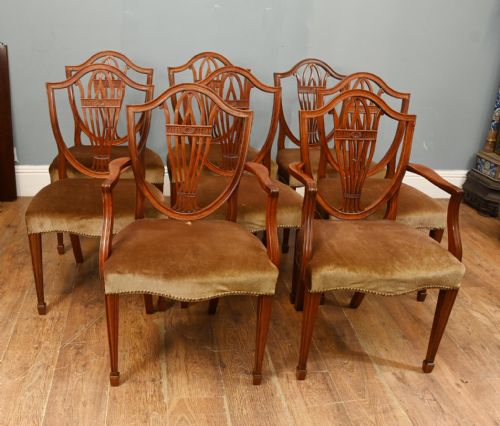


Vintage Velvet Dining Seats
Vintage velvet dining seats bring character to a table, combining period timber frames with soft textile upholstery.
Vintage Velvet Dining Seats
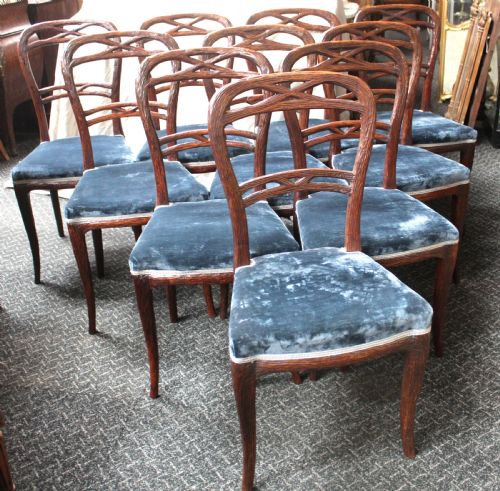
When searching for vintage velvet dining seats, buyers encounter dining chairs, armchairs, and banquette sofas spanning the Georgian, Victorian, Edwardian, and twentieth-century periods. These pieces bring historical timber frames together with soft pile upholstery.
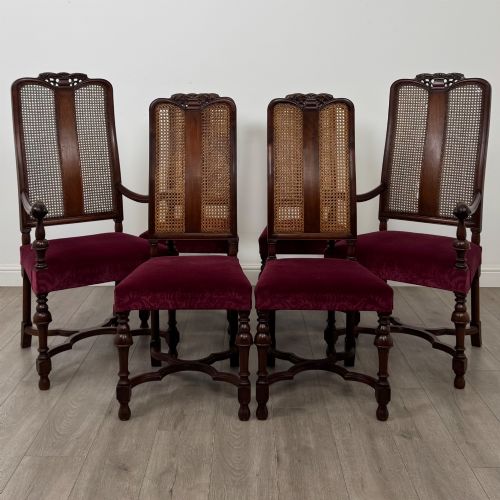
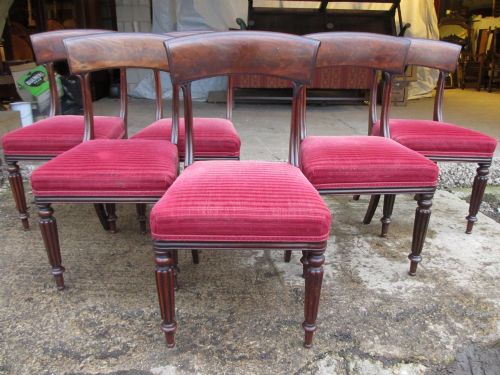
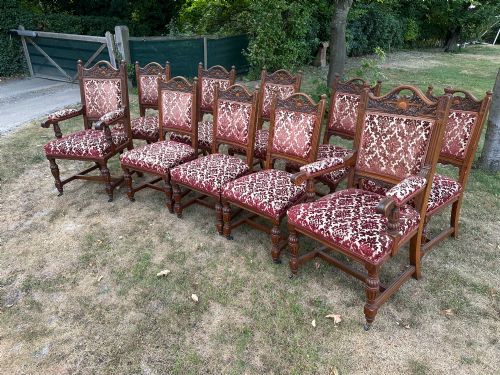
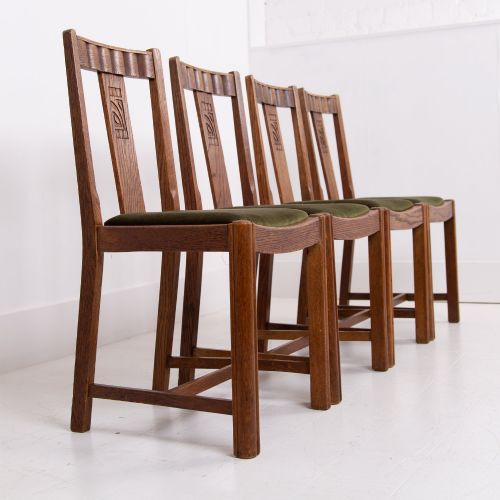
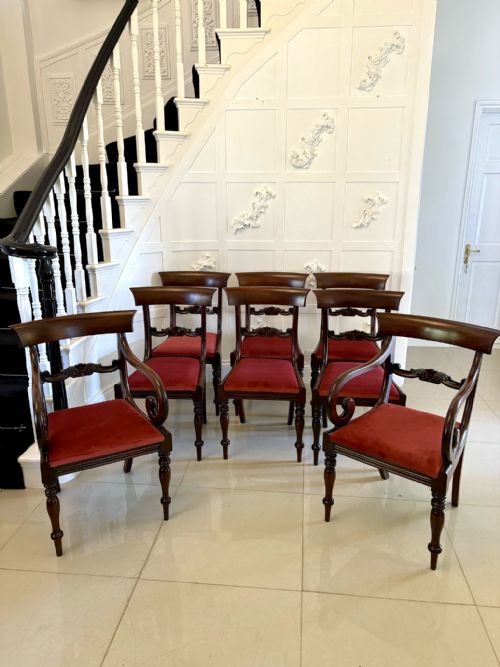
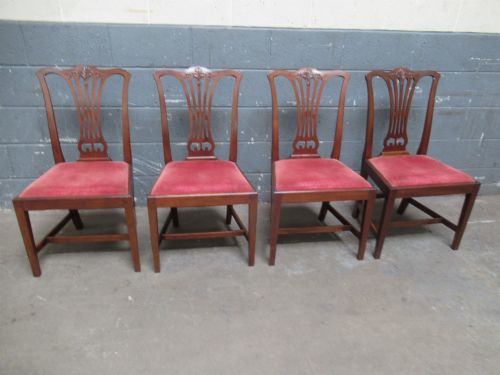
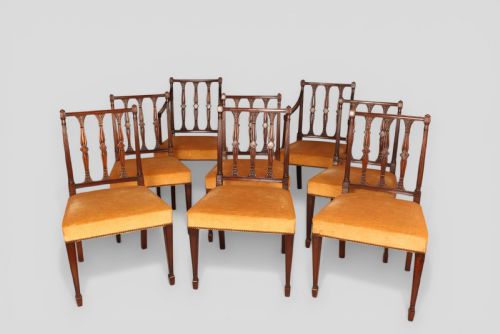
The most common forms on this page are mahogany and oak dining chairs originating from the nineteenth and early twentieth centuries. Many appear in matched sets of four, six, eight, or ten pieces, reflecting formal dining traditions of their eras.
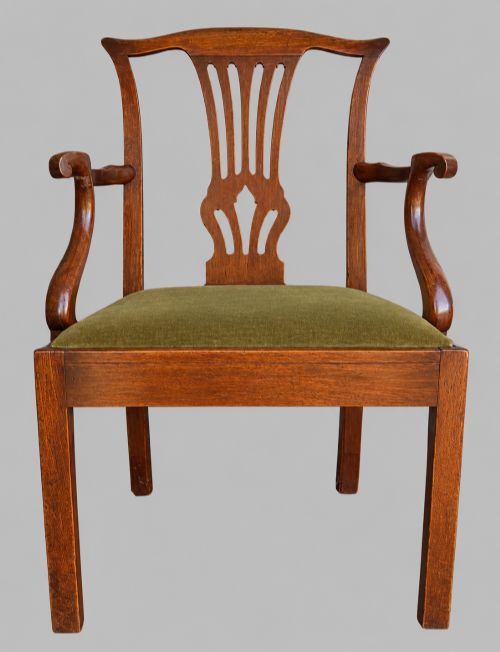
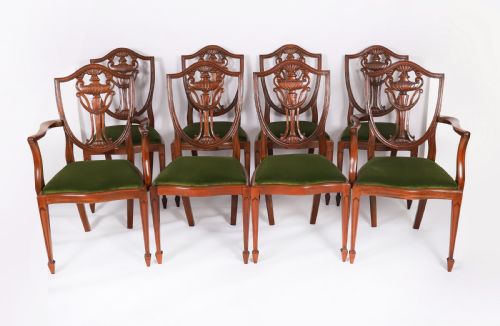
Makers often drew upon classic design vocabularies such as Chippendale, Hepplewhite, Regency, and Queen Anne. Alongside standard dining chairs, the selection includes carvers, side chairs, and occasional bedroom chairs adapted for modern seating.
Materials and Construction
Construction relies heavily on dense hardwoods, principally mahogany, oak, walnut, and rosewood, chosen for structural strength and rich grain. Timber frames are joined using traditional methods such as mortise and tenon joints to support daily use.
Upholstery combines textile materials like velvet and fabric with internal stuffing supported by webbing or springs. Brass accents and detailed hand-carved woodwork frequently complement the textile surfaces on formal dining seats.
The site's listings feature dining seats across eight distinct periods, from Georgian origins to 1930s pieces.
Factors That Separate the Range
Quality differences stem from the crispness of the timber carving and the fidelity of revival styles to historical proportions. Sets that maintain uniform colour and consistent wood grain across every chair command greater attention than mismatched assemblies.
The integrity of the frame construction and the quality of the textile upholstery determine how well a seat survives centuries of sitting. Hand-carved details and substantial timber scantlings indicate higher workshop standards.
The Vintage Velvet Dining Seats Glossary
- Carver
- An armchair designed with armrests, traditionally placed at the head of a dining table. These matched straight-sided single chairs in larger dining sets.
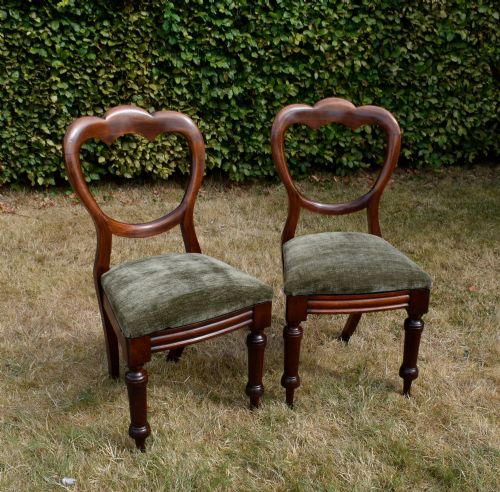
- Balloon Back
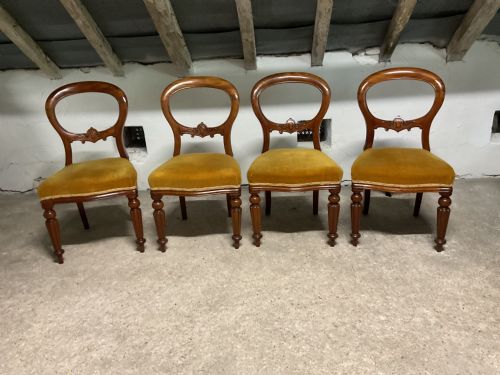
- A rounded, oval-shaped chair back popular during the Victorian period. This profile curves outwards to support the spine.
- Hepplewhite Style
- A furniture design style originating in the eighteenth century, characterised by shield backs and tapered legs. Revival pieces often emulate these lighter proportions.
- Regency
- A style period spanning the early nineteenth century, drawing inspiration from classical Greek and Roman forms. Chairs from this era often feature sabre legs and reeded framing.
- Scantling
- The dimensions or thickness of the timber components used to build a chair frame. Heavier scantlings generally indicate a more robust piece of furniture.
Vintage Velvet Dining Seats: Frequently Asked Questions
Are large sets available together?
Many listings offer matched sets ranging from four up to twelve or fourteen chairs. These larger groups often include both single chairs and arm-equipped carvers.
Finding a unified set allows a dining room to maintain a consistent aesthetic around a large table.
Which woods are most common?
Mahogany forms the majority of the timber frames, followed by oak, walnut, and rosewood. These hardwoods were chosen for their durability and attractive grain patterns.
Secondary materials include brass fittings and varied textile trims alongside the main velvet upholstery.
How do I identify different styles?
Styles are identified through characteristic back shapes and leg designs, such as Chippendale ladder backs or Queen Anne vase-shaped splats. Design revivals from the nineteenth and twentieth centuries deliberately echo these historical motifs.
Examining the carved details and overall silhouette reveals which period vocabulary the maker followed.