

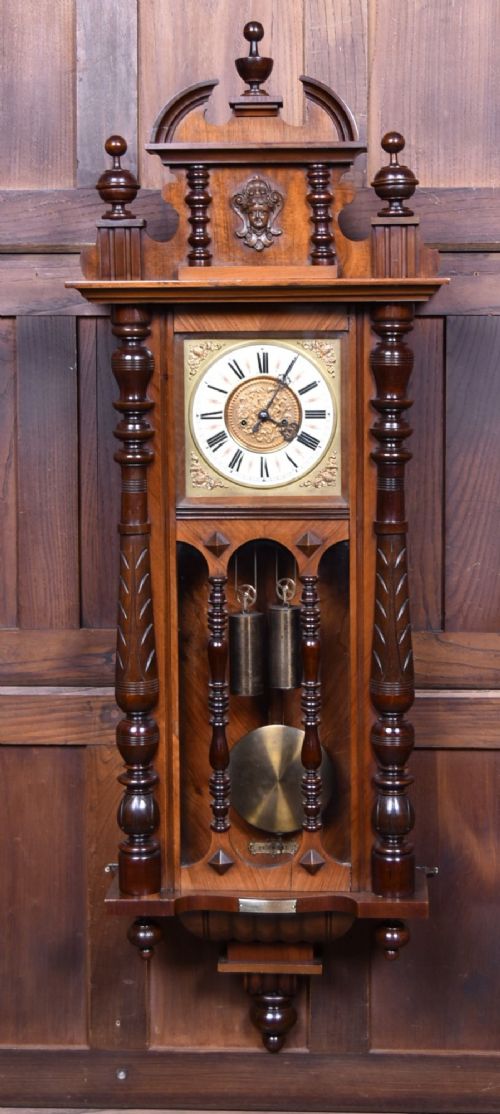
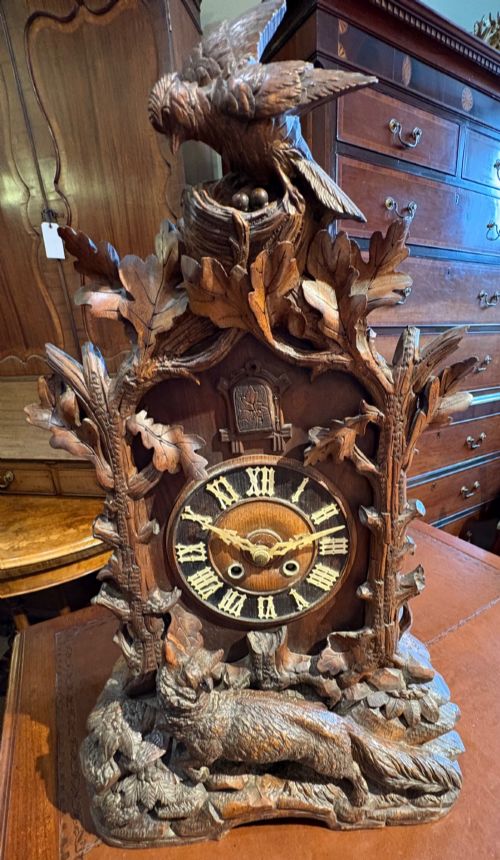

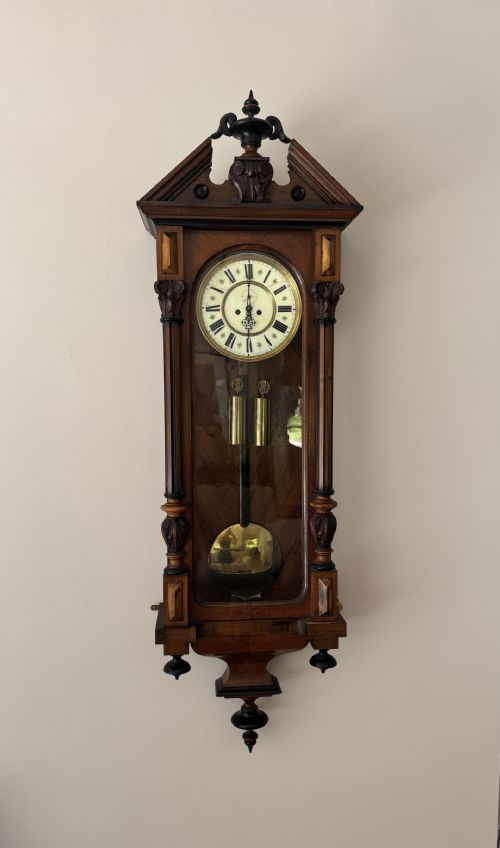
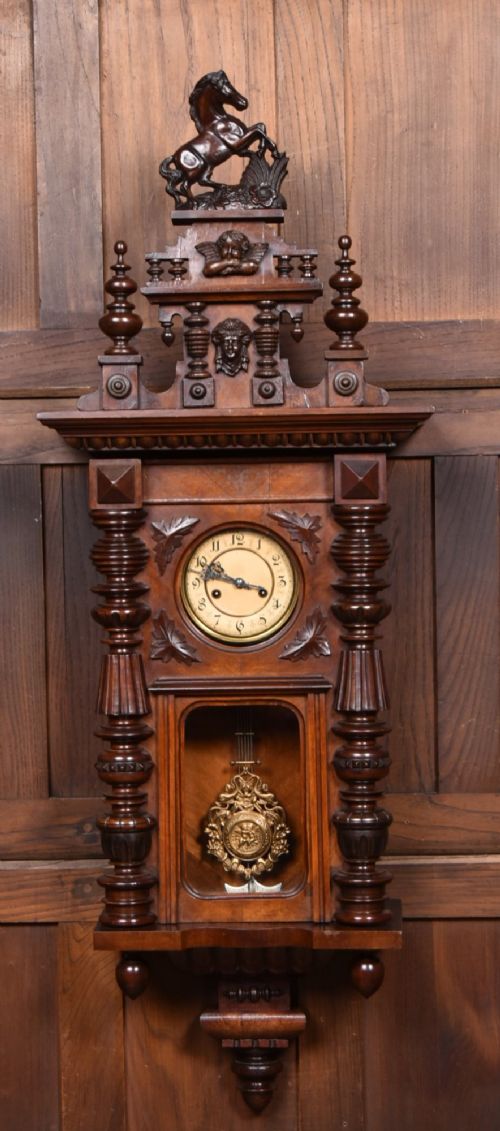


Dark Walnut Clock
A dark walnut clock brings rich, deep timber tones and precision movement to a room, ranging from grand floor-standing pieces to compact mantel designs.
Dark Walnut Clock
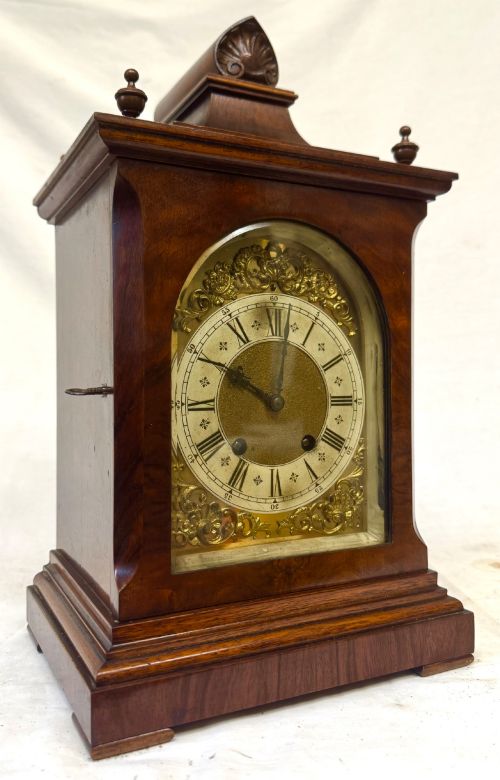
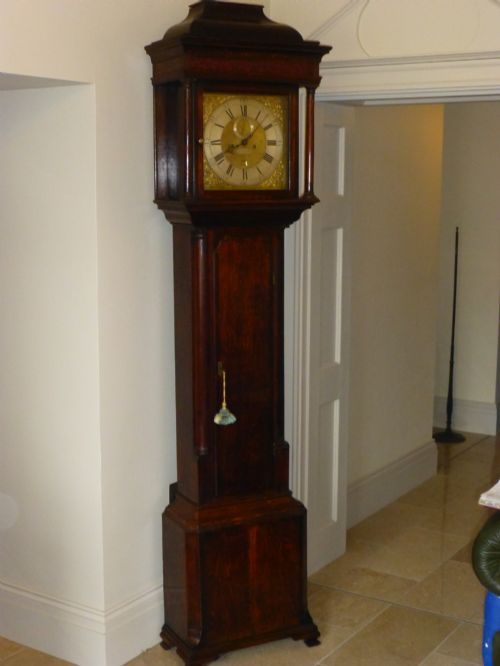
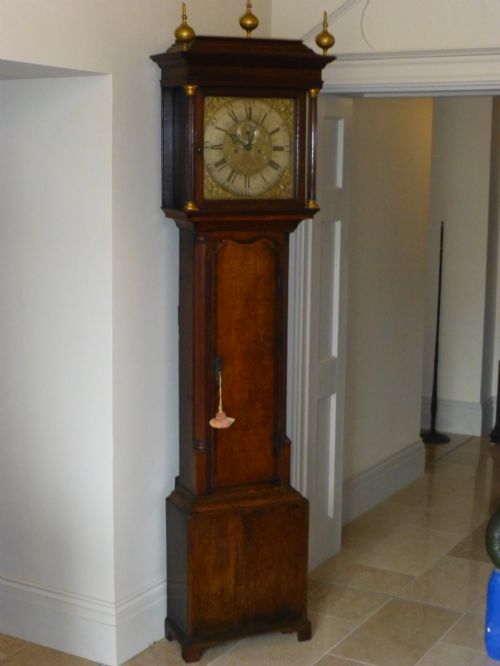
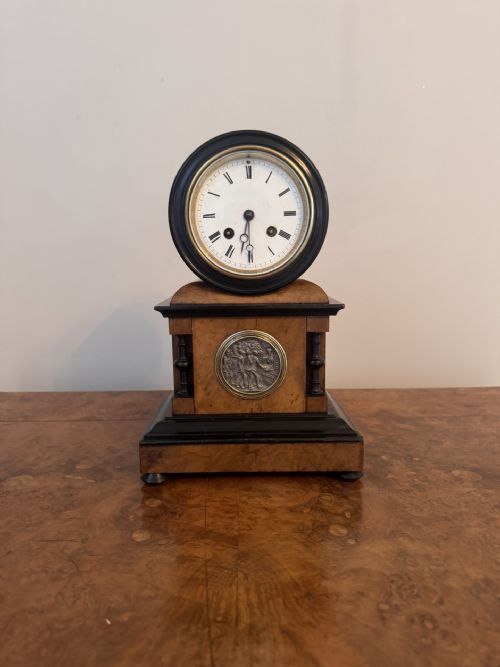
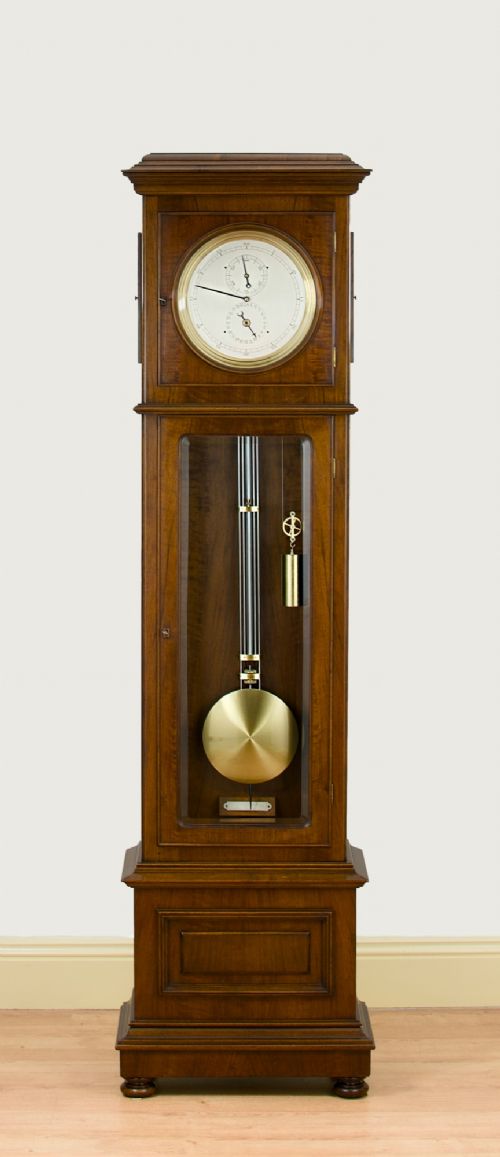
A dark walnut clock encompasses tall floor-standing longcase models, wall-hanging regulators, and smaller mantel pieces found in this selection. These timepieces originate from periods spanning the seventeenth century through to the mid-twentieth century, with notable representation from Victorian and nineteenth-century examples.
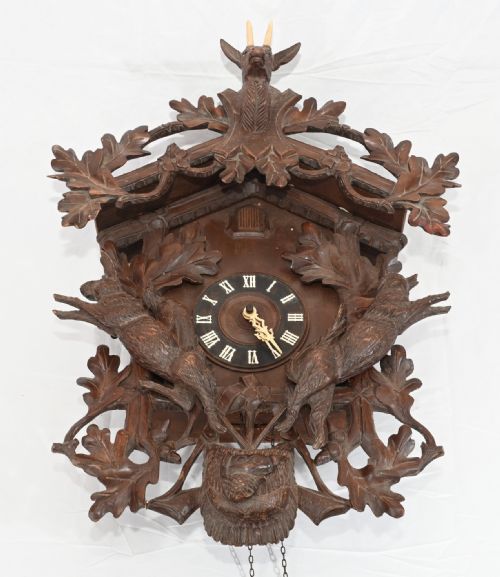
Buyers encounter various forms, from German and Austrian wall regulators with double brass weights to Black Forest carved cuckoo clocks and English longcase instruments. The dark walnut timber provides the primary visual character across these diverse regional styles and mechanical types.
Materials and construction methods
Cabinet makers utilised solid walnut, often combined with oak or ebonised wood elements, to construct the dense cases that house these movements. Carved wood details, glass panels, and marquetry frequently decorate the exteriors, particularly on Black Forest and continental wall clocks.
Dark Walnut Clock Retail Price Guide 2026
Typical asking prices for dark walnut clock among the pieces listed under this phrase on Sellingantiques today, from the lower quarter to the upper quarter. They describe what is for sale here now, not the wider market.
The listings show dark walnut clocks stretching from the 17th century through the Victorian era up to 1950, encompassing oak, brass, glass, and ebonised wood.
Assessing quality in dark walnut timepieces
The refinement of the timber carving and the depth of the walnut grain significantly distinguish standard production from superior examples, especially in Black Forest and Victorian pieces. Crisp detail in hand-carved elements and well-matched wood veneers indicate higher workshop standards.
Mechanical complexity and the reputation of the maker also divide the range, with precision regulators and signed movements from known centres demanding closer attention. Original dials, intact weights, and well-preserved brass components reflect the overall integrity of the piece.
Richard Corless of Stockport·Smith of Chester·Lenzkirch·Gustav Becker·Johann Baptist Beha·Samuel Young Nantwich and Bunbury·Joseph Jackeman London
The Dark Walnut Clock Glossary
- Longcase clock
- A tall, floor-standing timekeeper enclosed in a wooden case, commonly known as a grandfather clock. These instruments typically house weights and a pendulum.
- Regulator
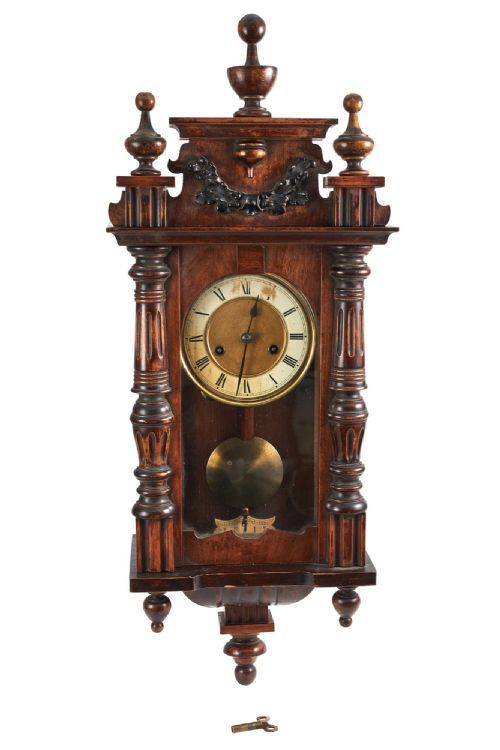
- A precision pendulum clock designed to maintain high accuracy, frequently seen in nineteenth-century Vienna wall clock designs. They often utilise dual brass weights.
- Mantel clock
- A smaller timepiece designed to sit upon a shelf or fireplace mantelpiece. These portable cases appear in styles ranging from French Rococo to Art Deco Bauhaus.
- Aneroid barometer
- An instrument that measures atmospheric pressure without liquid, often mounted alongside clocks in carved walnut banjo cases. They record weather changes through the expansion of a sealed metal box.
- Marquetry
- The art of applying decorative pieces of veneer to a structure to form intricate designs. Seventeenth-century examples frequently employ this technique on walnut surfaces.
Dark Walnut Clock: Frequently Asked Questions
How do I wind a Vienna wall clock?
Vienna wall clocks typically use a key to wind the driving springs or to pull the brass weights back to their upper position. Care must be taken not to over-wind the movement.
Consult the specific mechanism type, as double and triple weight systems require balanced attention to each suspended weight to maintain proper timekeeping.
Where should I place a longcase clock?
Longcase clocks require a stable, dry interior wall away from direct sunlight, central heating vents, and heavy vibrations. Floor stability ensures the pendulum swings evenly.
Ensure the case is plumb and securely leveled against the wall using internal fixing points if the model includes them.
How do I identify a Black Forest cuckoo clock?
Black Forest clocks are distinguished by their hand-carved wooden cases featuring naturalistic motifs such as leaves, birds, and animals. They frequently house mechanical bellows that produce the cuckoo sound.
These pieces originate from the Black Forest region of Germany and typically feature robust wooden plate movements.
What is an eight-day striking clock?
An eight-day striking clock requires winding approximately once a week and sounds the hours or half-hours on a gong, bell, or wire coil. The movement utilises separate trains for timekeeping and striking.
This design offers convenience for daily living by reducing the frequency of maintenance while providing audible time signals.