
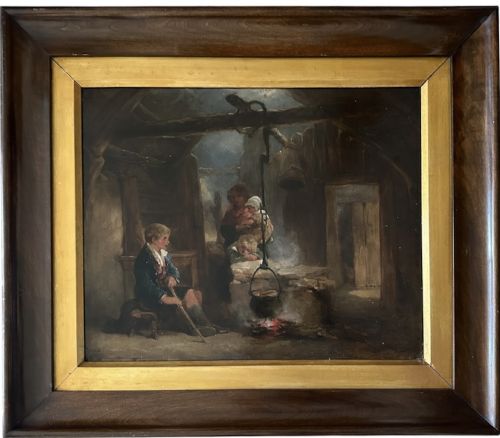


Dark Timber Framed Painting
These dark timber framed painting examples bring rich canvas and wood textures into a room through centuries of portraiture and landscape.
Dark Timber Framed Painting
A dark timber framed painting brings together historical canvases and panels enclosed by robust wooden mouldings. When searching for a dark timber framed painting, buyers encounter works spanning from the seventeenth century through the Victorian era and into later traditional pieces. The selection includes oil on canvas, oil on board, and reverse prints on glass set within sturdy frames.
Materials and construction
Makers utilised traditional canvas, wooden boards, and glass surfaces as foundations for oil paint and watercolour. Artists applied oil paints to build up deep tones, occasionally incorporating gold leaf to catch the light within the dark timber surrounds.
The frames themselves consist of heavy timbers, fashioned to complement the depth of the paintings they hold. Joinery techniques varied by period, securing canvases and panels firmly within architectural or simple moulded wooden borders.
Listings feature canvases, boards, and reverse prints on glass enclosed within wooden and gold leaf frames.
Assessing quality
The integrity of the timber frame adds significant weight to the piece. Original mouldings that match the age of the canvas elevate the overall standing of the work far beyond replacement housings.
George Whitton Johnstone·C W Tuck·Annie L Lee·Frank Moss Bennett·William Woodhouse·Joseph Paul
The Dark Timber Framed Painting Glossary
- Canvas
- A heavy woven fabric stretched across a wooden stretcher as a base for oil painting. It provides a textured surface that holds pigment through centuries.
- Oil paint
- A slow-drying paint made from pigment suspended in oil. This medium allows for subtle blending and deep, rich dark tones.
- Reverse print on glass
- An image applied directly to the back of a glass sheet and viewed from the front. This technique produced glossy surfaces popular in the Georgian period.
- Mannerist
- A style of European art that emerged in the later years of the Italian High Renaissance. It prioritises compositional tension and elongated forms.
Dark Timber Framed Painting: Frequently Asked Questions
How do I date a dark timber framed painting?
Dating relies on examining the construction of the frame, the weave of the canvas, and the materials used in the pigments. Stylistic clues within the portraiture or landscape also point to specific eras.
Later copies or revivals often mimic earlier periods, so inspecting the backboards and fixings provides vital context for the age of the piece.
Where should I hang these paintings?
These works suit rooms with traditional decor, library spaces, or hallways where dark wood tones complement existing furniture. They require stable wall spaces away from direct sunlight.
Avoid damp areas such as unheated kitchens or bathrooms, as moisture damages both the canvas and the wooden frames over time.
How do I care for the wooden frames?
Dust the timber mouldings gently with a soft, dry cloth to prevent the accumulation of dirt in the crevices. Avoid using liquid polishes or chemical cleaners that might strip the original finish.
Check the hanging wire and fixings periodically to ensure the heavy timber frame remains securely supported on the wall.
What subjects are most common?
Portraits of gentlemen and ladies form a large part of the selection, alongside pastoral scenes, sporting art, and architectural subjects like inns. Religious themes also appear among the earlier works.
These subjects reflect the tastes of their respective periods, from seventeenth-century continental influences to nineteenth-century British realism.