
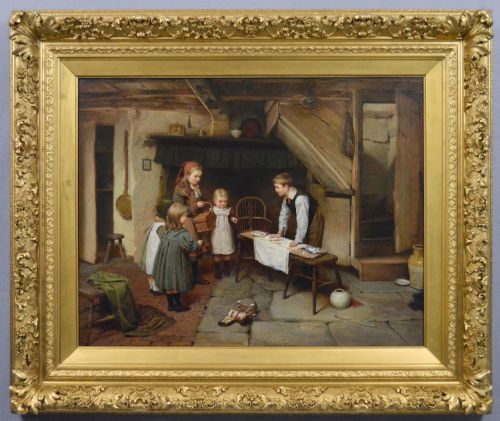

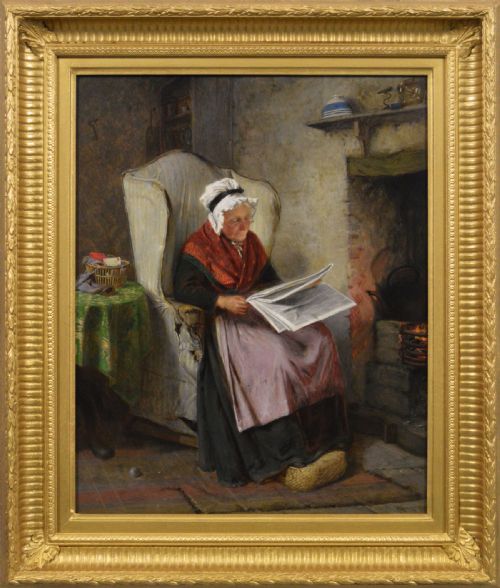


Cottage Interior Oil Painting
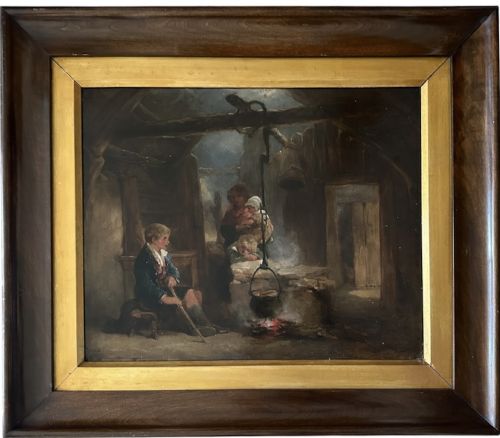
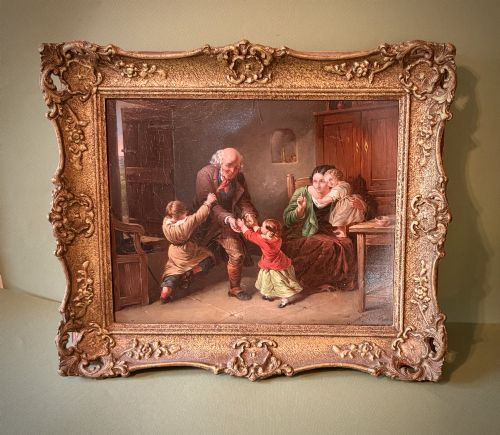
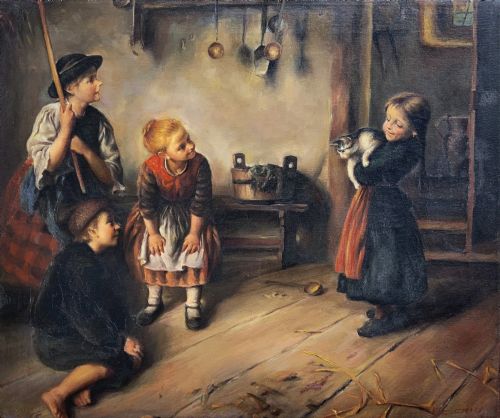
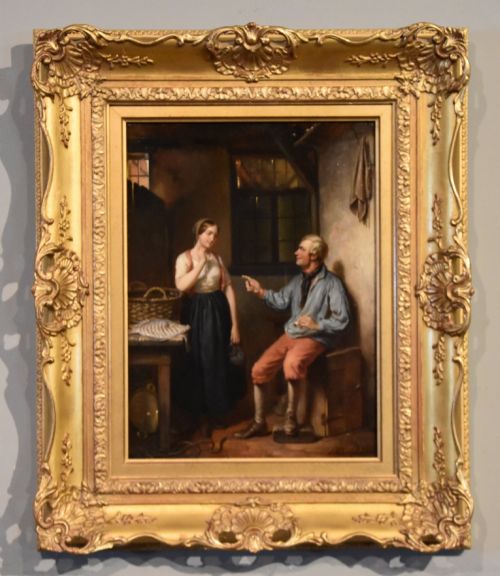
A cottage interior oil painting captures the quiet domestic rhythms and familiar warmth of rural domestic life through pigment.
Cottage Interior Oil Painting
A cottage interior oil painting depicts domestic scenes within rural homes, focusing on daily tasks, family gatherings, and fireside moments. These works capture domestic life through depictions of spinning, reading, or sharing meals in cottage rooms.
The pieces on this page emerge primarily from the nineteenth century, including Victorian genre paintings alongside mid-century interpretations and continental examples. Artists observe human activity inside modest dwellings, recording details of everyday rural existence.
Subjects range from solitary figures by the hearth to children playing with animals, all framed within the intimate boundaries of cottage walls.
How they were made
Artists built these works using oil paint applied to canvas, wood panels, or boards, creating layered compositions that captured the play of light within dim rooms. Gesso and gold leaf frequently appear on the frames that enclose and protect these works.
Makers handled pigment to render texture in wool, wood, and skin, balancing dark shadows and warm hearth-light characteristic of interior genre scenes.
Listings feature works executed in oil paint upon canvas, wood panels, and boards, dating primarily from the nineteenth century into the mid-twentieth century.
What varies in quality
Quality rests in the handling of light and shadow, the confidence of the brushwork, and the psychological depth given to the figures. Superior paintings manage narrative detail without losing the atmospheric cohesion of the room.
The construction of the underlying support and the integration of figures within their domestic surroundings separate skilled hands from more formulaic workshop production.
George Whitton Johnstone·Jacob Akkersdijk·Harry Brooker·Alexander Rosell·Haynes King·James Kyd·George Smith·Pauline Delacroix Garnier·Alfred Provis·Ralph Hedley·Robert Gemmell Hutchison·Jonathan Pratt·Charles Hunt Jnr·John Exley·Paul Constant Soyer·Gustav Vermehren·James Crawford Thom·Jacob Simon Hendrik Kever·Sir David Wilkie
The Cottage Interior Oil Painting Glossary
- Genre painting
- A style of painting depicting scenes from everyday life, ordinary people, and domestic interiors. These works focus on narrative and human activity rather than formal portraiture.
- Chiaroscuro
- An artistic technique using strong contrasts between light and dark, usually bold contrasts affecting a whole composition. It creates a sense of volume in figures and dramatic focus around the hearth.
- Panel
- A rigid support for a painting, usually made of wood rather than canvas. Panels offer a stable surface that allows for fine, detailed brushwork in domestic scenes.
- Gesso
- A plaster-like mixture applied to wood panels or frames to prepare a smooth surface for painting or gilding. It provides the foundation for the gold leaf often found on period borders.
- Realism
- An artistic movement focused on representing subject matter truthfully without artificiality. In these interiors, it manifests in the accurate depiction of labour, clothing, and domestic objects.
Cottage Interior Oil Painting: Frequently Asked Questions
What subjects appear in these paintings?
The compositions show domestic activities including spinning wool, children playing, mothers with infants, and elderly figures by the hearth.
Animals such as dogs, donkeys, pigs, and poultry frequently share the cottage floor with the human figures.
Where were these artists working?
Makers worked across Britain and Northern Europe, recording both local domestic scenes and continental rural life.
English, Scottish, Welsh, German, and Dutch settings all provided subjects for these interior compositions.
How should I hang an oil painting?
Keep works away from direct sunlight and fluctuating heat sources to protect the canvas or wood panel from warping and fading.
Ensure the wall can support the weight of the framed piece and use appropriate fixings designed for your wall type.
Are these paintings signed by the artist?
Many examples bear signatures or attributions to named painters, while others represent the broader output of period schools.
Exhibited works often carry provenance linking them to historical exhibitions and named makers.