





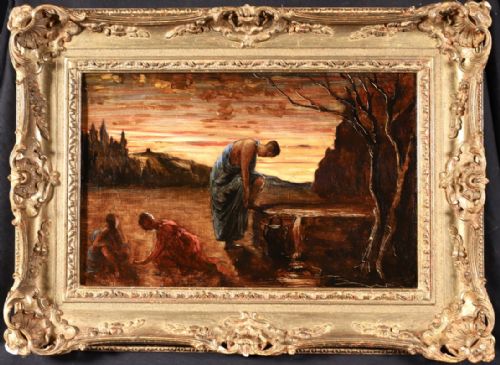


Nineteenth Century Narrative Art
Nineteenth century narrative art brings storytelling to canvas, offering a direct glimpse into Victorian life, romance, and historical drama.
Nineteenth Century Narrative Art
Nineteenth century narrative art comprises oil paintings on canvas that tell a specific story, whether through domestic scenes, historical events, or literary subjects. These works capture human drama and everyday moments across various stylistic movements from the era.
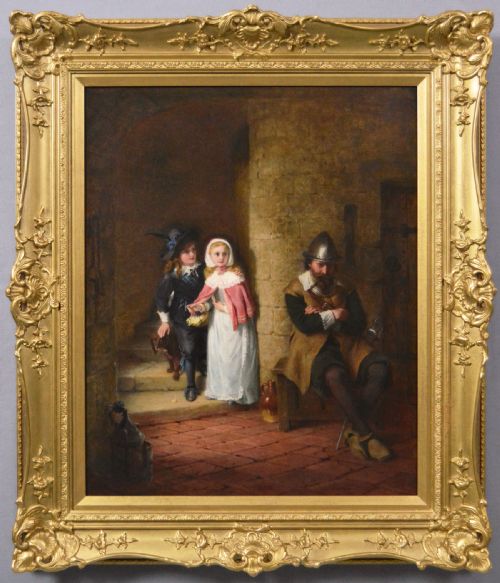
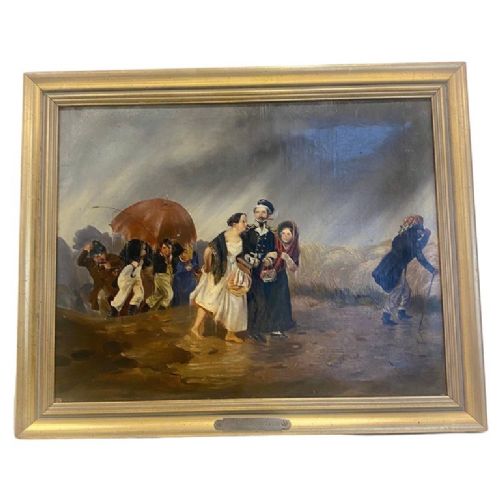
The pieces on this page lean heavily into Victorian genre painting, Pre-Raphaelite subjects, and French academic traditions. Collectors encounter everything from quiet cottage interiors and children at play to dramatic historical elopements and coastal scenes.
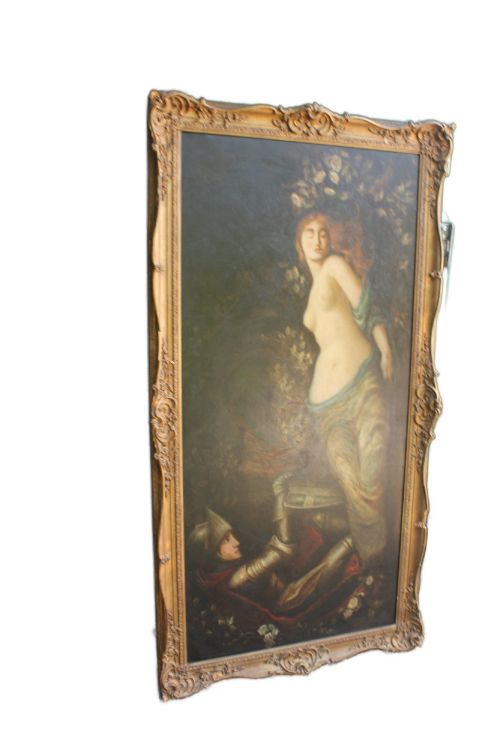
Most examples utilise oil paint on canvas and frequently retain their original gilt wood or giltwood frames. The subjects range from intimate domestic interactions to grand literary adaptations like La Belle Dame sans Merci.
Materials and techniques
Painters of this era worked primarily with oil paint on stretched canvas, building up layers of pigment to achieve rich depth and luminosity. This medium allowed artists to render fine details in costume, expression, and interior settings with precision.
Frames form an integral part of the physical object, usually constructed from wood and finished with gold leaf or giltwood. These ornate settings were designed to complement the narrative weight and academic standards of the paintings they housed.
Listings feature 19th Century and Victorian oil paintings on canvas, framed in gilt wood, spanning domestic genre scenes and historical subjects.
What separates the work
The success of nineteenth century narrative art rests on the artist's ability to convey emotion and narrative clarity through gesture and composition. Stronger works draw the viewer into the scene with convincing psychological depth and careful placement of figures.
Technical execution in handling light, texture, and anatomical proportion divides ambitious salon pieces from simpler domestic sketches. The preservation of the original canvas and the quality of the surrounding gilt frame also influence the overall integrity of the piece.
Abraham Cooper RA·Alexander Rosell·John Arthur Lomax·George Bernard O'Neill·Arthur Longley Vernon·Gilbert Scott Wright·Edmund Alphonse Andre·Jules Girardet·Ralph Hedley·Wilhelm Alexander Meyerheim·Robert Gemmell Hutchison·Alexandre Decamps·Eugene Hindle·Charles Lewis
The Nineteenth Century Narrative Art Glossary
- Genre painting
- Depictions of everyday life and ordinary people engaged in common activities. These scenes often carry gentle moral messages or domestic warmth.
- Pre-Raphaelite
- A style associated with a group of English painters who rejected academic rules in favour of detailed observation of nature and intense literary or religious themes.
- Giltwood
- Wood carved and covered with a thin layer of gold leaf or metallic powder. It provides the traditional reflective border for nineteenth century canvases.
- Academic art
- A style of painting and sculpture produced under the influence of European academies of art. It emphasises strict adherence to classical rules and historical subject matter.
Nineteenth Century Narrative Art: Frequently Asked Questions
What subjects do these paintings show?
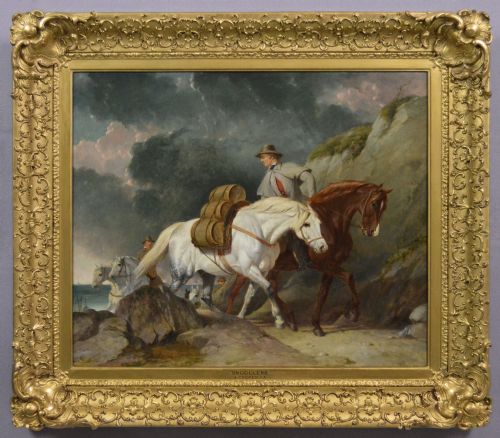
These works depict human stories ranging from domestic family moments and children at play to historical events and literary scenes. Painters recorded smugglers on coastal paths, blacksmiths at work, and couples eloping.
The narrative focus means every canvas tells a distinct tale, capturing the manners, dress, and emotional landscapes of the period.
How do I care for an oil painting on canvas?
Keep nineteenth century canvases away from direct sunlight and sources of extreme heat or humidity to prevent the paint from cracking and the canvas from warping. Dust the surface and frame gently with a soft, dry cloth.
Avoid using liquid cleaners or water on the painted surface, and consult a professional conservator for deeper cleaning.
What is the difference between genre and historical painting?
Genre painting focuses on scenes of everyday life, ordinary people, and domestic interiors. Historical painting depicts moments from history, mythology, or literature, often on a grander scale.
Both fall under narrative art because they tell a story, but their subject matter and traditional artistic hierarchy differ.