





Victorian Cottage Interior Art
Victorian cottage interior art captures domestic scenes of family life, quiet firesides and daily labour within rural homes.
Victorian Cottage Interior Art
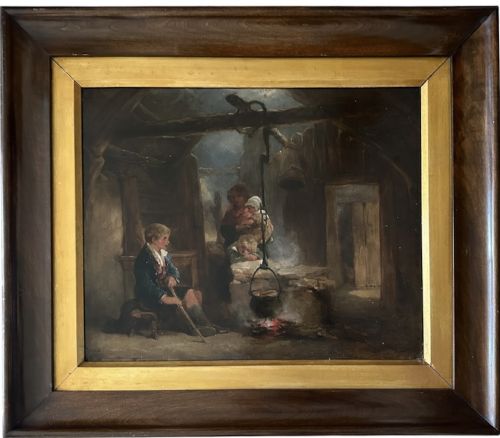
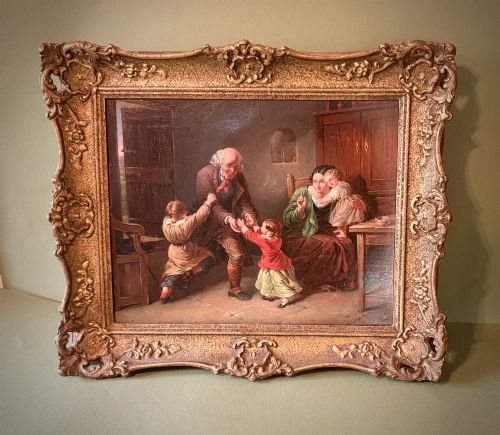
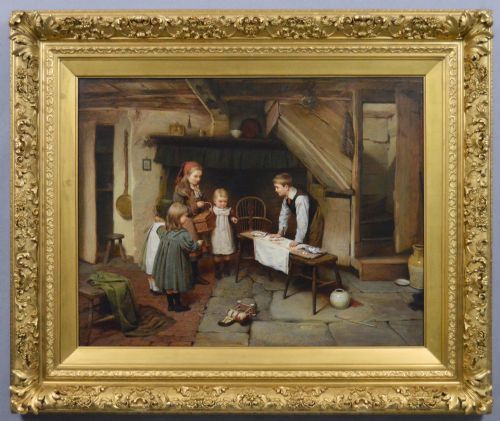
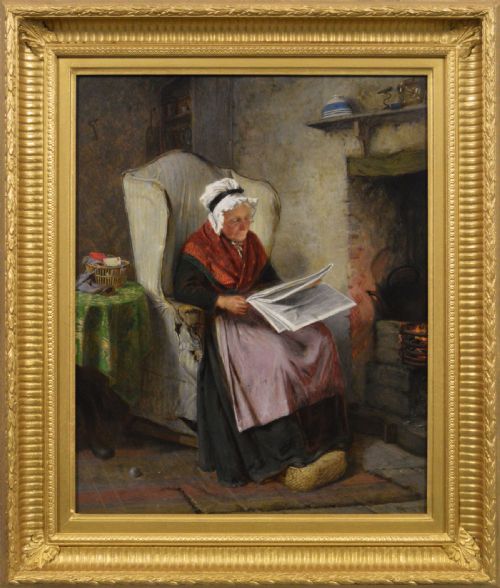
Victorian cottage interior art depicts domestic scenes within rural dwellings, showing figures engaged in daily routines, spinning wool, or resting by the fireside. These works range from intimate studies of family life to broader portrayals involving children, livestock and rustic household settings.
The pieces on this page are predominantly oil paintings on canvas or panel, alongside watercolours, created across the nineteenth century and into the Edwardian era. Genre painting dominates the selection, focusing on realism and the storytelling elements of humble home life.
Works attributed to named artists such as George Whitton Johnstone, Harry Brooker, Haynes King, and Charles Hunt Jnr sit alongside period watercolours and atmospheric portraits. Each piece offers a window into domestic narratives shaped by nineteenth-century realism and genre painting traditions.
How they were made
Artists painted primarily in oil on canvas or wooden panel, utilising layered pigments to build depth in domestic lighting and fabric textures. Watercolours on paper also appear, capturing lighter tones and swift preparatory marks.
Many of these works are housed in their original wooden frames, often finished with gesso and gold leaf or gilt wood. The framing methods reflect nineteenth-century workshop practices designed to complement the warm interior palettes of genre art.
Victorian Cottage Interior Art Retail Price Guide 2026
Typical asking prices for victorian cottage interior art among the pieces listed under this phrase on Sellingantiques today, from the lower quarter to the upper quarter. They describe what is for sale here now, not the wider market.
Listings span the nineteenth and twentieth centuries, featuring oil on canvas, panel, and watercolour mediums within Victorian and Edwardian realism.
What varies in quality
Quality rests in the handling of interior light, facial expression, and narrative detail within the domestic scene. Skilled painters render textiles, smoke, and wooden furniture with precise brushwork that brings warmth and conviction to the cottage interior.
The composition of figures and animals dictates visual balance, separating straightforward portrayals from more complex genre scenes involving multiple characters and livestock. Framing and substrate preservation further distinguish the works.
George Whitton Johnstone·Harry Brooker·Haynes King·James Kyd·George Smith·William Henry Knight·Henry Spernon Tozer·Pauline Delacroix Garnier·Alfred Provis·Henry Silkstone Hopwood·Ralph Hedley·Robert Gemmell Hutchison·Jonathan Pratt·Charles Hunt Jnr
The Victorian Cottage Interior Art Glossary
- Genre painting
- Depiction of aspects of everyday life by depicting ordinary people engaged in common activities. These works focus on domestic narratives rather than historical or mythological events.
- Oil on panel
- A painting executed on a flat wooden surface prepared with a ground layer. This support was common for detailed nineteenth-century interior scenes.
- Gesso
- A paint mixture consisting of a binder mixed with chalk, gypsum, or pigment, used to prepare wood or canvas substrates. It frequently forms the base for gilded framing elements.
- Watercolour
- A paint wherein the colourants are suspended in a water-soluble vehicle. These works on paper offer translucent washes suited to interior sketches and studies.
Victorian Cottage Interior Art: Frequently Asked Questions
What is Victorian cottage interior art?
These works are paintings and watercolours depicting domestic scenes inside nineteenth-century rural homes. They typically show daily activities like spinning, tea time, or children playing by the fireside.
Artists focused on realist storytelling, capturing the domestic routines, furnishings, and animals of working families.
Who painted these interior scenes?
The pieces were produced by nineteenth-century genre painters who specialised in domestic realism. Many exhibited at major institutions such as the Royal Academy.
Notable painters include Harry Brooker, Haynes King, and Charles Hunt Jnr, alongside regional artists working in Britain and Northern Europe.
What materials were used?
Most works are painted in oil on canvas or wooden panel, utilising rich pigments to capture warm indoor lighting and textures. Watercolours on paper also feature among the selection.
Many paintings retain their period wooden frames, finished with gesso and gilt leaf or gold leaf.
How do I care for these paintings?
Keep the artwork away from direct sunlight and fluctuating humidity to protect the oil paint, canvas, or paper base. Gentle dusting with a soft, dry cloth is sufficient for surface maintenance.
Avoid hanging pieces near heat sources like firesides or radiators, which can dry out wooden panels and nineteenth-century gesso frames.