





British Genre Scene
When you search for a british genre scene, you enter a Victorian and Edwardian world of everyday domestic life, country interiors and fireside narratives.
British Genre Scene
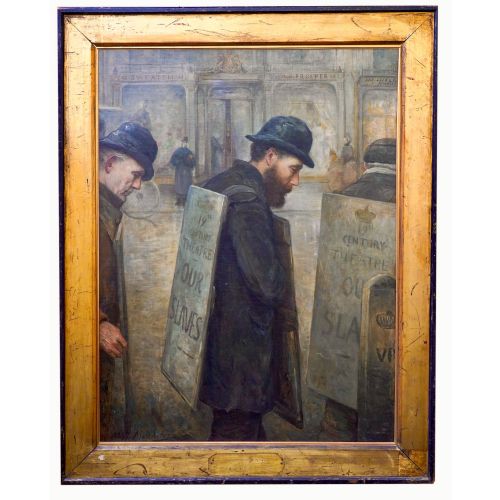
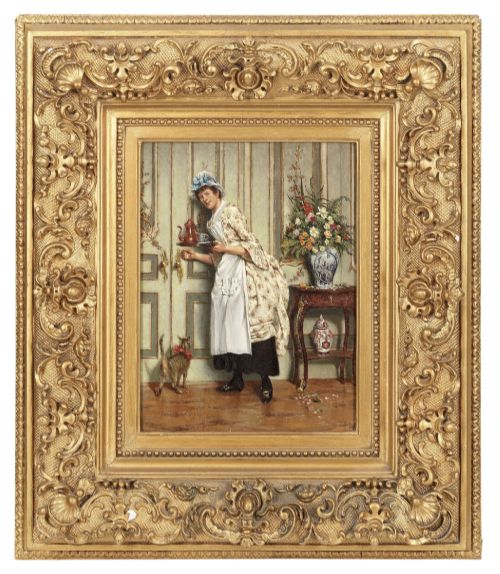
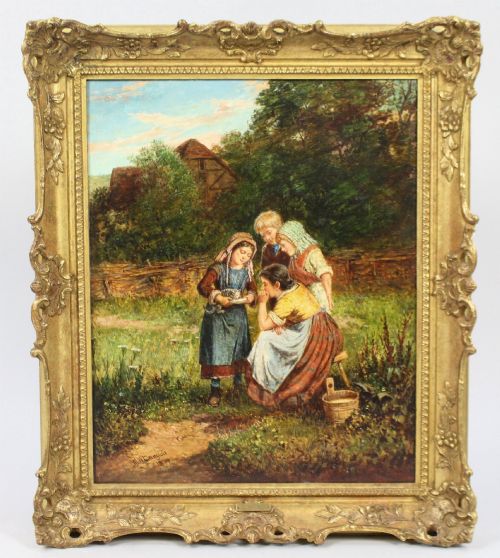
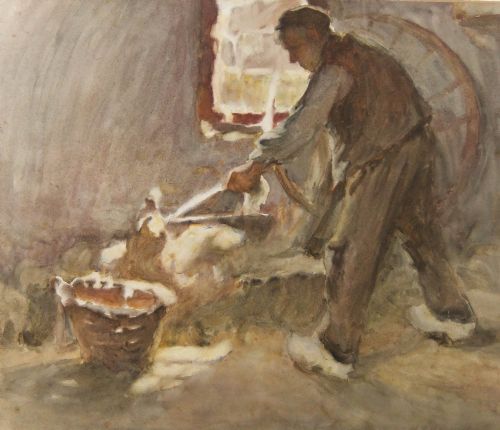
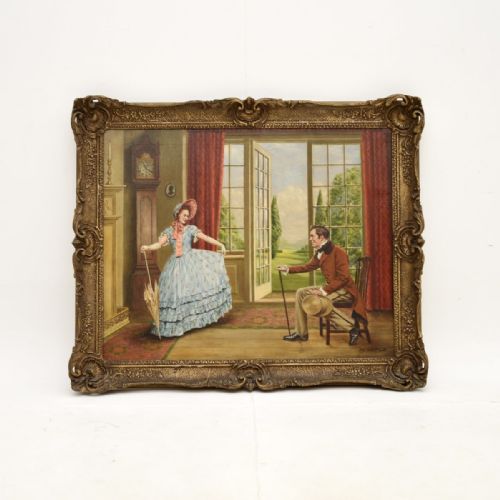
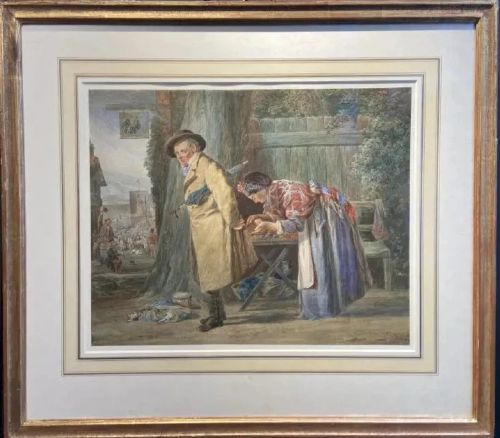
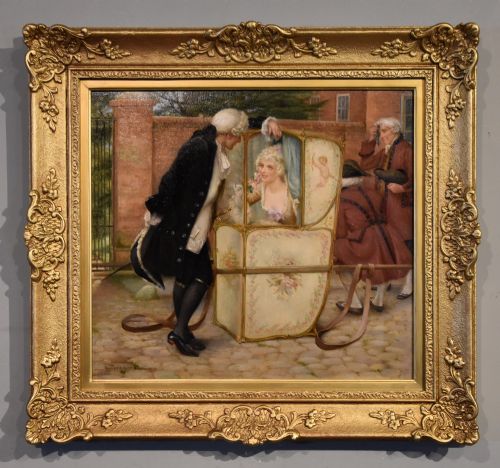
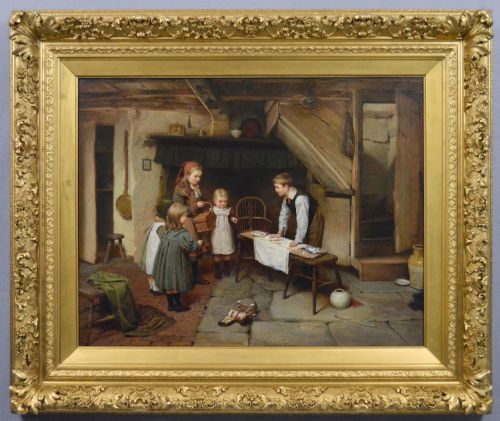
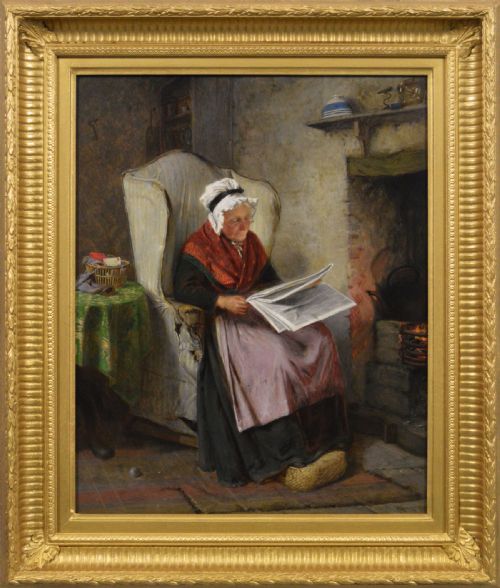
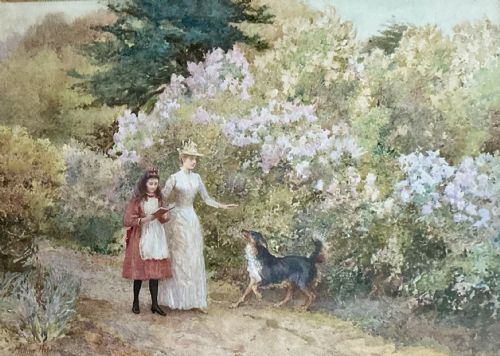
A british genre scene captures human activity in narrative paintings and watercolours spanning the nineteenth century into the early twentieth century. The works on this page focus on ordinary people, rural labourers, children and domestic interiors.
Most pieces date from the Victorian and Edwardian periods, reflecting social realism, pastoral subjects and historical vignettes. Common formats include oil on canvas, oil on panel and watercolour on paper, often framed in gilt wood and gesso.
Subjects range from street sellers and blacksmiths to family tea times and fireside moments. They document social history through the brushwork of named British artists rather than anonymous artisan craft.
What varies in quality
Quality depends upon the artist's ability to render facial expressions, narrative tension and atmospheric lighting within domestic or rural settings. Stronger examples display careful composition of figures and interior objects, whereas lesser works rely on repetitive formulas.
The handling of medium also dictates distinction, separating finely detailed brushwork on canvas from looser, simpler watercolour sketches. Preservation of the original pigment and the integrity of the period frame contribute further to a work's standing.
Several domestic interiors capture quiet naps by the fireside and interrupted shaving rituals.
Felix Stone Moscheles·Stephen Samuel Lewin·Mark William Langlois·Henry Silkstone Hopwood·Alfred Lyndon Grace·Joseph H Barnes·Delapoer Downing·Harry Brooker·Alexander Rosell·John Arthur Lomax·Haynes King·John Sanderson Wells·James Kyd·James Mallard Bromley·Arthur Hopkins·Henry John Yeend King·Robert Alexander Hillingford·George Smith·Edwin Hughes·Alfred Holst Tourrier·Frank Moss Bennett·Kate E Booth·Andrew Young·George Kilburne·David Woodlock
The British Genre Scene Glossary
- Genre painting
- A branch of fine art depicting scenes from everyday life, ordinary people and domestic interiors. These works tell stories about social habits and common occupations rather than portraying grand historical events.
- Social realism
- An artistic movement highlighting the daily realities and working conditions of the lower classes. Painters used these subjects to document Victorian society without idealisation.
- Gesso
- A plaster-like mixture applied to wooden frames before gilding or painting. It provides a smooth surface for intricate decorative moulding.
- Oil on panel
- A painting technique using wooden boards as the primary support rather than woven fabric. Panels offered a rigid surface favored by many nineteenth-century artists.
British Genre Scene: Frequently Asked Questions
What is a British genre scene painting?
These works depict ordinary people engaged in daily activities, domestic chores, or rural labour during the nineteenth and early twentieth centuries. They focus on human narratives rather than grand historical or mythological subjects.
Artists used oil on canvas, panel, or watercolour to record Victorian and Edwardian social history through intimate indoor and outdoor settings.
How were these paintings displayed originally?
Victorian and Edwardian households hung these works in principal reception rooms and parlours to showcase cultural refinement and narrative taste to visitors. Domestic interiors often paired them with period furnishings.
Heavily moulded gilt wood and gesso frames gave the paintings architectural presence on patterned wallpapered walls.
How do I care for an antique oil painting?
Keep works away from direct sunlight, high humidity, and rapid temperature fluctuations that can cause canvas slackening or wood panel cracking. Gentle dusting with a soft, dry brush preserves the painted surface.
Avoid using water or chemical cleaners on the paint or the gilt frame, leaving conservation work to professionals.
How can I tell a watercolour from an oil painting?
Watercolours utilise pigment suspended in water-based solutions applied to paper, requiring protective glass framing to prevent moisture damage. Oil paintings feature thick, textured pigments bound in drying oils on woven canvas or wooden boards.
Oils generally display greater surface relief and sheen, whereas watercolours present a matte, translucent finish.