







Dark Red Baluch Runner
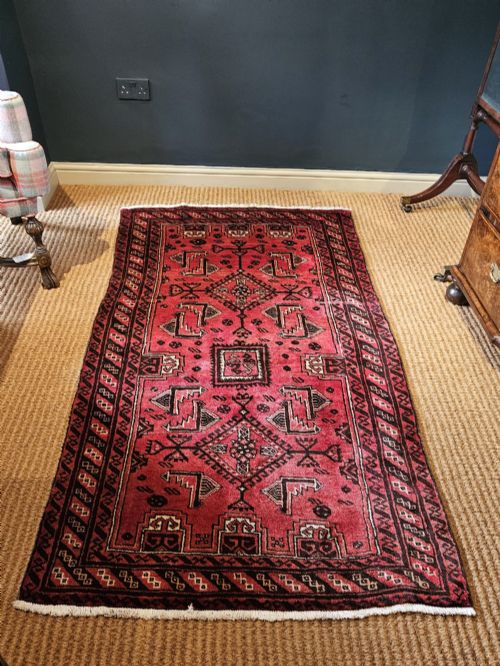
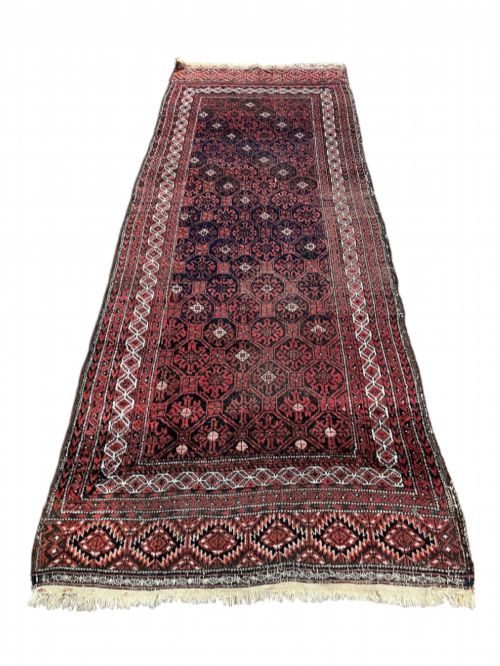
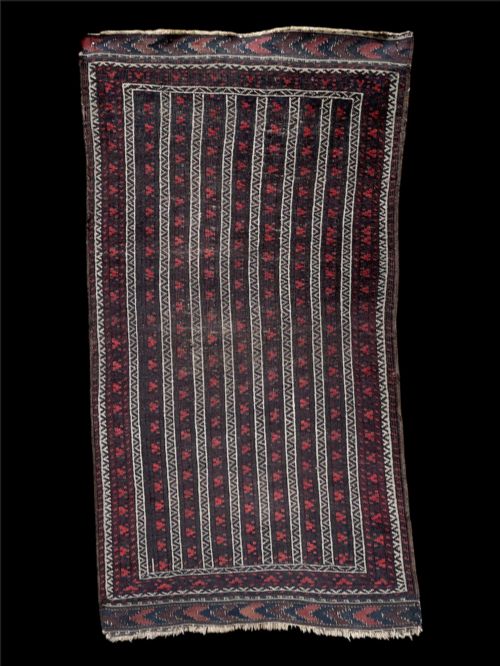
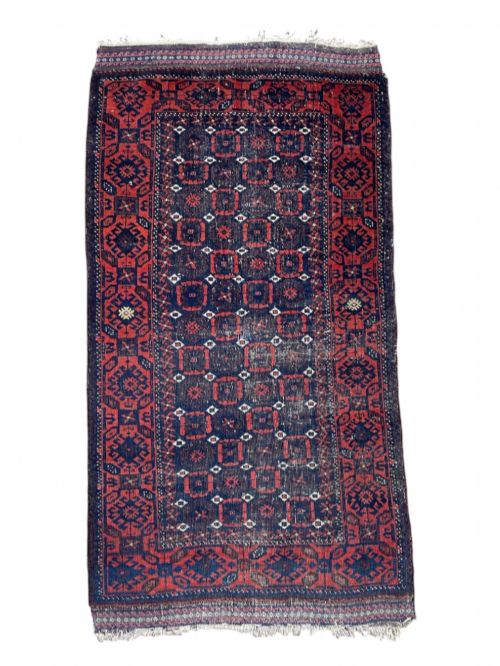
A dark red baluch runner brings tribal geometry and deep madder tones into a hallway or narrow space.
Dark Red Baluch Runner
A dark red baluch runner is a hand-knotted tribal textile produced by nomadic and village weavers across the borderlands of Persia, Afghanistan, and Khorasan. These narrow floor coverings typically display deep madder red, aubergine, or dark brown grounds enlivened by geometric motifs, latch-hooks, and repeated lattice patterns. While many surviving examples take the form of small rugs or prayer mats, elongated formats serve narrow passageways.
The pieces grouped under this dark red baluch runner selection span the late nineteenth century to the early twentieth century. Weavers from specific groups such as the Salar Khani, Mahdad Khani, Timuri, and Mushwani contributed to this regional tradition. Their work reflects both nomadic utility and distinct tribal iconography handed down through generations.
How they were made
Weavers constructed these textiles using hand-spun wool for the pile, often supported by wool or cotton foundations, with occasional use of goat hair in the outer selvedges. The dense wool pile absorbs dye deeply, yielding the characteristic saturated dark red and aubergine hues observed across the period.
Natural dyes provide the varied tonal palette, reacting to local water and mineral conditions during the mordanting and dyeing process. Skilled hands knotted the wool onto warps with careful tension, creating durable surfaces designed to withstand decades of heavy floor use.
Some weavers tucked tiny protective amulets directly into the wool pile to ward off the evil eye.
What varies in quality
Quality in these tribal textiles rests on the handle of the wool, the precision and complexity of the geometric drawing, and the depth of the dye palette. Finer knotting allows intricate motifs like the mina khani or calyx lattice to hold crisp edges against the dark ground.
The integrity of the foundation and the survival of the original outer borders also distinguish superior examples. Pieces retaining their complete outer guard stripes and secure selvedges demonstrate higher craftsmanship from the original workshop or nomadic camp.
The Dark Red Baluch Runner Glossary
- Mihrab
- A arched niche design derived from Islamic architecture, frequently seen on prayer rugs pointing toward Mecca. Double and triple mihrab variations appear in regional weaving.
- Mina Khani
- A repeating pattern of daisy-like flowers linked by a delicate lattice network. This classical motif recurs across Khorasan room-size carpets and smaller runner formats.
- Herati
- A ubiquitous Persian floral pattern composed of a central rosette enclosed by a rectangle and flanked by curved lancet leaves. It provides balanced movement across tribal fields.
- Sofreh
- A flat-woven or pile-knotted spread used for dining, kneading bread, or serving food within nomadic households. These functional textiles often display remarkable secondary geometric designs.
- Madder
- A natural red dye extracted from the roots of the Rubia tinctorum plant. It produces the enduring terracotta, brick, and dark red tones foundational to nineteenth-century village weaving.
Dark Red Baluch Runner: Frequently Asked Questions
How are these runners cleaned?
Professional immersion washing by a specialist in antique oriental textiles preserves the lanolin in the hand-spun wool and prevents dye migration.
Domestic cleaning methods and harsh chemical detergents risk damaging the natural dyes and brittle foundation threads of nineteenth-century weavings.
Can I place one in a hallway?
These narrow formats were originally made for domestic floors and handle moderate foot traffic well when paired with a quality underlay.
Positioning the runner away from direct, prolonged sunlight protects the dark red madder dyes from fading over time.
How do I date an antique piece?
Dating relies on assessing the saturated natural dye palette, the presence of hand-spun wool, and structural characteristics like asymmetric knots open to the left.
Stylistic markers such as specific tribal medallion structures or structural similarities to documented nineteenth-century examples refine the period further.
What defines tribal design?
Tribal designs originate from nomadic imagination and generational weaving traditions rather than urban workshop cartoons. Artisans repeat geometric symbols, star octagons, and stylized animals from memory.
Slight irregularities in symmetry and spontaneous colour shifts are inherent characteristics of these authentic village and nomadic works.