



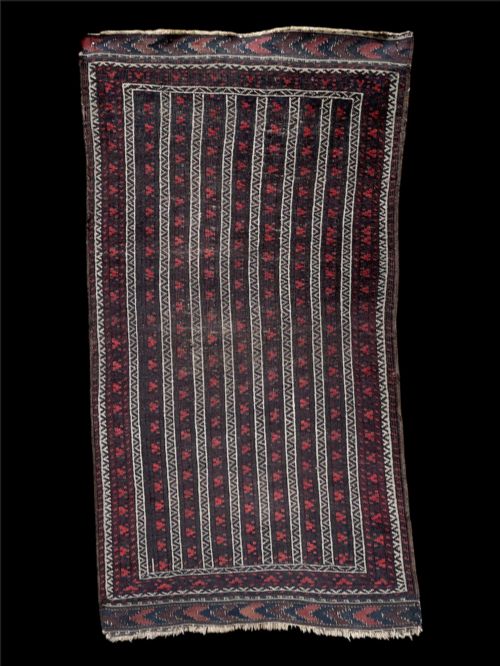


Dark Red Afghan Rug
A dark red afghan rug brings deep earthy tones and tribal geometry into a room, forged by nomadic hands over a century ago.
Dark Red Afghan Rug
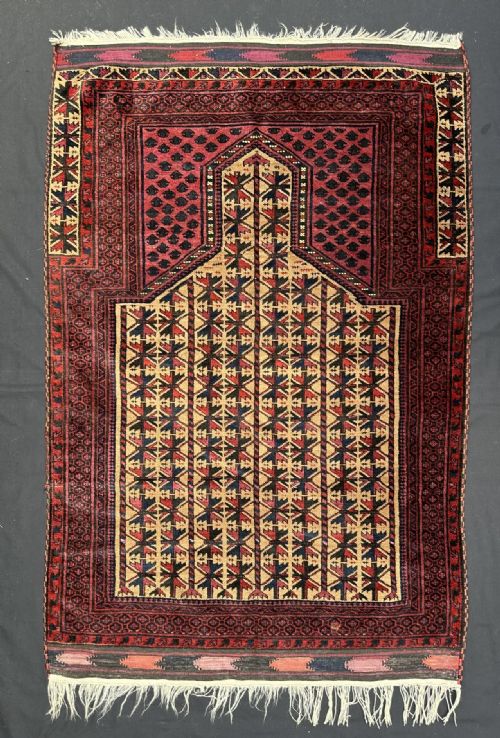
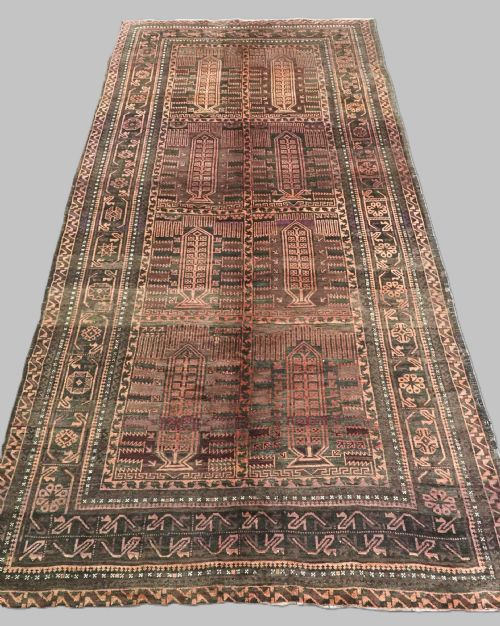
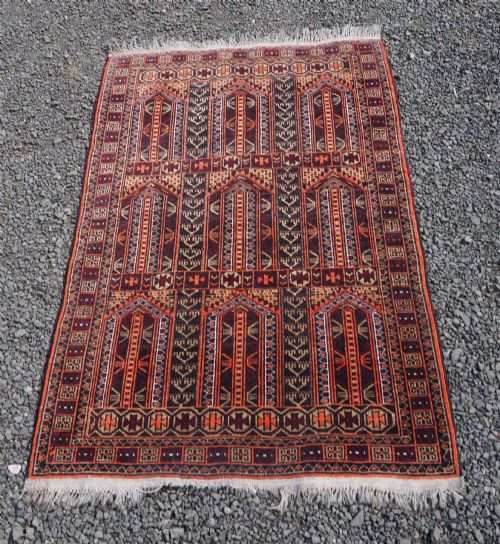
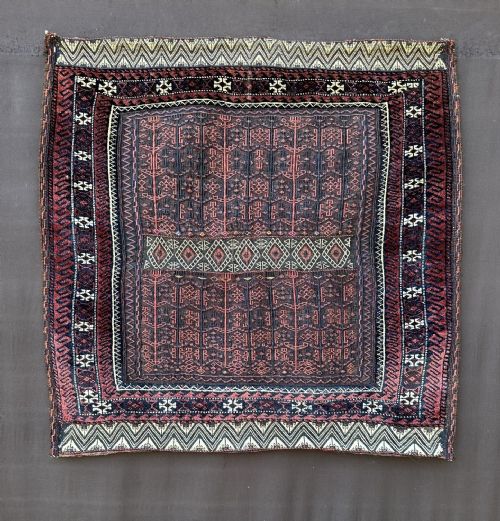
A dark red afghan rug is a tribal textile woven primarily by Baluch, Timuri, and Ersari groups across the borderlands of western Afghanistan and north-east Persia. These pieces span from the late nineteenth century through to the early twentieth century, encompassing prayer rugs, main carpets, storage bags, and long runner formats.
The version most commonly met on this page is the Baluch or Timuri village rug, typically displaying rich madder red and deep indigo grounds with geometric motifs. Collectors encounter specific regional layouts such as the pencil box pattern, repeating star octagons, and multiple mihrab prayer designs.
Tribal weavers produced these items for domestic utility, storage, and ritual prayer rather than luxury export markets. Consequently, each surviving carpet carries distinct regional characteristics and tribal weaving signatures passed down through generations.
Factors of Quality
Quality rests upon the fineness of the spin, knot density, and the depth achieved by natural dyes. Tightly packed wool yields a resilient pile that maintains its integrity under foot traffic.
Artistic execution and clarity of tribal geometry separate standard village work from exceptional examples. The precision of intricate mihrab arches and well-balanced repeat patterns dictate the standing of a textile.
Listings feature hand-spun wool, natural dyes, and goat hair across rugs dated from 1870 through the 1930s.
The Dark Red Afghan Rug Glossary
- Mihrab
- A niche design representing the direction of prayer, frequently seen repeated in multiple arches on tribal prayer rugs. It guides the layout of the central field.
- Sofreh
- A flatwoven or piled cloth used for dining, food preparation, or handling bread within nomadic households. These functional textiles double as striking geometric wall hangings.
- Balisht
- A traditional storage or grain bag woven on a vertical loom with a plain weave back. They were utilised inside nomadic tents for storing personal belongings.
- Madder
- A natural dye extracted from the roots of the Rubia plant, producing the enduring deep reds foundational to these tribal rugs. It ages with a characteristic rich warmth.
- Dokhtar-e-Qazi
- A specific design attribution associated with Timuri and Baluch weavers, often featuring repeated boteh or lotus leaf motifs. The pattern is characteristic of late nineteenth-century borderland production.
Dark Red Afghan Rug: Frequently Asked Questions
How do I clean a vintage rug?
Gentle surface brushing and professional specialist washing preserve the delicate hand-spun wool and natural dyes.
Avoid harsh chemical immersion or modern mechanical scrubbing to protect the historic fibres.
Are these rugs suitable for heavy traffic?
Dense knotting and robust wool construction allow many nineteenth-century tribal carpets to handle normal domestic use.
Placing a quality underlay beneath the textile prevents slipping and reduces fibre wear.
What does a mihrab design signify?
The arched motif marks a prayer niche, identifying the piece as a rug created for personal devotion.
Weavers often multiplied these arches into double or triple mihrab arrangements for visual balance.
How can I date my textile?
Examination of the wool spin, natural dye variations, and structural wear patterns provides reliable chronological clues.
Stylistic markers like pencil box borders and specific tribal attributions help narrow the production era.